




Customer service and travel training in special-needs busing
Sessions during the National Association for Pupil Transportation Summit in October delved into these topics, with insight from one family’s personal experiences and strategies for attendees to take back to their operations.
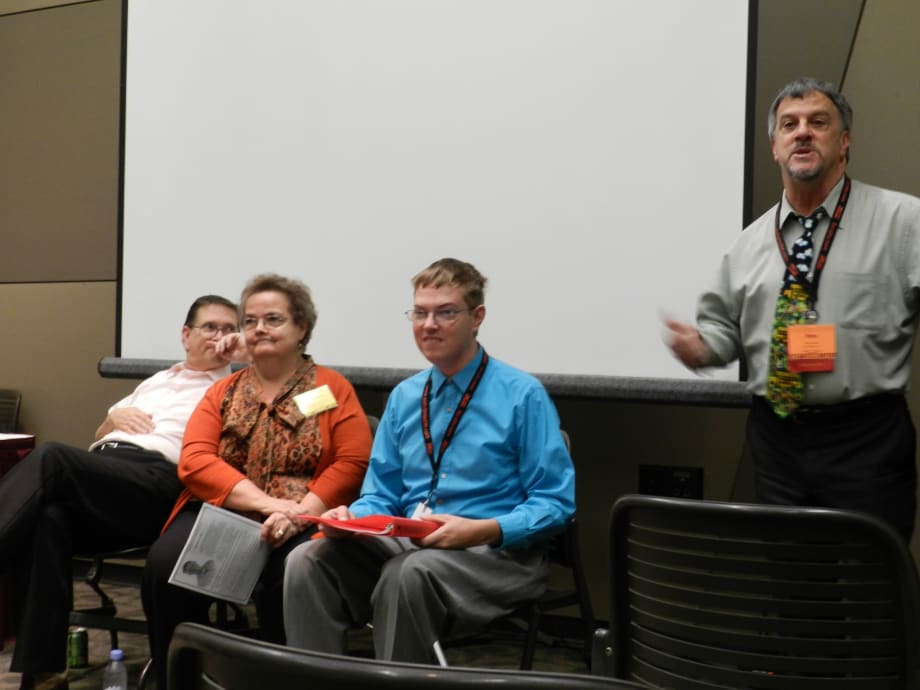
Pete Meslin (far right), director of transportation at California's Newport-Mesa Unified School District, moderated a session at the NAPT Summit in which panelists (from left) Michael and Judith Ann Benedict and their son, Michael Jr., discussed how relationship-building is critical to good customer service when transporting special-needs students.
GRAND RAPIDS, Mich. — An engaging session at the National Association for Pupil Transportation (NAPT) Summit in October explored parent and client perspectives in transporting students with special needs, and what it takes to deliver good customer service.
Panelists Michael Benedict Jr. and his parents, Judith Ann and Michael Sr., provided insight on this issue, speaking from their personal experiences. (Pete Meslin, director of transportation at Newport-Mesa Unified School District in Costa Mesa, Calif., moderated.)
Michael Benedict Jr. rode special-needs school buses as a student; he now serves as a bus aide for Provo (Utah) City School District, a role he has held since 2006. He applied for the position with encouragement from one of his first school bus drivers, Una Hebner, who Michael Benedict Sr. said “saw something in Michael and took time to nurture that.”
When Meslin asked Michael Jr. what good customer service looks like, he spoke of Una Hebner.
“My driver would make sure to listen to me and any needs or concerns I had,” Michael Jr. said.
And now, in discussing customer service as a bus aide, he said, “The key ingredient is taking the time to care about the students.”
Judith Ann Benedict said that for her, good customer service meant knowing that the bus drivers were caring for her son in the same way that she would have.
Michael Jr. also talked about the importance of communication between parents, school officials and transportation officials in providing good customer service. He said that parents can’t feel rushed when providing information about their children’s needs and how they may impact their ride on the school bus, and he said transportation personnel have to be willing to “meet them half way” by asking questions, where appropriate, about students’ needs. In addition, transportation officials should make a point to share information about their special-needs passengers with parents and school officials if they have concerns about their passengers.
Meslin asked Michael Jr. what information he shares with parents, and he said he first talks with the student to try to determine what the issue is, and he then talks with school officials about the situation so that they and the student’s parents can work with him or her.
When Meslin asked Michael Jr. how he balances being friendly toward students and getting to know them while also being professional, Michael Jr. said that being professional is, of course, important, but in providing good customer service while also transporting students safely, you have to “be willing to do the extra things to best serve students.”
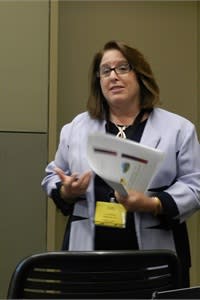
Judy Shanley co-presented a session with Pete Meslin on travel instruction for students with disabilities. Shanley is director of student engagement and mobility management for the Easter Seals Transportation Group.
Meslin co-presented another session at the NAPT Summit with Judy Shanley, director of student engagement and mobility management for the Easter Seals Transportation Group.
The two discussed the importance of travel instruction for students with disabilities, noting that education about public transportation helps in providing these students with skills necessary for living as independently as possible after they have completed school.
As part of the session, Meslin and Shanley offered strategies for integrating transportation content into students’ educational experience. Shanley urged attendees to think of the school bus as a place to teach students about travel training.
Subjects that can be taught on the bus include math, geography and reading. For example, students could be given bus schedules to help them learn addition and subtraction, and they could be given bus safety materials to promote reading. Identifying landmarks can help students develop their knowledge of geography.
Meslin also noted the need to “break the ‘short bus syndrome’” when transporting students with disabilities. Where possible, he encouraged attendees to use larger buses to transport these students because they are more similar in size to public transit buses, and they have a larger wheelchair and ambulatory capacity.
“Discuss long-term goals and short-term actions to get there,” the presenters added. “Talk with the public transportation officials in your community and participate in community transportation planning.”
Check out this gallery with photos from this year's NAPT and NASDPTS conferences.
Read more about travel training in this paper from industry veteran Ted Finlayson-Schueler.
More Special Needs Transportation
Kelli Goterba Named 2026 Special-Needs School Bus Driver of the Year
Through building trust with students and strengthening her transportation team, Goterba exemplifies the impact special-needs drivers can make.
Read More →
BraunAbility Introduces New Safety Barrier for Wheelchair Lifts
LiftSentinel is designed to add another layer of protection during wheelchair loading and unloading and can be retrofitted to many existing commercial lift installations.
Read More →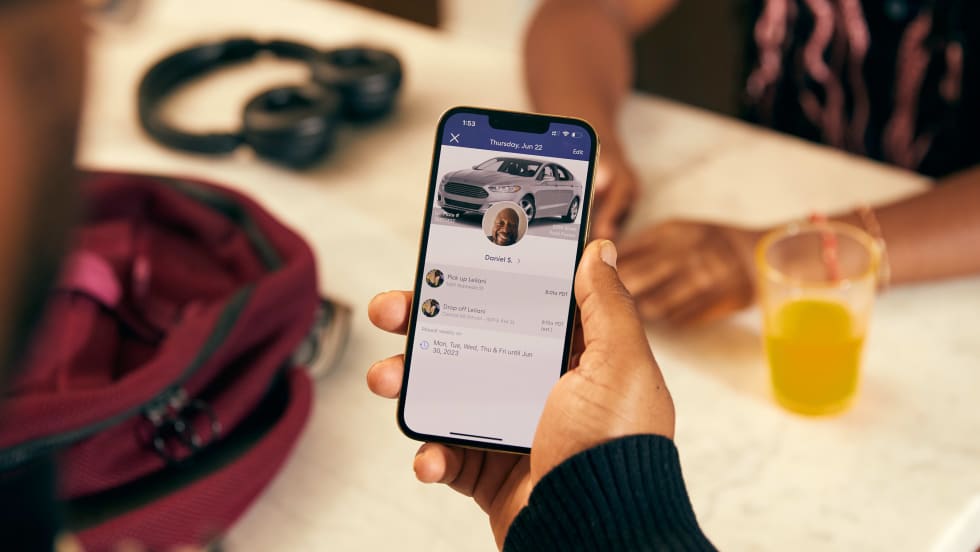
HopSkipDrive Launches New Safety, Driver Consistency Features for 2026-27 School Year
The company’s free ride recording, live ride tracking, and consistent driver assignments aim to improve safety and continuity for diverse student transportation needs.
Read More →
The Most Common Wheelchair Securement Mistakes on School Buses (and How to Fix Them)
Small missteps in wheelchair securement can have serious consequences. Here are 32 tips from experts to reduce risk and increase student safety on the bus.
Read More →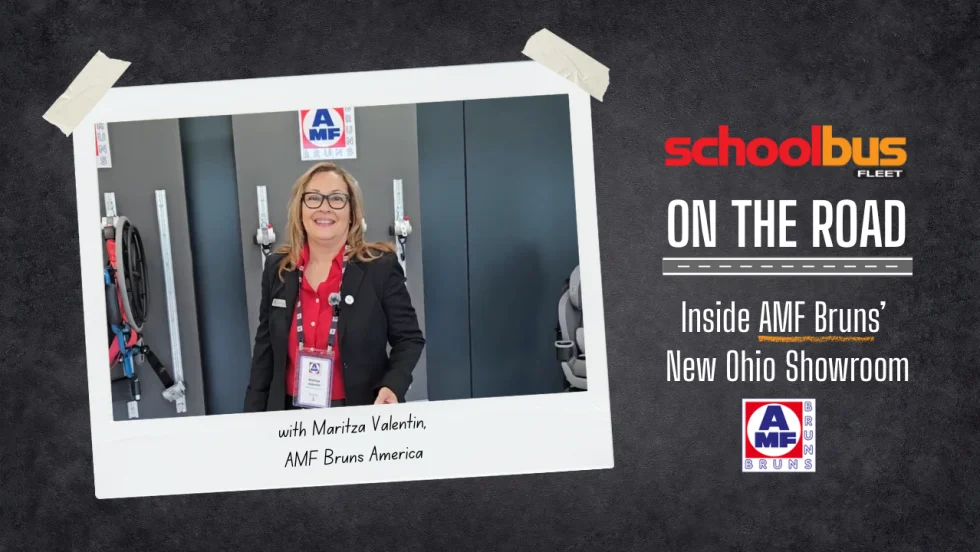
Inside AMF Bruns’ New Showroom: School Bus Securement Solutions Explained
Go inside AMF Bruns America’s new Ohio showroom with Maritza Valentin to see its FutureSafe technology, driver training tools, securement systems, and seating innovations.
Read More →
What AMF Bruns’ New Facility Means for Customers [Video]
Inside AMF Bruns’ new Stow, Ohio, operations: See how expanded space and innovation will enhance customer support and operations.
Read More →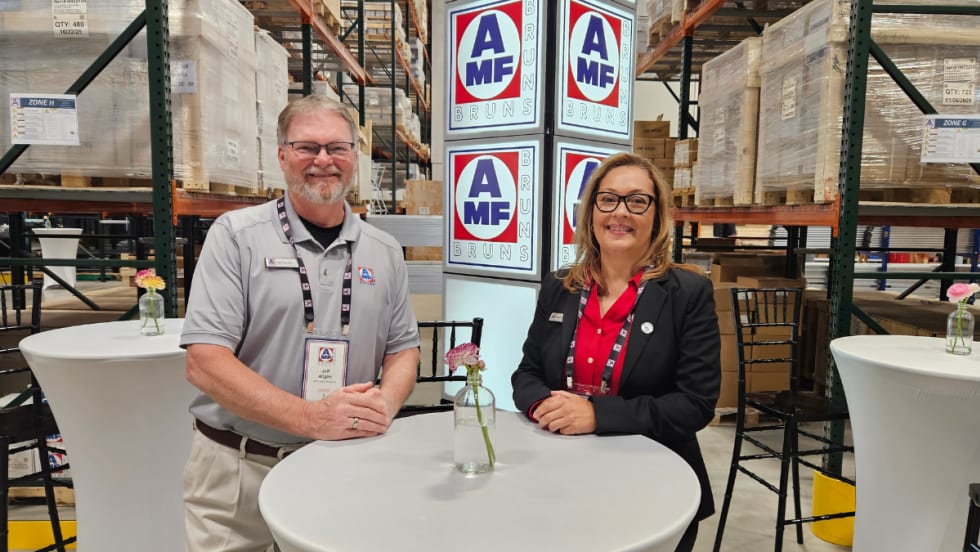
AMF Bruns Expands in Ohio, Investing in Growth and Community
With expanded production space, local investment, and a growing workforce, AMF Bruns is scaling its U.S. presence. Here’s an exclusive first look inside the new Stow, Ohio, HQ.
Read More →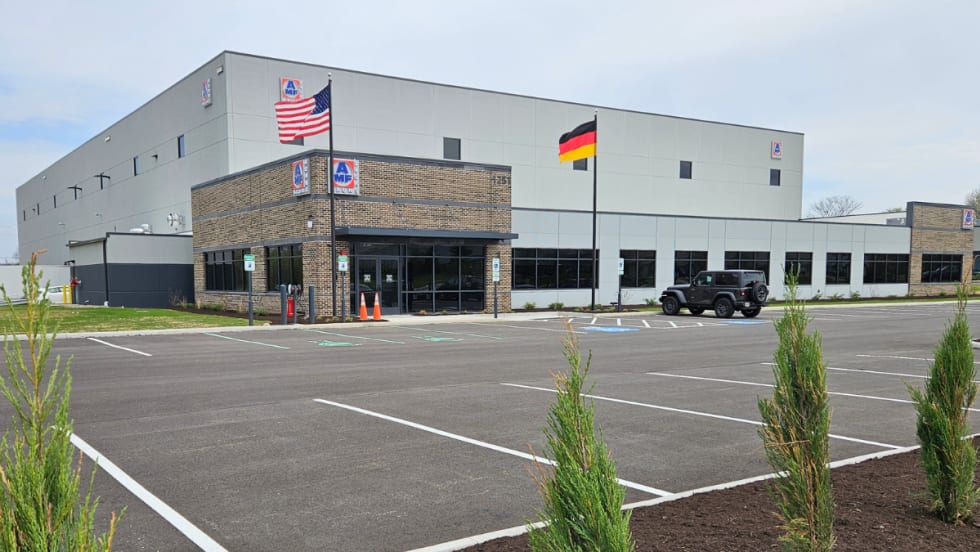
Inside AMF Bruns of America’s New Ohio Manufacturing Facility [Photos]
Take a behind-the-scenes look at AMF Bruns of America’s new 41,000-square-foot Stow, Ohio, headquarters, featuring advanced manufacturing, expanded space, and future-ready mobility solutions.
Read More →
First Student Boosts Student Support in Wichita & Texas
First Student and Wichita Public Schools are using behavioral support strategies to improve student ride experiences, while a separate initiative expands access to after-school programs through a bus donation.
Read More →
2026 Special-Needs Transportation Survey
What’s changing in special-needs transportation? This year, student transportation operators report a rising need, easing driver shortages, growing tech adoption, and evolving challenges. Sponsored by AMF Bruns of America.
Read More →