





You also might like Battery-Electric Trucks: Maintenance 101
Cummins Buying Meritor to Accelerate Electrification Development
Cummins is buying Meritor in a deal that will give the company a broad reach in traditional powertrains and components as well as accelerating its development of battery-electric and fuel-cell-electric propulsion systems.
February 22, 2022
Cummins said buying Meritor will help develop economically viable zero-carbon solutions for commercial vehicle applications.
Photo: Cummins
3 min to read
Cummins is buying Meritor in a deal that will give the company a broad reach in traditional powertrains and components as well as accelerating its development of battery-electric and fuel-cell-electric propulsion systems.
The $3.7 billion deal was announced Feb. 22. Cummins officials said the acquisition will position the company as one of the few able to provide integrated powertrain solutions across both internal-combustion and electric power applications.
Citing the two company’s “complementary strengths,” Tom Linebarger, Cummins chairman and CEO, said in a news release that the deal “will help us address one of the most critical technology challenges of our age: developing economically viable zero-carbon solutions for commercial and industrial applications.
“Climate change is the existential crisis of our time, and this acquisition accelerates our ability to address it," he continued. "Our customers need economically viable decarbonized solutions…. our communities and our planet depend on companies like Cummins to invest in and develop these solutions.”
Cummins believes e-axles will be a critical integration point in hybrid and electric drivetrains, and Meritor already has e-axles commercially available.
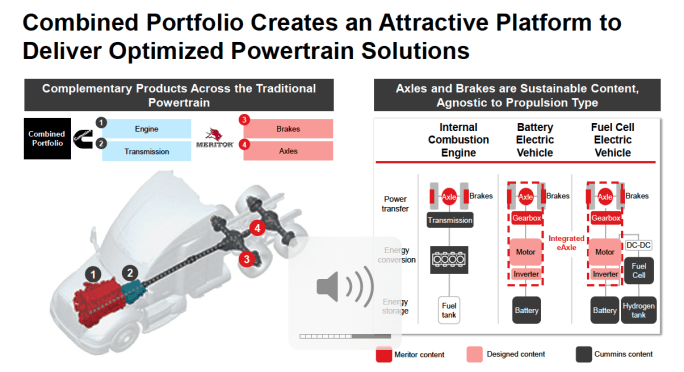
Cummins' acquisition of Meritor will position the company as one of the few able to provide integrated powertrain solutions across both combustion and electric power applications.
Photo: Cummins presentation
By accelerating Meritor’s investment in electrification and integrating development within Cummins' New Power business, Linebarger said, “we think we can be at the table for virtually every negotiation for who can supply what in the commercial/industrial sector. We want to be able to provide both systems and components” in the fast-moving electrification sector.
The deal also will “provide customers with more certainty they’ll have a viable product for years and years to come,” he added.
“Meritor has transitioned from a traditional drivetrain manufacturing company into an electric drivetrain company, and this is the next transition in our journey,” said Chris Villavarayan, CEO and president of Meritor, in a conference call for investors and analysts.
'Powertrain-Agnostic Components'
On the traditional powertrain side, Linebarger explained that Meritor’s core axle and brake business brings powertrain-agnostic components to Cummins, and it expects to use its global reach to raise growth rates in these businesses.
Meritor’s traditional axle and brake business fits well into Cummins’ component busines, Linebarger said, and it can grow that business on a global scale. “Cummins is in some places Meritor isn’t, in bigger ways. By bringing Meritor into places we are, we can develop their core business — and our components business becomes more powertrain-agnostic over time, providing a more sustainable source of revenue and profit.”
The acquisition announcement follows close on the heels of announcements of Cummins’ purchase of Jacobs Vehicle Systems, which will help it meet more stringent upcoming emissions standards, and of its approach to develop multiple lower-carbon alternative fuel versions of its internal combustion engines as an intermediary step on the path to zero emissions.
While Cummins will be investing in growing the electrification, at the same time, the companies have identified cost synergies, and by the end of the third year predict positive pre-tax synergies of $130 million. The transaction, which is subject to customary closing conditions, regulatory approvals, and shareholder approval, is expected to close by the end of the year.
We have reached out to Eaton and Cummins to find out if this deal will have any effect on the Eaton-Cummins joint venture in automated transmissions. Eaton on Feb. 22 announced its Vehicle Group has formed a new ePowertrain business unit.
Originally posted on Heavy Duty Trucking
More Maintenance
Sponsored•September 8, 2026
The Essential Guide to School Bus Maintenance and Student Safety
Your district's buses carry students to school every day. This guide shows how predictive maintenance powered by fleet data helps keep buses reliable, drivers accountable and students safer from the first bell to the last stop.
Read More →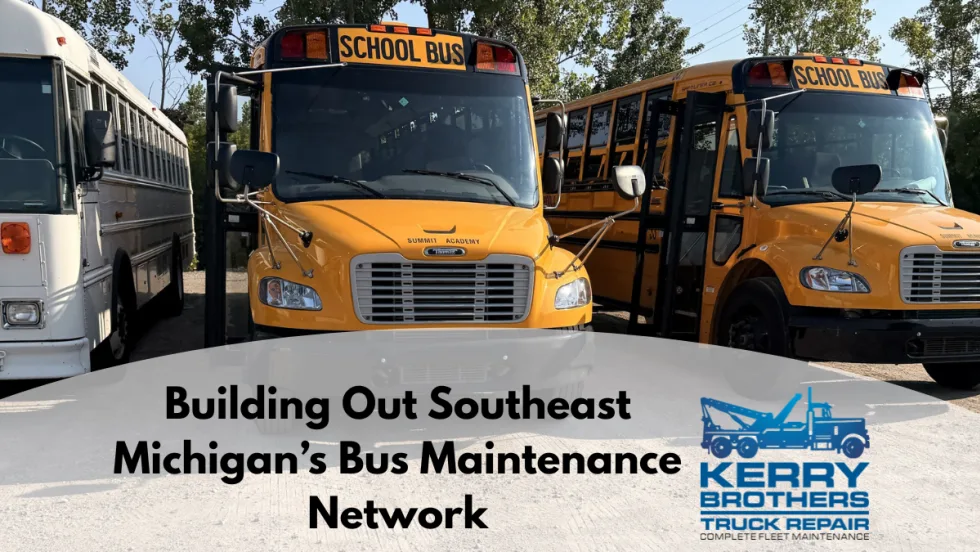
Kerry Brothers Grows Michigan School Bus Repair Network
The acquisition of Downriver Truck and Bus expands Kerry Brothers’ school bus maintenance footprint across southeast Michigan, adding repair capacity, diagnostic resources, and state inspection support.
Read More →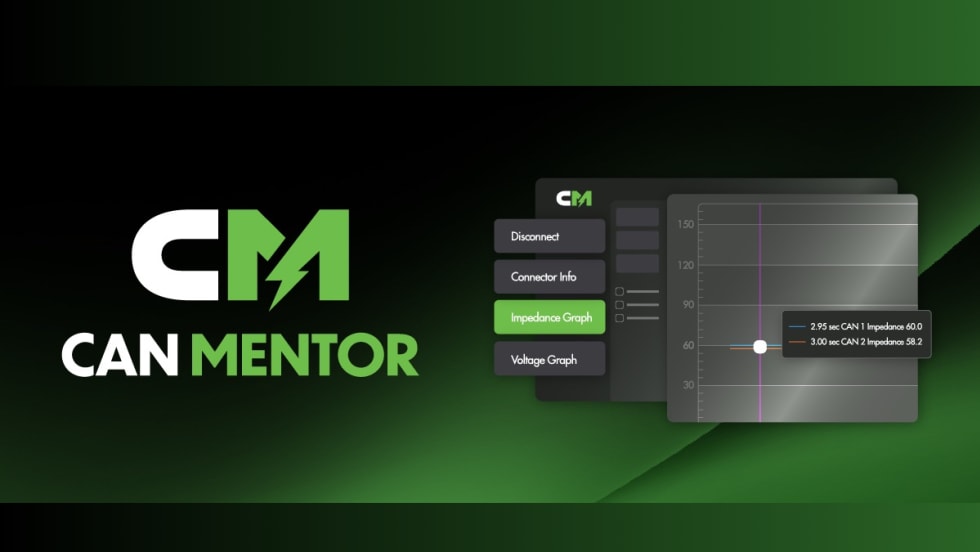
Noregon Introduces CAN Bus Diagnostic Tool, Expands JPRO Features
CAN Mentor and the latest JPRO update aim to simplify vehicle network diagnostics and improve repair efficiency for technicians of all experience levels.
Read More →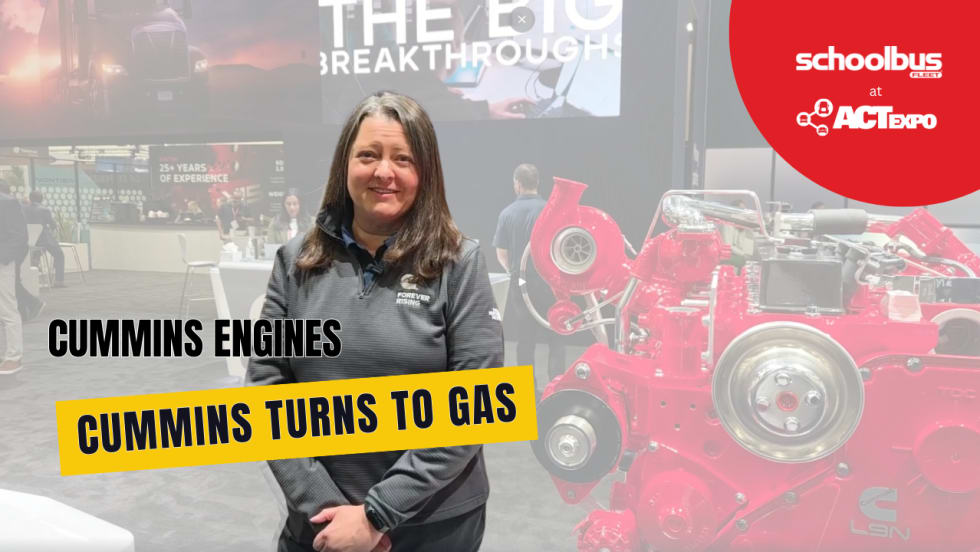
Cummins on Smarter, Simpler Engine Innovation
Cummins discusses its first-ever gasoline engine for school buses, EPA 2027, and why bus fleets still want durable, simpler internal combustion options.
Read More →
Report: 72% of Diesel School Buses Now Use Advanced Low-Emission Engines
New data shows advanced low-emission diesel technology continues expanding across school bus fleets, even as electric bus adoption gains momentum.
Read More →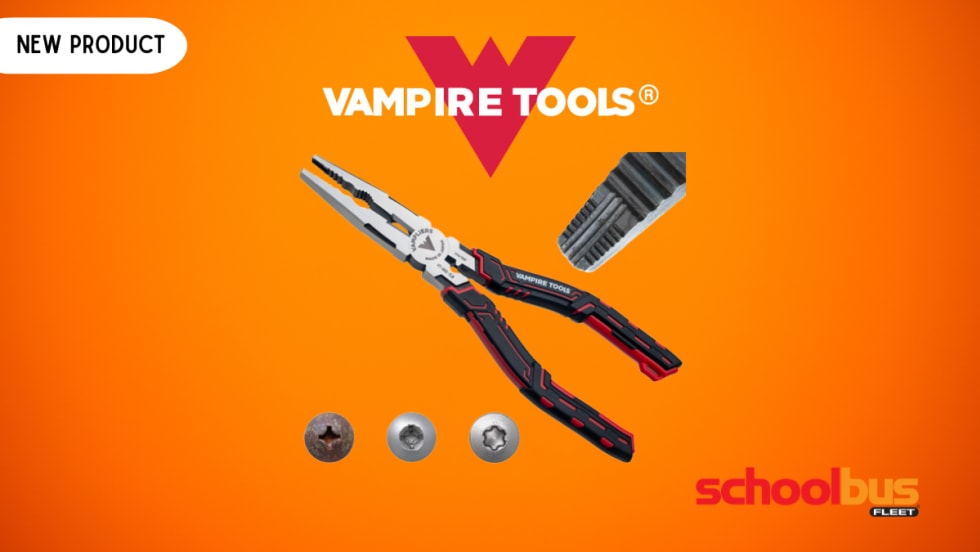
Vampire Tools' CAIMAN 7.5-Inch Multi-Purpose Screw Extractor Long-Nose Pliers with Crimper
Vampire Tools introduced the VAMPLIERS Caiman 7.5-inch multi-purpose pliers, combining screw extraction, cutting, crimping, and gripping functions into a single tool designed for fleet maintenance professionals.
Read More →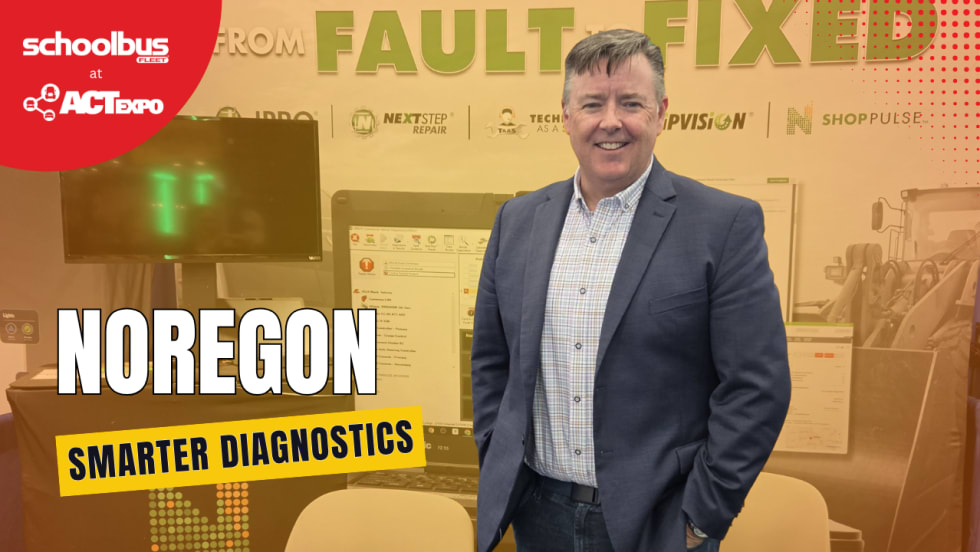
How Advanced Diagnostics Helps Bus Fleets Stay Ahead of Repairs
Chat with Noregon’s Kevin Smallhorn at ACT Expo about bus diagnostic tools, telematics integration, CNG maintenance support, and strategies to help reduce downtime and improve uptime.
Read More →
How School Bus Fleets are Getting Ahead of Breakdowns
Don’t let bus downtime wear you down. Here’s how bus operators are shifting from manual processes to AI-powered, data-driven maintenance systems for improved reliability and safety.
Read More →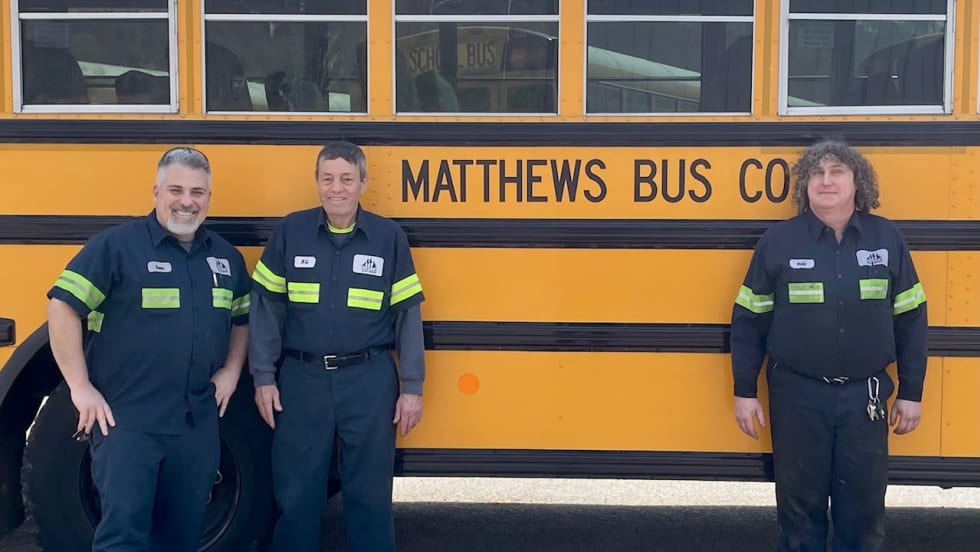
Pennsylvania School Bus Maintenance Team Praised for Dedication to Safety
Matthews Bus Company’s West Jefferson received a letter of commendation from the Pennsylvania State Police for their fleet inspections.
Read More →
Sponsored•April 16, 2026
From Chaos to Clarity: How School Districts Are Running Leaner Transportation Operations
Covering 38 routes on a Friday afternoon. Buses idling while routes overlap. Parents calling nonstop about late arrivals. Sound familiar? This whitepaper explores how district transportation leaders solved these exact problems — and what measurable results followed.
Read More →