




Conference Presentations Gaze Into the Future
NAPT sessions show that vehicle technology is advancing rapidly, and the school bus industry needs to keep pace or be left behind.

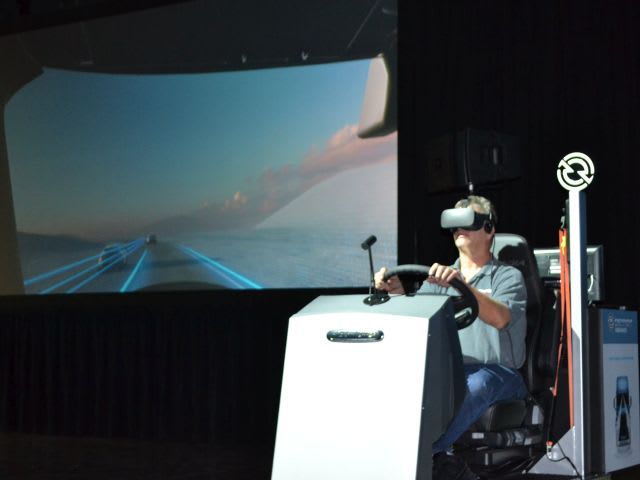
A driver wearing virtual reality goggles in a truck simulator demonstrates such technologies as adaptive cruise control, lane departure warnings, and active brake assist.
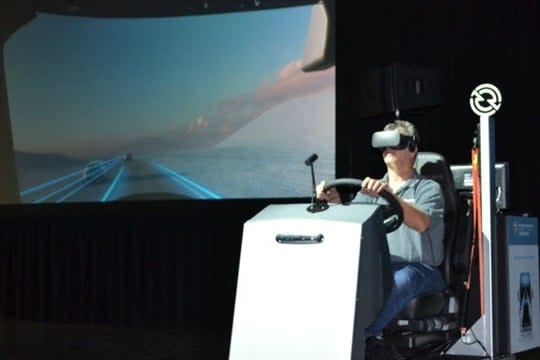
A driver wearing virtual reality goggles in a truck simulator demonstrates such technologies as adaptive cruise control, lane departure warnings, and active brake assist.
COLUMBUS, Ohio — Vehicle technology is advancing rapidly, and the school bus industry needs to keep pace or be left behind.
That was the thread running through several sessions at the association conferences in Columbus. Discussions covered such forward-looking topics as driver assistive technologies, autonomous vehicles, and electric buses.
In an eye-catching presentation at the National Association for Pupil Transportation (NAPT) conference on Saturday, officials from Daimler brands demonstrated driver-assistive systems that are now available in some cars and trucks, and they discussed how the technologies may impact pupil transportation. The top factor when considering technology for school buses is whether it will improve safety, followed by saving money and time.
“Innovation brings safety,” said Caley Edgerly, president and CEO of Thomas Built Buses. “That’s the first and foremost thing we look for in our industry.”
Mercedes, which like Thomas Built is a Daimler brand, now offers numerous driver assistive technologies that are designed to increase safety in its S-Class and other cars. On big screens in the large exhibit hall, the conference presentation showed video simulations of those features to illustrate what exactly they do. A few examples:
• Active distance assist adjusts the speed of the vehicle to maintain a safe following distance from the vehicle ahead. It also applies the brakes automatically if the vehicle ahead is stopping.
• Active steering assist scans the road ahead and to the sides and can steer the vehicle if the driver takes his or her hands off the wheel for a few seconds.
• Attention assist monitors how the driver steers, brakes, etc. If those driving behaviors change in a way that suggests fatigue, the car will display a coffee cup icon and will tell the driver to take a break.
• Active speed limit assist and route-based speed adjustment detect speed limits and road features such as curves and automatically adjust the speed of the vehicle.
• Active parking assist scans to the sides of the car for parking spots, determines whether the car can fit, and then helps the driver park by steering into the space.
Engine manufacturer Detroit, also a Daimler brand, took the demonstration a step further. In front of the crowd of conference attendees, a driver manned a Freightliner truck simulator while wearing virtual reality goggles. The live simulation was displayed on the big screens as the driver tapped into Detroit Assurance technologies like adaptive cruise control, lane departure warnings, and active brake assist. Those types of features are now available on the Freightliner Cascadia and other trucks.
Bringing back the school bus connection, Leslie Kilgore, vice president of engineering for Thomas Built, said that the Mercedes and Detroit technologies are available to Thomas Built as part of the Daimler family. Even so, Kilgore added, they aren’t all necessarily the right fit for the yellow bus, and manufacturers have to be mindful of that as they think forward.
“The first question: Is it relevant to safety?” she said, echoing Edgerly’s earlier comments. “After that, how will it assist the driver in doing everyday duties?”
Meanwhile, with the ongoing development of vehicle-to-vehicle and vehicle-to-infrastructure communication, vehicles will eventually “talk to” each other and their surroundings. Some cities, including conference host Columbus, are working to transform themselves into “smart cities” to accommodate these types of advances. School buses, Kilgore noted, will have to ramp up to remain relevant in this “more complicated, more connected world.”
“Transportation as we know it is actually going to change,” Kilgore said. “We have to change with it as an industry.”
The presentation then took a surprising twist as Thomas Built introduced a new electric school bus.
In another NAPT session on Sunday, Raymond Melleady, executive vice president of USSC Group, reinforced the notion that automated and connected vehicle technologies will reshape transportation, so pupil transportation leaders need to assess how those developments will impact their operations in the years to come and plan accordingly.
“I do believe that 10 to 15 years from now we’re going to have vehicles without drivers on the road, so we need to be prepared for that,” Melleady said.
He also addressed why so much time and effort — not to mention money — are being invested in advancing autonomous vehicles. In short, Melleady said, “Automation can be a tool for solving problems.” That may include improving safety by eliminating vehicle collisions caused by human factors.Also, self-driving technology promises to increase mobility for those who can’t drive themselves, including the elderly.
Melleady also suggested that vehicle automation could at some point help with another current problem: driver shortage.
“Do you think autonomous vehicles will impact your labor shortage?” he asked attendees. “I think it might.”
More Management

How to Build a Better Driver Training Program
Ready to boost up your school bus instructor training? Here’s how to pick the right talent and improve recruitment, retention, and safety.
Read More →
CALSTART and Forth Combine to Form Catalyst Mobility
The new name represents a renewed vision for the nonprofit focused on advancing clean, equitable, and affordable transportation solutions that move people and goods.
Read More →
What Makes a Great School Bus Driver Trainer?
Choosing the right school bus driver trainer takes more than experience. Learn six keys to selecting and developing trainers and evaluating program effectiveness.
Read More →


School Bus Contractors Expand Through New Deals, Acquisitions & Partnerships
STA's Canadian division acquires Ontario-based G&L Stevenson Transport while Durham School Services adds a new district contract in California, First Student adds a New Jersey contract, and Minnesota Coaches acquires Halo Transportation.
Read More →
Logan Bus Company Rolls Out AI Phone System for NYC School Bus Families
A summer pilot found that AI agents could handle most routine calls, freeing up time for customer service staff to focus on emergencies and complex family concerns.
Read More →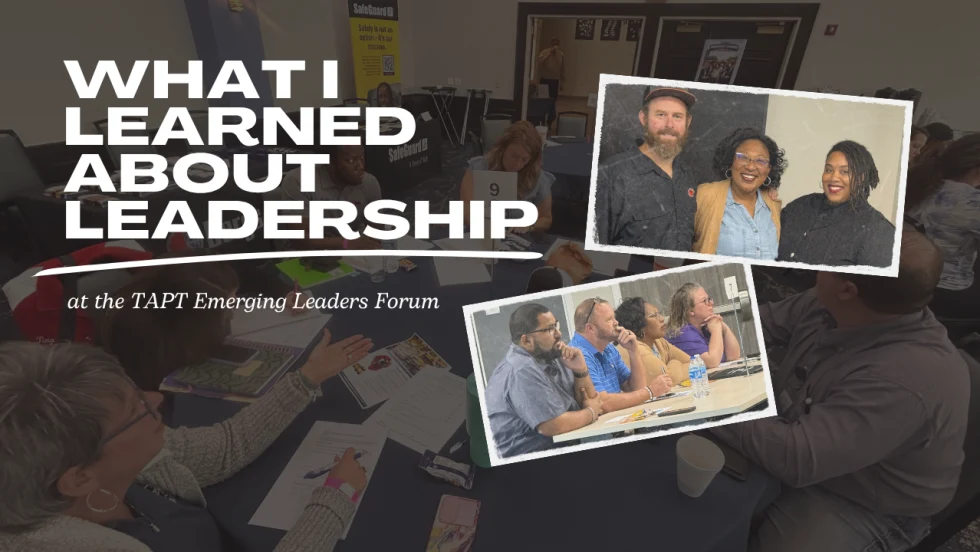
From Intent to Impact: What I Learned About Leadership from TAPT
A Texas transportation supervisor shares lessons on self-awareness, accountability, managing stress and building trust — and why investing in leadership development matters at every stage of your career.
Read More →
NAPT Names 2026 Award Recipients, Hall of Fame Inductee
Who earned national recognition for their work in student transportation? This year, NAPT named five recipients of its 2026 awards for service, safety, and leadership, plus its newest Hall of Famer.
Read More →
2026 State of Student Transportation Report
Driver shortages. Rising costs. Growing safety expectations. More data, but not enough time to act on it. The 2026 State of Student Transportation Report reveals what transportation leaders say is putting the most pressure on their operations—and where they’re investing next. See how your priorities compare.
Read More →
How to De-Escalate an Angry Person: 5 Steps for Handling Workplace Conflict
What makes emotions run high, and how should you handle an angry colleague or parent? Follow these steps for staying calm, listening, showing empathy, and resolving conflict.
Read More →
What Readiness Looks Like This School Year
Learn about the challenges shaping the 2026–2027 school year, from persistent driver shortages and budget pressure to technology and readiness gaps. See how school districts are responding and adapting in Zonar’s 2026 Back-to-School Readiness Report.
Read More →