




Change to School Bus Passing Law Sparks Concerns in Georgia
A state bill signed into law earlier this year modifies requirements for stopping for school buses and decreases fines for some violations.

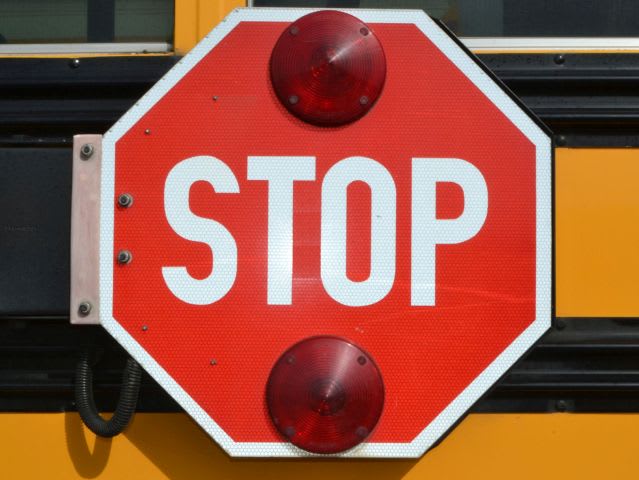
A bill signed into law in Georgia earlier this year modifies requirements for stopping for school buses and decreases fines for some violations.
A bill signed into law in Georgia earlier this year modifies requirements for stopping for school buses and decreases fines for some violations.
ATLANTA — Changes to state law on stopping for school buses have raised safety concerns among education and transportation officials in Georgia.
The changes stem from state House Bill 978, which was signed into law in May and became effective on July 1.
One provision of the bill reduces the fines for school bus passing violations that are “evidenced by recorded images” — in other words, captured by stop-arm cameras. Previously, Georgia had a tiered system for those fines: $300 for a first offense, $750 for a second offense, and $1,000 for subsequent offenses. HB 978 replaced the tiers with a flat fine of $250.
However, the legislative change that has caused more alarm in Georgia’s pupil transportation community affects when motorists have to stop for school buses. When HB 978 was passed into law, it appeared to allow drivers to pass a stopped school bus on the opposite side of a highway that is divided only by a turn lane — rather than a physical median like a grass strip, as previously required.
As The Atlanta Journal-Constitution reported recently, that provision was opposed by the Georgia Association for Pupil Transportation.
Sam Ham, executive director of transportation services for Fulton County School System in Atlanta, told SBF in July that he’s among those who worry that the legislative change could compromise the safety of students at school bus stops.
“I share the concern of many of my fellow Georgia transportation leaders that HB 978 contains some confusing language on when a motorist must stop for the school bus during the loading and unloading process,” Ham said. “Those last-minute line additions may have far greater impact on school bus passing violations, thus putting students in far greater danger than the reductions of fine amounts.”
On Monday, the Georgia Attorney General’s Office issued an unofficial opinion on HB 978 that confirmed the change that transportation officials had feared.
“I conclude that this statute, as amended by the General Assembly during the 2018 session, does not require a vehicle travelling on a three or five lane road divided by a center turn lane to stop for a school bus that is stopped on the opposite side of the road with its visual signals engaged,” Assistant Attorney General Meghan Davidson wrote.
Along with the opinion, Attorney General Chris Carr also released a statement about the change in state law in which he urged the public to be vigilant on the roads.
“With school starting and Georgia law changing, it is important that we remain focused on keeping Georgia's children safe on and around school buses," Carr said. "We urge all motorists in Georgia to make good choices and proceed with ... extreme caution when near school buses and stops as well as school safety zones.”
Meanwhile, Georgia State School Superintendent Richard Woods expressed his concerns about HB 978 in a statement on Tuesday.
“In my role as leader of the Georgia Department of Education, I maintain my position that this change in law does not reflect best practices to ensure student safety, and could endanger Georgia’s kids as they travel to and from school,” Woods said. “As GaDOE provides training to transportation personnel, we will continue to emphasize safe loading and unloading practices at school bus stops. More than ever, students need to be reminded they should never cross more than two lanes of traffic, including the lane occupied by the bus, at a school bus stop."
Woods added that he would call on state lawmakers to reverse the change in the upcoming legislative session.
More Safety

Geotab Expands Fleet Safety Tools With Video Coaching, Risk Insights
New safety and video capabilities aim to help fleet managers assess risk, support drivers, and take targeted action through video coaching, red-light violation detection, and more.
Read More →
How to Build a Better School Bus Driver Training Program
Is it time to strengthen your driver training? Here’s how to pick the right talent and improve recruitment, retention, and safety. This video is brought to you by IC Bus.
Read More →
Recent School Bus Accidents Leave 2 Dead, 2 Injured
Four school bus crashes in Florida, Illinois, and Georgia highlight risks in transportation lots, at bus stops, and during student loading and unloading.
Read More →

When Every Second Matters, Clarity Keeps Routes Moving
From routine delays to urgent incidents, strong communication practices help drivers, dispatchers, schools, and families respond with confidence.
Read More →
What Happens When a School Bus Catches Fire — and What Can Help
School bus fires are rare but can be devastating. Learn how advances in fire suppression and asset protection help fleets detect fires earlier, reduce damage, and improve safety.
Read More →
Geotab Launches Tool to Help Fleets Investigate Road Incidents
Geotab Investigations combines telematics data, video, documents, and other evidence to help fleets reconstruct incidents, resolve claims, and determine what happened.
Read More →
Texas Sixth Grader Wins 2026 National School Bus Safety Poster Contest
Sai Darshana Yekolu of Moseley Middle School in Prosper, Texas, was named the newest winner for her artwork, bringing the theme of “Safe Rides, Everyday Heroes” to life.
Read More →
Doing More With Less: How Transportation Directors Can Prioritize Safety Amid Budget Uncertainty
With diesel prices soaring and nearly one-third of transportation directors expecting budget cuts, maintaining student safety has never been more challenging. Download this guide to learn how leading districts are prioritizing risk, funding critical safety technology, and building stronger budget cases with data.
Read More →
Walton County Schools Adds Gatekeeper Stop-Arm Enforcement System
The Florida district will deploy Gatekeeper’s updated Student Protector technology, which now incorporates AI to improve video evidence.
Read More →
How To Build a More Secure School Bus Yard During and After Hours
As thefts and overnight security threats continue, school transportation leaders are combining stronger operational practices with AI-enabled surveillance to better protect buses, facilities, and staff.
Read More →