




Related: Tips for Getting Small Business Administration Bridge Loans
CARES Act Analysis: 17 Takeaways for Applicants
Bobit Business Media's webinar, "Navigating the CARES Act for Small- and Medium-Sized Businesses With Fleets," shared how businesses with commercial, corporate, and rental fleets can access and apply funds made available by the new law.
by Chris Brown
April 10, 2020
Bobit Business Media's webinar, "Navigating the CARES Act for Small- and Medium-Sized Businesses With Fleets," shared how businesses with commercial, corporate, and rental fleets can access and apply funds made available by the new law. Photo courtesy Rawpixel.com/Flickr
4 min to read

Bobit Business Media's webinar, "Navigating the CARES Act for Small- and Medium-Sized Businesses With Fleets," shared how businesses with commercial, corporate, and rental fleets can access and apply funds made available by the new law. Photo courtesy Rawpixel.com/Flickr
This article initially ran onBusiness Fleet, which is published by School Bus Fleet's parent company,Bobit Business Media.
Loan applications for the Coronavirus Aid, Relief, and Economic Security (CARES) Act opened on April 3, allowing businesses with 500 or fewer employees to apply for the Paycheck Protection Program (PPP) or the Economic Injury Disaster Loan Program (EIDL).
On April 7, Bobit Business Media convened the webinar “Navigating the CARES Act for Small- and Medium-Sized Businesses with Fleets” that addressed the needs of businesses with commercial, corporate, and rental fleets regarding accessing these funds.
The panel presenters consisted of Phil Feigen, attorney and managing partner DC Office and Shareholder at Polsinelli Law Firm; Matthew W. Daus, Esq., partner and chair, Transportation Practice Group at Windels Marx; Kirk Browning, president, Auto, Truck and Specialty Vehicle Fleet Divisions at 1st Source Bank; and Gregory M. Scott, founder and president of Merevir Consulting.
The takeaways below convey key findings presented by the speakers. For comprehensive program overviews, loan details, and an analysis of future relief legislation, access the archived webinar through this link.
Note that new information is forthcoming. The information presented in the webinar was current as of noon on April 7.
For PPP loan forgiveness, 75% of the amount funded must go to payroll. But that doesn’t mean if the company’s ratio is less than 75% for payroll the company won’t get any forgiveness: As an example, using 70% of the loan for payroll would simply mean that 5% of the funds remain a loan.
Insurance premiums are not listed as reimbursable expenses under PPP. You can, however, use EIDL loan money to pay insurance premiums.
Drivers listed as independent contractors (1099) do not count toward payroll for the purposes of loan forgiveness, though those drivers will be able to apply as individuals on Monday, April 13. (The Small Business Administration [SBA] has promised that banks will start accepting applications on April 10.)
Companies should consider encouraging their independent contractor drivers to apply for the Payroll Protection Program on their own to avoid unemployment claims filed against the company. Note that states are weighing the issue of how claims filed during this crisis affect unemployment insurance premiums.
Non-U.S. citizens are not eligible for EIDL loans. They are however eligible for PPP if they’re a U.S.-based company with employees based in the U.S.
Regarding whether vehicle lease payments are eligible for loan forgiveness, the statute is worded as “mortgages for personal or real property.” There is discussion on whether Treasury or SBA would interpret a lease as a type of mortgage on personal property, though this question hasn’t yet been addressed.
The SBA views commercial lessors as a bank or finance company and are therefore not eligible for EIDL. They are eligible for PPP, however, and have successfully submitted their applications.
Banks are seeing incomplete loan applications. Applicants must be mindful of missing documentation, including simple omissions such as trade names, failing to initial certifications, or missing dates next to signatures. This will delay approval.
As of the morning of April 7, 1st Source Bank has processed 800 applications and 102 of those have been approved. The rest are still in progress.
In addition to federal funds, distressed small businesses should also seek out state and local programs. The New York City Department of Small Business Services (SBS) created the NYC Small Business Continuity Fund (for companies with fewer than 100 employees) and the NYC Employee Retention Grant Program (for fewer than five employees). Chicago’s Small Business Resiliency Loan Fund targets “historically under-resourced communities.” Investigate other state and local programs for other possible grants and loans using tax levy monies.
Some businesses under franchise systems, even ones under the same corporate umbrella, are not listed in the SBA franchise directory to be able to receive EIDL funds. This will hopefully be amended.
EIDL loan applicants have complained of difficulties in submitting applications online and the system timing out before all fields were inputted. For the loan to be successfully submitted, applicants should receive a return email from disastercustomerservice@sba.gov to confirm a successful submission, and an email will be sent on how applicants will receive updated status notifications.
There is no uniform rule that says insurance companies must relax their customers’ requirements to pay premiums. signed affidavits may be required to ground fleet vehicles in some jurisdictions, but with the closures of Departments of Motor Vehicles, there are unanswered questions regarding turning in DMV plates.
Many banks are only helping existing customers and aren’t taking any more applications.
For companies that haven’t yet applied, it is imperative to apply now to secure a place in the queue. When the lender has successfully vetted and submitted the application, applicants will receive an SBA confirmation number. Once the SBA confirmation number has been received the lender will send the documentation that must be executed by the applicant before the funds can be dispersed. Funds will be processed and released in the order the applications were received.
It’s widely believed that CARES Act programs will be oversubscribed. Expect details as soon as April 20 regarding a new round of funding for PPP, a “CARES Act 2.0,” or other type of stimulus package.
Future stimuli may come in the form of shovel-ready infrastructure projects and programs for cities that are unable to meet their bond commitments because of drops in tax revenues.
More Management

Zum Secures Continued Financing Support for School Bus Expansion
Generate Private Credit has financed approximately $75 million in school bus deployments across three states, supporting more than 500 buses as Zum expands across the county.
Read More →
Beyond Discipline: A Different Approach to Student Behavior on the Bus
After implementing a dean of students program in Oregon, North Clackamas is seeing positive improvements. Here’s how it worked. The Route is brought to you by IC Bus.
Read More →
A Dean of Transportation's Different Approach to Student Behavior on the School Bus
After implementing a dean of students program in Oregon, North Clackamas is seeing positive improvements on the bus. Here’s how it worked.
Read More →
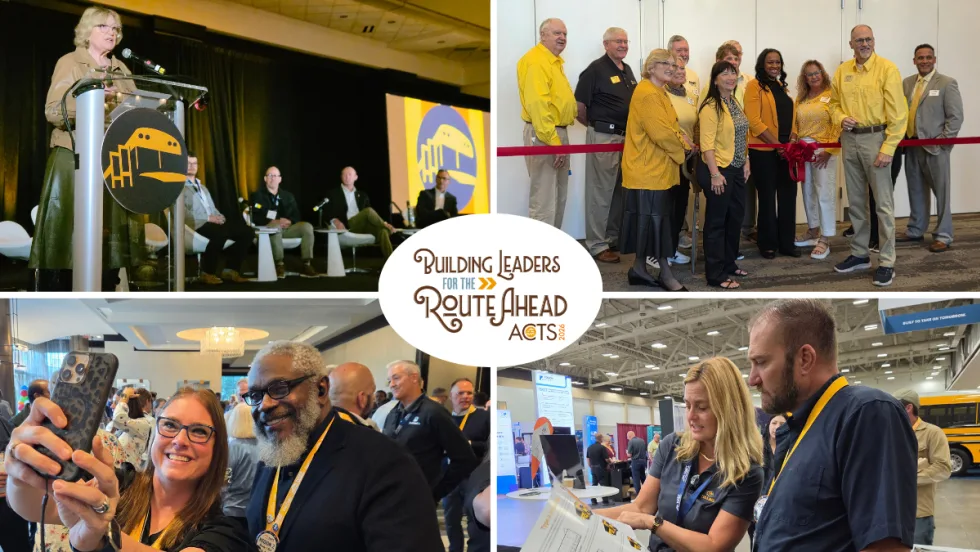
Inside NAPT ACTS 2026: Highlights from Louisville
From federal updates and student behavior strategies to new school bus technology and industry awards, see highlights from NAPT ACTS 2026 in Louisville.
Read More →
Meet the 2025 School Bus Driver Hero Winner: Annette Brown
We caught up with Wa-Nee Community Schools' Annette Brown on site at SBFX, where she was named the 2026 School Bus Driver Hero Award winner. Hear about her reaction, what she loves most about being a school bus driver, and more!
Read More →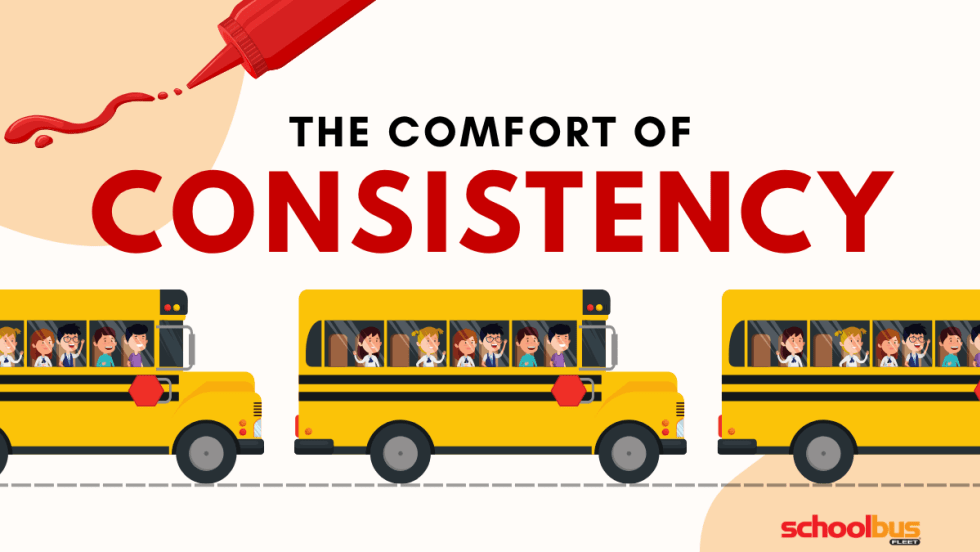
Predictability Is Like Ketchup (According to 6-Year-Olds)
To students, a different school bus can feel like a full-blown crisis. One driver reflects on why familiar routines, showing up on time, and being reliably boring matter more than we think.
Read More →
Samsara Launches Free Driver Rewards Program
The new Driver Perks program gives eligible professional drivers access to discounts and offers without adding a cost for participating fleets.
Read More →
How Tax-Exempt Municipal Leases Can Help Finance School Buses
Let’s explore school bus financing options, including municipal leases, vendor payable accounts, and balloon payments, and how they can help stretch fleet budgets.
Read More →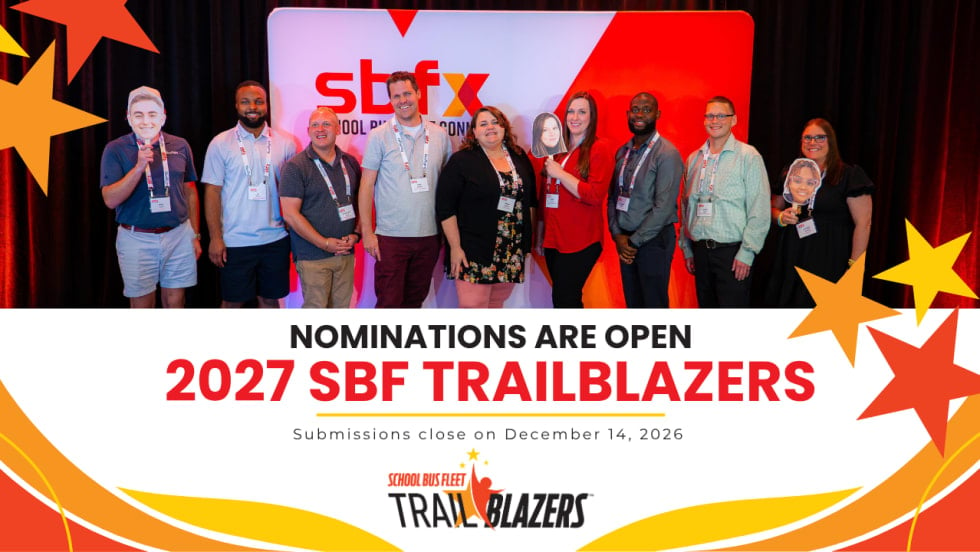
Nominate Rising School Transportation Pros Under 40!
We’re searching for the next generation of leaders making an impact across the K-12 student transportation industry to recognize as SBF’s 2027 Trailblazers. Nominations are open now!
Read More →
Changing Lanes: BusWhere, EverDriven, InterMotive, Summit School Services, Switzer-Carty & Thomas Built Buses
Check out who's been hired, promoted, and appointed to leadership positions at various school transportation suppliers, contractors, and manufacturers.
Read More →