




Blue Bird, Georgia District Complete V2X Deployment With Audi
Vehicle-to-everything technology tested on a Fulton County Schools bus shows it can alert a connected vehicle driver with a visual warning and audible signal to slow down, potentially preventing illegal passing incidents.


Vehicle-to-everything technology tested on a Fulton County (Ga.) Schools bus shows it can alert a connected vehicle driver with a visual warning and audible signal to slow down in a school zone, potentially preventing illegal passing of buses.
Photo courtesy Stephen Avett
Blue Bird and a Georgia-based school district, along with Audi of America and other partners, have completed an initial cellular vehicle-to-everything (C-V2X) technology deployment, setting the stage to refine the technology for adoption and integration into new vehicles.
As previously reported, the school bus manufacturer and Fulton County Schools, located in the greater Atlanta metropolitan area, have worked on setting up the deployment with Audi of America, Applied Information, and Temple Inc. since last October. The technology was tested at the district this spring using a Blue Bird propane-powered school bus and a 2021 Audi e-tron Sportback electric SUV.
The deployment leveraged C-V2X solutions provided by Qualcomm Technologies Inc. and Commsignia, according to a news release from Audi, to test roadside units (RSUs) from Applied Information, which were mounted in flashing speed limit signs near school zones. The SUV and school bus were also equipped with the C-V2X solutions.
This initial deployment demonstrated that when active in school zones, the RSU can send a direct, low-latency signal to the connected Audi vehicle, alerting the driver with a visual warning and audible signal to slow down, Audi stated in the news release.
The technology has two primary applications, Bryan Mulligan, president of Applied Information, said in a roundtable discussion on the deployment on Wednesday. It can warn drivers when they are entering an active school zone or approaching a school bus to reduce risks for children and vulnerable road users.
Similarly, when a Blue Bird school bus extends its stop arm, it alerts oncoming traffic that children may be entering or exiting a school bus. This is especially helpful on curvy or hilly roads where a driver might not be able to see the bus, Audi noted in the news release.
Trey Stow, director of transportation operations for Fulton County Schools, said in the discussion that the deployment simply entailed a quick installation of the C-V2X connectivity module on the bus that was part of the test, and that no action was required of the driver.
He pointed to the technology helping to meet the crucial need to protect students from illegal bus passing during the loading and unloading process.
“I’m not worried about our students once we get them on the bus,” Stow said. “The problem is getting them on and off the bus in the danger zone. That’s where this comes into play. If we save one student’s life, it’s worth it.”
Stop-arm violations continue to be one of the most significant dangers to children and other vulnerable road users around school buses with an estimated 17 million illegal bus passing incidents in the U.S. in 2019, according to the National Association of State Directors of Pupil Transportation Services.
The initial deployment took place in Alpharetta, Georgia, an Atlanta suburb where Applied Information develops next-generation communications technology with connected infrastructure throughout its 78.5-square-mile testing zone, including more than 130 connected traffic signals, according to Audi. The partners tested C-V2X through LTE and 5G networks with Fulton County Schools, one of Georgia’s largest school districts.
The partners are now fine-tuning the technology on closed courses at the Infrastructure-Automotive Testing Laboratory facility and with buses and connected road signs in real-world traffic conditions in Alpharetta.
Anupam “Pom” Malhotra, senior director of connected services for Audi of America, said in the roundtable discussion that tapping C-V2X technology’s potential safety benefits became possible following a U.S. Federal Communications Commission (FCC) ruling reached in November 2020 and published in May 2021. The FCC’s decision, which Malhotra described as a “big win,” allocates a portion of the 5.9 GHz cellular band for C-V2X applications for the first time.
The decision paved the way for automakers to deploy standardized messages for vehicles to speak to one another, including school zone and bus use cases, according to Audi.
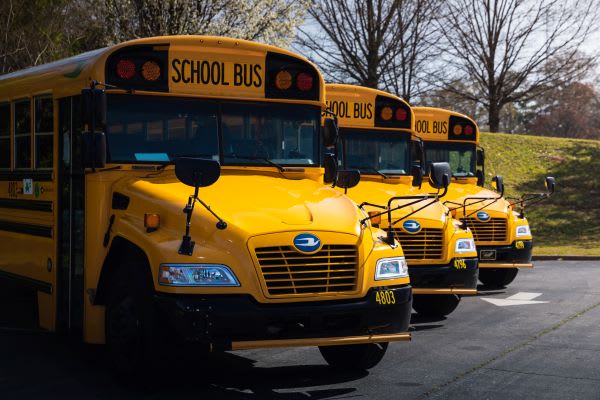
The school bus used in the deployment demonstrates how vehicles can communicate with road signs and traffic control devices. This could also open opportunities for use in different public vehicles, such as emergency vehicles and other service equipment. Shown here are three of Fulton County Schools' Blue Bird buses.
Photo courtesy Stephen Avett
John Barrington, director of product planning for Blue Bird, noted in the discussion that this safety technology is more proactive than others designed to prevent stop-arm running and pointed to the project’s “holistic approach.”
“There is an opportunity for this to be used consistently across the country,” he added.
The other partners also see significant opportunities to deploy C-V2X systems nationwide so that vehicle manufacturers, companies that create roadside infrastructure, and local authorities can play a key role in increasing road safety, benefiting schoolchildren in particular.
Additionally, vehicles with built-in infrastructure, such as the Blue Bird school bus used in this deployment, demonstrate how vehicles can communicate with road signs and traffic control devices. This also opens opportunities for use in different public vehicles, such as emergency vehicles and other service equipment.
Using algorithms developed by Audi and the Silicon Valley-based Volkswagen Group Innovation and Engineering Center California, technical teams from the partners can evaluate optimal warning times and distances for C-V2X to function to safely augment the driving experience, according to Audi. Using direct vehicle-to-vehicle or vehicle-to-infrastructure C-V2X communication, a vehicle can pick up a basic safety message every 100 milliseconds, taking topography, time of day for school zones and indirect cell tower communications into consideration as well.
This technology can supplement cameras and sensors to read the road, making it possible for truly automated driving to no longer rely on visible vehicles and road markings to help drivers move safely down the road. C-V2X provides an accelerated potential for this future, supplementing communications with cameras and sensors and allowing for the potential to help make drivers and vulnerable road users safer through technology.
More Safety
2 Killed, Dozens Injured in Florida School Bus Crash
A multi-vehicle collision caused a Polk County school bus carrying 37 students to overturn on its way to Winter Haven High School.
Read More →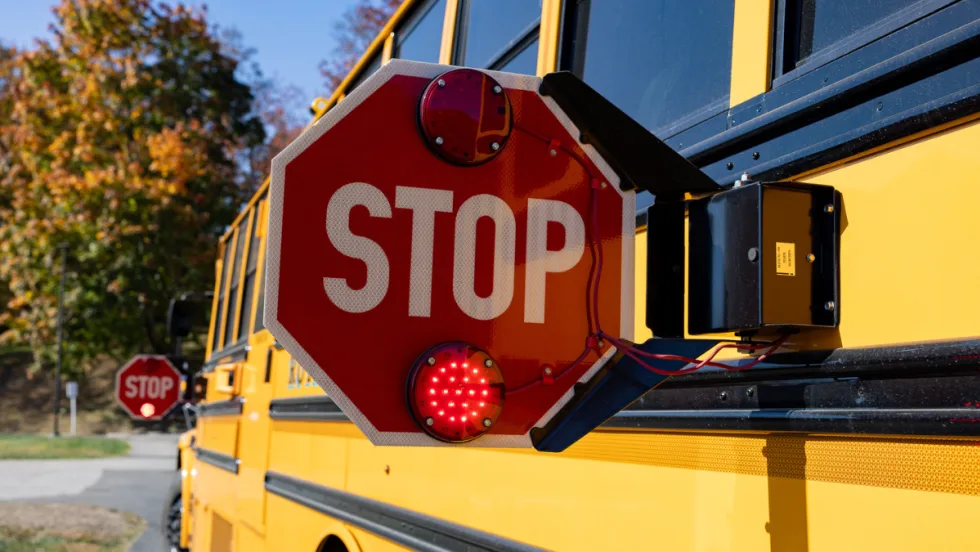
Illegal School Bus Passing Drops 24% in New York Districts
With fewer than 5% of citations involving repeat offenders, Westchester County officials said enforcement, education, and community partnerships are helping change driver behavior.
Read More →
School's Back. Here's What Happened to Traffic, Speeding & Distraction
What happens to traffic when school resumes? New data analysis examines changes in distracted driving, congestion, and speeding around schools.
Read More →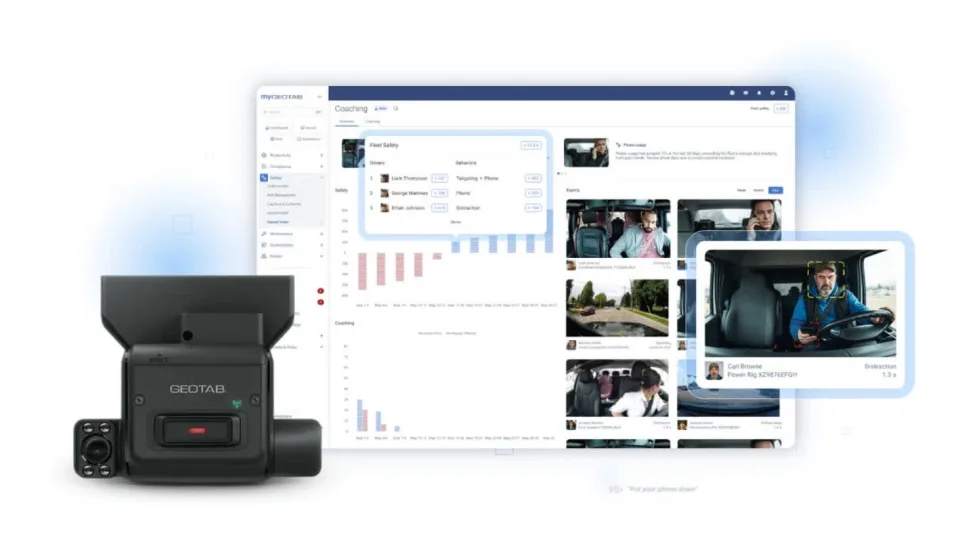
Geotab Expands Fleet Safety Tools With Video Coaching, Risk Insights
New safety and video capabilities aim to help fleet managers assess risk, support drivers, and take targeted action through video coaching, red-light violation detection, and more.
Read More →
How to Build a Better School Bus Driver Training Program
Is it time to strengthen your driver training? Here’s how to pick the right talent and improve recruitment, retention, and safety. This video is brought to you by IC Bus.
Read More →
Recent School Bus Accidents Leave 2 Dead, 2 Injured
Four school bus crashes in Florida, Illinois, and Georgia highlight risks in transportation lots, at bus stops, and during student loading and unloading.
Read More →
When Every Second Matters, Clarity Keeps Routes Moving
From routine delays to urgent incidents, strong communication practices help drivers, dispatchers, schools, and families respond with confidence.
Read More →
What Happens When a School Bus Catches Fire — and What Can Help
School bus fires are rare but can be devastating. Learn how advances in fire suppression and asset protection help fleets detect fires earlier, reduce damage, and improve safety.
Read More →
Geotab Launches Tool to Help Fleets Investigate Road Incidents
Geotab Investigations combines telematics data, video, documents, and other evidence to help fleets reconstruct incidents, resolve claims, and determine what happened.
Read More →
Texas Sixth Grader Wins 2026 National School Bus Safety Poster Contest
Sai Darshana Yekolu of Moseley Middle School in Prosper, Texas, was named the newest winner for her artwork, bringing the theme of “Safe Rides, Everyday Heroes” to life.
Read More →