




Related - PHOTOS: Texas District Builds New Transportation Center
Arizona District Transitions to New School Bus Facility
The Chandler Unified School District #80 transportation team’s new 35,000-square-foot facility features five new vehicle lifts, 16 service bays, and a 1,400 square-foot parts department.

Nicole Schlosser・Former Executive Editor
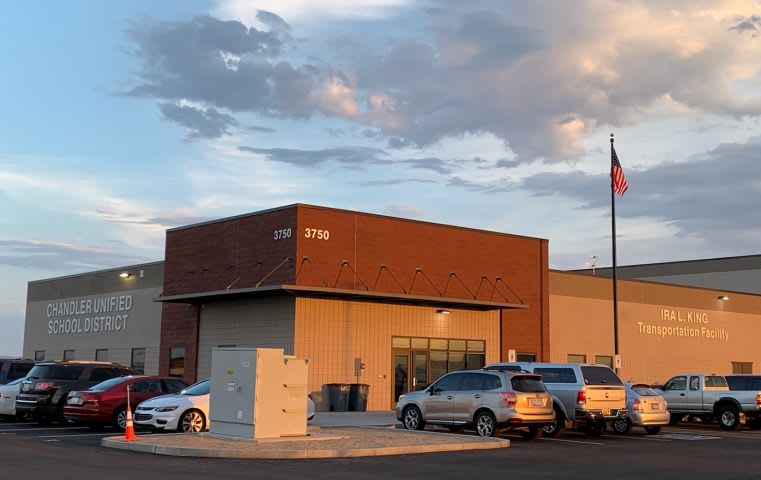
The Chandler Unified School District #80 transportation team’s new 35,000-square-foot facility features five new vehicle lifts, 16 service bays, and a 1,400 square-foot parts department. Photo courtesy Chandler Unified School District #80
4 min to read
The Chandler Unified School District #80 transportation team’s new 35,000-square-foot facility features five new vehicle lifts, 16 service bays, and a 1,400 square-foot parts department. Photo courtesy Chandler Unified School District #80
CHANDLER, Ariz. — A district here recently underwent a major transition to a new transportation facility featuring significant upgrades, including nearly all new equipment, about double the space in one location, and changes that better accommodate the desert heat.
The Chandler Unified School District #80 transportation team quickly moved its operations from three separate locations into the Ira L. King facility, a new 35,000-square-foot building on July 22, just in time for the new school year — which started the following day.
It was no small undertaking, said David Thiele, the district’s fleet supervisor, who handled a large share of the planning process and new facility design.
“We had to move 280 buses in one day and operate off of picnic tables that first week,” he added. “It was impressive what our staff accomplished.”
“I was so proud of the group,” added Sandy Brown, the transportation supervisor for the district.
One of the buildings that the team had been operating in is about 20,000 square feet, 60 years old, and has needed updates for about 15 years, Thiele said. Dispatch was located there and the team ran special-needs buses from that site. The second building, where the shop was located, is a high school, and was at one time a vocational school.
“It wasn’t designed for any type of buses or garage,” Thiele said.
The third location was a lot and garage, used primarily for parking.
Transportation staff members needed parking spaces during the 10-plus months it took to build the facility, so Thiele opened a temporary site of about 2.5 acres, which accommodated over 100 buses, along with a mobile washroom and office at the largest of the former locations.
“If we had to work on buses, we had to bring them back to the [location at the] high school, about a mile away,” Thiele said.
Thiele moved three mechanics to the new facility, along with approximately 80 buses, the weekend before school started. More mechanics and some drivers stepped in to help during the first three days of school. The transportation department also formed a team of drivers to clean the old facilities.
Mechanics were finishing bus repairs from over the summer at the old sites for about a month before they were completely resettled in the new facility, Brown said.
The new facility is comprised of 18.5 acres and accommodates 252 drivers, 61 bus attendants, 15 mechanics, and several office staff members, said Steve Hewitt, the director of transportation and community education for the district.
Additionally, 90% of the equipment is new, Thiele said. The facility features five 40,000-pound vehicle lifts, four of which are portable; a 1,400 square-foot parts department; and 16 bays, with two designated just for service and an engine wash bay. Thiele designed harnesses that are placed above the bays for mechanics to work on the buses’ rooftop air-conditioning units.
The bays have 20-foot-high ceilings, eight swamp coolers and eight fans to combat the Arizona heat, as well as eight heaters for the desert’s cool mornings and evenings.
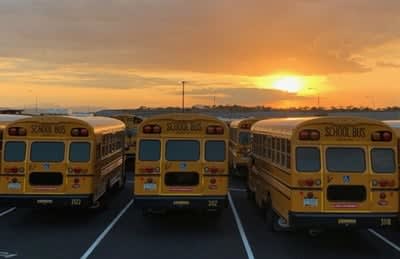
The parking lot at the new facility has 340 spaces. Photo courtesy Chandler Unified School District #80
To determine the new facility’s design, Hewitt, Thiele, and other transportation staff members as well as the builders visited six other transportation departments and city transportation departments, as well as a couple of school bus dealerships, some of which were new, and found out about what worked for them.
Brown and Thiele advise other pupil transporters who are transitioning to a new facility to ensure they have a plan in place in advance for parking lot spots and entrance and exits, and to consider the size of their department and the space needed for training, meetings, and visitors.
A need for a new bus facility arose as the district has added schools in response to increasing enrollment in recent years, Brown said. The district is made up of 44 schools and two more are being built over the next few years.
One hiccup in the transition that has since been worked out, Brown said, is establishing a system for parking buses in the new lot, which has 340 spaces.
“The drivers are working out whether to park nose-to-nose or tail-to-tail in the new facility since they parked differently at each of the old facilities,” Brown explained.
The transportation team put together a committee to finalize a parking plan, she added.
Meanwhile, mechanics from each of the three old sites now get to work together since there is enough room to do so in the new building.
Moreover, Hewitt said, having all staff members under one roof will strengthen the team.
"It will make us more consistent, safer, and [able to provide] better customer service," he added.
“We are all very excited to be together in this beautiful facility,” Brown said.
More Management

How to Build a Better Driver Training Program
Ready to boost up your school bus instructor training? Here’s how to pick the right talent and improve recruitment, retention, and safety.
Read More →
CALSTART and Forth Combine to Form Catalyst Mobility
The new name represents a renewed vision for the nonprofit focused on advancing clean, equitable, and affordable transportation solutions that move people and goods.
Read More →
What Makes a Great School Bus Driver Trainer?
Choosing the right school bus driver trainer takes more than experience. Learn six keys to selecting and developing trainers and evaluating program effectiveness.
Read More →


School Bus Contractors Expand Through New Deals, Acquisitions & Partnerships
STA's Canadian division acquires Ontario-based G&L Stevenson Transport while Durham School Services adds a new district contract in California, First Student adds a New Jersey contract, and Minnesota Coaches acquires Halo Transportation.
Read More →
Logan Bus Company Rolls Out AI Phone System for NYC School Bus Families
A summer pilot found that AI agents could handle most routine calls, freeing up time for customer service staff to focus on emergencies and complex family concerns.
Read More →
From Intent to Impact: What I Learned About Leadership from TAPT
A Texas transportation supervisor shares lessons on self-awareness, accountability, managing stress and building trust — and why investing in leadership development matters at every stage of your career.
Read More →
NAPT Names 2026 Award Recipients, Hall of Fame Inductee
Who earned national recognition for their work in student transportation? This year, NAPT named five recipients of its 2026 awards for service, safety, and leadership, plus its newest Hall of Famer.
Read More →
Sponsored•September 2, 2026
2026 State of Student Transportation Report
Driver shortages. Rising costs. Growing safety expectations. More data, but not enough time to act on it. The 2026 State of Student Transportation Report reveals what transportation leaders say is putting the most pressure on their operations—and where they’re investing next. See how your priorities compare.
Read More →
How to De-Escalate an Angry Person: 5 Steps for Handling Workplace Conflict
What makes emotions run high, and how should you handle an angry colleague or parent? Follow these steps for staying calm, listening, showing empathy, and resolving conflict.
Read More →
Sponsored•September 1, 2026
What Readiness Looks Like This School Year
Learn about the challenges shaping the 2026–2027 school year, from persistent driver shortages and budget pressure to technology and readiness gaps. See how school districts are responding and adapting in Zonar’s 2026 Back-to-School Readiness Report.
Read More →