




After Hurricane Irma Hits, Florida Schools Work to Get Back in Business
The storm caused widespread power outages, wind damage, and flooding in Florida and beyond. School buses pitched in for evacuations and braced for impact.

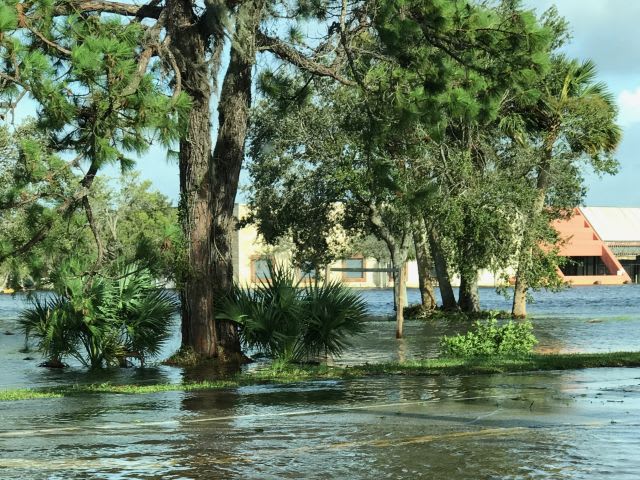
Hurricane Irma flooded St. Lucie Public Schools’ central office (seen in the background), which is expected to be uninhabitable for months.
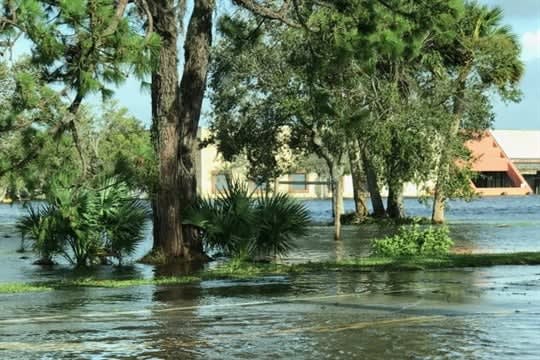
Hurricane Irma flooded St. Lucie Public Schools’ central office (seen in the background), which is expected to be uninhabitable for months.
School districts in Florida are working to get running again after Hurricane Irma caused widespread power outages, wind damage, and flooding.
Schools closed last week to prepare for the storm, which made landfall in south Florida on Sunday and swept through the state.
As was the case in Texas during Hurricane Harvey, school bus operations pitched in for Hurricane Irma evacuations in Florida.
At St. Lucie Public Schools on the Atlantic coast, several neighborhoods were flooded and became uninhabitable. That included the district’s central office (see photo above). A dozen of the district’s schools temporarily served as storm shelters, and the transportation department helped in a number of ways before and during the emergency.
“Transportation provided a call center for evacuees to call for help when the county system was overwhelmed,” said Don Carter, director of transportation for St. Lucie Public Schools, “and buses transported evacuees to shelters, including special-needs clients as well as pets to the pet-friendly shelter.”
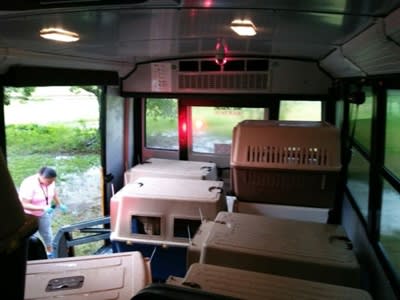
St. Lucie Public Schools’ buses transported people as well as pets (seen here in kennels) to storm shelters.
St. Lucie Public Schools hopes to reopen on Monday. At one point, more than half of the district’s 38 schools were without electricity, but Carter said on Wednesday that the situation has improved and all of the schools are expected to have power restored by this weekend.
While the storm shelters at the schools have been closed, Carter noted, “We're feeding students at select schools for the next couple of days for any that want to come eat.”
Across the state on the Gulf Coast, Hillsborough County Public Schools was also closed this week, with plans to reopen on Monday. The Tampa-based district’s transportation department has also been helping to move people before and after Hurricane Irma.
“We assisted with about 50 buses for evacuation of special-needs residents in the state prior to the storm and are now working with emergency management trying to get them back home,” Jim Beekman, Hillsborough’s general manager of transportation services, said on Tuesday.
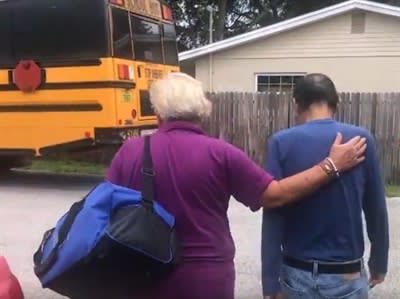
Hillsborough County (Fla.) Public Schools bus drivers helped evacuate residents before Hurricane Irma hit. Screenshot from Hillsborough County Public Schools video
(Hear Hillsborough school bus drivers discuss their experience evacuating residents in this video.)
The district’s transportation department takes part in various emergency response workshops and drills throughout the year. Those include reviewing evacuation procedures with county and municipal police and fire departments.
In emergencies like Hurricane Irma, Hillsborough County Public Schools supports county governmental agencies by dispatching school buses to transport residents in evacuation zones that transit buses might not be able to reach. When an emergency operations center (EOC) is activated, a dedicated transportation staff member is assigned to the EOC throughout the crisis.
This infographic from Hillsborough County Public Schools shows the district’s preparations for Hurricane Irma by the numbers. (Story continues below.)
We're continuing our response to #HurricaneIrma. Thank you to every member of the Hillsborough Schools team for your dedication! #HCPSproudpic.twitter.com/ggNAzjCD81
— Hillsborough Schools (@HillsboroughSch) September 10, 2017
Brevard Public Schools on the Atlantic Coast also made extensive preparations for Hurricane Irma. For the district's 500 school buses, that included installing hurricane storm locks on service doors and securing roof hatches, windows, stop arms, and crossing arms. The transportation team also positioned buses as much as possible so that the forecast 100 mph winds would run parallel to them.
"A sustained 100 mph wind with higher gusts hitting a bus directly from the side can easily roll it over," said Arby Creach, transportation director for Brevard Public Schools.
The prep work paid off. The district's bus garages and parking compounds sustained only minor damage, mostly from water and debris, and the fleet stayed intact.
"Our buses made it through without any apparent damage," Creach said. "We will know more as our staff members return to their homes and we begin the preparation to start school on Monday the 18th. I am convinced that the extra staff effort and long hours of preparation made the difference."
Hurricane Irma also made its way into states north of Florida. In Georgia, for example, schools in Atlanta closed from Monday to Wednesday. Many schools lost power earlier in the week but are now back up and running.
John Franklin, executive director of transportation for Atlanta Public Schools, said that the storm didn’t damage any of the district’s buses, but it caused other obstacles for his operation as they worked to get back in business on Thursday.
“We had lots of employees with no power and trees down, prohibiting their return to work,” Franklin said. “Transportation did have to get out and review downed trees, inoperable traffic lights, and impassable roads as part of our preparation.”
More Safety

Geotab Expands Fleet Safety Tools With Video Coaching, Risk Insights
New safety and video capabilities aim to help fleet managers assess risk, support drivers, and take targeted action through video coaching, red-light violation detection, and more.
Read More →
How to Build a Better School Bus Driver Training Program
Is it time to strengthen your driver training? Here’s how to pick the right talent and improve recruitment, retention, and safety. This video is brought to you by IC Bus.
Read More →
Recent School Bus Accidents Leave 2 Dead, 2 Injured
Four school bus crashes in Florida, Illinois, and Georgia highlight risks in transportation lots, at bus stops, and during student loading and unloading.
Read More →

When Every Second Matters, Clarity Keeps Routes Moving
From routine delays to urgent incidents, strong communication practices help drivers, dispatchers, schools, and families respond with confidence.
Read More →
What Happens When a School Bus Catches Fire — and What Can Help
School bus fires are rare but can be devastating. Learn how advances in fire suppression and asset protection help fleets detect fires earlier, reduce damage, and improve safety.
Read More →
Geotab Launches Tool to Help Fleets Investigate Road Incidents
Geotab Investigations combines telematics data, video, documents, and other evidence to help fleets reconstruct incidents, resolve claims, and determine what happened.
Read More →
Texas Sixth Grader Wins 2026 National School Bus Safety Poster Contest
Sai Darshana Yekolu of Moseley Middle School in Prosper, Texas, was named the newest winner for her artwork, bringing the theme of “Safe Rides, Everyday Heroes” to life.
Read More →
Doing More With Less: How Transportation Directors Can Prioritize Safety Amid Budget Uncertainty
With diesel prices soaring and nearly one-third of transportation directors expecting budget cuts, maintaining student safety has never been more challenging. Download this guide to learn how leading districts are prioritizing risk, funding critical safety technology, and building stronger budget cases with data.
Read More →
Walton County Schools Adds Gatekeeper Stop-Arm Enforcement System
The Florida district will deploy Gatekeeper’s updated Student Protector technology, which now incorporates AI to improve video evidence.
Read More →
How To Build a More Secure School Bus Yard During and After Hours
As thefts and overnight security threats continue, school transportation leaders are combining stronger operational practices with AI-enabled surveillance to better protect buses, facilities, and staff.
Read More →