




AAA: Texting while driving doubles after Calif. ban
Texting and use of devices has jumped to 2.7 percent of drivers at any time, with young women the most frequent violators. Current penalties are inadequate to deter the behavior, officials say.

LOS ANGELES —Texting behind the wheel appears to be about double where it was before California's texting ban was implemented, according to the Automobile Club of Southern California's latest roadside survey of drivers.
Some 19 months after the texting ban went into effect, the level of texting and use of other devices such as smart phones has jumped to 2.7 percent of drivers at any time — about double where it was before California's ban went into effect in January 2009. However, the level of hand-held cell phone use on the road at seven locations in Southern California has held constant at 3.7 percent.
These results indicate that California needs to do more to combat the growing traffic safety problem caused by texting and driving, according to the Auto Club.
"Stronger penalties, more driver awareness and education, and heightened enforcement are needed to significantly reduce one of the most dangerous activities a driver can do while on the road," Auto Club Government Affairs Manager Steve Finnegan said.
"The rise in texting indicates that the growth of texting overall has outpaced current enforcement efforts and overcome the current law, which should be strengthened to enhance safety," he added.
Current penalties on the books for texting while driving in California are inadequate to deter the behavior, Finnegan said. A motorist caught texting while driving is now assessed a $20 base fine for a first offense, and, unlike other moving violations, no "point" is placed on the motorist's driving record.
A bill aimed at strengthening the texting-while-driving ban by increasing penalties, including adding a point to driving records, was recently defeated in the Legislature. Finnegan said the Auto Club, which supported the bill, believes the Legislature should reconsider and enact it next year to deter drivers from texting.
"Studies have established that imposing points on driving records is a very effective deterrent to hazardous driving," the Auto Club's senior researcher and study author Steven Bloch, Ph.D., said.
According to the National Highway Traffic Safety Administration, nearly 6,000 people died in 2008 in crashes involving a distracted driver and an additional 515,000 people were injured. A recent analysis by AAA and Seventeen magazine found most teen drivers today (84 percent) are aware of the risks of distracted driving, yet 86 percent admit doing it anyway.
AAA is combating distracted driving through education and by working with legislators to support strong state texting bans across the country. AAA, Seventeen and the U.S. Dept. of Transportation have teamed to promote Seventeen's "Two-Second Turnoff Day," a Friday, Sept. 17, nationwide event encouraging all drivers to "take two seconds" to turn off their cell phone before getting behind the wheel.
Issuing more citations is another approach. However, it's difficult for law enforcement agencies to cite texting motorists since drivers typically hold devices in their lap.
Because of this challenge, the California Highway Patrol (CHP) reports issuing an average of only about 200 citations per month since the texting ban went into effect. By comparison, over the past year, the CHP issued about 12,500 hand-held cell phone citations each month.
Who are the biggest violators in the Auto Club driver survey? Among texters, young women were the most frequent group observed texting during the study (4.3 percent texting at any time), while young men's rate of texting stood at 2.1 percent. By contrast, use of smart phones and other hand-held technology (iPods, etc.) was more the domain of young men — 3.1 percent versus 1.6 percent for young women.
The rise in texting while driving mirrors the dramatic growth in mobile communications device use overall. Text messaging is increasing rapidly and multimedia messaging (messages containing an image or video) more than doubled from 2008 to 2009. According to the wireless industry trade association, CTIA, text messaging is enormously popular, with more than 822 billion text messages sent and received on carriers' networks during the last half of 2009 — amounting to almost 5 billion per day at the end of last year. U.S consumers are expected to buy 30 percent more smart phones in 2010 than in 2009.
Various studies have shown that texting while driving increases the risk of a crash from eight to 23 times.
Before and after the ban, the Auto Club has been regularly monitoring cell phone and other device use. Until now, results had been promising, showing that California's laws were effective in reducing use, Bloch said. Researchers call texting a "perfect storm" of risky driving activity because drivers take their hands off the steering wheel and their eyes and minds are off the road.
California became the nation's seventh state to ban texting while driving in January 2009. Before the texting law took effect, three Auto Club surveys conducted in mid-to-late 2008 showed consistently that about 1.4 percent of motorists were texting at any time. Two surveys conducted shortly after the texting ban (May and July 2009) showed that texting (or manipulating electronic devices) had dropped about 70 percent, to about 0.5 percent of all drivers. The Club's spring survey, conducted in late March and early April 2010, showed that texting had more than doubled from the earlier studies — to 1.1 percent — but was still slightly below pre-law levels.
The Auto Club in-vehicle cell phone and texting surveys were each conducted using systematic random samples of about 4,000 vehicles that were passing by seven roadside sites in Orange County. Surveys were conducted during: June 2008, prior to the cell phone law first taking effect; July, August and October 2008; May and July 2009; March-April 2010 and July 2010. Observational surveys were conducted in morning, early afternoon and evening commutes on freeway entrances and exits, and urban, suburban and small city roadways.
More Safety
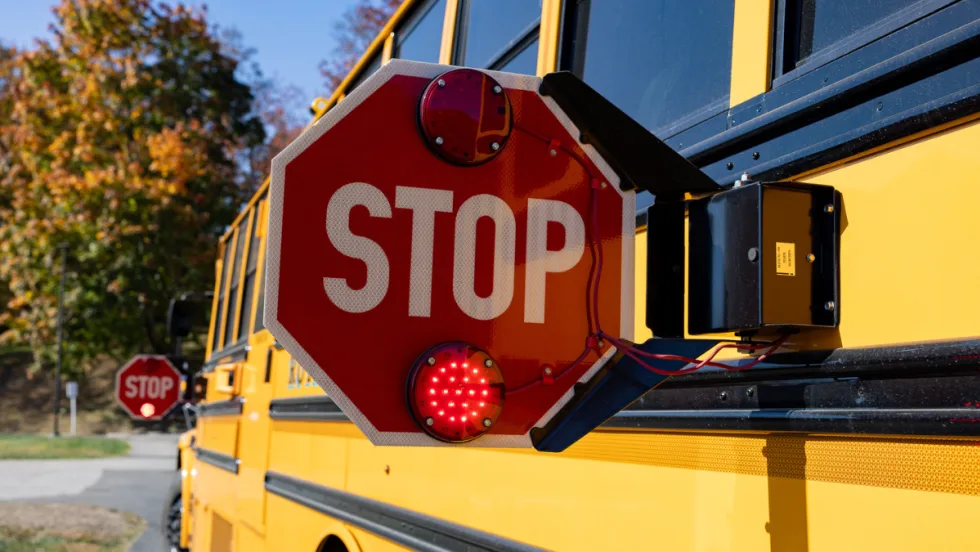
Illegal School Bus Passing Drops 24% in New York Districts
With fewer than 5% of citations involving repeat offenders, Westchester County officials said enforcement, education, and community partnerships are helping change driver behavior.
Read More →
School's Back. Here's What Happened to Traffic, Speeding & Distraction
What happens to traffic when school resumes? New data analysis examines changes in distracted driving, congestion, and speeding around schools.
Read More →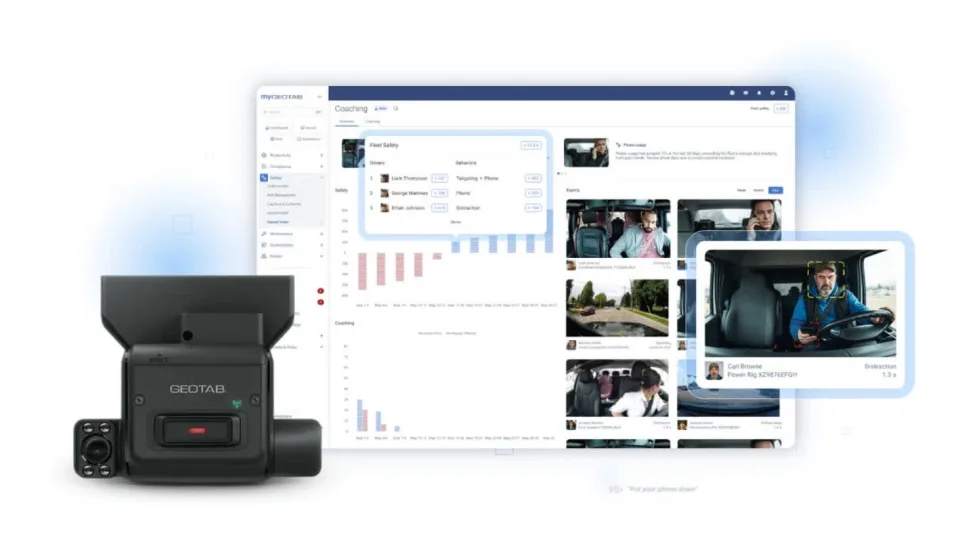
Geotab Expands Fleet Safety Tools With Video Coaching, Risk Insights
New safety and video capabilities aim to help fleet managers assess risk, support drivers, and take targeted action through video coaching, red-light violation detection, and more.
Read More →

How to Build a Better School Bus Driver Training Program
Is it time to strengthen your driver training? Here’s how to pick the right talent and improve recruitment, retention, and safety. This video is brought to you by IC Bus.
Read More →
Recent School Bus Accidents Leave 2 Dead, 2 Injured
Four school bus crashes in Florida, Illinois, and Georgia highlight risks in transportation lots, at bus stops, and during student loading and unloading.
Read More →
When Every Second Matters, Clarity Keeps Routes Moving
From routine delays to urgent incidents, strong communication practices help drivers, dispatchers, schools, and families respond with confidence.
Read More →
What Happens When a School Bus Catches Fire — and What Can Help
School bus fires are rare but can be devastating. Learn how advances in fire suppression and asset protection help fleets detect fires earlier, reduce damage, and improve safety.
Read More →
Geotab Launches Tool to Help Fleets Investigate Road Incidents
Geotab Investigations combines telematics data, video, documents, and other evidence to help fleets reconstruct incidents, resolve claims, and determine what happened.
Read More →
Texas Sixth Grader Wins 2026 National School Bus Safety Poster Contest
Sai Darshana Yekolu of Moseley Middle School in Prosper, Texas, was named the newest winner for her artwork, bringing the theme of “Safe Rides, Everyday Heroes” to life.
Read More →
Doing More With Less: How Transportation Directors Can Prioritize Safety Amid Budget Uncertainty
With diesel prices soaring and nearly one-third of transportation directors expecting budget cuts, maintaining student safety has never been more challenging. Download this guide to learn how leading districts are prioritizing risk, funding critical safety technology, and building stronger budget cases with data.
Read More →