




3 steps to bolster safety for school motorcoach trips
North Carolina state pupil transportation director Derek Graham reports on FMCSA's recent Bus Safety Roundtable and shares a three-step approach that schools and school districts can use to improve student safety when chartering motorcoaches for school trips.

Derek Graham is North Carolina’s state director of pupil transportation and an SBF editorial advisory board member.
On Dec. 6, I attended the Bus Safety Roundtable hosted by Anne Ferro, administrator of the Federal Motor Carrier Safety Administration (FMCSA).
This was a high priority meeting for FMCSA, as evidenced by the presence of U.S. Transportation Secretary Anthony Foxx, who put his personal spin on the overall importance of student safety when traveling on motorcoaches.
The meeting took me back 13 years, to when I was invited to talk about bus safety with our Motor Carrier Enforcement Section in North Carolina. When asked how our schools go about selecting motorcoaches for activity trips, I responded with a blank stare. I had no clue! It turned out that, in way too many situations, a school principal or teacher simply shopped for pricing in the yellow pages.
We’ve come a long way in that regard in our state. Now, State Board of Education policy requires each district to maintain a list of approved motorcoach carriers from which schools must choose when booking these trips.
And we’ve come a long way nationally, as well, recognizing that the same kids we work so hard to protect on the yellow bus are the ones riding on motorcoaches, and they deserve a safe trip.
But, as Barry Sudduth, Region 3 director for the National Association for Pupil Transportation (NAPT), reported at the roundtable, there are still school districts making uninformed choices of motorcoach companies for school trips. (Barry reported a wide spectrum of 250 responses to an NAPT survey, ranging from uninformed to very informed on this subject.)
Here’s a three-step approach that can work well for schools and school districts to improve student safety on school trips.
1. Maintain an approved list of safe motorcoach companies. The FMCSA resources listed below can be used to compile this list by the district or its consultant.
2. Establish a contract for a trip ensuring the proper number of drivers and buses. The trip organizer needs to understand the FMCSA hours-of-service requirement. A driver may not exceed 15 hours on duty, 10 hours driving, without an eight-hour period of rest.
3. Day-of-trip validation. The trip organizer should check the driver’s CDL and medical card and ask the driver to demonstrate that the bus has been inspected, including lights and emergency exits.
At the roundtable, FMCSA showed us several resources that are available to schools and school districts, including a new mobile app with which the safety status of a motor carrier can be checked by keying in the Department of Transportation number from the side of the vehicle.
I encourage you to share this information as we work together to ensure student safety, regardless of their mode of travel.
• FMCSA bus safety links
• North Carolina guidelines
Other recent news related to motorcoach safety:
• NHTSA issues final rule requiring seat belts on motorcoaches
More Management

Zum Secures Continued Financing Support for School Bus Expansion
Generate Private Credit has financed approximately $75 million in school bus deployments across three states, supporting more than 500 buses as Zum expands across the county.
Read More →
Beyond Discipline: A Different Approach to Student Behavior on the Bus
After implementing a dean of students program in Oregon, North Clackamas is seeing positive improvements. Here’s how it worked. The Route is brought to you by IC Bus.
Read More →
A Dean of Transportation's Different Approach to Student Behavior on the School Bus
After implementing a dean of students program in Oregon, North Clackamas is seeing positive improvements on the bus. Here’s how it worked.
Read More →

Inside NAPT ACTS 2026: Highlights from Louisville
From federal updates and student behavior strategies to new school bus technology and industry awards, see highlights from NAPT ACTS 2026 in Louisville.
Read More →
Meet the 2025 School Bus Driver Hero Winner: Annette Brown
We caught up with Wa-Nee Community Schools' Annette Brown on site at SBFX, where she was named the 2026 School Bus Driver Hero Award winner. Hear about her reaction, what she loves most about being a school bus driver, and more!
Read More →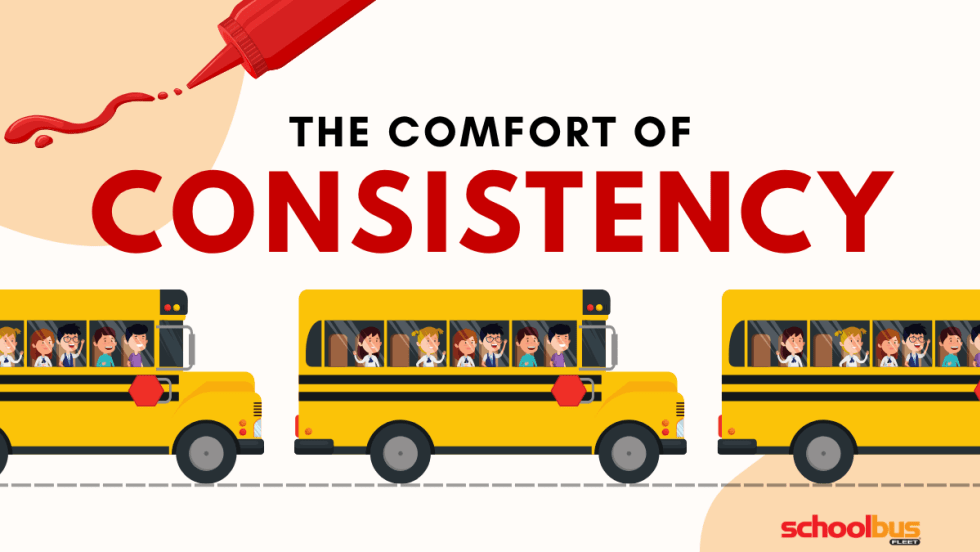
Predictability Is Like Ketchup (According to 6-Year-Olds)
To students, a different school bus can feel like a full-blown crisis. One driver reflects on why familiar routines, showing up on time, and being reliably boring matter more than we think.
Read More →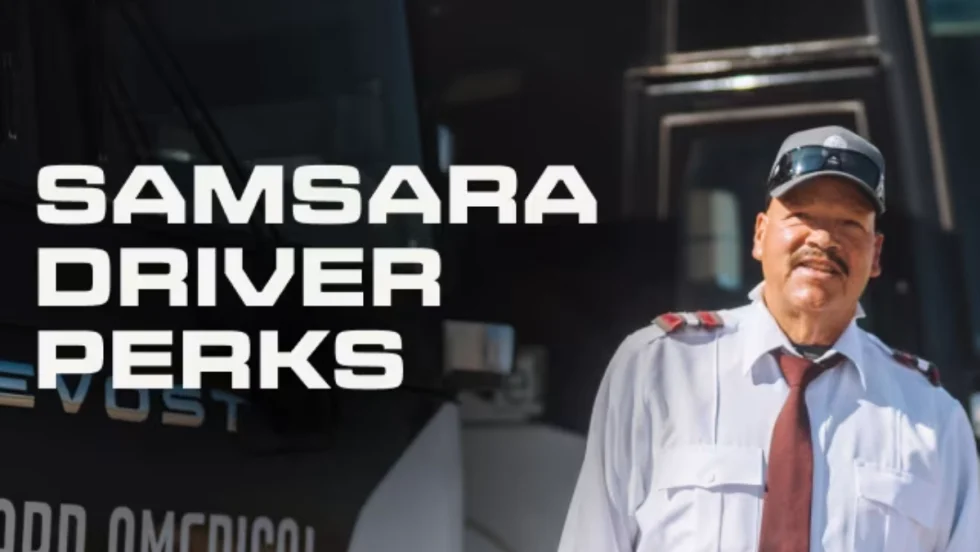
Samsara Launches Free Driver Rewards Program
The new Driver Perks program gives eligible professional drivers access to discounts and offers without adding a cost for participating fleets.
Read More →
How Tax-Exempt Municipal Leases Can Help Finance School Buses
Let’s explore school bus financing options, including municipal leases, vendor payable accounts, and balloon payments, and how they can help stretch fleet budgets.
Read More →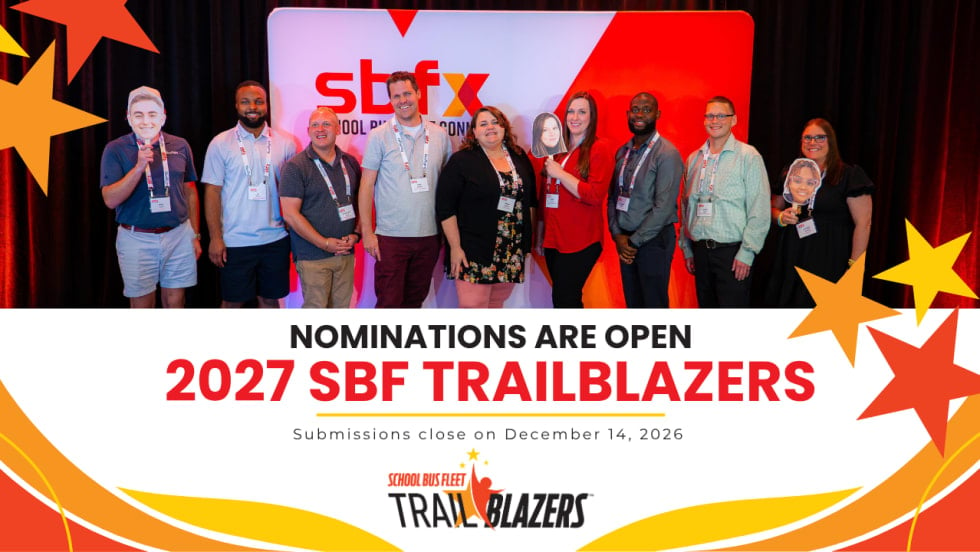
Nominate Rising School Transportation Pros Under 40!
We’re searching for the next generation of leaders making an impact across the K-12 student transportation industry to recognize as SBF’s 2027 Trailblazers. Nominations are open now!
Read More →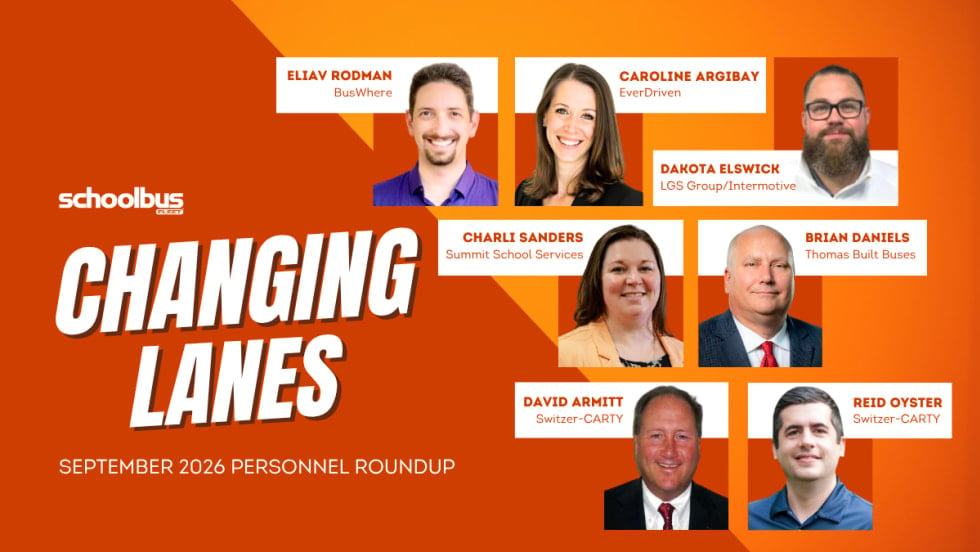
Changing Lanes: BusWhere, EverDriven, InterMotive, Summit School Services, Switzer-Carty & Thomas Built Buses
Check out who's been hired, promoted, and appointed to leadership positions at various school transportation suppliers, contractors, and manufacturers.
Read More →