




Related: NTSB Calls for New Safety, Training Standards Based on Fatal Iowa School Bus Fire
2 New Members Confirmed for National Transportation Safety Board
The confirmations bring the investigative agency back to a full board of five members for the first time in nearly a year.

Nicole Schlosser・Former Executive Editor
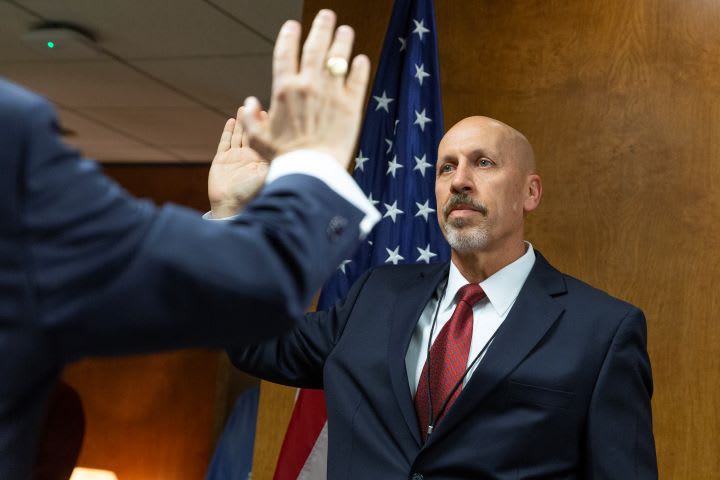
The Senate recently confirmed two new members - Michael Graham, who is shown being sworn in here on Jan. 3, and Thomas Chapman - for the National Transportation Safety Board. Photo courtesy James Anderson/NTSB
3 min to read
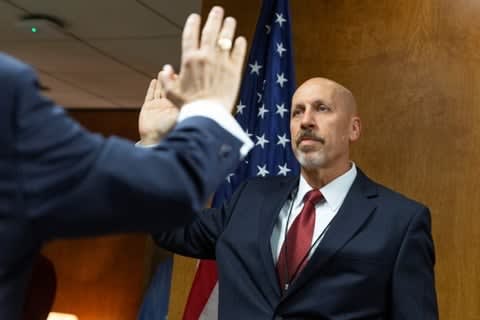
The Senate recently confirmed two new members - Michael Graham, who is shown being sworn in here on Jan. 3, and Thomas Chapman - for the National Transportation Safety Board. Photo courtesy James Anderson/NTSB
This story was updated on Jan. 6 with information on when Michael Graham and Thomas Chapman were sworn into their positions on the NTSB board.
WASHINGTON, D.C. — The Senate recently confirmed two new members for the National Transportation Safety Board (NTSB), bringing the investigative agency back to a full board of five members for the first time in nearly a year.
The NTSB will welcome aboard Michael Graham and Thomas Chapman as its newest board members, according to a news release from the agency. The NTSB will have a full board for the first time since Feb. 15, 2019.
Graham was sworn in on Jan. 3 by NTSB Chairman Robert Sumwalt, and Chapman was sworn in on Jan. 6. President Donald Trump nominated Graham and Chapman and the Senate voted to confirm them on Dec. 19. Graham’s term as a board member is through 2025, and Chapman’s term runs through the end of 2023.
Graham previously served as the director of Flight Operations Safety, Security, and Standardization for Textron Aviation Inc., overseeing its safety management system, global security, and air safety investigations. Graham is the former chairman of the Air Charter Safety Foundation, leader of the single pilot safety working group of the National Business Aviation Association’s Safety Committee and member of the general aviation information analysis team.
Graham’s career began in the U.S. Navy as a naval aviator flying A-7s and F/A-18s. He later worked as a F/A-18 aircrew instructor and avionics integration engineer for Boeing/McDonnell Douglas and joined Cessna in 1997 as a demonstration pilot. Graham is a certified airline transport pilot with 10,000 flight hours and is type-rated in six different citation models. Graham earned a Bachelor of Science in Mechanical Engineering from the University of New Mexico.
"It will be a privilege to be working with the premier team of technical and dedicated transportation safety experts of the NTSB," Graham said.
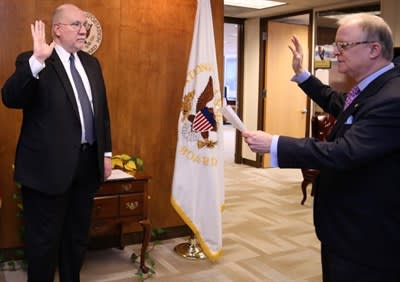
Thomas Chapman, shown left, was sworn in by NTSB Chairman Robert Sumwalt on Jan. 6. Photo courtesy Leah Walton/NTSB
Chapman previously served as minority counsel to the Senate Commerce Subcommittee on Aviation and Space and has nearly four decades of experience in government, legislative, and regulatory affairs. He was involved in the recent bipartisan effort to pass comprehensive legislation reauthorizing the Federal Aviation Administration, Transportation Security Administration, and the NTSB.
Chapman previously served as US Airways’ vice president for government affairs, legislative counsel for Southwest Airlines, and as senior vice president for government and technical affairs for the Aircraft Owners and Pilots Association. Chapman is a graduate of the American University Washington, College of Law and earned a Bachelor of Fine Arts from C.W. Post College.
"The NTSB’s people are renowned for their skill and technical expertise,” Chapman said. “I am honored to join such a dedicated team and look forward to contributing to the important work of the agency."
The NTSB has been functioning with three board members — Sumwalt, Vice Chairman Bruce Landsberg, and Member Jennifer Homendy — since the departure of member T. Bella Dinh-Zarr in February and Earl Weener in July 2019.
"I am pleased to have our board back to its full complement and I know our work will benefit from the breadth and depth of experience of our two newest members," Sumwalt said.
The NTSB investigates major transportation accidents, including those involving school buses, and issues recommendations created to improve safety. The agency does not have regulatory authority.
More Safety

How to Build a Better School Bus Driver Training Program
Is it time to strengthen your driver training? Here’s how to pick the right talent and improve recruitment, retention, and safety. This video is brought to you by IC Bus.
Read More →
Recent School Bus Accidents Leave 2 Dead, 2 Injured
Four school bus crashes in Florida, Illinois, and Georgia highlight risks in transportation lots, at bus stops, and during student loading and unloading.
Read More →
Sponsored•September 8, 2026
When Every Second Matters, Clarity Keeps Routes Moving
From routine delays to urgent incidents, strong communication practices help drivers, dispatchers, schools, and families respond with confidence.
Read More →

What Happens When a School Bus Catches Fire — and What Can Help
School bus fires are rare but can be devastating. Learn how advances in fire suppression and asset protection help fleets detect fires earlier, reduce damage, and improve safety.
Read More →
Geotab Launches Tool to Help Fleets Investigate Road Incidents
Geotab Investigations combines telematics data, video, documents, and other evidence to help fleets reconstruct incidents, resolve claims, and determine what happened.
Read More →
Texas Sixth Grader Wins 2026 National School Bus Safety Poster Contest
Sai Darshana Yekolu of Moseley Middle School in Prosper, Texas, was named the newest winner for her artwork, bringing the theme of “Safe Rides, Everyday Heroes” to life.
Read More →
Sponsored•August 27, 2026
Doing More With Less: How Transportation Directors Can Prioritize Safety Amid Budget Uncertainty
With diesel prices soaring and nearly one-third of transportation directors expecting budget cuts, maintaining student safety has never been more challenging. Download this guide to learn how leading districts are prioritizing risk, funding critical safety technology, and building stronger budget cases with data.
Read More →
Walton County Schools Adds Gatekeeper Stop-Arm Enforcement System
The Florida district will deploy Gatekeeper’s updated Student Protector technology, which now incorporates AI to improve video evidence.
Read More →
How To Build a More Secure School Bus Yard During and After Hours
As thefts and overnight security threats continue, school transportation leaders are combining stronger operational practices with AI-enabled surveillance to better protect buses, facilities, and staff.
Read More →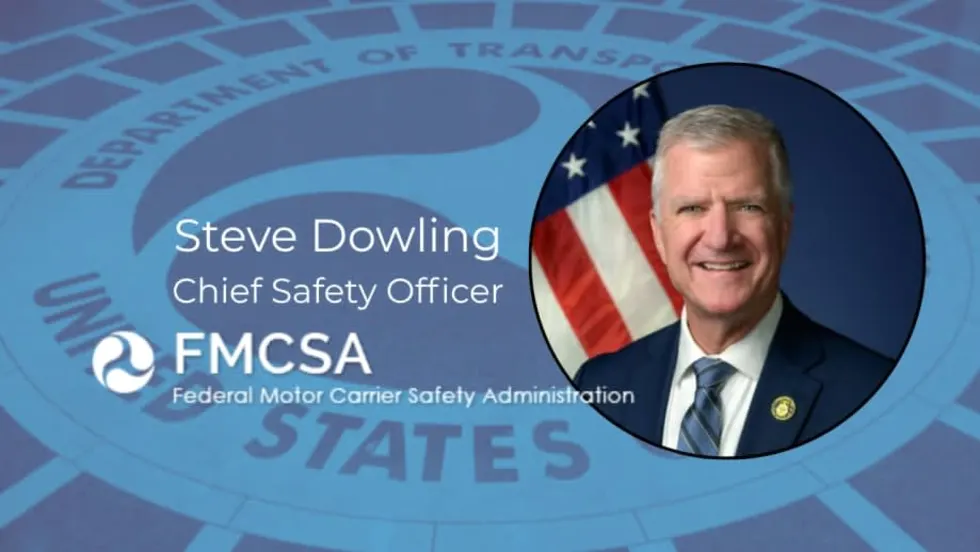
FMCSA Names New Chief Safety Officer: What School Bus Operators Should Know
Steve Dowling is set to lead the federal agency's efforts to advance commercial motor vehicle safety and reduce crashes, fatalities, and injuries on the nation's roadways.
Read More →