




2 New Compressors Offered for Bus Cooling
T/CCI’s new compressors target trends in bus manufacturing, growing demand.

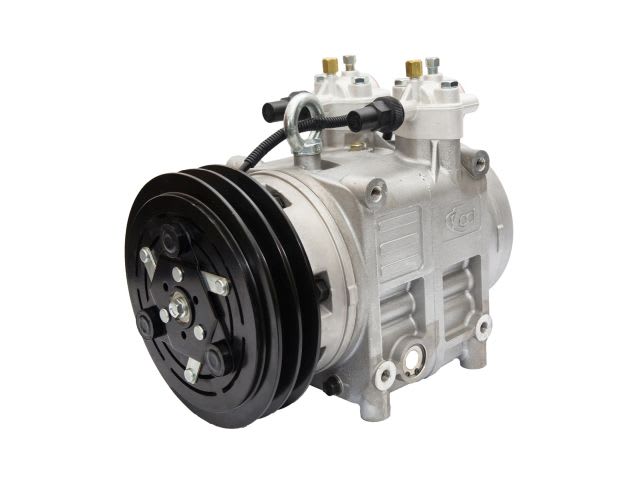
According to T/CCI, the QPS65 compressor’s new, smaller design is tailored to align with industry trends in bus manufacturing.
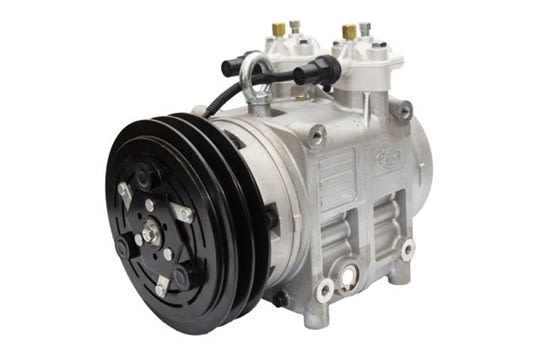
According to T/CCI, the QPS65 compressor’s new, smaller design is tailored to align with industry trends in bus manufacturing.
DECATUR, Ill. — Compressor supplier T/CCI Manufacturing has introduced new cooling technology for the bus market in the U.S. and Canada.
The QPS65 swash plate compressor is suited for buses, transport refrigeration vehicles, and other applications that require large capacity displacement. According to T/CCI, the new, smaller design is tailored to align with industry trends in bus manufacturing, downsizing engine space and the ability to mount traditional compressors.
“The QPS65 is the direct result of industry demand in the market,” T/CCI President Richard Demirjian said. “We have applied 30 years of engineering expertise to develop a durable, lower-cost compressor that provides a smoother, more comfortable ride. We have also allowed for more clutch configurations, resulting in the ability to customize solutions for partners in the U.S., Canada, and around the world.”
The company’s new QP25 compressor is designed to be a versatile solution for school buses and smaller bus applications. The QP25 model offers higher capacity than the QP21 or enhanced 7H15 while being able to fit in the same mounting configurations. According to T/CCI, this provides an immediate, cost-effective solution to customers who need the higher capacity in extreme climatic conditions.
“The demand for buses worldwide is forecast to rise nearly 5% annually through 2021, and the need to provide our OEMs with customized solutions at an affordable cost is higher than ever,” said Dick Ennis, director of engineering. “Both the QPS65 and the QP25 are quality-tested products that have undergone T/CCI’s rigorous validation processes to meet industry-leading performance standards.”
For more information, go to tccimfg.com.
More Maintenance
The Essential Guide to School Bus Maintenance and Student Safety
Your district's buses carry students to school every day. This guide shows how predictive maintenance powered by fleet data helps keep buses reliable, drivers accountable and students safer from the first bell to the last stop.
Read More →
Kerry Brothers Grows Michigan School Bus Repair Network
The acquisition of Downriver Truck and Bus expands Kerry Brothers’ school bus maintenance footprint across southeast Michigan, adding repair capacity, diagnostic resources, and state inspection support.
Read More →
Noregon Introduces CAN Bus Diagnostic Tool, Expands JPRO Features
CAN Mentor and the latest JPRO update aim to simplify vehicle network diagnostics and improve repair efficiency for technicians of all experience levels.
Read More →
Cummins on Smarter, Simpler Engine Innovation
Cummins discusses its first-ever gasoline engine for school buses, EPA 2027, and why bus fleets still want durable, simpler internal combustion options.
Read More →
Report: 72% of Diesel School Buses Now Use Advanced Low-Emission Engines
New data shows advanced low-emission diesel technology continues expanding across school bus fleets, even as electric bus adoption gains momentum.
Read More →
Vampire Tools' CAIMAN 7.5-Inch Multi-Purpose Screw Extractor Long-Nose Pliers with Crimper
Vampire Tools introduced the VAMPLIERS Caiman 7.5-inch multi-purpose pliers, combining screw extraction, cutting, crimping, and gripping functions into a single tool designed for fleet maintenance professionals.
Read More →
How Advanced Diagnostics Helps Bus Fleets Stay Ahead of Repairs
Chat with Noregon’s Kevin Smallhorn at ACT Expo about bus diagnostic tools, telematics integration, CNG maintenance support, and strategies to help reduce downtime and improve uptime.
Read More →
How School Bus Fleets are Getting Ahead of Breakdowns
Don’t let bus downtime wear you down. Here’s how bus operators are shifting from manual processes to AI-powered, data-driven maintenance systems for improved reliability and safety.
Read More →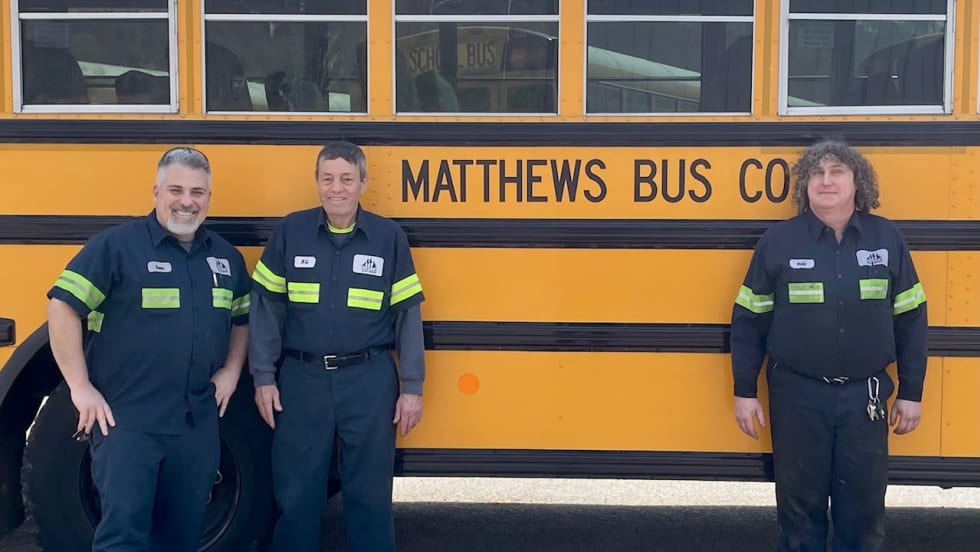
Pennsylvania School Bus Maintenance Team Praised for Dedication to Safety
Matthews Bus Company’s West Jefferson received a letter of commendation from the Pennsylvania State Police for their fleet inspections.
Read More →
From Chaos to Clarity: How School Districts Are Running Leaner Transportation Operations
Covering 38 routes on a Friday afternoon. Buses idling while routes overlap. Parents calling nonstop about late arrivals. Sound familiar? This whitepaper explores how district transportation leaders solved these exact problems — and what measurable results followed.
Read More →