




Why the future of contracting looks bright
A look at effective strategies that some school bus contractors are employing, such as developing new marketing approaches, empowering local managers and establishing a distinct, consistent brand across the company.
I was recently watching CNBC's "Mad Money," hosted by Jim Cramer. Cramer was conducting an extensive interview with Denis Gallagher, chairman of Student Transportation Inc. (STI). The interview motivated me to reflect on the school bus contracting industry and its prospects for the future.
The industry has been reshaped in the last 10 years by the formation of new marketing strategies, technology and different approaches to managing the business and operations — all directed at making the service more efficient and safer for school districts.
Mr. Gallagher mentioned alternative-fuel buses as the focus of his company. In addition, STI had locked in a three-year fixed pricing for fuel and 2% financing for capital purchases.
STI ordered more than 400 Blue Bird propane school buses for a contract to serve two Omaha school districts. The governor of Nebraska commented on how pleased he was with the switch to alternative-fuel buses.
Is this what the future of contracting will look like? I think the answer is yes!
Economic models, marketing plans
Over the last 30 years, a debate has raged among contractors as to whether the industry is a commodity-based economic model or a value-added model. I believe the industry has never been commodity based, but rather a combination of value-added services and lowest responsible pricing.
What this means is an incumbent who may have a lower-based pricing model can still lose a contract if they are not able to deliver the service per the specifications of the bid. School boards are politically based; elected officials do not want to be put under the spotlight for poor school bus service.
Low price does not always ensure the award of a contract. There are many factors that are considered before a contract award is made: price, safety record, customer references, technology utilized and proposed management.
What will drive the growth of the industry over the next few years will be new marketing approaches, technology, budget constraints for school districts and new management approaches to operations.
One company announced a few years back its $100 million economic stimulus plan for districts. This was a brilliant marketing plan to attract districts to convert from self-op to contracting by buying their fleets.
A number of districts were very interested with this plan since it immediately gave them access to cash, lowered their costs and was politically attractive. Sure, the unions complained, but the fact is that municipalities are being forced to address the rising costs of transportation and benefits for their workers. They cannot afford business as usual. That is why this particular marketing approach is so attractive to school districts.
New technology, bus replacement
In general, I believe that contractors have done a much better job of introducing technology to their operations than school districts. I have done a lot of consulting work both for contractors and school districts. I consistently see districts either not having the resources or the motivation to introduce technology.
On the other hand, contractors have done an outstanding job of introducing maintenance programs, driver monitoring technology, routing systems and student monitoring interventions. In fact, several contractors promote these technologies in their bid responses and do a great job of ensuring that they follow through with these programs once they are awarded contracts.
We all are familiar with the statistics that school bus contracting represents approximately 30% of the operated busing in the U.S. However, are you aware that districts will have to replace more than 25,000 aging school buses in 2014?
The majority of bidding usually involves established contracted school districts bidding out the same work every three to five years. However, I believe this is changing.
First, some contractors are reshaping the perceptions of the industry by changing the way they market the business. They are introducing innovative sales and marketing strategies to convert districts from self-op to contracting.
Second, some contractors have access to significant amounts of financing to back up their conversion plans with the capital means to entice school districts. When a city like Detroit is forced to file for bankruptcy, it only highlights the political fact that cities and school districts are being forced to face economic realities. This makes conversion an attractive alternative.
I believe that contractors do a much better job of controlling costs and ensuring operating efficiencies. Many of the contracting companies today have to answer to shareholders and have an incentive to provide the most efficient, safe service they can in order to maximize profits and growth. Inefficiency and complacency will cost an incumbent company their contract — we see it all the time with bids.
Empowering managers, establishing brand
Several contractors have established effective organizational structures to exceed their customers' expectations for service. More layers of management does not ensure success; rather, empowering local managers to be able to make real-time decisions to address client concerns is the key.
Backing up local management with strong maintenance, safety and operations expertise has proven very successful for some contractors. The best-practices approach to uniform management of local operations is something all companies should emulate. Safety technologies, maintenance programs and treatment of employees should all be uniform throughout a company.
If each manager is allowed to decide which programs he or she would like to have or not have, then the organization is looking at an inability to establish a brand name in the marketplace. Public relations is important, but I would argue that branding a company’s identity in the marketplace is more important for effectively growing the business and creating market awareness.
This is why I think the future is bright for contracting. We are seeing companies establishing particular brand names in the marketplace. New marketing strategies are being introduced that are proving to be effective in converting school districts. Lower financing and leasing costs make contracting a viable solution for cash-strapped school districts.
Howard Wallack is president of Transportation Sector Consultants Inc. (TSC). Prior to joining TSC in 1994, he was with Laidlaw Transit as president and executive vice president of operations for U.S. school bus operations.
More Blog Posts

'I’m a School Bus Driver, You Can Trust Me'
A crowded Cleveland parking lot, a full-size pickup, and five unexpected words turned a stressful moment into a reminder of just how much trust we place in school bus drivers every day.
Read More →
The Sound of Summer Starting [Guest Editorial]
That unmistakable school bus rumble? It carries childhood memories, community routines, and a whole lot of unseen work behind the scenes.
Read More →
The Technology Power Combo That Enables EV Charging on Difficult Sites
As the pace of fleet electrification increases and charging infrastructure continues to pose challenges, many fleets find themselves puzzling over the question: how do I install charging infrastructure faster and more cost-efficiently?
Read More →
Trip Sheet: Farewell, Faithful Readers – Keep on Rolling
Executive Editor Wes Platt offers parting thoughts as he parks the School Bus Fleet bus to focus on ultra-local community journalism, making way for someone else to take the wheel as the pupil transportation industry continues to evolve.
Read More →
Trip Sheet: School Transportation Pros Can Champion Children's Mental Health
Children's Mental Health Awareness Day underscores the significance of school bus drivers in fostering supportive environments during students' journeys. SAMHSA's initiatives, including stigma reduction and access to resources, complement the Biden-Harris administration's funding efforts to enhance youth mental health services and workforce development.
Read More →
Trip Sheet: Is It Time for Daylight Saving Time to Clock Out?
How do you think the potential shift to permanent Daylight Saving Time or standard time would impact our daily lives and routines, especially considering the divided approach across various states?
Read More →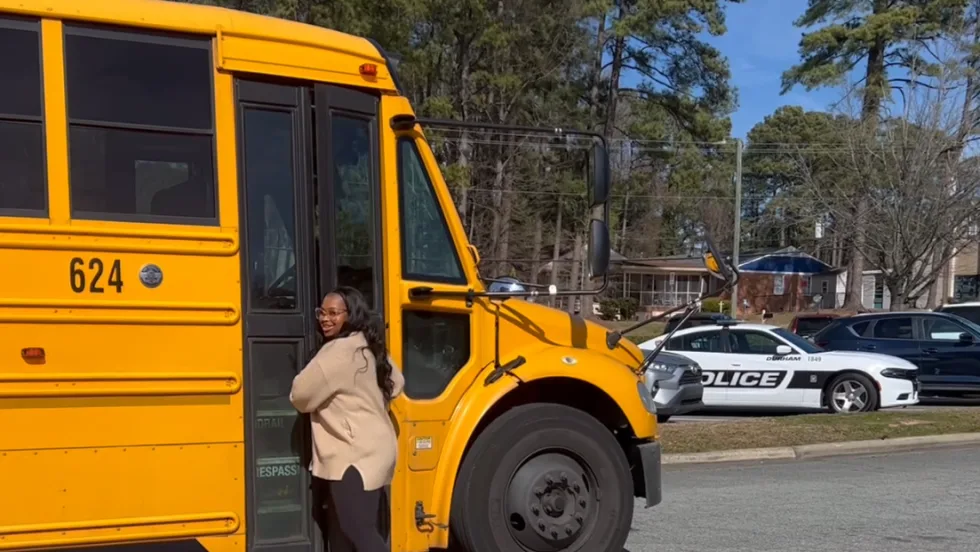
Trip Sheet: Meeting a Hero in My Own Back Yard
I remain impressed by the matter-of-fact heroism that’s often demonstrated by school bus drivers like Deona Washington who are caught in these situations where the best of us might lose our cool and panic. But, then again, bus drivers are a unique breed.
Read More →
Trip Sheet: 3 Takeaways from the EPA Clean School Bus Grant Program
Most applicants sought grant funding to acquire electric school buses, with propane coming in a distant second. No one indicated plans to purchase compressed natural gas (CNG) buses in this round. That’s not terribly surprising, I suppose, given how few school districts listed the inclusion of CNG buses in their fleets for our 2023 top district fleets survey.
Read More →
Trip Sheet: Let's Get Rolling: What's Coming in 2024?
Calendar pages keep flipping toward the mandates set in states like New York and California to transition their school bus fleets from diesel to zero-emission, but there’s plenty of reluctance and pushback.
Read More →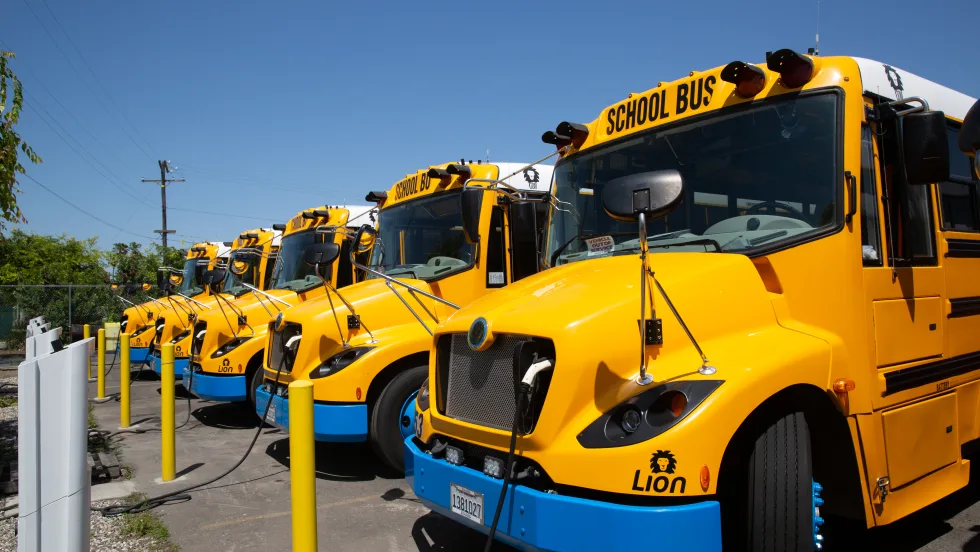
California School Children Ride in Green School Buses
Today, California prides itself on utilizing the most zero-emission (ZE) school buses in the country with over 1,689 being used by California school districts; and while the state is on a positive health trajectory thanks to a decree to eliminate gas and diesel vehicles, more work needs to be done to improve children’s well-being.
Read More →