




What puts a school bus immediately out of service?
One of our readers recently shared with me a situation at his operation in which the director allowed a driver to operate a bus when some of its lights weren't functioning. This got me thinking about what puts a bus immediately out of service. I did some research ...
Not long ago, one of SBF’s readers in Indiana contacted me and asked me to consider this: Is it legal to continue using a school bus once the stop arm and/or overhead warning lights fail to operate properly?
He said that he does not allow the employees at his operation to continue driving a bus if the stop-arm system is malfunctioning, and if the malfunction occurs while a bus driver is on the road, he or she is required to call in and request that a properly working bus be brought out to the driver’s location.
“Believe it or not, I had a director give permission over the school system two-way radio for a contract driver to continue using the school bus with a failed stop-arm light,” the reader told me. “[Then] the bus was brought to the transportation shop. Not only was one of the stop-arm lights out, there were overhead flashing lights not working on the front and rear of the bus. The kicker — it was on a winter morning, in the dark, on a state highway. The director had his school bus drivers’ certificate and CDL license, so he knew he had no legal right to give permission.”
(Our reader noted that this director had other issues as well and was asked to retire.)
This situation got me thinking about what puts a school bus immediately out of service.
The 2010 National School Transportation Specifications and Procedures outline recommended out-of-service criteria for various school bus components. (Go to www.ncstonline.org and click on "Download NCST Publications 1939-2010." Once the 2010 edition is downloaded, go to pg. 74 of the manual.)
For example, the manual recommends placing a school bus out of service if any of the following lamps are not working: brake, turn signal, tail, head (low beam), overhead warning light (amber or red), hazard warning or stop arm.
The manual notes that school bus safety programs vary greatly from state to state, and each state is urged to establish a third-party inspection program, as well as develop specific inspection regulations, rules, procedures and out-of-service criteria for all vehicles used for student transportation.
The manual also says that the purpose of the criteria outlined is to “provide tolerances that inspectors can use to determine if a school bus is safe for student transportation.”
I did some research on a couple of states’ out-of-service criteria for school buses. In Washington state, the criteria have been developed in cooperation with the Washington State Patrol’s Commercial Vehicle Division, the Office of Superintendent of Public Instruction (OSPI), and the School Bus Equipment Committee composed of the OSPI, regional transportation coordinators, and school district transportation and administration staff.
In the state, one instance under which a bus is placed out of service is if the brakes on one axle are out of adjustment, even if the braking system as a whole can stop the bus. Additionally, according to the state’s 2009 School Bus and Traffic Safety Education Vehicle Inspection Manual, these other items are of “prime interest” when evaluating the condition of a vehicle: suspension and steering components, the exhaust system, tires and lights.
In Missouri, the state’s School Bus Inspection Regulations Manual available from the Missouri State Highway Patrol lists a number of out-of-service criteria. Some of the criteria are: there is a major exhaust leak in the exhaust system that dumps exhaust in front of the rear axle; an emergency door is inoperable from either the inside or the outside, or any other emergency exit fails to open; and the bus frame has any unrepaired or visible cracks.
At the School District of Manatee County in Bradenton, Fla., Director of Vehicle Maintenance Don Ross tells me that at his operation, if a bus’ stop arm will not deploy to a full 90 degrees, it is considered a repair item. If a stop arm does not work at all during a route, the driver is asked if he or she has any remaining stops, if any remaining stops are curbside and other questions to determine if the driver can proceed on the route. If the driver cannot proceed, a replacement bus is sent to his or her location.
“If the route has a bus aide who can cross students, the driver is directed to return the bus to the shop for repair after the route is completed,” Ross adds.
He also says that during the 30-day inspection, repair items are fixed as if they were out-of-service items, with the exception of body repairs.
What are your operation’s or state’s out-of-service criteria for school buses? Post a comment below.
Until next time,
Kelly Roher
Managing Editor
More Blog Posts
The Sound of Summer Starting [Guest Editorial]
That unmistakable school bus rumble? It carries childhood memories, community routines, and a whole lot of unseen work behind the scenes.
Read More →
The Technology Power Combo That Enables EV Charging on Difficult Sites
As the pace of fleet electrification increases and charging infrastructure continues to pose challenges, many fleets find themselves puzzling over the question: how do I install charging infrastructure faster and more cost-efficiently?
Read More →
Trip Sheet: Farewell, Faithful Readers – Keep on Rolling
Executive Editor Wes Platt offers parting thoughts as he parks the School Bus Fleet bus to focus on ultra-local community journalism, making way for someone else to take the wheel as the pupil transportation industry continues to evolve.
Read More →
Trip Sheet: School Transportation Pros Can Champion Children's Mental Health
Children's Mental Health Awareness Day underscores the significance of school bus drivers in fostering supportive environments during students' journeys. SAMHSA's initiatives, including stigma reduction and access to resources, complement the Biden-Harris administration's funding efforts to enhance youth mental health services and workforce development.
Read More →
Trip Sheet: Is It Time for Daylight Saving Time to Clock Out?
How do you think the potential shift to permanent Daylight Saving Time or standard time would impact our daily lives and routines, especially considering the divided approach across various states?
Read More →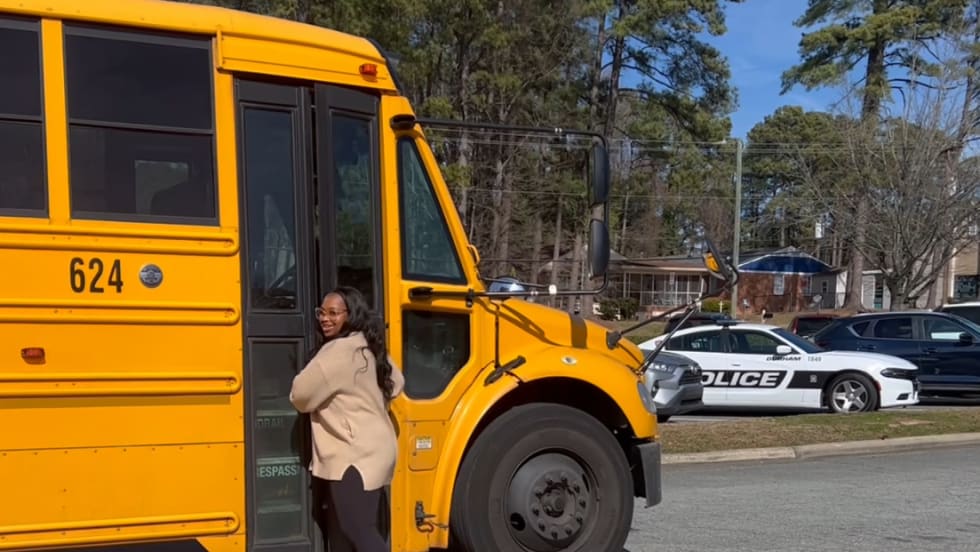
Trip Sheet: Meeting a Hero in My Own Back Yard
I remain impressed by the matter-of-fact heroism that’s often demonstrated by school bus drivers like Deona Washington who are caught in these situations where the best of us might lose our cool and panic. But, then again, bus drivers are a unique breed.
Read More →
Trip Sheet: 3 Takeaways from the EPA Clean School Bus Grant Program
Most applicants sought grant funding to acquire electric school buses, with propane coming in a distant second. No one indicated plans to purchase compressed natural gas (CNG) buses in this round. That’s not terribly surprising, I suppose, given how few school districts listed the inclusion of CNG buses in their fleets for our 2023 top district fleets survey.
Read More →
Trip Sheet: Let's Get Rolling: What's Coming in 2024?
Calendar pages keep flipping toward the mandates set in states like New York and California to transition their school bus fleets from diesel to zero-emission, but there’s plenty of reluctance and pushback.
Read More →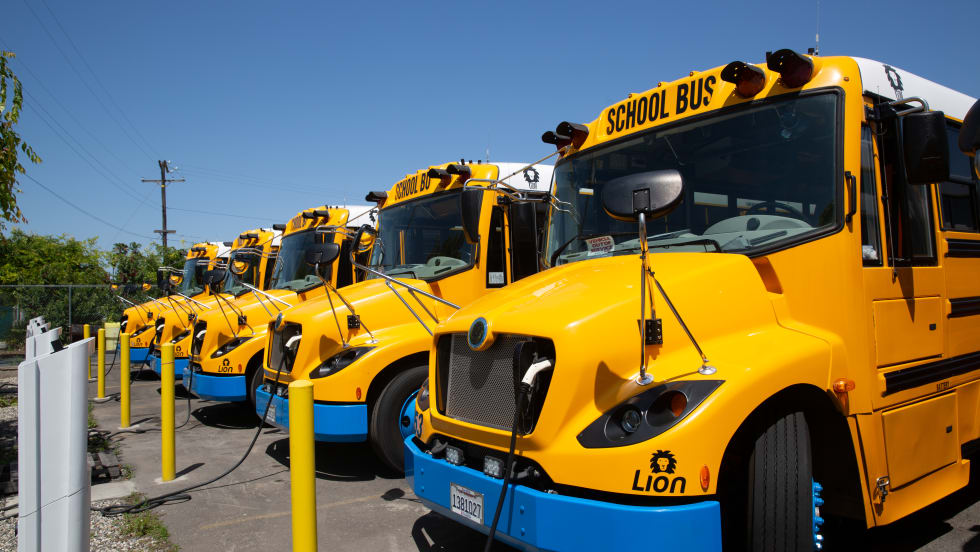
California School Children Ride in Green School Buses
Today, California prides itself on utilizing the most zero-emission (ZE) school buses in the country with over 1,689 being used by California school districts; and while the state is on a positive health trajectory thanks to a decree to eliminate gas and diesel vehicles, more work needs to be done to improve children’s well-being.
Read More →
Behind The Wheel of Childrens’ Safety Aboard the School Bus
Bus drivers are the primary caretakers of children during their commute and thus bear responsibility for their safety. By prioritizing proper operating procedures, maintenance checks, and additional precautions, drivers can help avoid the loss of precious young lives under their care.
Read More →