




Tips for effective student management
In the September 2012 issue of SBF, I wrote an article titled “Positive Interactions Encourage Peaceful Bus Ride,” where I discussed programs and initiatives that officials said have helped to improve student behavior on the school bus. Here, I’ll share with you additional information that didn’t make it into the article.
In the September 2012 issue of SBF, I wrote an article titled “Positive Interactions Encourage Peaceful Bus Ride,” where I discussed programs and initiatives that officials said have helped to improve student behavior on the school bus.
In the article, Antonio Mlynek, transportation supervisor for special education at Washington Elementary School District #6 in Phoenix, discussed his department’s coupon, bus points and “Coffee Talk” programs.
John Nunes, transportation director at Vail (Ariz.) School District, discussed the impact his operation’s Positive Behavior Intervention and Support program has had on bus riders.
Here, I’ll share with you additional information on student behavior management from these districts that didn’t make it into the article.
Misconduct reports and training resources
Mlynek said that when all other methods to address problematic student behavior have failed and it’s necessary to fill out a bus misconduct report, the form should be quick and easy to fill out. In addition, immediate communication in which the teacher receives the report as soon as the child departs the bus at school is more effective for changing behavior.
Previously, Washington Elementary School District #6 transportation staff was required to describe the incident in the misconduct form. Mlynek said that in most cases, it was not necessary and more opinions were written in the report than facts.
In the new special-education misconduct report form that Mlynek created, the transportation staff only needs to place a checkmark in the appropriate box to indicate what undesirable behavior the student was exhibiting and to whom it was directed. Unless it absolutely needs an explanation or they check a box that requires one, no comments are documented.
“This form comes in a three-part carbonless format — one copy for the teacher, transportation staff member and the office file,” Mlynek said, and he added that his operation is revising the regular-education bus misconduct form to a similar format.
To increase their knowledge on dealing with troublesome behavior among students, all transportation staff at Washington Elementary School District #6 has been trained in nonviolent crisis intervention training through the Crisis Prevention Institute.
Mlynek said the program instructs on how to defuse challenging and disruptive behavior before an incident escalates to a crisis situation.
Bus drivers should be consistent, reasonable
Carolyn Reynolds of Vail School District said she uses the elements of the transportation department’s Positive Behavior Intervention and Support program in her training sessions with bus drivers.
She first emphasizes that a good and safe school bus driver does not have an attitude about the students he or she transports. To improve one’s attitude, she has several suggestions, including the following: get a good night’s sleep, try to leave personal problems at home, bring a sense of humor to the job, greet everyone with a smile, ask questions and take an active role in the department — be part of the team.
In dealing with students, Reynolds said that drivers must be leaders and set the stage for what they view as reasonable and unreasonable behavior for their bus.
“It is not reasonable to expect absolute silence on the bus. It is reasonable to allow talking,” she said. “Be consistent. Your state of mind changes from day to day, and your ability to tolerate noise may also change. Students won’t understand if what is acceptable one day is not acceptable the next.”
She noted, however, that drivers should avoid misusing their power as a last resort for control because it can lead to an aggressive response from the student. Nunes said in my article that drivers and aides are instructed to address issues with students by teaching an expectation of better behavior through positive questioning. Reynolds expressed a similar view, saying that drivers should make each situation a lesson for the students to learn from.
She also provided the following advice:
• Make students feel that they have a responsibility in ensuring group safety.
• Give commands that stimulate an action (i.e., “Do this” instead of “Don’t do that.”)
• Have a reason for what students are asked to do, and provide that reason.
Does your operation have effective strategies in place for managing student behavior on the bus? If so, I’d like to read about them. Post a comment below or send an e-mail to info@schoolbusfleet.com.
Until next time,
Kelly Roher
Managing Editor
More Blog Posts
The Sound of Summer Starting [Guest Editorial]
That unmistakable school bus rumble? It carries childhood memories, community routines, and a whole lot of unseen work behind the scenes.
Read More →
The Technology Power Combo That Enables EV Charging on Difficult Sites
As the pace of fleet electrification increases and charging infrastructure continues to pose challenges, many fleets find themselves puzzling over the question: how do I install charging infrastructure faster and more cost-efficiently?
Read More →
Trip Sheet: Farewell, Faithful Readers – Keep on Rolling
Executive Editor Wes Platt offers parting thoughts as he parks the School Bus Fleet bus to focus on ultra-local community journalism, making way for someone else to take the wheel as the pupil transportation industry continues to evolve.
Read More →
Trip Sheet: School Transportation Pros Can Champion Children's Mental Health
Children's Mental Health Awareness Day underscores the significance of school bus drivers in fostering supportive environments during students' journeys. SAMHSA's initiatives, including stigma reduction and access to resources, complement the Biden-Harris administration's funding efforts to enhance youth mental health services and workforce development.
Read More →
Trip Sheet: Is It Time for Daylight Saving Time to Clock Out?
How do you think the potential shift to permanent Daylight Saving Time or standard time would impact our daily lives and routines, especially considering the divided approach across various states?
Read More →
Trip Sheet: Meeting a Hero in My Own Back Yard
I remain impressed by the matter-of-fact heroism that’s often demonstrated by school bus drivers like Deona Washington who are caught in these situations where the best of us might lose our cool and panic. But, then again, bus drivers are a unique breed.
Read More →
Trip Sheet: 3 Takeaways from the EPA Clean School Bus Grant Program
Most applicants sought grant funding to acquire electric school buses, with propane coming in a distant second. No one indicated plans to purchase compressed natural gas (CNG) buses in this round. That’s not terribly surprising, I suppose, given how few school districts listed the inclusion of CNG buses in their fleets for our 2023 top district fleets survey.
Read More →
Trip Sheet: Let's Get Rolling: What's Coming in 2024?
Calendar pages keep flipping toward the mandates set in states like New York and California to transition their school bus fleets from diesel to zero-emission, but there’s plenty of reluctance and pushback.
Read More →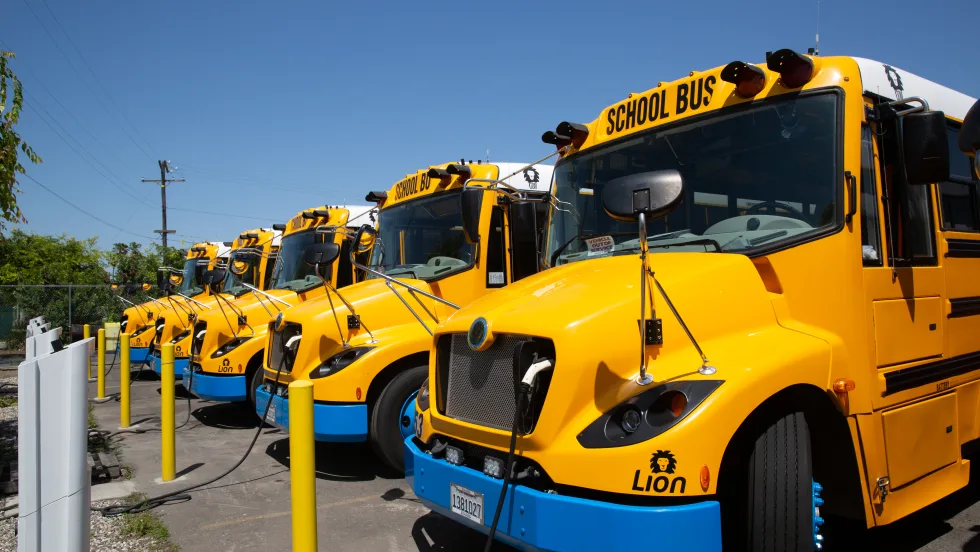
California School Children Ride in Green School Buses
Today, California prides itself on utilizing the most zero-emission (ZE) school buses in the country with over 1,689 being used by California school districts; and while the state is on a positive health trajectory thanks to a decree to eliminate gas and diesel vehicles, more work needs to be done to improve children’s well-being.
Read More →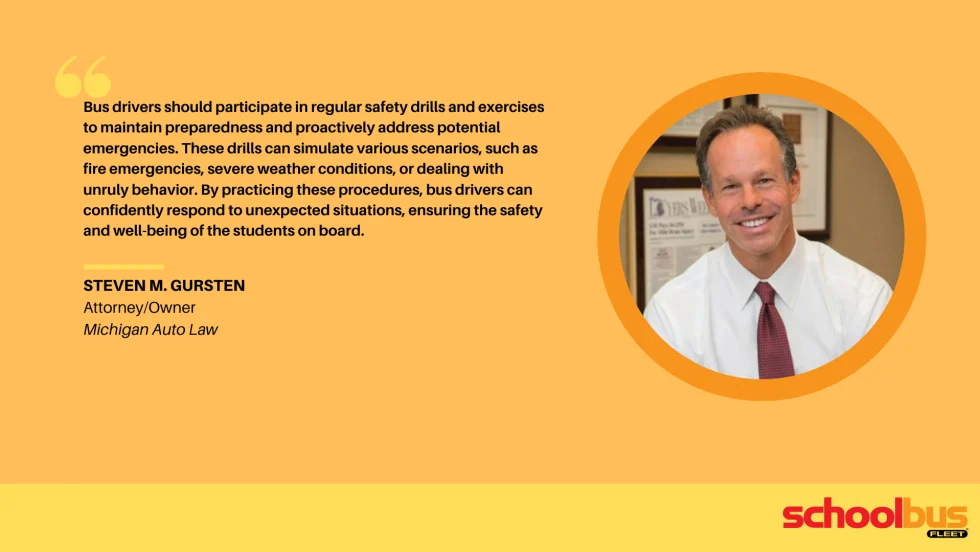
Behind The Wheel of Childrens’ Safety Aboard the School Bus
Bus drivers are the primary caretakers of children during their commute and thus bear responsibility for their safety. By prioritizing proper operating procedures, maintenance checks, and additional precautions, drivers can help avoid the loss of precious young lives under their care.
Read More →