




Tips for an outstanding maintenance operation
In the March 2012 issue of SBF, I wrote an article wherein pupil transportation professionals at operations shared with me their thoughts on what helps keep school buses in good operating condition. The people I interviewed offered many more tips, which I'll share with you here.
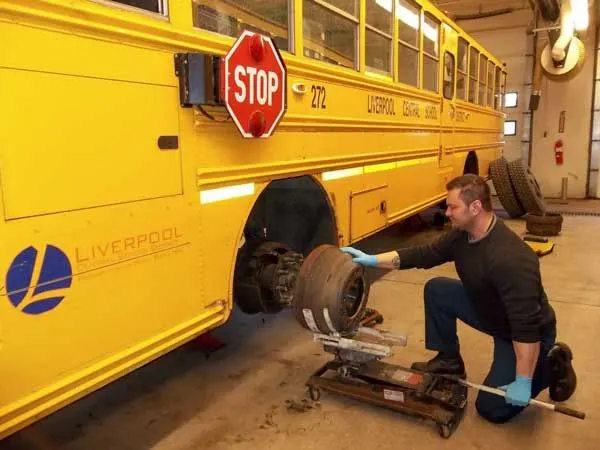
At Liverpool (N.Y.) Central School District, the shop staff made handling piloted drums easier by building a lifter fabricated from metal welded together to create a holding fixture, and that was attached to a small floor jack.
In the March 2012 issue of SBF, I wrote an article titled “Skilled Techs Keep Fleets Top Notch,” wherein pupil transportation professionals at operations around the country shared with me their thoughts on what helps keep school buses in good operating condition.
As they discuss in the article, everything from technician training to a strong preventive maintenance program to performance benchmarking contributes to a safe fleet.
The people I interviewed offered many more tips, which I’ll share with you here.
Components of a safe, efficient bus garage
Everyone agreed that a clean and organized shop ensures that technicians are working in a safe environment, and it will help them do their jobs efficiently. They said that a shop should be well lit and well ventilated, and that technicians should have proper equipment when performing work, such as a welding jacket and glasses, earplugs and steel-toed shoes.
Gary Thomsen, transportation manager at Evergreen Public Schools in Vancouver, Wash., brings in loss control specialists to have them inspect his district’s shop.
“They will see things that you sometimes don’t think of,” Thomsen said. “It’s good to have some eyes from the outside, and they should always do it on a courtesy. I recommend checking with your insurance company to see if they have a loss control specialist who can come out for a courtesy inspection.”
Thomsen also has a policy at his operation stating that technicians are the only employees who are permitted to drive buses in and out of the shop.
In that vein, Shirley Patrick, director of transportation at North Kansas City (Mo.) Schools, said that unauthorized employees need to respect the policy of not being in the garage where the technicians are working on buses.
She also said it’s important for technicians to receive training on how to operate the tool or equipment that’s needed to complete a job, such as welding equipment, a plasma cutter and a vehicle lift.
“One area often overlooked with potentially harmful side effects is the dilution ratio of chemicals used in the shop,” added William French, assistant director of fleet and finance at Volusia County Schools in Daytona Beach, Fla. “The floor soap, engine degreaser, general cleaners and windshield washer solvent all may have dilution ratios, which if used properly will reduce costs considerably. Oftentimes, the technician wants his favorite cleaner and only thinks management is watching the dollar. To overcome this, we had a hands-on chemist conduct a brief training on how these chemicals are produced, the value of dilution and the harmful effects of improper dilution. For our technicians, hearing this from someone other than us made all the difference in implementing cost-savings with our chemicals.”
ASE certification and technician incentives
In my article, I mentioned that Dean Transportation Inc. in Lansing, Mich., requires that every technician maintain at least one ASE or state of Michigan mechanic certification in the area of heavy duty.
Other operations promote ASE and encourage their techs to become certified. Volusia County Schools provides a $100 annual stipend for each ASE certification maintained, and Salem-Keizer Public Schools in Salem, Ore., nominates technicians who have achieved master certification for the operation’s “Going the Distance” award for “going above and beyond the call of duty,” according to Michael Burton, assistant transportation manager.
Aside from the maintenance safety aspect that stems from ASE certification, Bob Duquette, shop foreman at Liverpool (N.Y.) Central School District, believes that the certification is not only a way for a technician to demonstrate his capabilities and knowledge of school bus maintenance and repair, “it gives a technician a sense of pride and accomplishment,” he said.
Supervisor training
French and Scott Pellerito, director of fleet services at Dean Transportation, said that training for employees in supervisory positions is equally important as training for technicians.
“The supervisor performs many roles and needs to understand the importance and value of the shop personnel,” French said. “We look for opportunities to improve our managers’ skills in effective communication, diversity, problem solving, workplace violence and so forth. The local community college may be a resource, and there are many leadership classes available online through the Emergency Management Institute sponsored by FEMA.”
Dean Transportation’s lead technicians and fleet management personnel are subject to advanced training in certain areas to ensure that the needs of the company and industry standards are met.
Pellerito said all supervisory personnel are in the final stages of the community emergency responder training course presented by the State of Michigan Emergency Management Division.
“This training is to ensure that all leadership positions are trained with respect to unified management systems and local, state and company disaster plans in the event of a company or local disaster,” he explained.
Teamwork is key
French and Thomsen stressed the importance of staff communication in my article, and they and other officials also said that teamwork is essential to a safe and successful operation.
“Success truly starts from the ground up,” French said. “We’re all stakeholders with the same goals, but we can’t do it alone. Find the strengths in the organization and task people with responsibilities. Invite and value everyone’s ideas and make sure everyone knows the reason behind what you’re doing or changing.”
Burton and David Farley, head mechanic at Salem-Keizer Public Schools, offered similar advice. They said it’s important to raise the bar for continued improvement and ensure that everyone is working together to achieve that goal.
"Understanding the needs of the technicians is key. You also need to have compassion for one another," Burton said, and Farley agreed.
Additional insight and recommendations
French said that by conducting a tire brand analysis, he is expecting to see a savings of nearly 30 percent to his budget for tires this year, even with increasing tire prices. The analysis was conducted among three manufacturers. The technician assistant who runs the tire shop worked closely with the vendor in monitoring the test buses.
“After being loyal to one brand, the results of the test were so overwhelming that we moved to an alternate brand,” French explained. “At the same time, we tested recapping our 255/70R22.5, which were previously restricted to new replacements. Testing was successful — we have yet to experience a single failure, and tread life estimates are positive.”
Moreover, Pellerito said that when an operation has multiple shifts of technicians, management should allow for overlapping of the shifts and enough time for breaks.
“Consider extending a 30-minute lunch break to one hour so that technicians have time to handle some personal business during normal working hours,” he said, and he also recommended evaluating parts availability for a job before it is started so that hoists and floor space are not cluttered for extended periods of time.
Until next time,
Kelly Roher
Managing Editor
More Blog Posts

'I’m a School Bus Driver, You Can Trust Me'
A crowded Cleveland parking lot, a full-size pickup, and five unexpected words turned a stressful moment into a reminder of just how much trust we place in school bus drivers every day.
Read More →
The Sound of Summer Starting [Guest Editorial]
That unmistakable school bus rumble? It carries childhood memories, community routines, and a whole lot of unseen work behind the scenes.
Read More →
The Technology Power Combo That Enables EV Charging on Difficult Sites
As the pace of fleet electrification increases and charging infrastructure continues to pose challenges, many fleets find themselves puzzling over the question: how do I install charging infrastructure faster and more cost-efficiently?
Read More →
Trip Sheet: Farewell, Faithful Readers – Keep on Rolling
Executive Editor Wes Platt offers parting thoughts as he parks the School Bus Fleet bus to focus on ultra-local community journalism, making way for someone else to take the wheel as the pupil transportation industry continues to evolve.
Read More →
Trip Sheet: School Transportation Pros Can Champion Children's Mental Health
Children's Mental Health Awareness Day underscores the significance of school bus drivers in fostering supportive environments during students' journeys. SAMHSA's initiatives, including stigma reduction and access to resources, complement the Biden-Harris administration's funding efforts to enhance youth mental health services and workforce development.
Read More →
Trip Sheet: Is It Time for Daylight Saving Time to Clock Out?
How do you think the potential shift to permanent Daylight Saving Time or standard time would impact our daily lives and routines, especially considering the divided approach across various states?
Read More →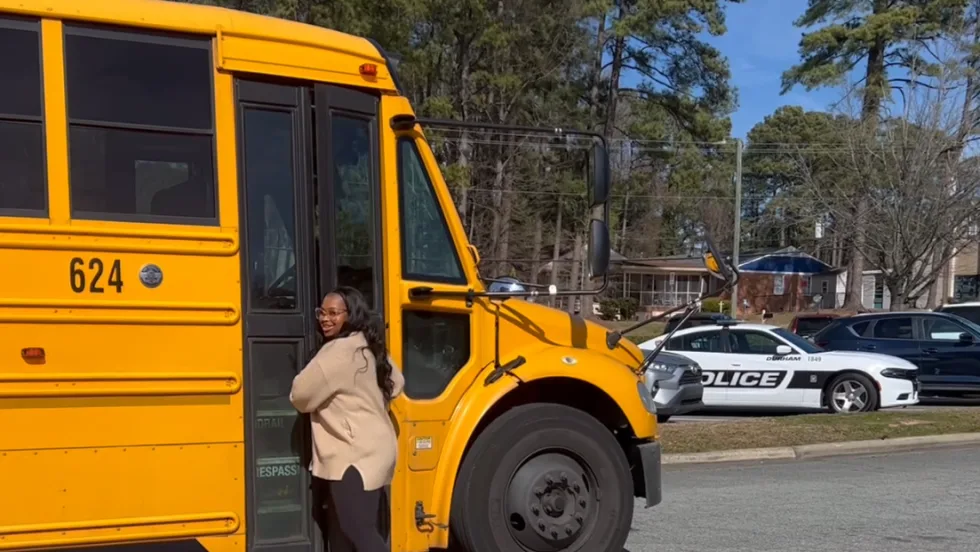
Trip Sheet: Meeting a Hero in My Own Back Yard
I remain impressed by the matter-of-fact heroism that’s often demonstrated by school bus drivers like Deona Washington who are caught in these situations where the best of us might lose our cool and panic. But, then again, bus drivers are a unique breed.
Read More →
Trip Sheet: 3 Takeaways from the EPA Clean School Bus Grant Program
Most applicants sought grant funding to acquire electric school buses, with propane coming in a distant second. No one indicated plans to purchase compressed natural gas (CNG) buses in this round. That’s not terribly surprising, I suppose, given how few school districts listed the inclusion of CNG buses in their fleets for our 2023 top district fleets survey.
Read More →
Trip Sheet: Let's Get Rolling: What's Coming in 2024?
Calendar pages keep flipping toward the mandates set in states like New York and California to transition their school bus fleets from diesel to zero-emission, but there’s plenty of reluctance and pushback.
Read More →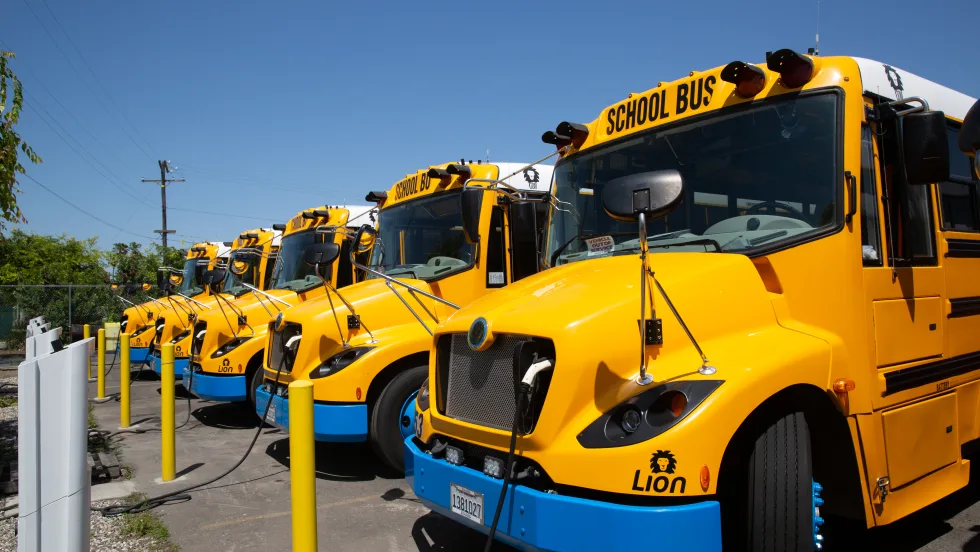
California School Children Ride in Green School Buses
Today, California prides itself on utilizing the most zero-emission (ZE) school buses in the country with over 1,689 being used by California school districts; and while the state is on a positive health trajectory thanks to a decree to eliminate gas and diesel vehicles, more work needs to be done to improve children’s well-being.
Read More →