



Thoughts on transit replacing yellow buses
In recent months, we at SBF have come across news of school districts implementing a transit bus service program for some of their students. The reasons vary, but it has usually been due to cuts in school bus service or in an effort to save money. Industry officials share their views on the issue.
In recent months, we at SBF have come across news of school districts implementing a transit bus service program for some of their students. The reasons vary, but it has usually been due to cuts in school bus service or in an effort to save money.
Ron Kinney, state legislation monitor for the National School Transportation Association, a consultant, and former state director of school transportation for California, says he believes that when a district replaces school buses with public transit, it discredits the years of work that the school transportation community has invested in making the yellow bus the safest mode of home-to-school transportation for students.
He says he also believes that many district transportation personnel are not making the final decision to implement the transit service, and that they would prefer that students ride yellow buses.
“It goes back to competition for money — the classroom versus the school bus — and the classroom is winning out in this argument,” Kinney says.
I think that’s a fair assessment.
In Ohio, approximately 2% of the state’s upper-grade-level students who live in major urban areas ride public transit vehicles, according to former state director of pupil transportation Pete Japikse, who is set to begin a new role with the Ohio School Boards Association.
Japikse says the availability of transit routes in Ohio’s major cities at a subsidized cost is “far more practical” than for schools to operate buses for those students.
“While this is a major issue for the private contractor operations nationwide, the high level view is that some students will not make it to school without transportation,” he says. “When a school bus is not available due to economic limitations, the use of a public transit vehicle does indeed provide access to education.”
However, Japikse adds that he would prefer to see all of Ohio’s students riding school buses.
The potential for problems
Beyond the fact that transit buses don’t feature the compartmentalized design of school buses, Japikse, Kinney and Bob Riley, executive director of the National Association of State Directors of Pupil Transportation Services, have other concerns with students riding transit buses, including the following:
Accident reporting data aren’t as specific. Kinney says that the data don’t include whether the individuals involved were children or adults — they are classified as “passengers.” “It’s not as strict, so things could be happening on transit buses that we may not even know about,” he says.
Young children are exposed to the general public. “You have no control over who rides the bus, so you could have a higher degree of crime on those buses,” Riley says.
Students may get lost. Japikse notes that transit drivers are required to operate fixed routes to comply with Federal Transit Administration standards. Riley says that as a result, you may have students dropped off blocks from school, with the potential to get lost, or older students may forgo going to school altogether by getting off at a different bus stop.
Industry-wide impact. Kinney and Riley say that transit bus service affects all aspects of the pupil transportation industry, from fewer buses being sold to job loss.
One district’s experience partnering with a transit service
In Canada, a pupil transportation operation in Red Deer, Alberta, has had a successful relationship with the local transit system, Red Deer City Transit.
Scott Partridge, transportation manager for Red Deer Public School District No. 104, says that students in middle school and high school have been riding city transit buses for years. The district subsidizes the cost of a restricted bus pass for students, which is valid Monday through Friday from 6:15 a.m. until 5:15 p.m., and only on school days — not on holidays.
The school district has been connected with Red Deer City Transit since the transit service began in 1966, according to Partridge, and as student transportation and city transit service needs evolved, adjustments were made.
“Initially the city (transit department) provided a charter (yellow bus) transportation system under contract to the school district until the mid-1970s,” Partridge says. “In the 80s, a decision was made for city transit to get out of the charter business, and students utilized regular transit service on regular transit routes from that time on.”
Partridge also says that Red Deer Public School District No. 104 did not want elementary students riding on regular transit buses, so a contracted yellow school bus provider offered service for elementary students while middle and high school students continued to access city transit services.
In the 90s, Red Deer City Transit began providing dedicated, direct destination routes for middle and high school students through use of subsidized city transit passes or paid fare. In 2003, the city and school district entered into a formal agreement on providing transit services, transitioning into what has become “student overload transit routes,” according to Partridge. Overload routes meet the morning bell times as well as the end-of-day dismissal times for middle and high school.
“It is fair to say that the city transit system relies heavily on student transportation in a significant way, and it provides safe and cost-effective student transportation for the school district,” Partridge says. “It is a mutually beneficial arrangement overall — use of the city transit system also provides students with access to transit service outside of the overload schedule times or dedicated routes, increasing flexibility and appeal for all concerned.”
What are your thoughts? Do you have a different view on transit bus use? Post a comment below or send an e-mail to info@schoolbusfleet.com.
Until next time,
Kelly Roher
Managing Editor
More Blog Posts
The Sound of Summer Starting [Guest Editorial]
That unmistakable school bus rumble? It carries childhood memories, community routines, and a whole lot of unseen work behind the scenes.
Read More →
The Technology Power Combo That Enables EV Charging on Difficult Sites
As the pace of fleet electrification increases and charging infrastructure continues to pose challenges, many fleets find themselves puzzling over the question: how do I install charging infrastructure faster and more cost-efficiently?
Read More →
Trip Sheet: Farewell, Faithful Readers – Keep on Rolling
Executive Editor Wes Platt offers parting thoughts as he parks the School Bus Fleet bus to focus on ultra-local community journalism, making way for someone else to take the wheel as the pupil transportation industry continues to evolve.
Read More →
Trip Sheet: School Transportation Pros Can Champion Children's Mental Health
Children's Mental Health Awareness Day underscores the significance of school bus drivers in fostering supportive environments during students' journeys. SAMHSA's initiatives, including stigma reduction and access to resources, complement the Biden-Harris administration's funding efforts to enhance youth mental health services and workforce development.
Read More →
Trip Sheet: Is It Time for Daylight Saving Time to Clock Out?
How do you think the potential shift to permanent Daylight Saving Time or standard time would impact our daily lives and routines, especially considering the divided approach across various states?
Read More →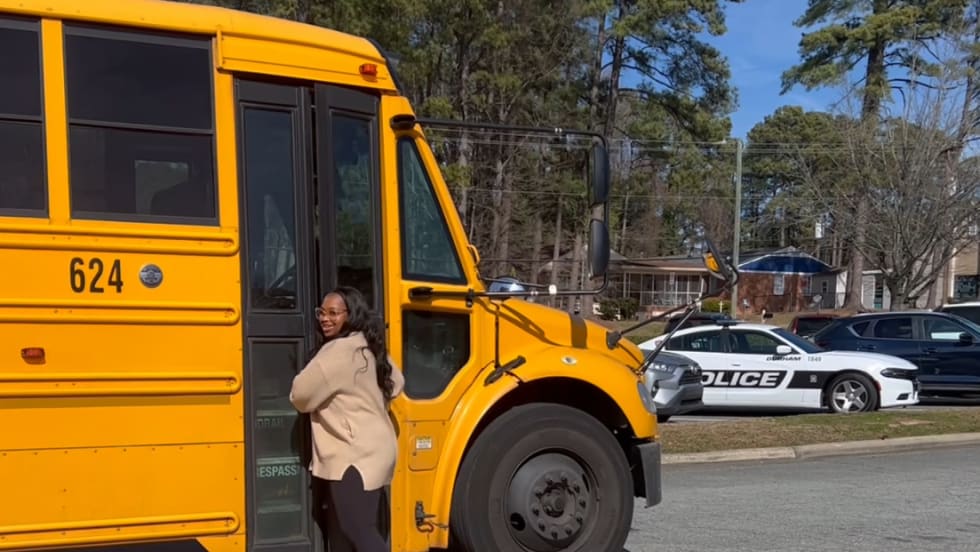
Trip Sheet: Meeting a Hero in My Own Back Yard
I remain impressed by the matter-of-fact heroism that’s often demonstrated by school bus drivers like Deona Washington who are caught in these situations where the best of us might lose our cool and panic. But, then again, bus drivers are a unique breed.
Read More →
Trip Sheet: 3 Takeaways from the EPA Clean School Bus Grant Program
Most applicants sought grant funding to acquire electric school buses, with propane coming in a distant second. No one indicated plans to purchase compressed natural gas (CNG) buses in this round. That’s not terribly surprising, I suppose, given how few school districts listed the inclusion of CNG buses in their fleets for our 2023 top district fleets survey.
Read More →
Trip Sheet: Let's Get Rolling: What's Coming in 2024?
Calendar pages keep flipping toward the mandates set in states like New York and California to transition their school bus fleets from diesel to zero-emission, but there’s plenty of reluctance and pushback.
Read More →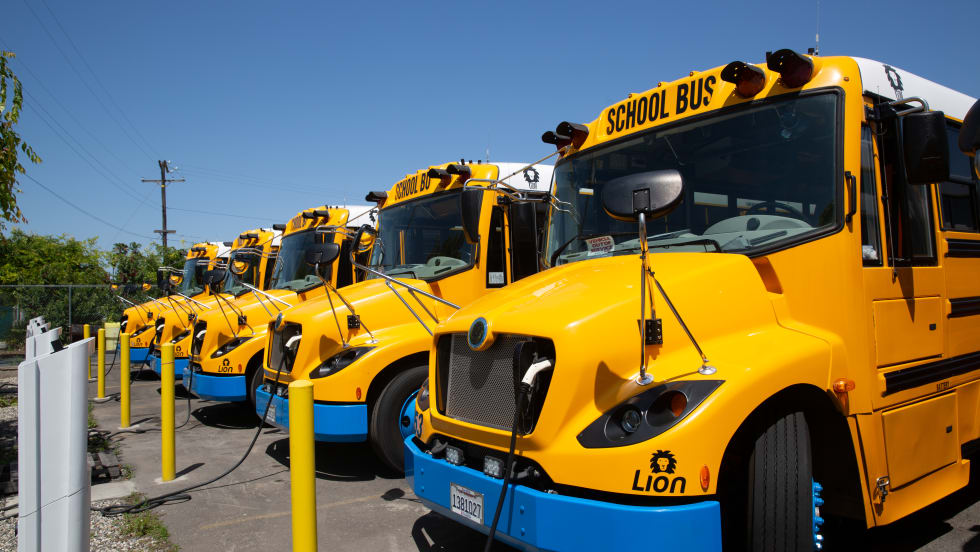
California School Children Ride in Green School Buses
Today, California prides itself on utilizing the most zero-emission (ZE) school buses in the country with over 1,689 being used by California school districts; and while the state is on a positive health trajectory thanks to a decree to eliminate gas and diesel vehicles, more work needs to be done to improve children’s well-being.
Read More →
Behind The Wheel of Childrens’ Safety Aboard the School Bus
Bus drivers are the primary caretakers of children during their commute and thus bear responsibility for their safety. By prioritizing proper operating procedures, maintenance checks, and additional precautions, drivers can help avoid the loss of precious young lives under their care.
Read More →