




The trouble with cutting bus service
Previously, I discussed the notion that districts have a responsibility to be “in the transportation business,” which some disagree with. Here, I want to draw attention to issues that arise when districts decide to cut school bus service. As shown in the Etiwanda (Calif.) School District example, increased traffic around schools is one of the key problems. ...


Thomas McMahon is executive editor of SCHOOL BUS FLEET.
In Etiwanda, Calif., cutting school bus service caused what one parent described as “chaotic traffic conditions” around two schools, Etiwanda Colony Elementary and Summit Intermediate.
The Etiwanda School District discontinued regular-education bus service in the 2010-11 school year because of budgetary issues.
On Dec. 4 of last year, 9-year-old Ashlyn Gardner and her 7-year-old brother Landon were crossing a street near Etiwanda Colony Elementary when they were struck by a pickup truck. Ashlyn was killed.
After the accident, local parents started two online petitions calling for the return of school bus service.
“Taking away the buses has resulted in chaotic traffic conditions daily at Colony and Summit schools,” Tressy Capps’ petition at MoveOn.org says. “Our kids’ safety must come first!”
As of late March, a combined total of more than 1,300 people had signed the petitions.
Traffic, safety issues
In my editorial from our April/May issue, I discussed the notion that districts have a responsibility to be “in the transportation business,” which some disagree with. Here, I want to draw attention to issues that arise when districts decide to cut school bus service.
As shown in the Etiwanda example, increased traffic around schools is one of the key problems. In situations like this, long lines of vehicles often build up in the morning and afternoon. Students who walk or bike from home — and students whose parents drop them off a distance from the school — have to navigate more traffic, and therefore more risk.
Cutting bus service also deprives students of the safest way to get to school. As federal statistics show, even riding with a parent is not as safe as the yellow bus.
Another problem with cutting school bus service: Parents will fight it. That became clear in Etiwanda. Another example was at Hoover (Ala.) City Schools, where the board decided last summer to stop regular-ed transportation with the 2014-15 school year. However, many parents, students and other community members fervently protested, and the board later rescinded its decision to cut bus service.
Bring back the buses
At Etiwanda School District, about a month after the accident that killed Ashlyn Gardner and spurred the parent petitions, the board decided to bring regular-ed transportation back — to an extent. The board opted to implement a pilot transportation program for students who live at least 3 miles from their elementary or middle school of residence.
In the program, parents pay $40 per month per student, with the district contributing the remaining cost. (Special-ed transportation service is still provided free of charge.)
The pilot program was scheduled to run from March 25 to May 22. Etiwanda Superintendent Shawn Judson said in a letter to parents that the initiative offers “several positive outcomes” for the district.
“It allows the district to use excess seats for regular-education students on some current special-education bus routes and to recover revenue for those seats,” Judson said. “The program also has the potential to reduce congestion around these schools.”
At the end of this school year, the board of trustees will evaluate the feasibility of continuing the program in 2014-15.
The pilot program idea didn’t appear to appease some parents, but perhaps everyone can agree that limited bus service is better than no bus service.
More Blog Posts
The Sound of Summer Starting [Guest Editorial]
That unmistakable school bus rumble? It carries childhood memories, community routines, and a whole lot of unseen work behind the scenes.
Read More →
The Technology Power Combo That Enables EV Charging on Difficult Sites
As the pace of fleet electrification increases and charging infrastructure continues to pose challenges, many fleets find themselves puzzling over the question: how do I install charging infrastructure faster and more cost-efficiently?
Read More →
Trip Sheet: Farewell, Faithful Readers – Keep on Rolling
Executive Editor Wes Platt offers parting thoughts as he parks the School Bus Fleet bus to focus on ultra-local community journalism, making way for someone else to take the wheel as the pupil transportation industry continues to evolve.
Read More →
Trip Sheet: School Transportation Pros Can Champion Children's Mental Health
Children's Mental Health Awareness Day underscores the significance of school bus drivers in fostering supportive environments during students' journeys. SAMHSA's initiatives, including stigma reduction and access to resources, complement the Biden-Harris administration's funding efforts to enhance youth mental health services and workforce development.
Read More →
Trip Sheet: Is It Time for Daylight Saving Time to Clock Out?
How do you think the potential shift to permanent Daylight Saving Time or standard time would impact our daily lives and routines, especially considering the divided approach across various states?
Read More →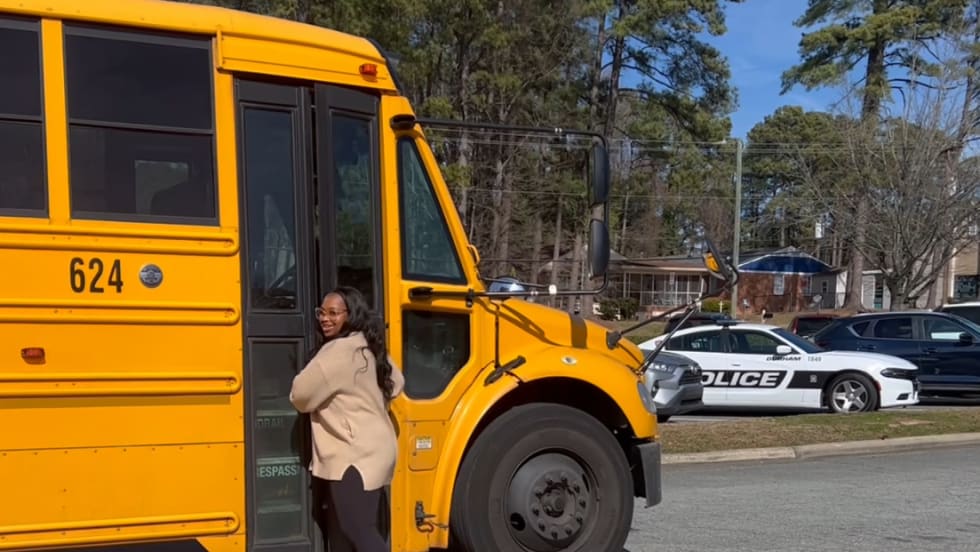
Trip Sheet: Meeting a Hero in My Own Back Yard
I remain impressed by the matter-of-fact heroism that’s often demonstrated by school bus drivers like Deona Washington who are caught in these situations where the best of us might lose our cool and panic. But, then again, bus drivers are a unique breed.
Read More →
Trip Sheet: 3 Takeaways from the EPA Clean School Bus Grant Program
Most applicants sought grant funding to acquire electric school buses, with propane coming in a distant second. No one indicated plans to purchase compressed natural gas (CNG) buses in this round. That’s not terribly surprising, I suppose, given how few school districts listed the inclusion of CNG buses in their fleets for our 2023 top district fleets survey.
Read More →
Trip Sheet: Let's Get Rolling: What's Coming in 2024?
Calendar pages keep flipping toward the mandates set in states like New York and California to transition their school bus fleets from diesel to zero-emission, but there’s plenty of reluctance and pushback.
Read More →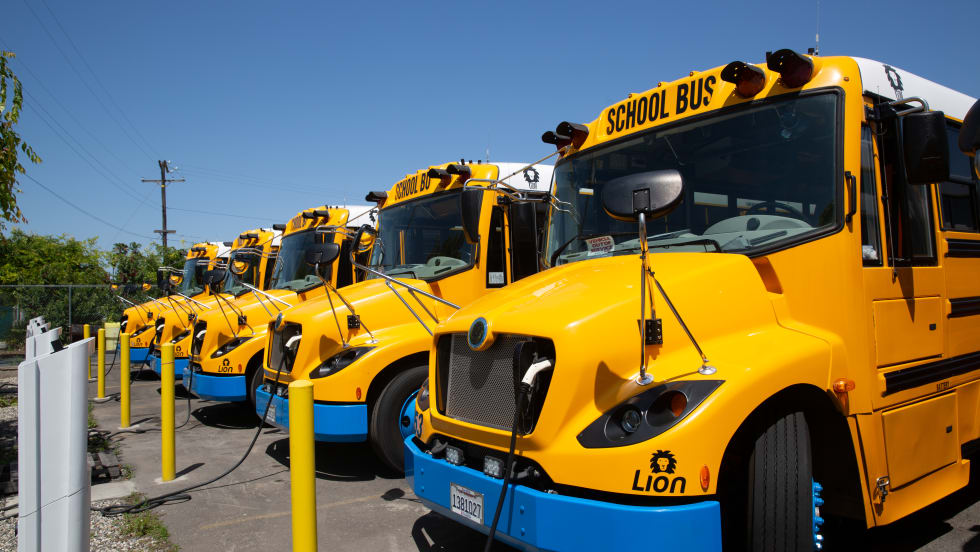
California School Children Ride in Green School Buses
Today, California prides itself on utilizing the most zero-emission (ZE) school buses in the country with over 1,689 being used by California school districts; and while the state is on a positive health trajectory thanks to a decree to eliminate gas and diesel vehicles, more work needs to be done to improve children’s well-being.
Read More →
Behind The Wheel of Childrens’ Safety Aboard the School Bus
Bus drivers are the primary caretakers of children during their commute and thus bear responsibility for their safety. By prioritizing proper operating procedures, maintenance checks, and additional precautions, drivers can help avoid the loss of precious young lives under their care.
Read More →