




The right way to make a left
There’s no good way around it: We have to turn left sometimes, often without the “protection” of a solid green arrow. For school bus drivers, training to “perfect the art” of knowing the bus and how to steer it will allow them to focus on watching out for objects in the intersection. ...


Image courtesy of Oregon State University
Two wrongs don’t make a right, but do three rights make a left?
Perhaps you’ve heard stories of drivers who — whether due to a past accident or just an extreme dedication to caution — refuse to make left turns.
These motorists, we’re told, will go to literal great lengths to chart a course to their destination that avoids left turns.
This would often entail overshooting the mark (i.e., where the average driver would turn left), then making a right, making another right and making yet another right (hence, a left turn substitute).
Whether anyone really does — or could — completely avoid left-hand turns, I’m not sure. But, undoubtedly, there are real risks associated with making a left.
Training on turning
Donna Anderson, a transportation programs consultant with the California Department of Education, recently gave a conference presentation about making left-hand turns safely and correctly.
She told me later that the presentation highlighted “the need for training based on the tragic accidents that have occurred in our state.” Last year, there were two incidents in California in which pedestrians were fatally struck by school buses making left turns.
According to Anderson, one of the key dangers in turning left in a school bus is the limited visibility, which is mainly due to the blind spots created by the bus’ multiple mirrors. Of course, the mirrors are essential, as is the proper adjustment of them.
Anderson points to several critical elements in ensuring safe turns:
• Assess depth perception through training.
• Adjust mirrors properly, and practice proper mirror use.
• Look around the mirrors to avoid blind spots.
• Look around for fixed and movable objects.
• Know the turning capability of the vehicle.
• Establish the correct turning points.
Risks in ‘permitted’ lefts
One area that calls for heightened caution is the “permitted” left turn. This differs from the “protected” left turn in that there is not a solid green arrow to give the turning driver the complete right of way.
A recent study on permitted left turns, conducted in a full-scale driving simulator, found that about 4% to 9% of the time, drivers don’t look to see if there are pedestrians in their way.
Researchers at the Oregon State and Portland State universities said that permitted left turns are often allowed by a “confusing hodgepodge” of signals, and drivers may have to pick their way through narrow windows of oncoming traffic.
The researchers said their study found that permitted left turns present an “alarming” level of risk to unwary pedestrians crossing the street.
The research showed that as drivers wait to make a permitted left turn, they focus mainly on the traffic and the signal, rather than pedestrians, and often lunge into narrow openings in oncoming traffic. The heavier the traffic, the less attention paid to pedestrians, according to the study.
There’s no good way around it: We have to turn left sometimes, often without the “protection” of a solid green arrow.
For school bus drivers, as Anderson notes, training to “perfect the art” of knowing the bus and how to steer it will allow them to focus on watching out for objects in the intersection.
— Thomas McMahon, executive editor
More Blog Posts
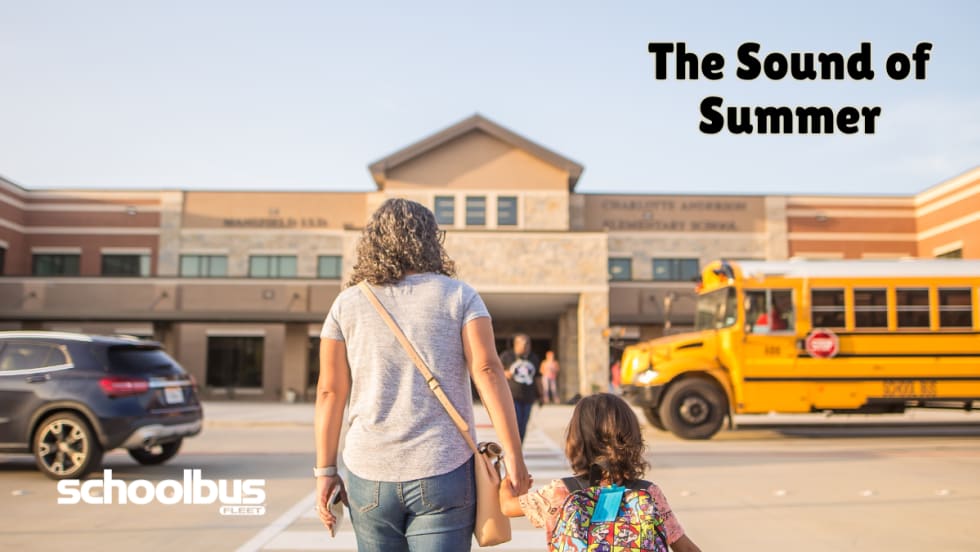
The Sound of Summer Starting [Guest Editorial]
That unmistakable school bus rumble? It carries childhood memories, community routines, and a whole lot of unseen work behind the scenes.
Read More →
The Technology Power Combo That Enables EV Charging on Difficult Sites
As the pace of fleet electrification increases and charging infrastructure continues to pose challenges, many fleets find themselves puzzling over the question: how do I install charging infrastructure faster and more cost-efficiently?
Read More →
Trip Sheet: Farewell, Faithful Readers – Keep on Rolling
Executive Editor Wes Platt offers parting thoughts as he parks the School Bus Fleet bus to focus on ultra-local community journalism, making way for someone else to take the wheel as the pupil transportation industry continues to evolve.
Read More →
Trip Sheet: School Transportation Pros Can Champion Children's Mental Health
Children's Mental Health Awareness Day underscores the significance of school bus drivers in fostering supportive environments during students' journeys. SAMHSA's initiatives, including stigma reduction and access to resources, complement the Biden-Harris administration's funding efforts to enhance youth mental health services and workforce development.
Read More →
Trip Sheet: Is It Time for Daylight Saving Time to Clock Out?
How do you think the potential shift to permanent Daylight Saving Time or standard time would impact our daily lives and routines, especially considering the divided approach across various states?
Read More →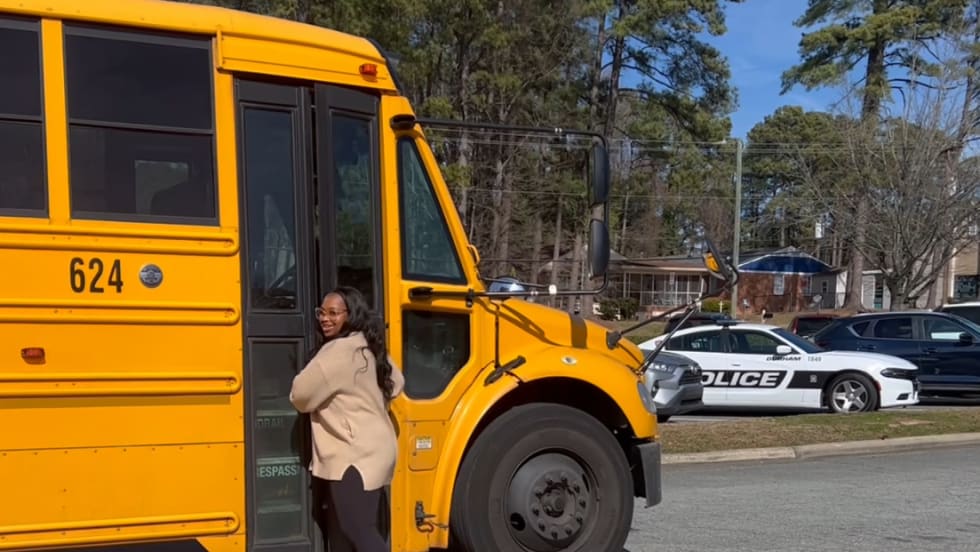
Trip Sheet: Meeting a Hero in My Own Back Yard
I remain impressed by the matter-of-fact heroism that’s often demonstrated by school bus drivers like Deona Washington who are caught in these situations where the best of us might lose our cool and panic. But, then again, bus drivers are a unique breed.
Read More →
Trip Sheet: 3 Takeaways from the EPA Clean School Bus Grant Program
Most applicants sought grant funding to acquire electric school buses, with propane coming in a distant second. No one indicated plans to purchase compressed natural gas (CNG) buses in this round. That’s not terribly surprising, I suppose, given how few school districts listed the inclusion of CNG buses in their fleets for our 2023 top district fleets survey.
Read More →
Trip Sheet: Let's Get Rolling: What's Coming in 2024?
Calendar pages keep flipping toward the mandates set in states like New York and California to transition their school bus fleets from diesel to zero-emission, but there’s plenty of reluctance and pushback.
Read More →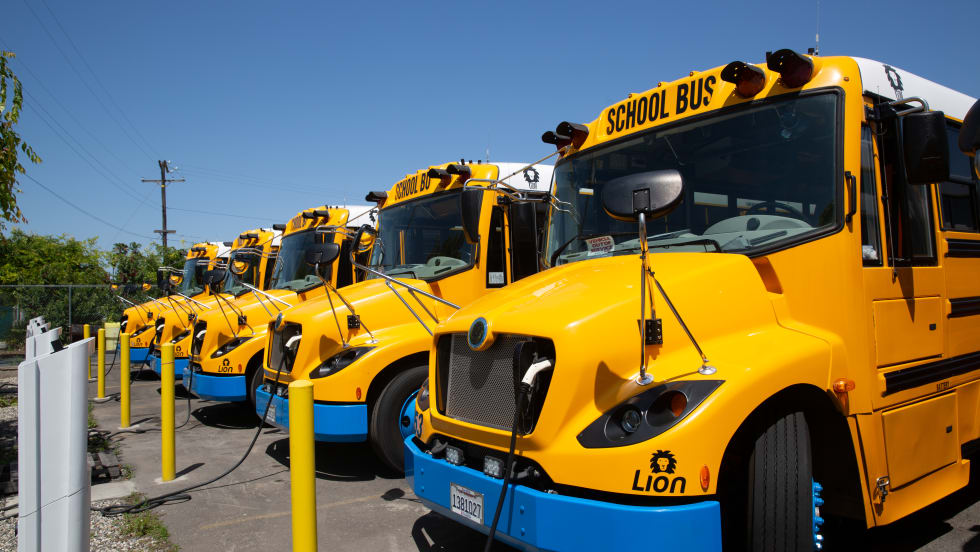
California School Children Ride in Green School Buses
Today, California prides itself on utilizing the most zero-emission (ZE) school buses in the country with over 1,689 being used by California school districts; and while the state is on a positive health trajectory thanks to a decree to eliminate gas and diesel vehicles, more work needs to be done to improve children’s well-being.
Read More →
Behind The Wheel of Childrens’ Safety Aboard the School Bus
Bus drivers are the primary caretakers of children during their commute and thus bear responsibility for their safety. By prioritizing proper operating procedures, maintenance checks, and additional precautions, drivers can help avoid the loss of precious young lives under their care.
Read More →