




The challenges of bus driver training
I read an interesting story recently that reported on an impending partnership for school bus driver training between an Augusta, Ga.-based school district and a local technical college. One of the objectives of the course is to help create a more qualified applicant pool. Around that time, I also spoke with a driver trainer at another operation, who shared with me some of the challenges she faces in instructing bus drivers. One thing she said was that ...
I read an interesting story in The August Chronicle recently that reported on an impending partnership for school bus driver training between an Augusta, Ga.-based school district and a local technical college.
According to the article, the Richmond County School System board of education’s human resources committee has given initial approval to loan buses, a simulator and track space for a Commercial Straight Truck and Passenger Driving Program that will be offered at Augusta Technical College in the fall. (“Straight trucks” include school buses, but not tractor-trailers and other jointed vehicles.)
The 15-week course would train school bus driver candidates in the fundamentals of driving and operation, and graduates would receive a technical certificate of credit. They would then have to report to the school system for further certification, and then to the Department of Motor Vehicles to obtain a commercial driver’s license. Jimmie Wiley, director of transportation at the Richmond County School System, told The Augusta Chronicle that the course would “enhance candidates’ abilities and create a more qualified applicant pool.”
I’m interested to read your thoughts on this partnership/program. Do you think it could be an effective way to, as Wiley said, enhance candidates’ abilities and create a more qualified applicant pool? Post a comment below or send an e-mail to info@schoolbusfleet.com.
Around the time that I read this article, I also spoke with a driver trainer at an operation in California, who shared with me some of the challenges she faces in instructing bus drivers. One thing she said was that she sometimes finds it difficult to continually come up with new and interesting ways to present material to her drivers.
In SBF's inaugural Driver Training Survey, which Executive Editor Thomas McMahon wrote about in last week’s blog post, respondents were asked, “What is your biggest challenge in school bus driver training?”
Not surprisingly, there was a wide range of answers, and many people relayed a similar challenge that the trainer at the California operation faces.
One person wrote, “Finding current topics that the drivers will actually learn something at the training session is the biggest challenge in school bus driver training. … It is difficult to come up with topics that [are] interesting all the time.”
This person also said that she recently had an official from the Federal Railroad Administration come to her facility and present on railroad crossing safety to the drivers. They then took a field trip to an actual railroad crossing, where they were able to board the train and see the crossing from the train engineer’s point of view. “Our drivers still talk about that training session,” she wrote.
Here are some of the other challenges mentioned by survey respondents:
• Money and time to do the extra training needed, not just meeting state and federal requirements.
• Finding drivers who are interested in taking the online training and face to face portion before driving for our district.
• Retention. Our biggest challenge is in keeping the driver. With the low pay, large responsibility and the distractions from the students, it just doesn't add up for the new hire.
• Dealing with student behavior problems and helping the drivers understand discipline procedures.
• Getting experienced drivers to receive instruction and criticism, and understanding the importance of continual self improvement of their skills.
Do you or your driver trainers face any of these challenges at your operation? If so, have you found an effective way to address them?
Until next time,
Kelly Roher
Managing Editor
More Blog Posts

The Sound of Summer Starting [Guest Editorial]
That unmistakable school bus rumble? It carries childhood memories, community routines, and a whole lot of unseen work behind the scenes.
Read More →
The Technology Power Combo That Enables EV Charging on Difficult Sites
As the pace of fleet electrification increases and charging infrastructure continues to pose challenges, many fleets find themselves puzzling over the question: how do I install charging infrastructure faster and more cost-efficiently?
Read More →
Trip Sheet: Farewell, Faithful Readers – Keep on Rolling
Executive Editor Wes Platt offers parting thoughts as he parks the School Bus Fleet bus to focus on ultra-local community journalism, making way for someone else to take the wheel as the pupil transportation industry continues to evolve.
Read More →
Trip Sheet: School Transportation Pros Can Champion Children's Mental Health
Children's Mental Health Awareness Day underscores the significance of school bus drivers in fostering supportive environments during students' journeys. SAMHSA's initiatives, including stigma reduction and access to resources, complement the Biden-Harris administration's funding efforts to enhance youth mental health services and workforce development.
Read More →
Trip Sheet: Is It Time for Daylight Saving Time to Clock Out?
How do you think the potential shift to permanent Daylight Saving Time or standard time would impact our daily lives and routines, especially considering the divided approach across various states?
Read More →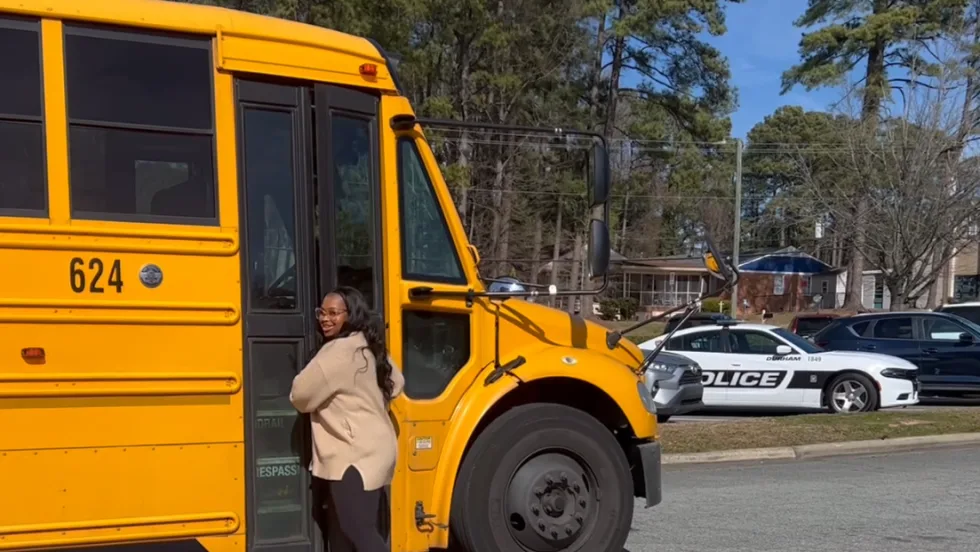
Trip Sheet: Meeting a Hero in My Own Back Yard
I remain impressed by the matter-of-fact heroism that’s often demonstrated by school bus drivers like Deona Washington who are caught in these situations where the best of us might lose our cool and panic. But, then again, bus drivers are a unique breed.
Read More →
Trip Sheet: 3 Takeaways from the EPA Clean School Bus Grant Program
Most applicants sought grant funding to acquire electric school buses, with propane coming in a distant second. No one indicated plans to purchase compressed natural gas (CNG) buses in this round. That’s not terribly surprising, I suppose, given how few school districts listed the inclusion of CNG buses in their fleets for our 2023 top district fleets survey.
Read More →
Trip Sheet: Let's Get Rolling: What's Coming in 2024?
Calendar pages keep flipping toward the mandates set in states like New York and California to transition their school bus fleets from diesel to zero-emission, but there’s plenty of reluctance and pushback.
Read More →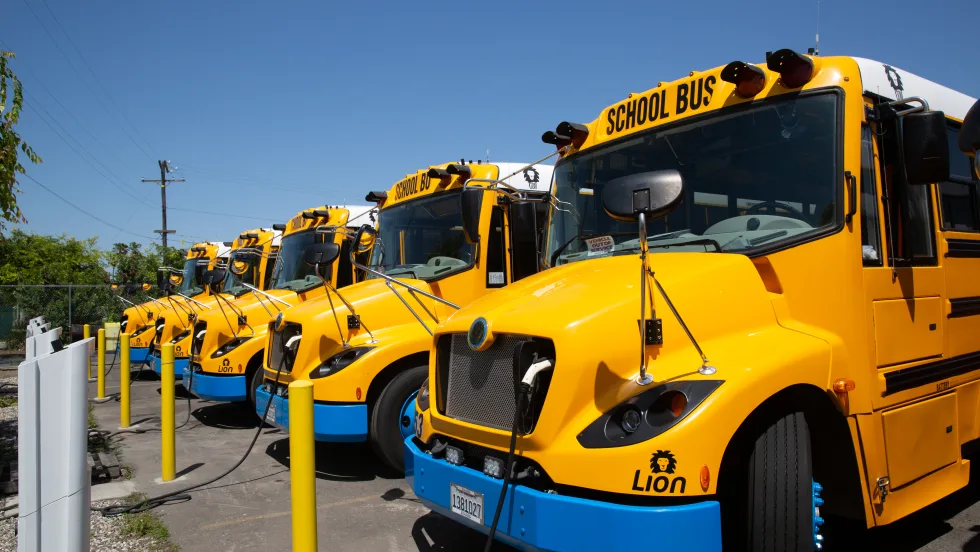
California School Children Ride in Green School Buses
Today, California prides itself on utilizing the most zero-emission (ZE) school buses in the country with over 1,689 being used by California school districts; and while the state is on a positive health trajectory thanks to a decree to eliminate gas and diesel vehicles, more work needs to be done to improve children’s well-being.
Read More →
Behind The Wheel of Childrens’ Safety Aboard the School Bus
Bus drivers are the primary caretakers of children during their commute and thus bear responsibility for their safety. By prioritizing proper operating procedures, maintenance checks, and additional precautions, drivers can help avoid the loss of precious young lives under their care.
Read More →