




School Bus Drivers Are Vital to Educational Equity
The National School Transportation Association has petitioned for school bus drivers to be made a high priority for phased allocation of COVID-19 vaccines. The association's president stresses that without a healthy and plentiful workforce of drivers, more children may be forced into less safe ways to get to school.
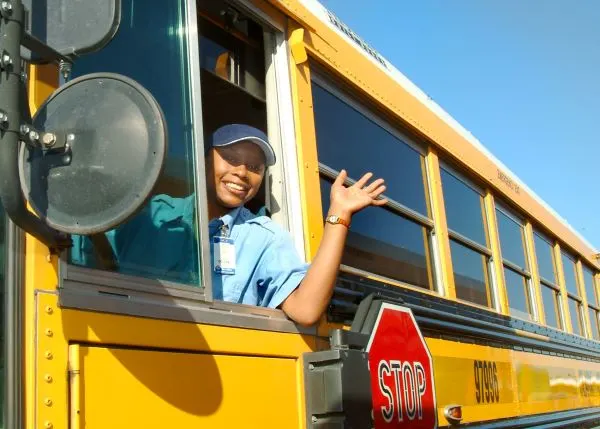
The National School Transportation Association has petitioned for school bus drivers to be made a high priority for phased allocation of COVID-19 vaccines.
File photo
The National School Transportation Association (NSTA) recently petitioned the Advisory Committee on Immunization Practices (ACIP) for school bus drivers across the country to be made a high priority for phased allocation of COVID-19 vaccines when they become available. (ACIP is an arm of the Centers for Disease Control and Prevention [CDC], a federal governmental agency we have heard mentioned quite a bit in the news recently.)
NSTA appreciated the opportunity to make comments in support of school bus drivers being classified as a high priority in the ACIP recommendations for the scheduled rollout of COVID-19 vaccines at a public hearing on Nov. 23. Since we are a hybrid, operating within both the educational and transportation sectors, we wanted to ensure that school bus drivers were specifically addressed in the vaccine phase deployment.
As I’m sure everyone reading this knows, school transportation is a huge part of our country’s commitment to a free and equal public education. Clearly, our industry is an essential service and school bus transportation is an extension of the overall K-12 educational system, and for many students provides the only way to get school each day.
Over the last nine months, our school bus heroes have also deliveredmillions of meals and supplies such as laptops and tablets, driven buses to locations that lack connectivity to provide Wi-Fi hot spots, as well as provided other specialized services. I even heard of one instance where a school bus contractor was able to return band equipment to students.
None of this should be surprising. Remember, we are the largest transportation system in the U.S., as 500,000 school buses transport over 26 million schoolchildren to and from school safely each day.
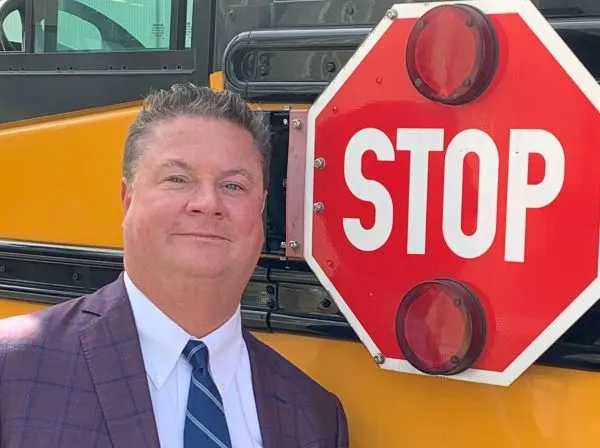
John Benish Jr. is the president of the National School Transportation Association.
File photo courtesy National School Transportation Association
Needless to say, this period has been and continues to be a challenging environment for us, and I think I speak for everyone in saying we look forward to a complete return to in-class learning for all students. But a full return to the school building environment will not be possible without an adequate number of skilled, trained, experienced, and licensed school bus drivers.
As we said in our testimony before ACIP: “Providing equity in access to in-school learning cannot be based simply on rhetoric and good wishes.”
Right now, NSTA estimates that 5% to 10% of school bus drivers are unavailable due to complications caused by the novel coronavirus, and those numbers continue to rise. These include drivers who are infected, exposed, and quarantined, and those on a leave of absence.
NSTA also estimates that approximately 33% of industry drivers are age 60 or older and are in racially and ethnically diverse groups.To summarize, many school bus drivers remain fearful about a return to work without a vaccine and targeting this group for vaccinations will certainly assist in the prevention of further transmissions of this virus.
One additional fact: school bus drivers are included on the Cybersecurity and Infrastructure Security Agency (CISA) list of Essential Critical Infrastructure Workers. They are listed in both the Education and Transportation sections of the latest version of this document issued this past August.
Just remember that without a healthy and plentiful workforce of drivers, more children may be forced into less safe ways to get to school, and many may not have access to pursue their educational opportunities. So, while it’s good to give praise to our school bus driver heroes, it’s also important for government to step up and provide this tangible support, which will benefit millions of schoolchildren around the country.
More Blog Posts
'I’m a School Bus Driver, You Can Trust Me'
A crowded Cleveland parking lot, a full-size pickup, and five unexpected words turned a stressful moment into a reminder of just how much trust we place in school bus drivers every day.
Read More →
The Sound of Summer Starting [Guest Editorial]
That unmistakable school bus rumble? It carries childhood memories, community routines, and a whole lot of unseen work behind the scenes.
Read More →
The Technology Power Combo That Enables EV Charging on Difficult Sites
As the pace of fleet electrification increases and charging infrastructure continues to pose challenges, many fleets find themselves puzzling over the question: how do I install charging infrastructure faster and more cost-efficiently?
Read More →
Trip Sheet: Farewell, Faithful Readers – Keep on Rolling
Executive Editor Wes Platt offers parting thoughts as he parks the School Bus Fleet bus to focus on ultra-local community journalism, making way for someone else to take the wheel as the pupil transportation industry continues to evolve.
Read More →
Trip Sheet: School Transportation Pros Can Champion Children's Mental Health
Children's Mental Health Awareness Day underscores the significance of school bus drivers in fostering supportive environments during students' journeys. SAMHSA's initiatives, including stigma reduction and access to resources, complement the Biden-Harris administration's funding efforts to enhance youth mental health services and workforce development.
Read More →
Trip Sheet: Is It Time for Daylight Saving Time to Clock Out?
How do you think the potential shift to permanent Daylight Saving Time or standard time would impact our daily lives and routines, especially considering the divided approach across various states?
Read More →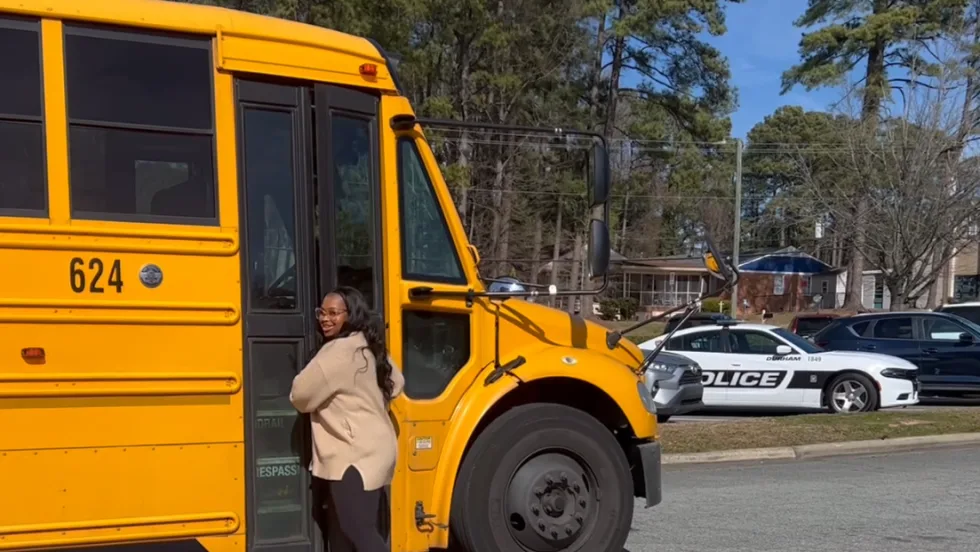
Trip Sheet: Meeting a Hero in My Own Back Yard
I remain impressed by the matter-of-fact heroism that’s often demonstrated by school bus drivers like Deona Washington who are caught in these situations where the best of us might lose our cool and panic. But, then again, bus drivers are a unique breed.
Read More →
Trip Sheet: 3 Takeaways from the EPA Clean School Bus Grant Program
Most applicants sought grant funding to acquire electric school buses, with propane coming in a distant second. No one indicated plans to purchase compressed natural gas (CNG) buses in this round. That’s not terribly surprising, I suppose, given how few school districts listed the inclusion of CNG buses in their fleets for our 2023 top district fleets survey.
Read More →
Trip Sheet: Let's Get Rolling: What's Coming in 2024?
Calendar pages keep flipping toward the mandates set in states like New York and California to transition their school bus fleets from diesel to zero-emission, but there’s plenty of reluctance and pushback.
Read More →
California School Children Ride in Green School Buses
Today, California prides itself on utilizing the most zero-emission (ZE) school buses in the country with over 1,689 being used by California school districts; and while the state is on a positive health trajectory thanks to a decree to eliminate gas and diesel vehicles, more work needs to be done to improve children’s well-being.
Read More →