




Saluting the ‘Father of the Yellow School Bus’
There have been many industry developments to cover during School Bus Fleet’s 60 years. But one of the most influential pupil transportation events, organized by Dr. Frank Cyr, occurred 17 years before the magazine’s inception.


Dr. Frank Cyr organized the first national standards conference for school transportation in 1939.
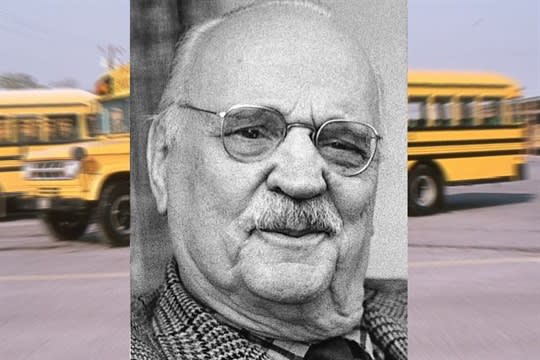
Dr. Frank Cyr organized the first national standards conference for school transportation in 1939.
As School Bus Fleet marks its 60th anniversary this year, I’ve taken a look back at some of the industry milestones that our magazine has covered over the six decades since it was first published. To name just a few:
• In 1957, a school bus with a built-in elevator, believed to be the first of its kind, began transporting special-needs students in California. The bus, designed and built by Gillig Brothers, was also fitted with floor attachments for anchoring wheelchairs.
• In 1963, Superior Coach introduced a bumper-mounted gate to keep kids from crossing too close to the front of the bus.
• In 1972, the National Highway Traffic Safety Administration issued Standard #17, guidelines for school bus operations, maintenance, inspections, and training.
• In 1977, new federal standards went into effect for six areas of school bus production: emergency exits, roof strength, joint strength, seating, fuel system integrity, and hydraulic brake systems.
• In 1992, federal requirements went into effect for all school bus drivers in the U.S. to obtain a CDL and for all new school buses to be equipped with stop arms.
Of course, there have been many other key developments in the industry since School Bus Fleet began (initially as School Bus Trends) in 1956. But one of the most influential events in pupil transportation occurred 17 years before the magazine’s inception.
In April 1939, the first national standards conference for school transportation took place at Columbia University’s Teachers College in New York. The event, which would go on to be held every five years, is now known as the National Congress on School Transportation.
At this first edition, representatives of the then-48 states and the manufacturers developed 44 school bus standards, including specifications for body length, ceiling height, doors, and aisle width. They also agreed on a highly visible shade of yellow, dubbed “National School Bus Chrome” (now “National School Bus Glossy Yellow”).
The man who organized this first standards conference was an educator named Dr. Frank Cyr, and for his pioneering efforts he became known as the “Father of the Yellow School Bus.”
Before the 1939 conference, there were no national standards for school bus construction. According to the Teachers College at Columbia University, Cyr had begun a study of pupil transportation in 1937, and he found that students were being transported in a wide variety of vehicles. Among them: trucks, horse-drawn wheat wagons, and buses of different colors. One patriotic school district had even painted its buses red, white, and blue. The findings pointed to the need for national standards, and thus the national conference.
Fifty years after the inaugural school bus standards conference, in April 1989, Cyr spoke at a luncheon held at the original site of the event, Teachers College. He recalled that strips of various colors were hung on a wall, and delegates deliberated until they had narrowed the field to three slightly different shades of yellow, which Cyr said allowed for the fact that the paint couldn’t always be mixed precisely.
According to Teachers College (where he taught from 1934 to 1965), Cyr noted that safety was the foremost factor in decisions made at the conference. “The most often asked question was, ‘Will this standard improve safety?’” Cyr recalled at the luncheon.
When Cyr died in 1995 at age 95, the pupil transportation community lost a “father.” But his groundbreaking work helped establish the yellow school bus as an icon of safety and education, and he set a model of collaboration for the industry to follow into the future.
More Blog Posts

The Sound of Summer Starting [Guest Editorial]
That unmistakable school bus rumble? It carries childhood memories, community routines, and a whole lot of unseen work behind the scenes.
Read More →
The Technology Power Combo That Enables EV Charging on Difficult Sites
As the pace of fleet electrification increases and charging infrastructure continues to pose challenges, many fleets find themselves puzzling over the question: how do I install charging infrastructure faster and more cost-efficiently?
Read More →
Trip Sheet: Farewell, Faithful Readers – Keep on Rolling
Executive Editor Wes Platt offers parting thoughts as he parks the School Bus Fleet bus to focus on ultra-local community journalism, making way for someone else to take the wheel as the pupil transportation industry continues to evolve.
Read More →
Trip Sheet: School Transportation Pros Can Champion Children's Mental Health
Children's Mental Health Awareness Day underscores the significance of school bus drivers in fostering supportive environments during students' journeys. SAMHSA's initiatives, including stigma reduction and access to resources, complement the Biden-Harris administration's funding efforts to enhance youth mental health services and workforce development.
Read More →
Trip Sheet: Is It Time for Daylight Saving Time to Clock Out?
How do you think the potential shift to permanent Daylight Saving Time or standard time would impact our daily lives and routines, especially considering the divided approach across various states?
Read More →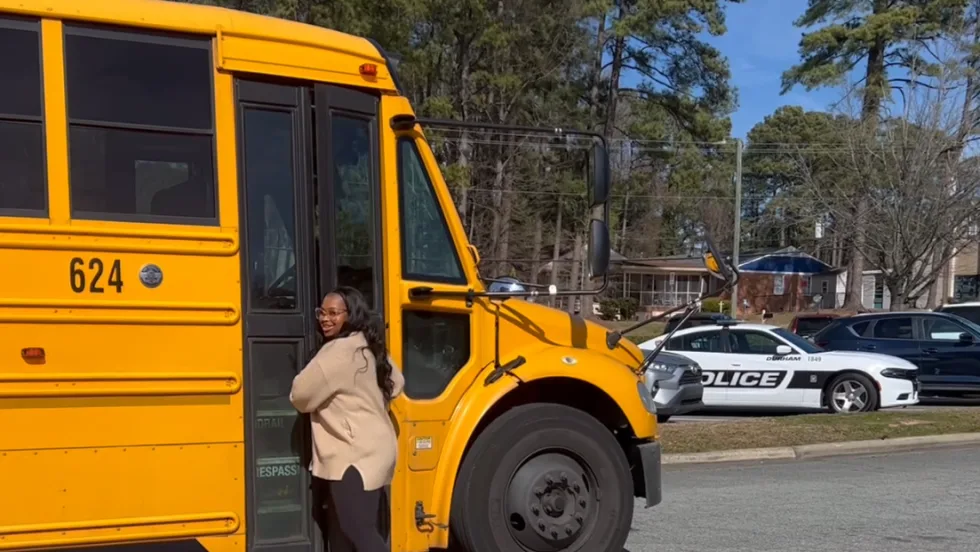
Trip Sheet: Meeting a Hero in My Own Back Yard
I remain impressed by the matter-of-fact heroism that’s often demonstrated by school bus drivers like Deona Washington who are caught in these situations where the best of us might lose our cool and panic. But, then again, bus drivers are a unique breed.
Read More →
Trip Sheet: 3 Takeaways from the EPA Clean School Bus Grant Program
Most applicants sought grant funding to acquire electric school buses, with propane coming in a distant second. No one indicated plans to purchase compressed natural gas (CNG) buses in this round. That’s not terribly surprising, I suppose, given how few school districts listed the inclusion of CNG buses in their fleets for our 2023 top district fleets survey.
Read More →
Trip Sheet: Let's Get Rolling: What's Coming in 2024?
Calendar pages keep flipping toward the mandates set in states like New York and California to transition their school bus fleets from diesel to zero-emission, but there’s plenty of reluctance and pushback.
Read More →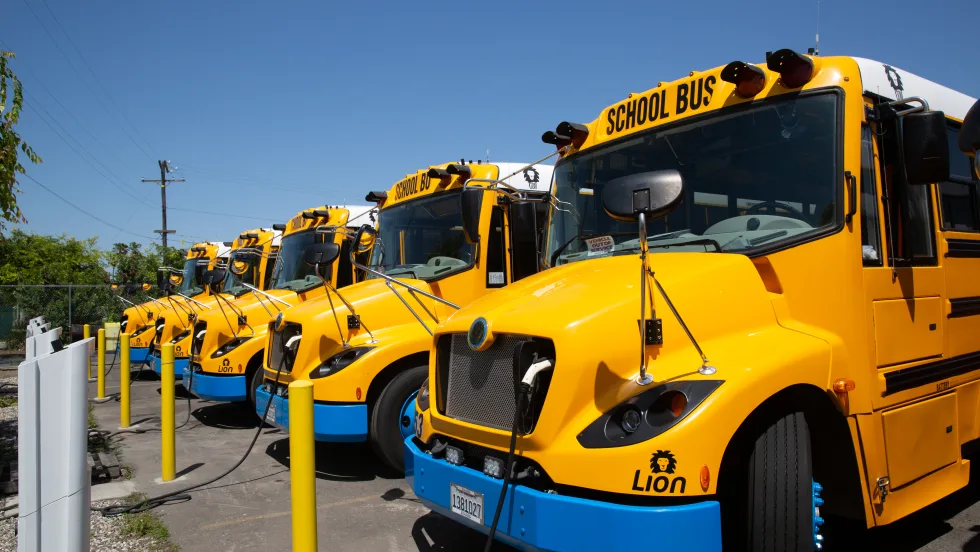
California School Children Ride in Green School Buses
Today, California prides itself on utilizing the most zero-emission (ZE) school buses in the country with over 1,689 being used by California school districts; and while the state is on a positive health trajectory thanks to a decree to eliminate gas and diesel vehicles, more work needs to be done to improve children’s well-being.
Read More →
Behind The Wheel of Childrens’ Safety Aboard the School Bus
Bus drivers are the primary caretakers of children during their commute and thus bear responsibility for their safety. By prioritizing proper operating procedures, maintenance checks, and additional precautions, drivers can help avoid the loss of precious young lives under their care.
Read More →