




Revisiting an infamous school bus-train crash
With the 20th anniversary of the Fox River Grove tragedy, in which seven students were killed, this week is a fitting time to review rail crossing safety procedures at your operation.

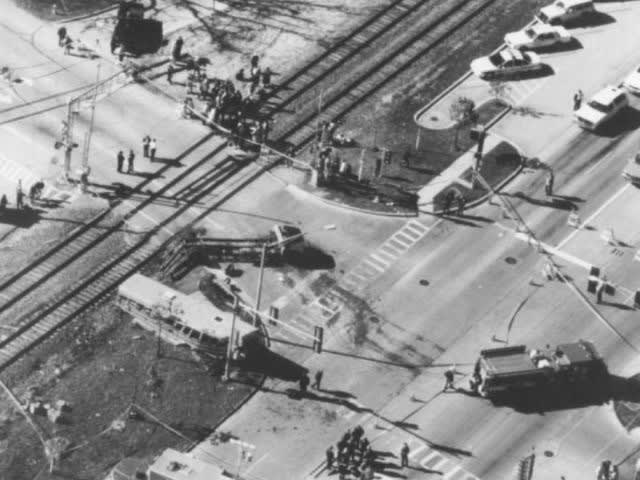
In 1995, seven students in Fox River Grove, Illinois, were killed when a commuter train slammed into the back of a stopped school bus that was extending into its path.
Sunday marked the 20-year anniversary of one of the worst school bus-train crashes in U.S. history.
On the morning of Oct. 25, 1995, a school bus in Fox River Grove, Illinois, crossed railroad tracks and immediately stopped for a red light at an intersection next to the tracks. What the substitute school bus driver didn’t realize was that the rear of the bus was extending about 3 feet into the path of an oncoming commuter train.
Seconds later, the train slammed into the bus. The impact separated the school bus body from its chassis.
Of the 35 high school students on the bus, five died at the scene, and two more died of injuries a day later. Two dozen other students and the school bus driver were injured. No one on the train was injured.
After investigating the Fox River Grove crash, the National Transportation Safety Board (NTSB) issued 28 recommendations to various agencies and associations. Among those recommendations, the NTSB called for guidelines to be developed for the identification of route hazards and for the placement and use of radio speakers on school buses (investigators found that the driver couldn't hear the approaching train because the bus was too noisy).
On the route hazards issue, the National Association of State Directors of Pupil Transportation Services (NASDPTS) developed a report, released in 1998, called “Identification and Evaluation of School Bus Route and Hazard Marking Systems."
The NASDPTS report calls for an annual review of school bus routes by a person trained to identify potential driving hazards. Also, NASDPTS wrote, school bus drivers should be trained in recognizing potential route hazards and should know how to report them.
The NASDPTS report includes a checklist for identifying potential railroad grade crossing hazards, such as presence of warning devices, sight distance, number and speed of scheduled trains, and characteristics of the road and tracks.
Another key resource for rail crossing safety is Operation Lifesaver. The nonprofit organization recommends these procedures for school bus drivers at highway-rail grades:
1. Slow down, test your brakes and activate your four-way hazard lights about 200 feet before the crossing. (If your vehicle has a manual transmission, downshift before you cross.)
2. Check for traffic around you. Make sure your intentions to stop are clear. Use a pull-out lane if one is available. Flashers, if necessary.
3. Prepare the bus: Put the transmission in neutral, press down on the service brake or set the parking brakes (depending on your district’s policy). Turn off the AM/FM radio and all other noisy equipment; ask passengers for quiet.
4. Stop where you have the best view of the tracks, no closer than 15 feet and no farther than 50 feet from the nearest rail. Check beyond the tracks for traffic congestion, a signal or stop sign. Be certain the containment area across the tracks is large enough to hold the entire bus, plus 15 feet. (Emphasis added.)
5. Open the service door and driver's window. Look and listen for an approaching train in both directions. Proceed only after checking the crossing signals.
6. Go. When certain that no train is approaching on any track, do not hesitate. Cross in low gear and do not change gears while crossing.
Operation Lifesaver also offers an e-learning program for school bus drivers and other resources that can be accessed on this NASDPTS page.
With the 20th anniversary of the Fox River Grove tragedy, this week is a fitting time to review rail crossing safety procedures at your operation.
Thomas McMahon is executive editor of School Bus Fleet.
More Blog Posts

'I’m a School Bus Driver, You Can Trust Me'
A crowded Cleveland parking lot, a full-size pickup, and five unexpected words turned a stressful moment into a reminder of just how much trust we place in school bus drivers every day.
Read More →
The Sound of Summer Starting [Guest Editorial]
That unmistakable school bus rumble? It carries childhood memories, community routines, and a whole lot of unseen work behind the scenes.
Read More →
The Technology Power Combo That Enables EV Charging on Difficult Sites
As the pace of fleet electrification increases and charging infrastructure continues to pose challenges, many fleets find themselves puzzling over the question: how do I install charging infrastructure faster and more cost-efficiently?
Read More →
Trip Sheet: Farewell, Faithful Readers – Keep on Rolling
Executive Editor Wes Platt offers parting thoughts as he parks the School Bus Fleet bus to focus on ultra-local community journalism, making way for someone else to take the wheel as the pupil transportation industry continues to evolve.
Read More →
Trip Sheet: School Transportation Pros Can Champion Children's Mental Health
Children's Mental Health Awareness Day underscores the significance of school bus drivers in fostering supportive environments during students' journeys. SAMHSA's initiatives, including stigma reduction and access to resources, complement the Biden-Harris administration's funding efforts to enhance youth mental health services and workforce development.
Read More →
Trip Sheet: Is It Time for Daylight Saving Time to Clock Out?
How do you think the potential shift to permanent Daylight Saving Time or standard time would impact our daily lives and routines, especially considering the divided approach across various states?
Read More →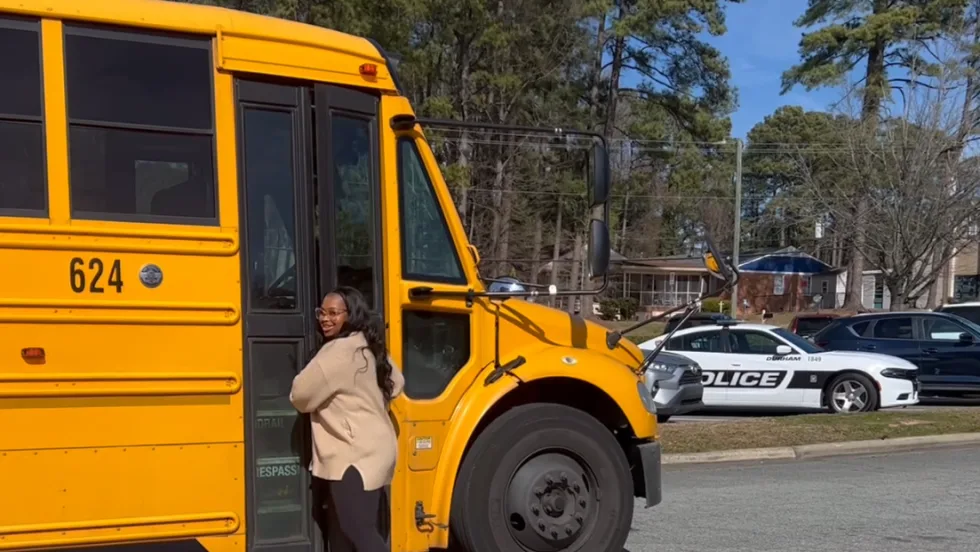
Trip Sheet: Meeting a Hero in My Own Back Yard
I remain impressed by the matter-of-fact heroism that’s often demonstrated by school bus drivers like Deona Washington who are caught in these situations where the best of us might lose our cool and panic. But, then again, bus drivers are a unique breed.
Read More →
Trip Sheet: 3 Takeaways from the EPA Clean School Bus Grant Program
Most applicants sought grant funding to acquire electric school buses, with propane coming in a distant second. No one indicated plans to purchase compressed natural gas (CNG) buses in this round. That’s not terribly surprising, I suppose, given how few school districts listed the inclusion of CNG buses in their fleets for our 2023 top district fleets survey.
Read More →
Trip Sheet: Let's Get Rolling: What's Coming in 2024?
Calendar pages keep flipping toward the mandates set in states like New York and California to transition their school bus fleets from diesel to zero-emission, but there’s plenty of reluctance and pushback.
Read More →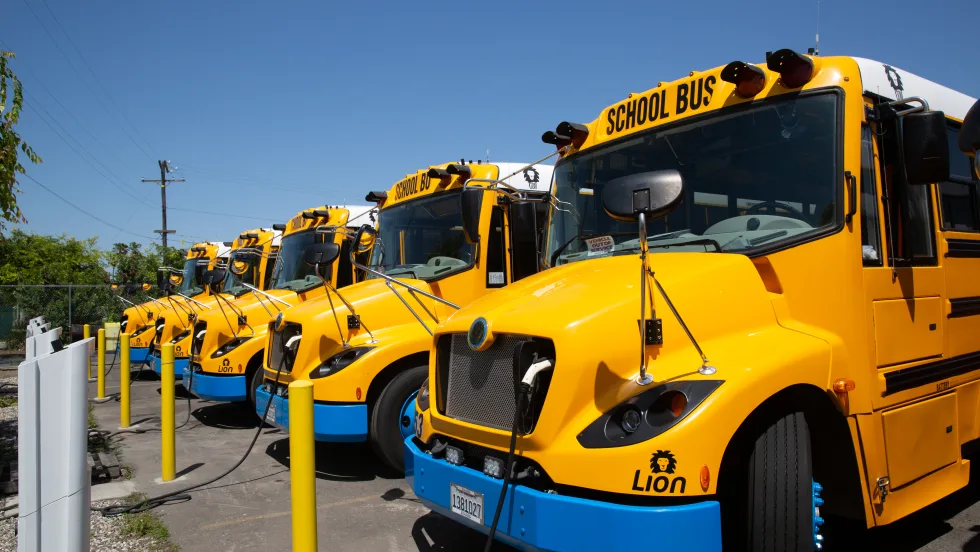
California School Children Ride in Green School Buses
Today, California prides itself on utilizing the most zero-emission (ZE) school buses in the country with over 1,689 being used by California school districts; and while the state is on a positive health trajectory thanks to a decree to eliminate gas and diesel vehicles, more work needs to be done to improve children’s well-being.
Read More →