




Proposed driver health funding cuts under fire
The Georgia governor’s proposed plan to cut health benefits for part-time school bus drivers fired up many of our readers, and they let us know. Some state legislators aren’t on board, either.

The news that Georgia’s governor proposed a plan to cut health funding benefits for part-time school bus drivers rubbed more than a few SBF readers the wrong way, and some lawmakers have indicated they are not behind the proposal.
As The Atlanta-Journal Constitution reported in mid-January, Gov. Nathan Deal proposed the cuts in the State Health Benefit Plan (SHBP) in the fiscal year 2016 state budget for school bus drivers and other state employees who work less than 30 hours a week.
Soon after, the Georgia Association for Pupil Transportation (GAPT) came out with a position paper that detailed how the plan would exacerbate a driver shortage, and remove a valuable recruitment and retention tool, as well as a sizable chunk of driver compensation that has been in use for decades.
A spokesperson for the governor's office said in an email to SBF that the governor has pointed out that no other state workers who work less than 30 hours a week are eligible for health benefits, so it is a matter of fairness.
However, in a recent op-ed piece that ran in a few local newspapers, Garry Puetz, president of the GAPT, disputes this. He says the governor’s comparison of the work of part-time school bus drivers with other state employees, is “overly simplistic” and inaccurate. He adds that the governor’s solution assumes that equal — in this case, the lack of SHBP benefits for all non-certified school employees — is also fair, but that it does not address the specifics of the issue or consider the needs of the people involved.
Puetz emphasizes that the GAPT values the hard work of every state employee, and points out that in addition to driving a vehicle, bus drivers also help children safely access a quality education.
Additionally, in surveys being conducted across the state, school transportation directors are reporting that 20% to 100% of their bus drivers do not work 30 hours a week, Puetz adds, and officials are concerned that many of these drivers will be forced to consider leaving the profession.
Not surprisingly, SBF readers responded passionately on the comments section of the website, citing the often low wages and high stress of the job, and pointing to nationwide driver shortages. Here are some of those comments:
“It is already hard enough to get — let alone, keep — bus drivers, so let’s [not] penalize the school and the transportation departments some more.” — Douglas Wood
“Good luck, Nathan, when you try to fill the vacant driver slots!! What incentive are you planning on using?? These folks work terrible hours, in all kinds of weather, make sub-standard wages and deal with many disrespectful students and parents with little or NO support [from] administrators.” — Ron Zelachowski
“Every teacher has told me, ‘I wouldn't drive a bus that has the equivalent of three classrooms full of students sitting behind me while driving a commercial vehicle down the road and not run over someone.” — Connie Kent
One reader simply said he backs Georgia bus drivers:
“I’m not a bus driver, but I stand with them. Use your heads down there at the budget hearing. You will lose good and safe drivers if this isn't taken out of the budget.” — Gary Guy
And another reader retorted about the level of accomplishment in government:
“…Bus drivers, cafeteria workers and custodians [work hard] and results can be seen at the end of every day, which is more than can be said for our lawmakers.” — Donna Garner
Meanwhile, the latest in the press indicates that many legislators do not support the proposed cut. The Cherokee Ledger-News reports that several lawmakers have said as much, and, according to the Times-Herald, the general assembly is requesting “an examination of options to provide health benefits to these workers.” The Atlanta-Journal Constitution also ran a column by author Jay Bookman that supports keeping the funding intact.
It will be interesting to see what happens as this story continues to develop. We’ll be sure to keep you posted.
Nicole Schlosser is managing editor of School Bus Fleet magazine.
More Blog Posts
The Sound of Summer Starting [Guest Editorial]
That unmistakable school bus rumble? It carries childhood memories, community routines, and a whole lot of unseen work behind the scenes.
Read More →
The Technology Power Combo That Enables EV Charging on Difficult Sites
As the pace of fleet electrification increases and charging infrastructure continues to pose challenges, many fleets find themselves puzzling over the question: how do I install charging infrastructure faster and more cost-efficiently?
Read More →
Trip Sheet: Farewell, Faithful Readers – Keep on Rolling
Executive Editor Wes Platt offers parting thoughts as he parks the School Bus Fleet bus to focus on ultra-local community journalism, making way for someone else to take the wheel as the pupil transportation industry continues to evolve.
Read More →
Trip Sheet: School Transportation Pros Can Champion Children's Mental Health
Children's Mental Health Awareness Day underscores the significance of school bus drivers in fostering supportive environments during students' journeys. SAMHSA's initiatives, including stigma reduction and access to resources, complement the Biden-Harris administration's funding efforts to enhance youth mental health services and workforce development.
Read More →
Trip Sheet: Is It Time for Daylight Saving Time to Clock Out?
How do you think the potential shift to permanent Daylight Saving Time or standard time would impact our daily lives and routines, especially considering the divided approach across various states?
Read More →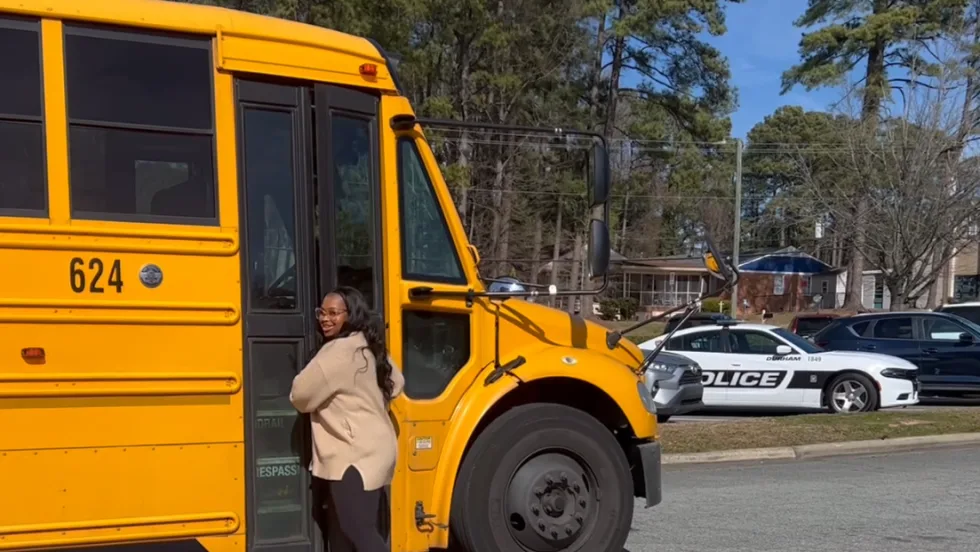
Trip Sheet: Meeting a Hero in My Own Back Yard
I remain impressed by the matter-of-fact heroism that’s often demonstrated by school bus drivers like Deona Washington who are caught in these situations where the best of us might lose our cool and panic. But, then again, bus drivers are a unique breed.
Read More →
Trip Sheet: 3 Takeaways from the EPA Clean School Bus Grant Program
Most applicants sought grant funding to acquire electric school buses, with propane coming in a distant second. No one indicated plans to purchase compressed natural gas (CNG) buses in this round. That’s not terribly surprising, I suppose, given how few school districts listed the inclusion of CNG buses in their fleets for our 2023 top district fleets survey.
Read More →
Trip Sheet: Let's Get Rolling: What's Coming in 2024?
Calendar pages keep flipping toward the mandates set in states like New York and California to transition their school bus fleets from diesel to zero-emission, but there’s plenty of reluctance and pushback.
Read More →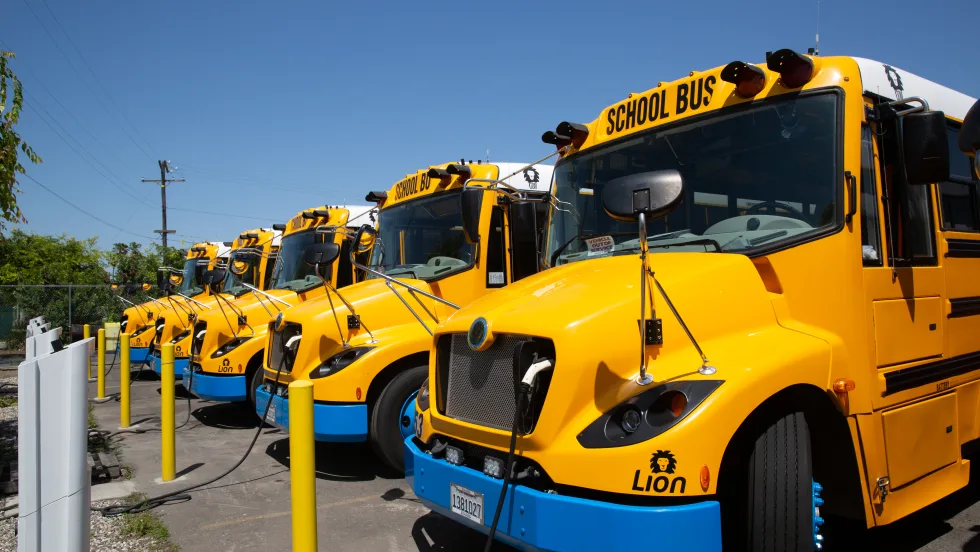
California School Children Ride in Green School Buses
Today, California prides itself on utilizing the most zero-emission (ZE) school buses in the country with over 1,689 being used by California school districts; and while the state is on a positive health trajectory thanks to a decree to eliminate gas and diesel vehicles, more work needs to be done to improve children’s well-being.
Read More →
Behind The Wheel of Childrens’ Safety Aboard the School Bus
Bus drivers are the primary caretakers of children during their commute and thus bear responsibility for their safety. By prioritizing proper operating procedures, maintenance checks, and additional precautions, drivers can help avoid the loss of precious young lives under their care.
Read More →