




New Engine, Fuel System Coming for Blue Bird Propane, Gasoline School Buses
Op-Ed: Propane Industry Offering More Innovations for School Buses
The U.S. has seen a 960% increase in propane-powered school bus fleets since 2012. Companies are responding with upgraded engines and fueling infrastructure and renewable propane.
by Todd Mouw and Crystelle Markley
January 29, 2021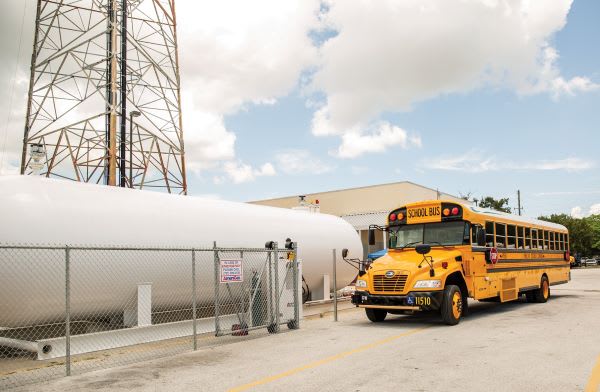
Photo courtesy Superior Energy Systems
4 min to read
Across the U.S., over 1,000 school districts operate more than 20,000 school buses fueled by propane autogas. This tried and true, domestically produced, alternative fuel powers buses that carry 1.2 million students to school each day.
The U.S. has seen a 960% increase in propane-powered school bus fleets since 2012. Meanwhile, companies that develop new propane technology and fueling infrastructure for the school bus market keep sharing innovations.
New Engine Technology
At the end of 2020, advanced clean transportation company Roush CleanTech introduced its new “Gen 5” propane fuel system. The company’s propane technology brings the alternative fuel’s benefits to Ford’s new 7.3L V8 engine in Class 3 to 7 chassis, including school buses.
Known as “Godzilla,” Ford’s 7.3L engine is compact, and designed to be durable and easy to maintain. It is narrower than the previous 6.8L, allowing it to fit into multiple vehicle chassis and be serviced with similar automotive parts across each chassis. Innovations for the Gen 5 propane fuel system include stronger and lighter forged fuel rails and a support bracket that keeps the engine fuel distribution well organized. For all of these reasons, it is ideally suited for the school bus market.
Like its predecessors, this engine is designed to meet current and future emissions requirements. The Gen 5 is certified to the California Air Resources Board’s optional low nitrogen oxide (NOx) emissions standard of 0.05 grams per brake horsepower-hour (g/bhp-hr). All propane school buses reduce greenhouse gas emissions, which helps optimize fuel efficiency, and can operate on renewable propane, which further reduces emissions and carbon intensity values.

Todd Mouw is the president of Roush CleanTech.
Photo courtesy Roush CleanTech
Rising Renewable
Propane engines can be powered by renewable propane — an up-and-coming transportation fuel. Renewable propane is a non-fossil fuel produced from 100% renewable raw materials, such as waste, residue, and sustainably produced vegetable oils.
There is growing interest in renewable propane due to its near-zero emission levels, reduced greenhouse gases, and ability to help meet growing demand for cleaner products.
It can be used as a “drop-in” replacement fuel because, chemically, it is nearly identical to conventional propane. Since it is produced from renewable, raw materials, renewable propane has an even lower carbon intensity than conventional propane and is far cleaner than other energy sources.
The Propane Education and Research Council, a nonprofit that provides propane safety and training programs, is testing renewable propane, including blends with conventional propane and standard development. The organization has been informing OEMs of potential engine use and creating awareness of the fuel for producer, seller, transporter, and end user.
Many companies around the globe are developing renewable propane production technology, with some in commercial volume as a byproduct of renewable diesel plants. Renewable propane is produced in several European and Asian countries, and many U.S. refineries in California, Texas, and Louisiana have existing capacity to produce renewable propane as part of their renewable diesel production systems. The pricing is on par with traditional propane.
As demand grows in places like California, the renewable propane producers will begin to develop the infrastructure to efficiently distribute this fuel.

Crystelle Markley is the marketing director for Superior Energy Systems.
Photo courtesy Superior Energy Systems
Latest Fueling Options
Fueling infrastructure has always been a substantial piece of the propane puzzle for fleets. Propane fueling infrastructure costs less than any other transportation energy source — conventional or alternative — and companies continue to adapt fueling equipment to code advancements in propane technology mandated by the National Fire Protection Association (NFPA) 58 committee.
The NFPA code now requires the K-15, quick-connect style refueling inlet on propane vehicles as an industry standard. The K-15 nozzle allows for nearly zero escaped emissions at release and is extremely user-friendly, similar to a gasoline or diesel dispenser, with no threading.
The new nozzle technology also eliminates the requirement for personal protective equipment (PPE), including gloves and eye protection, helping school bus drivers and personnel save time when fueling.
Additionally, propane infrastructure manufacturer Superior Energy Systems has expanded its propane fueling technology equipment. New onboard diagnostics offer enhanced service capability and increased reliability with the company’s own software. The online software is supported in-house, not by a third party, with the intention of allowing for easier navigation by customers. It gives users access to data such as driver and vehicle identification, vehicle mileage, and gallons pumped at any time.
School bus fleets can access the information in real time and remotely, removing the need for multiple site visits and ensuring the most up-to-date technology. They can also create customizable reports without purchasing and installing separate technology. The company’s mass flow meter dispensers require less maintenance and are extremely accurate.
Most school districts elect to install private, onsite propane fueling infrastructure. Alternately, for districts that choose to install a station in a public setting for full retail use, the National Type Evaluation Program retail certification ensures that the equipment exceeds all standards used to evaluate measuring devices.
Todd Mouw is the president of propane systems supplier Roush CleanTech.
Crystelle Markley is the marketing director for propane infrastructure systems supplier Superior Energy Systems.
Subscribe to Our Newsletter
More Blog Posts

The Sound of Summer Starting [Guest Editorial]
That unmistakable school bus rumble? It carries childhood memories, community routines, and a whole lot of unseen work behind the scenes.
Read More →
The Technology Power Combo That Enables EV Charging on Difficult Sites
As the pace of fleet electrification increases and charging infrastructure continues to pose challenges, many fleets find themselves puzzling over the question: how do I install charging infrastructure faster and more cost-efficiently?
Read More →
Trip Sheet: Farewell, Faithful Readers – Keep on Rolling
Executive Editor Wes Platt offers parting thoughts as he parks the School Bus Fleet bus to focus on ultra-local community journalism, making way for someone else to take the wheel as the pupil transportation industry continues to evolve.
Read More →
Trip Sheet: School Transportation Pros Can Champion Children's Mental Health
Children's Mental Health Awareness Day underscores the significance of school bus drivers in fostering supportive environments during students' journeys. SAMHSA's initiatives, including stigma reduction and access to resources, complement the Biden-Harris administration's funding efforts to enhance youth mental health services and workforce development.
Read More →
Trip Sheet: Is It Time for Daylight Saving Time to Clock Out?
How do you think the potential shift to permanent Daylight Saving Time or standard time would impact our daily lives and routines, especially considering the divided approach across various states?
Read More →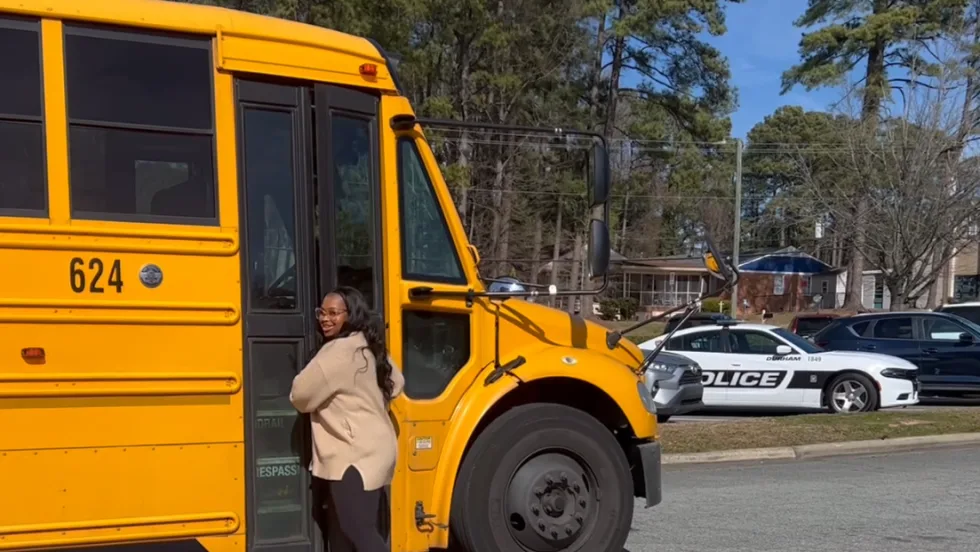
Trip Sheet: Meeting a Hero in My Own Back Yard
I remain impressed by the matter-of-fact heroism that’s often demonstrated by school bus drivers like Deona Washington who are caught in these situations where the best of us might lose our cool and panic. But, then again, bus drivers are a unique breed.
Read More →
Trip Sheet: 3 Takeaways from the EPA Clean School Bus Grant Program
Most applicants sought grant funding to acquire electric school buses, with propane coming in a distant second. No one indicated plans to purchase compressed natural gas (CNG) buses in this round. That’s not terribly surprising, I suppose, given how few school districts listed the inclusion of CNG buses in their fleets for our 2023 top district fleets survey.
Read More →
Trip Sheet: Let's Get Rolling: What's Coming in 2024?
Calendar pages keep flipping toward the mandates set in states like New York and California to transition their school bus fleets from diesel to zero-emission, but there’s plenty of reluctance and pushback.
Read More →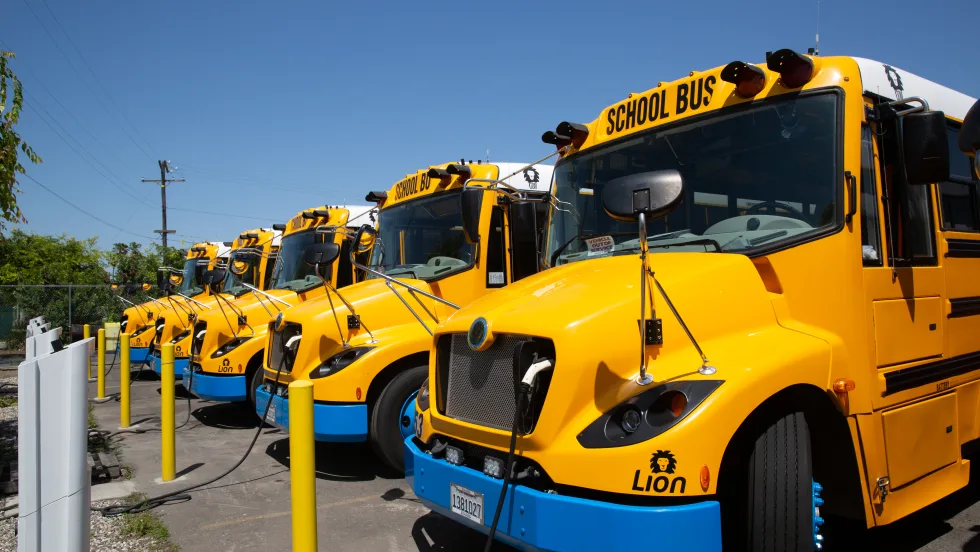
California School Children Ride in Green School Buses
Today, California prides itself on utilizing the most zero-emission (ZE) school buses in the country with over 1,689 being used by California school districts; and while the state is on a positive health trajectory thanks to a decree to eliminate gas and diesel vehicles, more work needs to be done to improve children’s well-being.
Read More →
Behind The Wheel of Childrens’ Safety Aboard the School Bus
Bus drivers are the primary caretakers of children during their commute and thus bear responsibility for their safety. By prioritizing proper operating procedures, maintenance checks, and additional precautions, drivers can help avoid the loss of precious young lives under their care.
Read More →