




Positive experiences with seat belts
In the debate on whether seat belts are a good fit for large school buses, it seems that the best insight comes from those who actually have experience with the restraints in their fleet. Casey Cypert is one such person. He has observed the effects of lap-shoulder belts on his district's route bus for the past five years. ...

In the debate on whether seat belts are a good fit for large school buses, it seems that the best insight comes from those who actually have experience with the restraints in their fleet.
Casey Cypert is one such person. As director of operations at Buellton (Calif.) Union School District (USD), Cypert has observed the effects of lap-shoulder belts on the district's route bus for the past five years.
I hit the road on Friday to visit Buellton USD and another district in Santa Barbara County, Goleta USD. Both had interesting perspectives to share about their fleets and the environments in which they operate.
Goleta USD has 21 school buses — including some new clean diesel units and two that run on compressed natural gas. The city, in between Santa Barbara and its University of California campus, is in a busy area, so traffic is a key issue for the district's bus operation.
Buellton USD has two buses, one of which runs a daily route to transport about 70 students. The district, in the bucolic Santa Ynez Valley, has had a big problem with stop-arm running, but local police have been cracking down on it recently.
Belt mandate
California has required lap-shoulder belts on new large school buses since 2005. (The same requirement went into effect for small school buses in 2004.)
Buellton USD bus passengers, the oldest of whom are in eighth grade, began buckling up when the district acquired a 2008 Type D school bus (with the help of a replacement grant of about $100,000). The 79-passenger unit is equipped with three lap-shoulder belts per seat.
Cypert told me that the belts have been "a real positive," particularly in their impact on student management. He said that having the students buckled up "solves 80 to 90% of problems" related to behavior.
Just for the sake of discussion, I noted a concern that I hear often in the industry: that kids will use the seat belt buckles as weapons. Cypert and bus driver Miguel Garcia said that this isn't happening. The lap-shoulder belts retract into the seat, so they can't be swung around like a lap-only belt could.
Another common question: Will the students actually buckle up? They do at Buellton USD. According to Cypert, training is the key. He said that Garcia has been diligent in training and reminding his passengers to wear their seat belts.
Personal experience
At Goleta USD, I got a chance to ride in a school bus with lap-shoulder belts. I was surprised by how easily the shoulder strap could be adjusted to fit me — and how comfortable it was to wear it.
The best part of the experience was that I was sitting next to my 6-year-old son, Tommy. (My wife homeschools our two boys, so they all came along as a field trip.)
When we get in our own vehicles, Tommy is quick to make sure that we're all wearing our seat belts before the car even starts. With that in mind, it was gratifying to see him board a school bus — the safest vehicle for transporting students — and still be able to buckle up.
My thanks to the fine folks I met with at Goleta USD — Robert Matheny, Jill Walker and Martin Tejeda — and at Buellton USD — Cypert and Garcia — for sharing their time and experiences with us.
— Thomas McMahon, executive editor
More Blog Posts
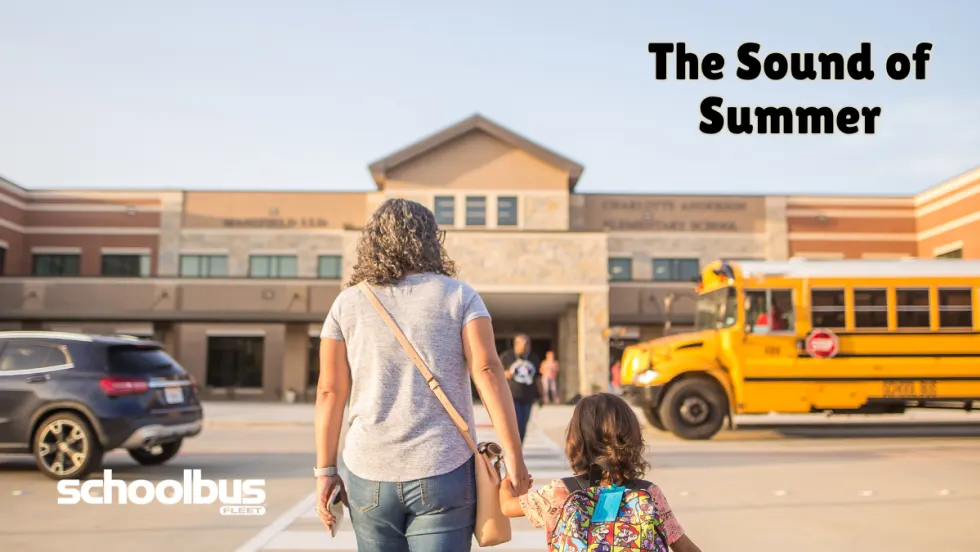
The Sound of Summer Starting [Guest Editorial]
That unmistakable school bus rumble? It carries childhood memories, community routines, and a whole lot of unseen work behind the scenes.
Read More →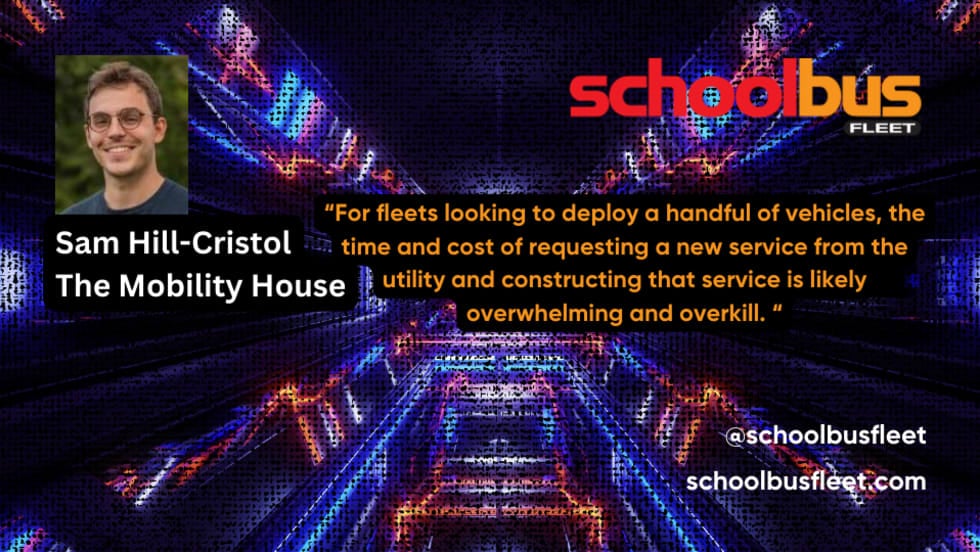
The Technology Power Combo That Enables EV Charging on Difficult Sites
As the pace of fleet electrification increases and charging infrastructure continues to pose challenges, many fleets find themselves puzzling over the question: how do I install charging infrastructure faster and more cost-efficiently?
Read More →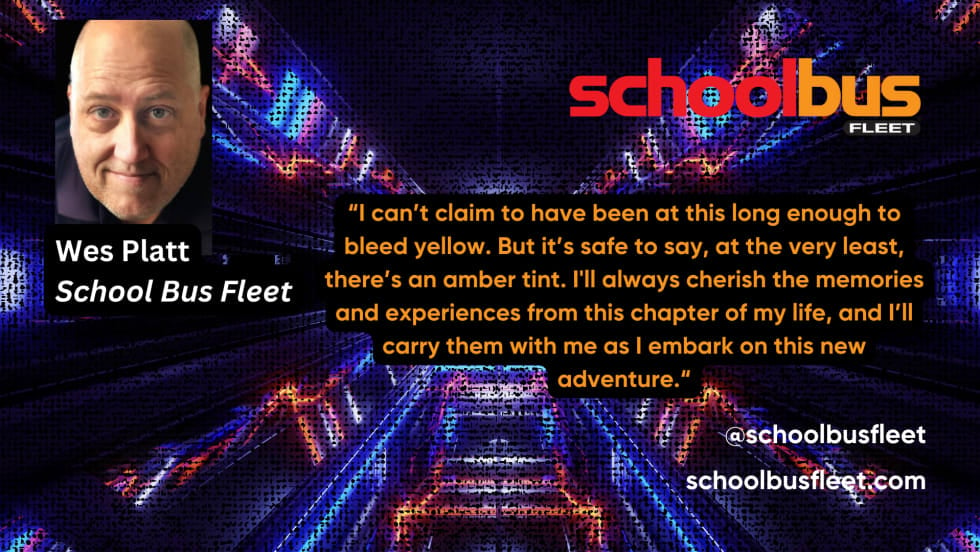
Trip Sheet: Farewell, Faithful Readers – Keep on Rolling
Executive Editor Wes Platt offers parting thoughts as he parks the School Bus Fleet bus to focus on ultra-local community journalism, making way for someone else to take the wheel as the pupil transportation industry continues to evolve.
Read More →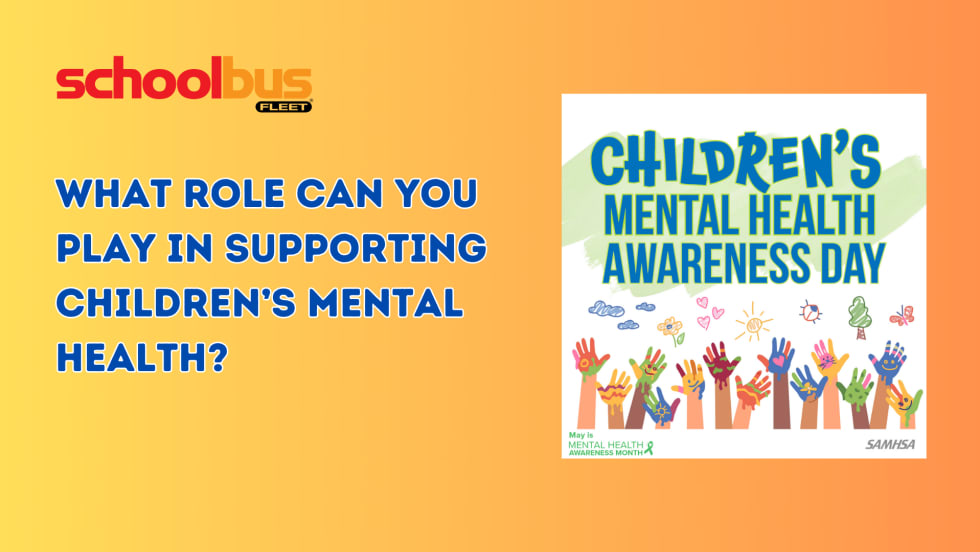
Trip Sheet: School Transportation Pros Can Champion Children's Mental Health
Children's Mental Health Awareness Day underscores the significance of school bus drivers in fostering supportive environments during students' journeys. SAMHSA's initiatives, including stigma reduction and access to resources, complement the Biden-Harris administration's funding efforts to enhance youth mental health services and workforce development.
Read More →
Trip Sheet: Is It Time for Daylight Saving Time to Clock Out?
How do you think the potential shift to permanent Daylight Saving Time or standard time would impact our daily lives and routines, especially considering the divided approach across various states?
Read More →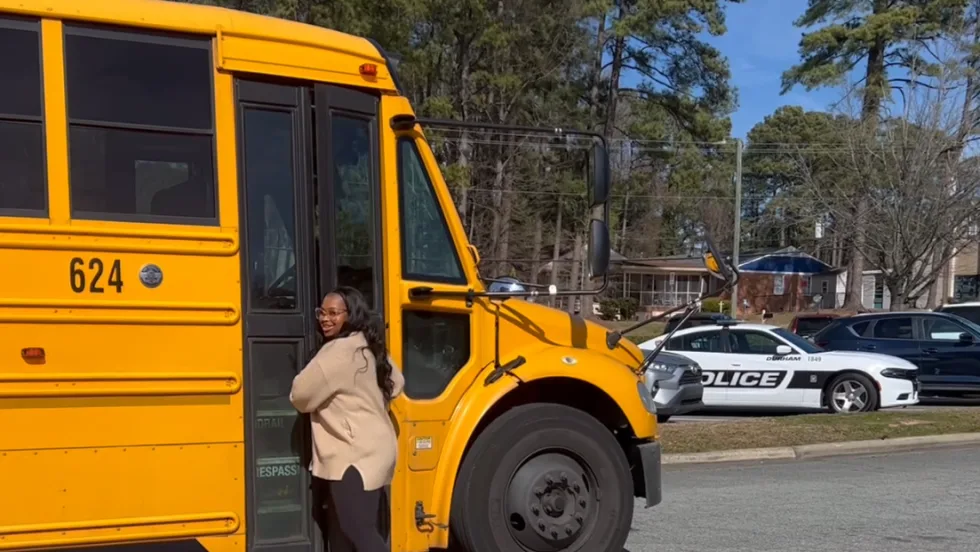
Trip Sheet: Meeting a Hero in My Own Back Yard
I remain impressed by the matter-of-fact heroism that’s often demonstrated by school bus drivers like Deona Washington who are caught in these situations where the best of us might lose our cool and panic. But, then again, bus drivers are a unique breed.
Read More →
Trip Sheet: 3 Takeaways from the EPA Clean School Bus Grant Program
Most applicants sought grant funding to acquire electric school buses, with propane coming in a distant second. No one indicated plans to purchase compressed natural gas (CNG) buses in this round. That’s not terribly surprising, I suppose, given how few school districts listed the inclusion of CNG buses in their fleets for our 2023 top district fleets survey.
Read More →
Trip Sheet: Let's Get Rolling: What's Coming in 2024?
Calendar pages keep flipping toward the mandates set in states like New York and California to transition their school bus fleets from diesel to zero-emission, but there’s plenty of reluctance and pushback.
Read More →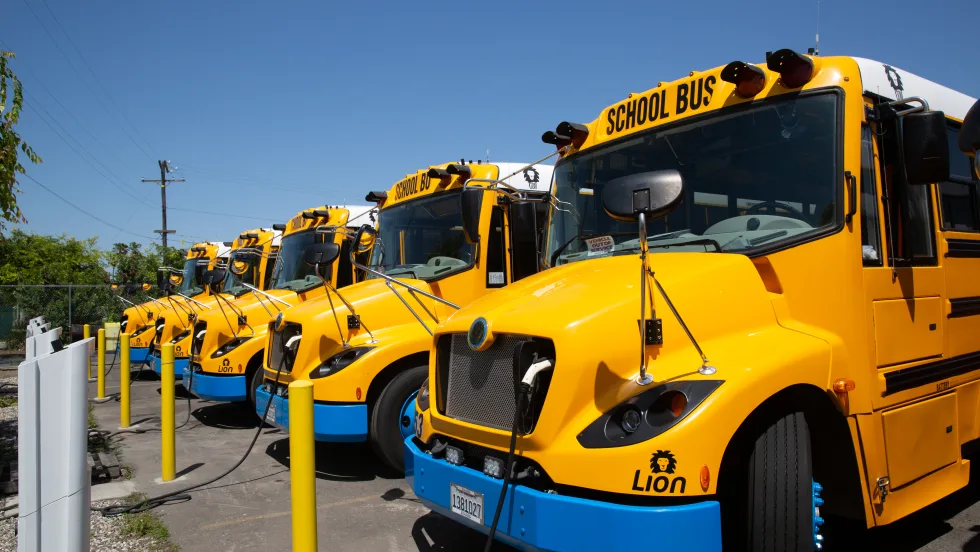
California School Children Ride in Green School Buses
Today, California prides itself on utilizing the most zero-emission (ZE) school buses in the country with over 1,689 being used by California school districts; and while the state is on a positive health trajectory thanks to a decree to eliminate gas and diesel vehicles, more work needs to be done to improve children’s well-being.
Read More →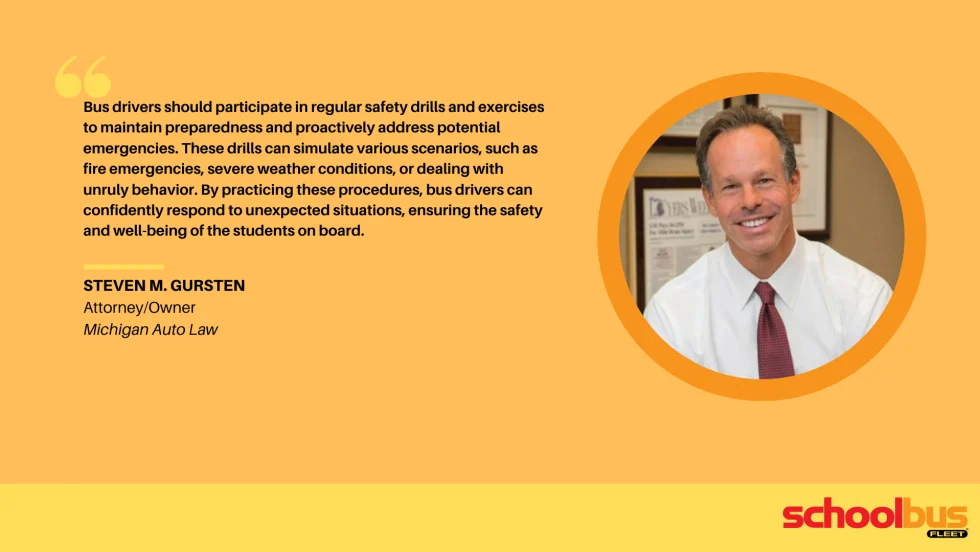
Behind The Wheel of Childrens’ Safety Aboard the School Bus
Bus drivers are the primary caretakers of children during their commute and thus bear responsibility for their safety. By prioritizing proper operating procedures, maintenance checks, and additional precautions, drivers can help avoid the loss of precious young lives under their care.
Read More →