




Polyfuel Strategy: A Holistic Approach to School Bus Electrification
It also helps to have an advisor or partner who is “fuel agnostic”—not tied to a specific fuel type. The right partner can help develop a comprehensive plan to guide your transition and work with you along the way.
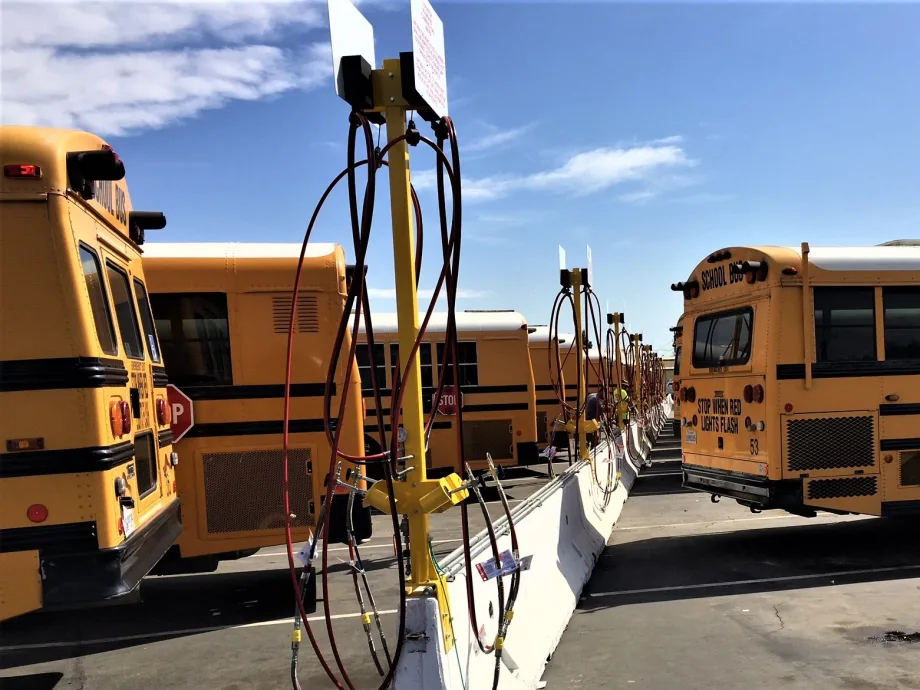
Some school districts have reported 14 cents per mile for battery electric energy cost compared to 42 cents per mile for diesel.
Photo: U.S. Gain
As emission concerns continue to increase and the EPA’s Clean School Bus program takes effect, more school districts are prioritizing their transition to electrification and low-carbon fuels.
Alternative fuels offer an attractive set of benefits: reduced greenhouse gas emissions, improvements to student and community health, and economic incentives, to name a few.
Although most school districts and bus operators across the country are taking their first steps into this decarbonization journey, they share common reasons for making the change. Perhaps the biggest appeal is the opportunity to lower operating and maintenance costs. West Fargo Public Schools in North Dakota, for example, reported that its diesel buses averaged 42 cents per mile for fuel costs (operating costs) compared to 14 cents per mile for battery electric energy costs.
On the maintenance side, Pacific Gas & Electric claims that diesel school buses average $0.21 per mile for maintenance costs compared to $0.09 per mile for battery electric maintenance costs. Of course, these numbers will vary due to several factors, including geography, duty cycle, and preventative maintenance.
Additional benefits of transitioning to low- and zero-emission fuels include the contribution to improved air quality, especially around schools; the reduction of a fleet’s carbon intensity score (potentially to zero); and the appeal to drivers interested in using new, environmentally conscious technology.
Operators find that electric buses offer key benefits to certain students and riders: they eliminate exposure to exhaust fumes and operating noises, which can be especially relevant to riders with special needs or who are sensitive to noise.
However, the transition from fossil fuels cannot happen overnight. Federal programs are helping fund new buses, but they often require fleets to retire old buses as electric vehicles (EVs) come online. This transition also requires an infrastructure network that is not yet widely available— reaffirming the fact that EVs are not a one-size-fits-all solution. With limited budgets, district leaders and school bus operators must take a calculated approach as they begin their decarbonization journey.
For these reasons, implementing a polyfuel approach is a strategic choice for fleets—allowing for a gradual transition. Using a polyfuel strategy enables you to take advantage of drop-in fuels as your first step. For example, current natural gas fleets might find renewable natural gas (RNG) can be adopted right away. Similarly, diesel-powered fleets may be able to switch to renewable diesel to start their transition.
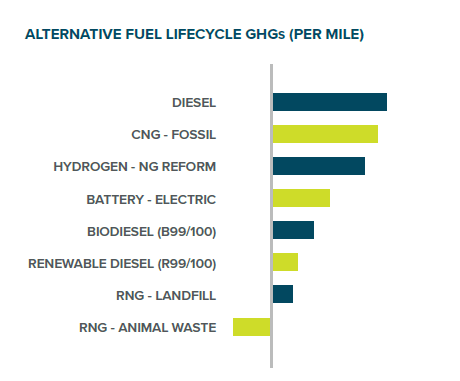
Implementing a polyfuel approach is a strategic choice for fleets—allowing for a gradual transition.
Image: U.S. Gain
It also helps to have an advisor or partner who is “fuel agnostic”—not tied to a specific fuel type. The right partner can help develop a comprehensive plan to guide your transition and work with you along the way.
Throughout the transition process, it’s important to maintain a system-level view, keeping in mind the people, processes, and technology that support the entire alternative fuel ecosystem. People with new skill sets (or those who want to expand their skill sets) are required to operate and maintain EV buses. Standard procedures need to be updated (or created) to accommodate new ways of operating and maintaining vehicles.
This system-level perspective ensures districts develop an approach that takes advantage of the technology that works best for them and features components that work well together. EVs and the technology that supports these vehicles are not necessarily interchangeable with other types of buses, so successful conversions require a merged ecosystem of system-specific components.
Ready to start your transition? Here are five steps a school bus fleet manager should consider:
Determine your current emissions levels
Gathering this data identifies the sources and quantity of your emissions—providing a baseline to measure improvement. This is important because there are different paths to achieve lower emissions depending on your starting point.
Evaluate your transportation needs
Consider the size and type of vehicles you need today and those you anticipate needing down the road. Are your routes generally short with regular return-to-base operations? Or do you have occasional longer routes with overnight or multi-day stays?
What type of fuels will your future vehicles require? You may have a long-term vision of an all-electric fleet or one with a mix of fuel types. A polyfuel strategy may be necessary to support your transition because it pairs vehicle size, type, and purpose with corresponding alternative fuels.
Finally, consider which vehicles you will retire along the way. As noted earlier, the Clean School Bus program requires older buses be retired as new ones come online. Sometimes this is driven strictly by vehicle age, but there may be other factors, such as emission level goals, that influence your decision.
Assess federal, state, and local incentives with a trusted partner
Aim for the incentives that provide a parallel path for new vehicle acquisition with infrastructure development.
Talk with vehicle manufacturers about what they offer to fit your needs
This conversation should be more than just a discussion about vehicles. Major manufacturers often have an expert available to guide you through the products they offer and to assist you in accessing all the funding that’s available to you. Remember, though, to be cautious of those who only want to sell you their solutions. Keep the system-level view in mind and look for solutions that fit your vision. This is where a fuel-agnostic partner can help you formulate a plan without bias.
Evaluate the support within your organization
This journey requires a broad change-management strategy to ensure success.
Some tips to build a supportive change-management environment include:
Align decision-makers with your strategy, so they understand the “why” behind it.
Identify a senior-level champion who will advocate for you.
Involve your operations and maintenance teams in the process so they understand the “why” and the ways they will be involved to develop the “how.”
Maintain regular communications with your stakeholders.
Be patient and remain committed to the process.
The EPA’s Clean School Bus program is the biggest infrastructure-related program of its type, and it has opened a significant window of opportunity for school districts and school bus operators who want to transition to low- and zero-emission vehicles. The rewards are real; so are the risks. Having a comprehensive polyfuel strategy and a trusted partner to work with you to identify solutions that meet your needs will help you realize the best of both these scenarios: maximizing reward while minimizing project risk.
Lynn Lyon is the director of sustainable transportation for U.S. Gain, a developer and distributor of alternative fuel and renewable energy. Lyon has managed corporate fleet transitions to alternative fuel with new truck technology and fueling infrastructure. She now partners with shippers and carriers to find their best path to lower emissions.
More Blog Posts

The Sound of Summer Starting [Guest Editorial]
That unmistakable school bus rumble? It carries childhood memories, community routines, and a whole lot of unseen work behind the scenes.
Read More →
The Technology Power Combo That Enables EV Charging on Difficult Sites
As the pace of fleet electrification increases and charging infrastructure continues to pose challenges, many fleets find themselves puzzling over the question: how do I install charging infrastructure faster and more cost-efficiently?
Read More →
Trip Sheet: Farewell, Faithful Readers – Keep on Rolling
Executive Editor Wes Platt offers parting thoughts as he parks the School Bus Fleet bus to focus on ultra-local community journalism, making way for someone else to take the wheel as the pupil transportation industry continues to evolve.
Read More →
Trip Sheet: School Transportation Pros Can Champion Children's Mental Health
Children's Mental Health Awareness Day underscores the significance of school bus drivers in fostering supportive environments during students' journeys. SAMHSA's initiatives, including stigma reduction and access to resources, complement the Biden-Harris administration's funding efforts to enhance youth mental health services and workforce development.
Read More →
Trip Sheet: Is It Time for Daylight Saving Time to Clock Out?
How do you think the potential shift to permanent Daylight Saving Time or standard time would impact our daily lives and routines, especially considering the divided approach across various states?
Read More →
Trip Sheet: Meeting a Hero in My Own Back Yard
I remain impressed by the matter-of-fact heroism that’s often demonstrated by school bus drivers like Deona Washington who are caught in these situations where the best of us might lose our cool and panic. But, then again, bus drivers are a unique breed.
Read More →
Trip Sheet: 3 Takeaways from the EPA Clean School Bus Grant Program
Most applicants sought grant funding to acquire electric school buses, with propane coming in a distant second. No one indicated plans to purchase compressed natural gas (CNG) buses in this round. That’s not terribly surprising, I suppose, given how few school districts listed the inclusion of CNG buses in their fleets for our 2023 top district fleets survey.
Read More →
Trip Sheet: Let's Get Rolling: What's Coming in 2024?
Calendar pages keep flipping toward the mandates set in states like New York and California to transition their school bus fleets from diesel to zero-emission, but there’s plenty of reluctance and pushback.
Read More →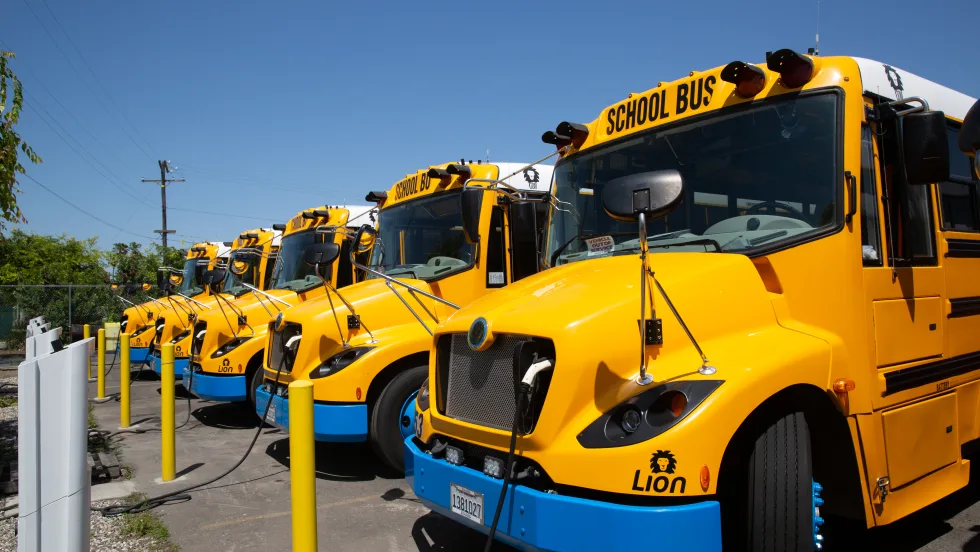
California School Children Ride in Green School Buses
Today, California prides itself on utilizing the most zero-emission (ZE) school buses in the country with over 1,689 being used by California school districts; and while the state is on a positive health trajectory thanks to a decree to eliminate gas and diesel vehicles, more work needs to be done to improve children’s well-being.
Read More →
Behind The Wheel of Childrens’ Safety Aboard the School Bus
Bus drivers are the primary caretakers of children during their commute and thus bear responsibility for their safety. By prioritizing proper operating procedures, maintenance checks, and additional precautions, drivers can help avoid the loss of precious young lives under their care.
Read More →