




Out of my control
While I’m well aware that the statistics show that the yellow bus is the safest form of school transportation, the thought of letting someone I don’t know drive my sons is, to be honest, a little scary. This raises a pertinent question: Do some parents decline the school bus because they feel it’s safer for their kids to ride with Mom,


"Helicopter parents” aren’t nearly as exciting as the name suggests.
Our sons would love it if my wife and I literally flew around in choppers instead of driving sensible family cars. But if they were old enough to use the Internet, Wikipedia would inform them that “helicopter parent” signifies a level of scrutiny that would make most kids shudder.
The popular term is defined as “a parent who pays extremely close attention to his or her child’s or children’s experiences and problems, particularly at educational institutions.”
While I don’t relish the thought of ever being considered a helicopter parent, I can certainly relate to the feeling of wanting to have some level of control over everything your kids are involved in — especially when it involves their safety.
I think about the day when my boys will have the option of riding a school bus to school. While I’m well aware that the statistics show that the yellow bus is the safest form of school transportation, the thought of letting someone I don’t know drive my sons is, to be honest, a little scary.
This raises a pertinent question: Do some parents decline the school bus because they feel it’s safer for their kids to ride with Mom, Dad or someone they know?
In the book Freakonomics, authors Steven Levitt and Stephen Dubner describe Peter Sandman’s “control” principle. “Risks that you control are much less a source of outrage than risks that are out of your control,” Sandman is quoted as saying.
Levitt and Dubner apply that idea to try to explain why most people are more afraid of flying than driving. The authors write: “Their thinking goes like this: Since I control the car, I am the one keeping myself safe; since I have no control of the airplane, I am at the mercy of myriad external factors.”
This “control” principle could also apply to school busing. Yet, as Tom McJury of Fairport (N.Y.) Central School District points out in the school board member roundtable in our November issue, “people send their children out to the bus stop every morning and have someone bring their children to school and home 180 days a year, and they don’t even know their name.”
Robb Cozby, transportation director at Parker (Ariz.) Unified School District, recently shared with me an interesting perspective on that notion.
“I think it’s a testament to the position of school bus driver that very few people at all really know the names of the drivers,” Cozby says. “People look at the big, yellow bus and automatically assume that the person behind the wheel is safe and trustworthy.”
What becomes clear in my mind is that parents are not handing over their “control” to just one person whose name they might not know, but to a tried and true system — one that runs driver candidates through background checks (see our November issue feature "Who’s behind the wheel?: optimizing driver background checks" for more on that topic) and trains them extensively.
Since I know all about that system and its success, I will gladly put my kids on the school bus when the time comes.
But there are many parents who still need to be informed of the pupil transportation industry’s unrivaled safety record. Maybe then they’ll let their kids ride the yellow bus to school instead of taking them in their “helicopters.”
— Thomas McMahon, executive editor
More Blog Posts
The Sound of Summer Starting [Guest Editorial]
That unmistakable school bus rumble? It carries childhood memories, community routines, and a whole lot of unseen work behind the scenes.
Read More →
The Technology Power Combo That Enables EV Charging on Difficult Sites
As the pace of fleet electrification increases and charging infrastructure continues to pose challenges, many fleets find themselves puzzling over the question: how do I install charging infrastructure faster and more cost-efficiently?
Read More →
Trip Sheet: Farewell, Faithful Readers – Keep on Rolling
Executive Editor Wes Platt offers parting thoughts as he parks the School Bus Fleet bus to focus on ultra-local community journalism, making way for someone else to take the wheel as the pupil transportation industry continues to evolve.
Read More →
Trip Sheet: School Transportation Pros Can Champion Children's Mental Health
Children's Mental Health Awareness Day underscores the significance of school bus drivers in fostering supportive environments during students' journeys. SAMHSA's initiatives, including stigma reduction and access to resources, complement the Biden-Harris administration's funding efforts to enhance youth mental health services and workforce development.
Read More →
Trip Sheet: Is It Time for Daylight Saving Time to Clock Out?
How do you think the potential shift to permanent Daylight Saving Time or standard time would impact our daily lives and routines, especially considering the divided approach across various states?
Read More →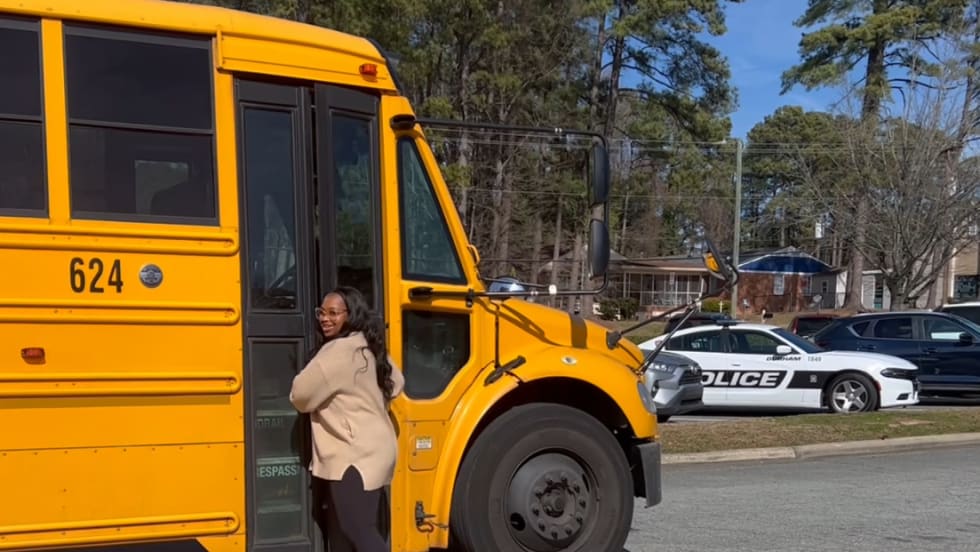
Trip Sheet: Meeting a Hero in My Own Back Yard
I remain impressed by the matter-of-fact heroism that’s often demonstrated by school bus drivers like Deona Washington who are caught in these situations where the best of us might lose our cool and panic. But, then again, bus drivers are a unique breed.
Read More →
Trip Sheet: 3 Takeaways from the EPA Clean School Bus Grant Program
Most applicants sought grant funding to acquire electric school buses, with propane coming in a distant second. No one indicated plans to purchase compressed natural gas (CNG) buses in this round. That’s not terribly surprising, I suppose, given how few school districts listed the inclusion of CNG buses in their fleets for our 2023 top district fleets survey.
Read More →
Trip Sheet: Let's Get Rolling: What's Coming in 2024?
Calendar pages keep flipping toward the mandates set in states like New York and California to transition their school bus fleets from diesel to zero-emission, but there’s plenty of reluctance and pushback.
Read More →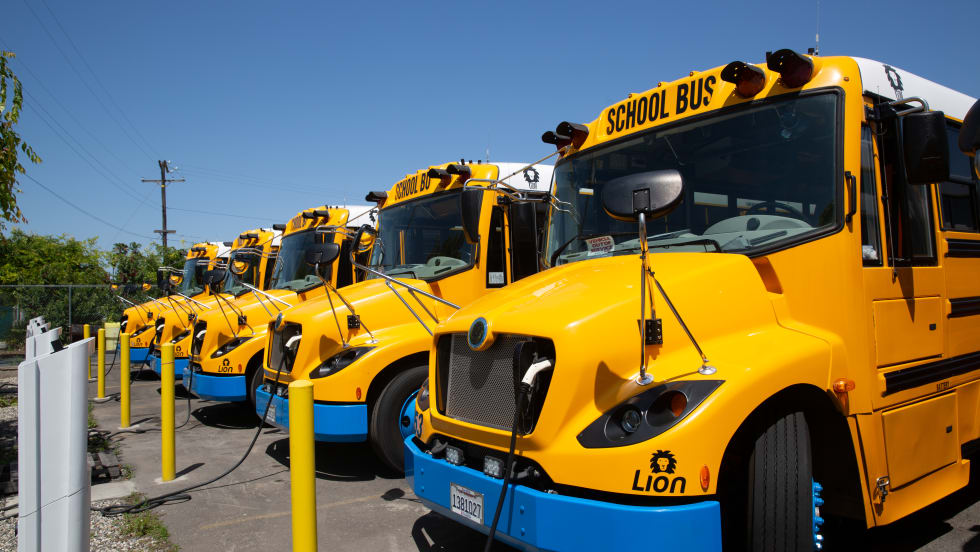
California School Children Ride in Green School Buses
Today, California prides itself on utilizing the most zero-emission (ZE) school buses in the country with over 1,689 being used by California school districts; and while the state is on a positive health trajectory thanks to a decree to eliminate gas and diesel vehicles, more work needs to be done to improve children’s well-being.
Read More →
Behind The Wheel of Childrens’ Safety Aboard the School Bus
Bus drivers are the primary caretakers of children during their commute and thus bear responsibility for their safety. By prioritizing proper operating procedures, maintenance checks, and additional precautions, drivers can help avoid the loss of precious young lives under their care.
Read More →