




NSTA Advocacy in Action — Public Transit for Students May Save Money, but at What Cost?
School transportation remains a critical element within the context of a child’s overall educational experience. When we boil this element down to a cost-saving endeavor, we’ve really done a disservice to our children.
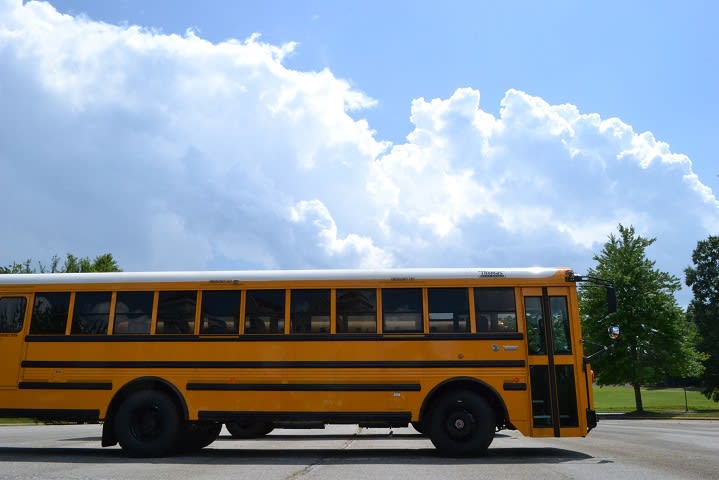
File photo
File photo
For many of us, the back-to-school season denotes the unofficial end of summer, and a return to a full menu of deadlines and schedules. Although you undoubtedly saw an increase in media stories related to school transportation during that time, school transportation does not always represent the most glamorous topic for media coverage. So, in an industry that is renowned for its consistency, grabbing readers’ attention may prove difficult.
One topic that has reemerged in several localities is the concept of school district encouragement of public transit to transport students to and from school. First, use of transit agency rail or bus service is not a new phenomenon. Truthfully, its usage revolves around a single benefit: revenue. (More to the point, saving revenue.) In a quest to balance budgets, school boards can save money by providing students a “free” transit pass, in some cases, instead of offering yellow bus service.
The premise is simple: pay the transit agency a certain amount of money for it to provide service for students. Hopefully, that amount resembles adequate compensation to “cover” the additional ridership on transit bus or rail. In theory, this arrangement helps transit agencies because it gets their buses or trains to operate at a higher capacity. But what about students?
Let’s start from a place that recognizes that school transportation is primarily, and appropriately, focused on the school-age population. In other words, bus routes are configured in the safest and most efficient manner to pick up students and take them to school. Transit routes are configured differently, and may require students to traverse multiple roads and intersections to access the closest bus or rail stop. Transit lines are not necessarily picking up students in front of their homes, nor are they dropping them off in front of the school. These particular nuances should not be taken lightly.
A recent survey released by the National Association of State Directors of Pupil Transportation Services indicates that on a single school day, there were 95,319 illegal “passings” of a school bus. If this statistic alone doesn’t grab your attention, consider that these inconsiderate motorists illegally pass a yellow bus with flashing red lights and stop arms. Students getting on and off transit buses wouldn’t be afforded the same protections as those traveling on a yellow bus.
In addition, let’s not discount the expertise of the school bus driver, as most transit bus drivers are not held to the same level of training, especially when it comes to the critical element of passenger evacuation. Also, remember that the school bus driver remains the gatekeeper to the safe haven that the yellow bus represents. Not just anyone can board a school bus; the same cannot be said for transit.

John Benish Jr. is the president of the National School Transportation Association.
Let’s also not forget that school buses can only pick up students and drop students off either at school or their home. If a student wants to, he or she can take public transportation anywhere — the city, a park, an airport, or even to another state. And as a parent, do you want to mix your children with the general public?
You may have heard me say this before, but it’s worth repeating. According to U.S. Department of Transportation statistics, “a child is 70 times more likely to get to and from school safely when riding a school bus compared to other modes of transportation — safer than a parent driving their child to school, walking, biking, or students driving themselves.”
Most of us understand the challenge of balancing school budgets, but the transportation of our most valuable commodity — school-age children — should never be a decision based solely on dollars and cents. School transportation remains a critical element within the context of a child’s overall educational experience. When we boil this element down to a cost-saving endeavor, we’ve really done a disservice to our children.
More Blog Posts
'I’m a School Bus Driver, You Can Trust Me'
A crowded Cleveland parking lot, a full-size pickup, and five unexpected words turned a stressful moment into a reminder of just how much trust we place in school bus drivers every day.
Read More →
The Sound of Summer Starting [Guest Editorial]
That unmistakable school bus rumble? It carries childhood memories, community routines, and a whole lot of unseen work behind the scenes.
Read More →
The Technology Power Combo That Enables EV Charging on Difficult Sites
As the pace of fleet electrification increases and charging infrastructure continues to pose challenges, many fleets find themselves puzzling over the question: how do I install charging infrastructure faster and more cost-efficiently?
Read More →
Trip Sheet: Farewell, Faithful Readers – Keep on Rolling
Executive Editor Wes Platt offers parting thoughts as he parks the School Bus Fleet bus to focus on ultra-local community journalism, making way for someone else to take the wheel as the pupil transportation industry continues to evolve.
Read More →
Trip Sheet: School Transportation Pros Can Champion Children's Mental Health
Children's Mental Health Awareness Day underscores the significance of school bus drivers in fostering supportive environments during students' journeys. SAMHSA's initiatives, including stigma reduction and access to resources, complement the Biden-Harris administration's funding efforts to enhance youth mental health services and workforce development.
Read More →
Trip Sheet: Is It Time for Daylight Saving Time to Clock Out?
How do you think the potential shift to permanent Daylight Saving Time or standard time would impact our daily lives and routines, especially considering the divided approach across various states?
Read More →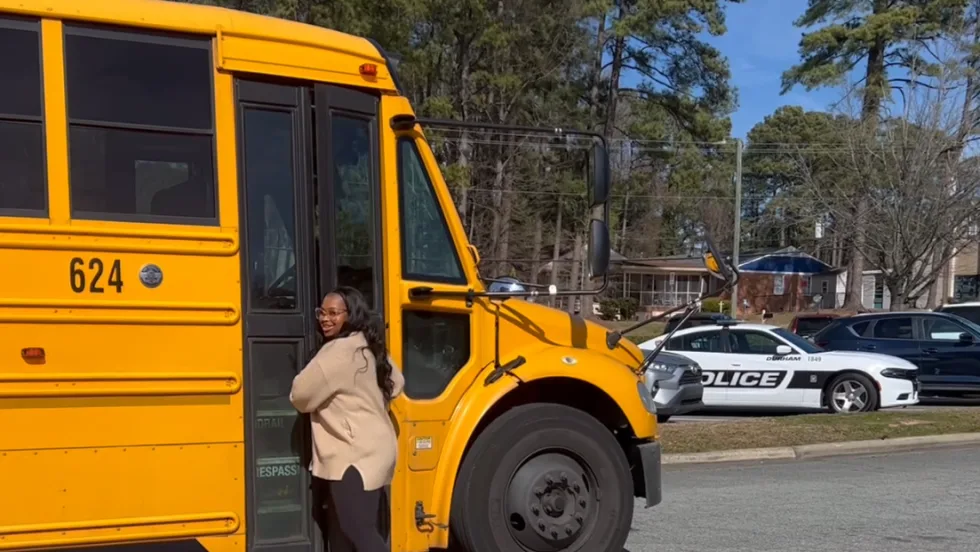
Trip Sheet: Meeting a Hero in My Own Back Yard
I remain impressed by the matter-of-fact heroism that’s often demonstrated by school bus drivers like Deona Washington who are caught in these situations where the best of us might lose our cool and panic. But, then again, bus drivers are a unique breed.
Read More →
Trip Sheet: 3 Takeaways from the EPA Clean School Bus Grant Program
Most applicants sought grant funding to acquire electric school buses, with propane coming in a distant second. No one indicated plans to purchase compressed natural gas (CNG) buses in this round. That’s not terribly surprising, I suppose, given how few school districts listed the inclusion of CNG buses in their fleets for our 2023 top district fleets survey.
Read More →
Trip Sheet: Let's Get Rolling: What's Coming in 2024?
Calendar pages keep flipping toward the mandates set in states like New York and California to transition their school bus fleets from diesel to zero-emission, but there’s plenty of reluctance and pushback.
Read More →
California School Children Ride in Green School Buses
Today, California prides itself on utilizing the most zero-emission (ZE) school buses in the country with over 1,689 being used by California school districts; and while the state is on a positive health trajectory thanks to a decree to eliminate gas and diesel vehicles, more work needs to be done to improve children’s well-being.
Read More →