




More insight on safe bus stops
In the August 2013 issue of SBF, I wrote a feature titled “Tips and Tools to Select Safe Stops,” where pupil transportation officials from operations around the country shared with me various components to ensuring that their bus stop locations are safe for students. Here, I’ll share with you some of their tips and insight that didn’t make it into the feature.
In the August 2013 issue of SBF, I wrote a feature titled “Tips and Tools to Select Safe Stops,” where pupil transportation officials from operations around the country shared with me various components to ensuring that their bus stop locations are safe for students.
In the article, they discuss everything from placement of the stops to ensuring there is room for the buses at stops to being open to feedback from drivers and parents if they feel a stop is in an unsafe location.
Officials from several companies that offer routing software for the school bus market weighed in on how this technology can help in establishing safe stops.
Here, I’ll share with you some of their tips and insight that didn’t make it into the feature.
Become involved in community development
At Queen Creek (Ariz.) Unified School District #95, Director of Transportation Edd Hennerley says that many of the staff members in his department have worked for the district for a long time, so they know the community that the district serves well, and this is helpful in determining where bus stops should or shouldn’t be placed.
The team also relies on its knowledge of the area to ensure bus stops are situated in safe areas when developers come to build new communities.
“We go to them in the inception stage of the neighborhood and we’ll ask them what their density rate is, if they have a site map, etc., so that we can see where we should be looking at placing bus stops, even as far as a year down the road, so that we can make sure that we’re putting those stops in as kids arrive there,” Hennerley explains.
He adds that they also ask how many lots have been sold and the projected finish dates for 10%, 20%, 30%, etc. of the development, and when they anticipate the build-up to be completed.
“When we can look at build-up, we know that if we have the bus stops appropriately designated, we don’t have to add more near the build-out time,” he explains.
Students should have proper bus stop etiquette
Another item to consider is students’ behavior at the stops. John Fahey, senior consultant at Tyler Technologies and past assistant superintendent of service center operations at Buffalo (N.Y.) Public Schools, says training for students is important so that they know what is expected of them. He says younger students should be accompanied by a parent or guardian when they travel to or from the stops.
“At Buffalo Public Schools, we would not release pre-K and kindergarten students by themselves,” he explains. “For students, we always emphasized that we wanted students at the stop on time, or five minutes early. We didn’t want them running to the stop as the bus was pulling up. Students should also know where to wait for the stop as it approaches.”
Fahey also says bus drivers need to make sure that students maintain order at the bus stops and enact consequences if the rules are not followed.
Carol Karl, safety coordinator at Illinois Central School Bus in Bloomington, Ill., says bus drivers should count students before they get on the bus and again as they’re getting off the bus.
“You also want to train the drivers to notify the students in terms of where they want the students to stand at the bus stop, and if students have to cross the road to get on or off the bus, the drivers should have a signal that’s known to students that allows them to know when it’s safe to cross the road.”
John Billigmeier, senior location manager at First Student’s terminal in Witchita, Kan., says that parents also have a responsibility to teach their children how to behave at the bus stop.
Help from routing software
In my feature, Hennerley said that one way that Transfinder’s Routefinder Pro routing software has benefited his operation is in identifying where each student lives, and then he and his team can identify that a stop needs to be established where there is, for example, a cluster of 10 students.
David Korhonen, director of buildings, grounds and transportation at the School District of Maple (Wis.), also uses this software, and he says it provides a measuring device to determine walkout distances to stops as well as measuring distances to curves, hills, valleys and other potential hazards like railroad crossings.
“We also use the software to determine distances to appropriate turnaround locations and establish more accurate route times in the process,” he adds.
Guide on bus stop safety
In 2010, the National Highway Traffic Safety Administration (NHTSA) released a resource guide that provides steps for designating school bus stops and supporting safe pedestrian behavior by students between their homes and bus stops.
Included are examples of state guidelines on the subject from Colorado and Alabama and district guidelines from Anoka-Hennepin School District in Minnesota, Brevard District Schools in Florida and Fairfax County Public Schools in Virginia.
“Selecting School Bus Stop Locations: A Guide for School Transportation Professionals” was prepared by the National Center for Safe Routes to School and the Pedestrian and Bicycle Information Center with funding from NHTSA. Members of the National Association of State Directors of Pupil Transportation Services and the National Association for Pupil Transportation provided insight and review.
To download a copy of the guide, visit the NHTSA website here and scroll down to the “Did you know?” section.
Until next time,
Kelly Roher
Managing Editor
More Blog Posts
The Sound of Summer Starting [Guest Editorial]
That unmistakable school bus rumble? It carries childhood memories, community routines, and a whole lot of unseen work behind the scenes.
Read More →
The Technology Power Combo That Enables EV Charging on Difficult Sites
As the pace of fleet electrification increases and charging infrastructure continues to pose challenges, many fleets find themselves puzzling over the question: how do I install charging infrastructure faster and more cost-efficiently?
Read More →
Trip Sheet: Farewell, Faithful Readers – Keep on Rolling
Executive Editor Wes Platt offers parting thoughts as he parks the School Bus Fleet bus to focus on ultra-local community journalism, making way for someone else to take the wheel as the pupil transportation industry continues to evolve.
Read More →
Trip Sheet: School Transportation Pros Can Champion Children's Mental Health
Children's Mental Health Awareness Day underscores the significance of school bus drivers in fostering supportive environments during students' journeys. SAMHSA's initiatives, including stigma reduction and access to resources, complement the Biden-Harris administration's funding efforts to enhance youth mental health services and workforce development.
Read More →
Trip Sheet: Is It Time for Daylight Saving Time to Clock Out?
How do you think the potential shift to permanent Daylight Saving Time or standard time would impact our daily lives and routines, especially considering the divided approach across various states?
Read More →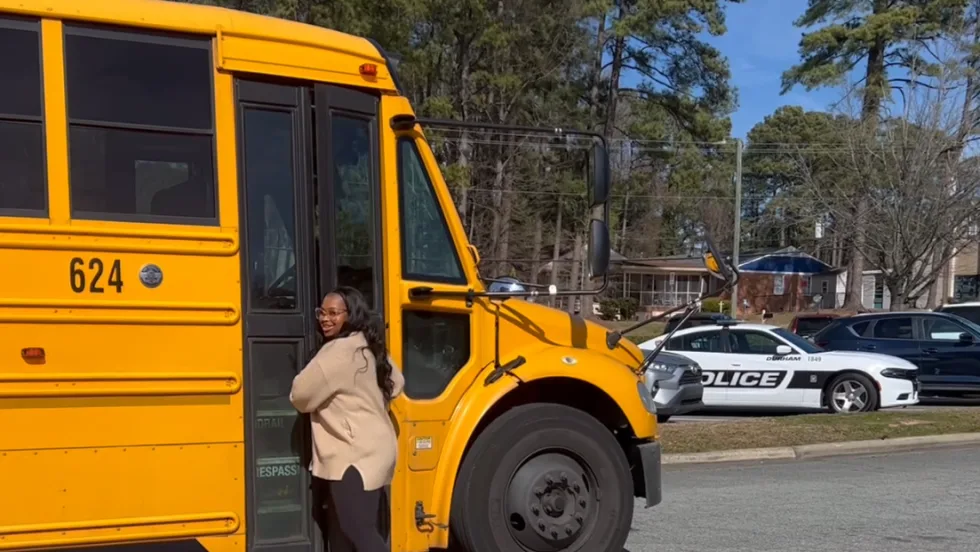
Trip Sheet: Meeting a Hero in My Own Back Yard
I remain impressed by the matter-of-fact heroism that’s often demonstrated by school bus drivers like Deona Washington who are caught in these situations where the best of us might lose our cool and panic. But, then again, bus drivers are a unique breed.
Read More →
Trip Sheet: 3 Takeaways from the EPA Clean School Bus Grant Program
Most applicants sought grant funding to acquire electric school buses, with propane coming in a distant second. No one indicated plans to purchase compressed natural gas (CNG) buses in this round. That’s not terribly surprising, I suppose, given how few school districts listed the inclusion of CNG buses in their fleets for our 2023 top district fleets survey.
Read More →
Trip Sheet: Let's Get Rolling: What's Coming in 2024?
Calendar pages keep flipping toward the mandates set in states like New York and California to transition their school bus fleets from diesel to zero-emission, but there’s plenty of reluctance and pushback.
Read More →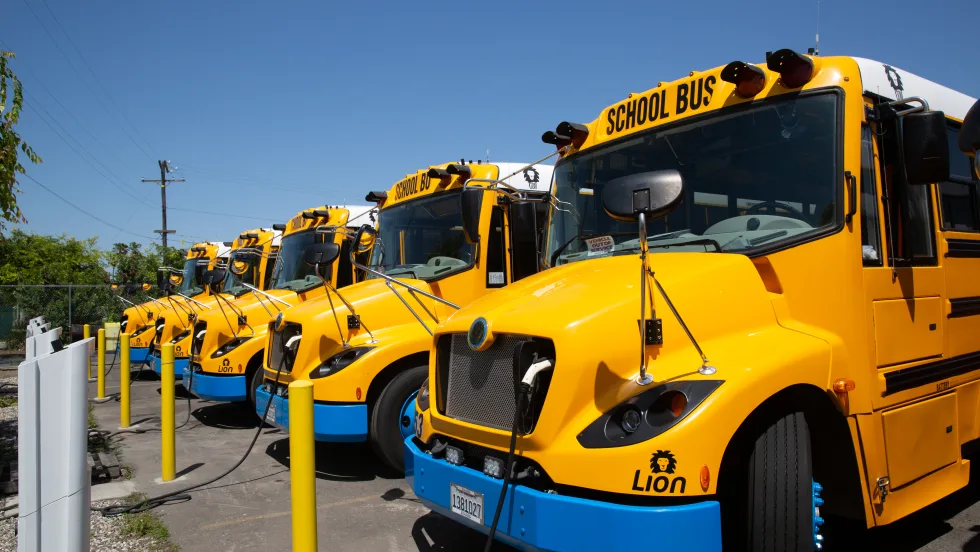
California School Children Ride in Green School Buses
Today, California prides itself on utilizing the most zero-emission (ZE) school buses in the country with over 1,689 being used by California school districts; and while the state is on a positive health trajectory thanks to a decree to eliminate gas and diesel vehicles, more work needs to be done to improve children’s well-being.
Read More →
Behind The Wheel of Childrens’ Safety Aboard the School Bus
Bus drivers are the primary caretakers of children during their commute and thus bear responsibility for their safety. By prioritizing proper operating procedures, maintenance checks, and additional precautions, drivers can help avoid the loss of precious young lives under their care.
Read More →