




Improving School Bus Safety, Security with RFID
What should you look for when considering radio-frequency identification devices for your school bus fleet?
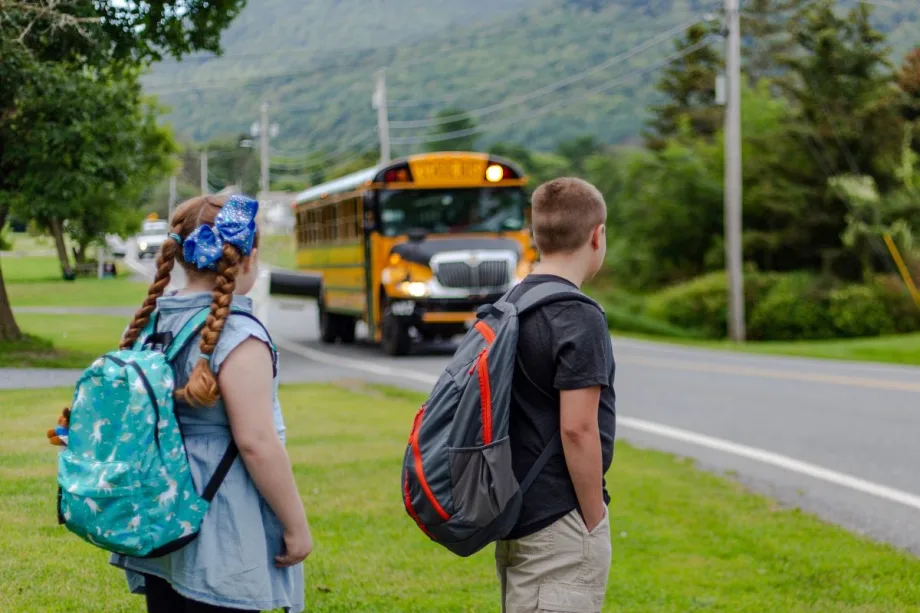
Radio-frequency identification (RFID) lets transportation providers and school districts track when and where students get on or off the bus.
Photo courtesy Elatec Inc.
Did Sophie get on the bus this morning? Did Daniel get off at the right stop? School districts and the transportation providers they contract with are responsible for keeping track of hundreds or thousands of other people’s children — many of them too young to read, carry a cell phone or accurately remember their home address. Radio‐frequency identification (RFID) badges are an easy way to improve student safety and security on school transportation.
Get on the Bus With RFID
RFID allows transportation providers and school districts to easily and accurately track when and where students get on or off the school bus. Students use an RFID badge provided by the district or by the bus company. In many cases, students already carry a school ID that is also used for building entry.
When the student gets on or off the bus, they simply wave their badge over an RFID reader that is integrated with the bus telematics system. The badge sends a radio signal to the reader that includes a unique number to identify the student. The signal can be encrypted for added security. Integrating RFID and school bus telematics provides several advantages.
The system records student activity as they enter and exit the bus, providing complete visibility into which students are on which buses at all times. It creates a running record that can be used if there is a safety incident or parents have questions about the whereabouts of their children.
The telematics system includes GPS tracking, so it is possible to track not only when students enter and exit but exactly where they were. For example, if a student gets off at a different stop than expected (perhaps to go home with a friend), their drop‐off location is recorded in case there are questions later.
The reader can be programmed to provide audible and visual feedback (lights and sounds) for students and bus drivers. This can be a fun way to reinforce the desired behavior (one bus company has programmed the reader to play a fun song when the badge is scanned). Visual and auditory signals can also be used to verify that students are on the right bus or provide an alert if a student attempts to get off at the wrong stop.
RFID badges are easier and more reliable than competing technologies such as magstripe or optical readers.
Students simply wave their badge near the reader, which is much easier for younger students than swiping a magstripe card through a narrow slot.
They are less prone to damage when carried in a pocket or thrown in a bookbag. Grime or scratches on the surface of the card will not prevent them from being recognized.
RFID is more secure and harder to counterfeit than magstripe or optical technologies.
The right RFID reader can also be leveraged to support emerging identification technologies such as smartphone credentialling. Many older students carry their own smartphones, and districts may want to allow them to use them as an alternate form of ID. However, because smartphone use is not universal (and is rare for the youngest students), smartphone authentication for school transportation is likely to always be part of a hybrid system that also includes physical ID badges.
What to Look for in an RFID Reader for School Transportation
There are many available RFID readers on the market. Original equipment manufacturers (OEMs) providing school transportation solutions should look for a reader that integrates well with their equipment and fully meets the needs of bus companies, school districts, and students. Here are some considerations when selecting a reader for school buses.
Hardware Integration: Does the reader have the right form factor and communication interfaces for integration into the telematics system? Seamless integration of the reader into existing hardware is not only aesthetically pleasing but also minimizes the risk of damage to the reader.
Certification: Does the reader have the appropriate certifications (e.g., FCC) for the market in which you are selling? Using a reader that already carries its own certifications will simplify the approval process.
Card Technologies: Which card technologies does the reader support? Bus companies may issue their own cards to students, or they may want to leverage existing cards issued by the school district. OEMs selling into this market will need a reader that supports all the possible technologies already in use by their target customers — including emerging smartphone credentialing systems.
Configurability: Does the reader allow custom configuration? The reader should be backed by a robust software package that enables integration with telematics software and other systems used by the transportation company or the district. In addition to configuring data inputs and outputs, look for a reader that supports custom auditory and visual feedback and other advanced functionality.
Update methods: How easy is it to update the reader when required? Updates may be needed to add transponder technologies or address emerging security concerns. A single school district may have dozens or hundreds of buses, and third‐party bus companies may provide transportation services for multiple districts. Readers that support remote updates will make the process much easier.
RFID enables easier student tracking for school districts and bus companies — and provides extra peace of mind for parents. The right RFID reader makes integrating student authentication with bus telematics easy.
Sean Houchin is the product manager for ELATEC Inc in Palm City, Fla., and part of the global ELATEC GmbH product management team. He has more than 20 years of experience in product development, management, and applications engineering. Sean is an expert in RFID technology, optoelectronic and fiber optic video, audio, and data transmission equipment for military and commercial applications and is a veteran of the United States Navy.
More Blog Posts
'I’m a School Bus Driver, You Can Trust Me'
A crowded Cleveland parking lot, a full-size pickup, and five unexpected words turned a stressful moment into a reminder of just how much trust we place in school bus drivers every day.
Read More →
The Sound of Summer Starting [Guest Editorial]
That unmistakable school bus rumble? It carries childhood memories, community routines, and a whole lot of unseen work behind the scenes.
Read More →
The Technology Power Combo That Enables EV Charging on Difficult Sites
As the pace of fleet electrification increases and charging infrastructure continues to pose challenges, many fleets find themselves puzzling over the question: how do I install charging infrastructure faster and more cost-efficiently?
Read More →
Trip Sheet: Farewell, Faithful Readers – Keep on Rolling
Executive Editor Wes Platt offers parting thoughts as he parks the School Bus Fleet bus to focus on ultra-local community journalism, making way for someone else to take the wheel as the pupil transportation industry continues to evolve.
Read More →
Trip Sheet: School Transportation Pros Can Champion Children's Mental Health
Children's Mental Health Awareness Day underscores the significance of school bus drivers in fostering supportive environments during students' journeys. SAMHSA's initiatives, including stigma reduction and access to resources, complement the Biden-Harris administration's funding efforts to enhance youth mental health services and workforce development.
Read More →
Trip Sheet: Is It Time for Daylight Saving Time to Clock Out?
How do you think the potential shift to permanent Daylight Saving Time or standard time would impact our daily lives and routines, especially considering the divided approach across various states?
Read More →
Trip Sheet: Meeting a Hero in My Own Back Yard
I remain impressed by the matter-of-fact heroism that’s often demonstrated by school bus drivers like Deona Washington who are caught in these situations where the best of us might lose our cool and panic. But, then again, bus drivers are a unique breed.
Read More →
Trip Sheet: 3 Takeaways from the EPA Clean School Bus Grant Program
Most applicants sought grant funding to acquire electric school buses, with propane coming in a distant second. No one indicated plans to purchase compressed natural gas (CNG) buses in this round. That’s not terribly surprising, I suppose, given how few school districts listed the inclusion of CNG buses in their fleets for our 2023 top district fleets survey.
Read More →
Trip Sheet: Let's Get Rolling: What's Coming in 2024?
Calendar pages keep flipping toward the mandates set in states like New York and California to transition their school bus fleets from diesel to zero-emission, but there’s plenty of reluctance and pushback.
Read More →
California School Children Ride in Green School Buses
Today, California prides itself on utilizing the most zero-emission (ZE) school buses in the country with over 1,689 being used by California school districts; and while the state is on a positive health trajectory thanks to a decree to eliminate gas and diesel vehicles, more work needs to be done to improve children’s well-being.
Read More →