





Check Out: 4 ChatGPT Prompts for Transportation Directors Collaborating with School Boards
Trip Sheet: How Did School Transportation Work in Ancient Rome?
Obviously, the Roman Empire (27 B.C. to 476 A.D.) existed long before today’s school buses took to the roads. The Romans didn’t have much in the way of organized education, let alone school transportation systems.
September 25, 2023

No buses on all those roads leading to Rome. But maybe a few chariots carried rich students to their instructors.
Image: Canva
3 min to read
I hadn’t thought much about the Roman Empire lately until a recent social media discussion went viral about how men frequently mused about the fallen civilization.
And now, it turns out, I’m pretty curious about schools and school transportation in the Imperium Romanum.
Schools in the Roman Empire
The empire never set up state-sponsored education and never legally required education for its citizens. Rich children often got their education from private tutors
Starting around 3 B.C., children of humbler means, up to the age of 11, attended a ludus litterarius (basically, elementary school) that was managed by a ludi magister (think Dumbledore in different robes). It wasn’t free education, though. Boys and girls could attend, but rarely together. Kids got started early in the morning and worked until midday on subjects including mathematics, reading, and writing.
They didn’t have school buildings. The instructor could essentially have a pop-up school just about anywhere – at home, in a park, on the side of the road. The Romans borrowed a lot of their educational ideas from the Greeks, although the Roman Empire tended toward practicality while the Greeks embraced art and music as ends to themselves.
Eventually, lower-class boys went on to become apprentices, while girls focused on becoming brides and mothers. More affluent families next sent their boys to a grammaticus, who helped them with writing, speaking, and poetry analysis. The rich kids learned both Greek and Latin. They didn’t have graded work.
Students stayed with the grammaticus until 14 or so. And if they were really, really wealthy and showed much promise, they might move on to a rhetor and learn about geography, music, philosophy, literature, mythology, and geometry, while also honing their skills at public speaking. Evidence indicates this education most likely came primarily through private tutors rather than organized educational facilities.
Transportation to Roman Schools
Obviously, the Roman Empire (27 B.C. to 476 A.D.) existed long before today’s school buses took to the roads. The Romans didn’t have much in the way of organized education, let alone school transportation systems.
Private tutors came to the wealthy Roman family homes, eliminating the need for a child to travel. Boarding schools were another option, with families sending their children to attend studies with philosophers or teachers of repute.
Students of the ludus, grammaticus, or rhetor likely walked to their lessons in Roman cities and towns that were designed to be compact. Richer children might be accompanied by hired escorts or servants, or driven aboard a chariot (ancient Roman limo service).
So, most children in ancient Rome walked to school while those from wealthy families might have had more comfortable transportation options.
Centuries later, though, we don’t usually have to worry about barbarians sacking the school district.
Usually.
Subscribe to Our Newsletter
More Blog Posts
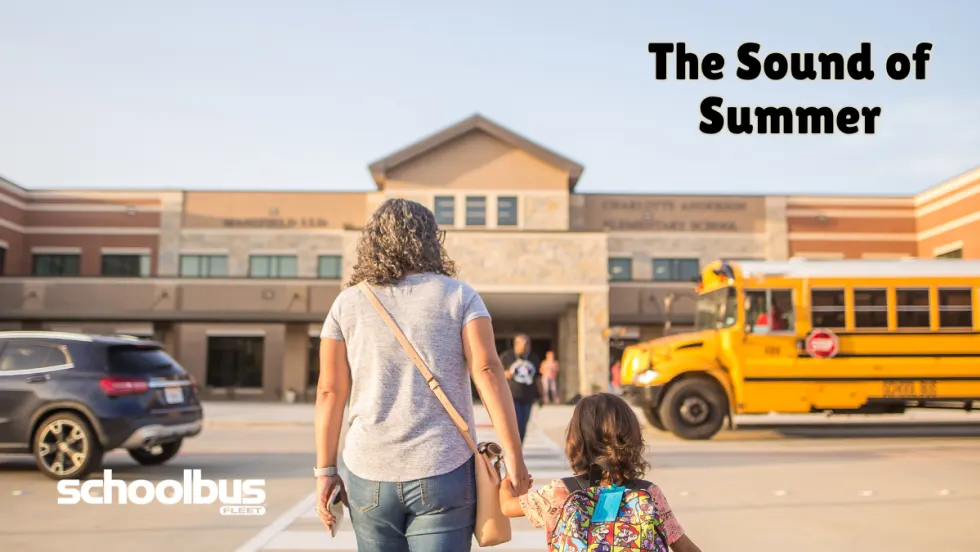
The Sound of Summer Starting [Guest Editorial]
That unmistakable school bus rumble? It carries childhood memories, community routines, and a whole lot of unseen work behind the scenes.
Read More →
The Technology Power Combo That Enables EV Charging on Difficult Sites
As the pace of fleet electrification increases and charging infrastructure continues to pose challenges, many fleets find themselves puzzling over the question: how do I install charging infrastructure faster and more cost-efficiently?
Read More →
Trip Sheet: Farewell, Faithful Readers – Keep on Rolling
Executive Editor Wes Platt offers parting thoughts as he parks the School Bus Fleet bus to focus on ultra-local community journalism, making way for someone else to take the wheel as the pupil transportation industry continues to evolve.
Read More →
Trip Sheet: School Transportation Pros Can Champion Children's Mental Health
Children's Mental Health Awareness Day underscores the significance of school bus drivers in fostering supportive environments during students' journeys. SAMHSA's initiatives, including stigma reduction and access to resources, complement the Biden-Harris administration's funding efforts to enhance youth mental health services and workforce development.
Read More →
Trip Sheet: Is It Time for Daylight Saving Time to Clock Out?
How do you think the potential shift to permanent Daylight Saving Time or standard time would impact our daily lives and routines, especially considering the divided approach across various states?
Read More →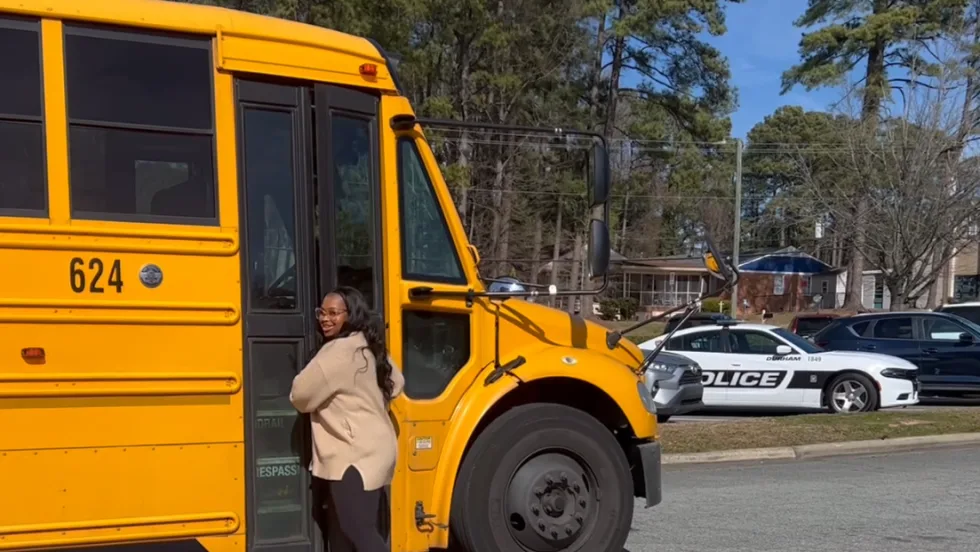
Trip Sheet: Meeting a Hero in My Own Back Yard
I remain impressed by the matter-of-fact heroism that’s often demonstrated by school bus drivers like Deona Washington who are caught in these situations where the best of us might lose our cool and panic. But, then again, bus drivers are a unique breed.
Read More →
Trip Sheet: 3 Takeaways from the EPA Clean School Bus Grant Program
Most applicants sought grant funding to acquire electric school buses, with propane coming in a distant second. No one indicated plans to purchase compressed natural gas (CNG) buses in this round. That’s not terribly surprising, I suppose, given how few school districts listed the inclusion of CNG buses in their fleets for our 2023 top district fleets survey.
Read More →
Trip Sheet: Let's Get Rolling: What's Coming in 2024?
Calendar pages keep flipping toward the mandates set in states like New York and California to transition their school bus fleets from diesel to zero-emission, but there’s plenty of reluctance and pushback.
Read More →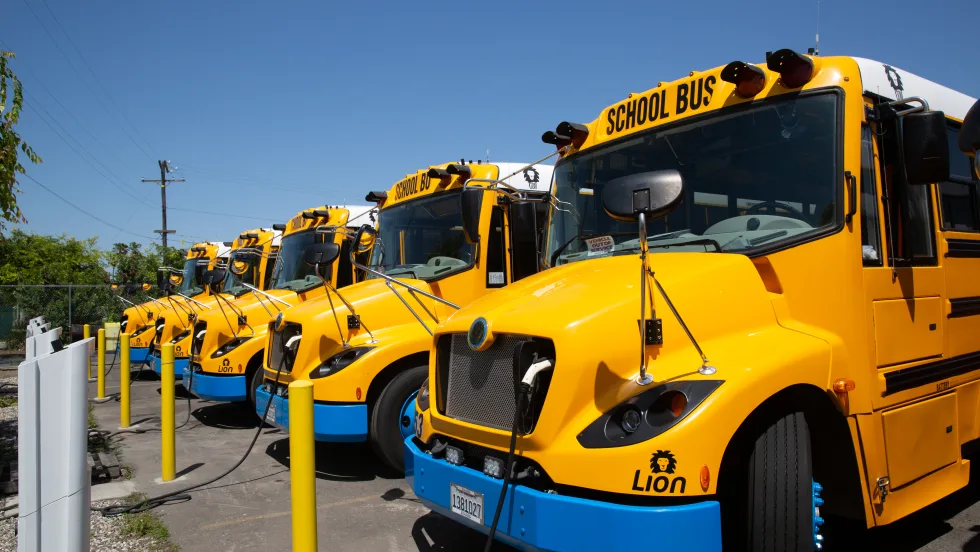
California School Children Ride in Green School Buses
Today, California prides itself on utilizing the most zero-emission (ZE) school buses in the country with over 1,689 being used by California school districts; and while the state is on a positive health trajectory thanks to a decree to eliminate gas and diesel vehicles, more work needs to be done to improve children’s well-being.
Read More →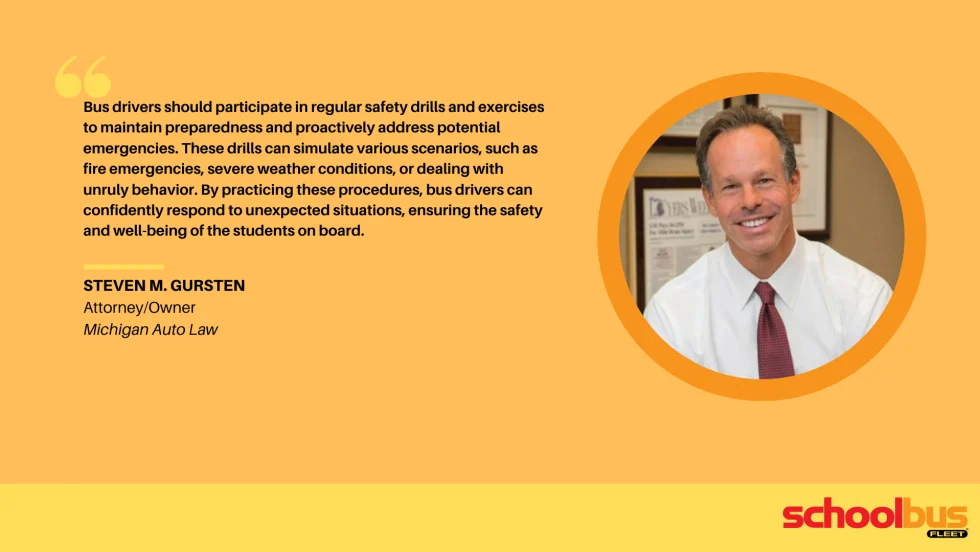
Behind The Wheel of Childrens’ Safety Aboard the School Bus
Bus drivers are the primary caretakers of children during their commute and thus bear responsibility for their safety. By prioritizing proper operating procedures, maintenance checks, and additional precautions, drivers can help avoid the loss of precious young lives under their care.
Read More →