




Getting Creative to Halt School Bus Stop-Arm Running
It is said that ‘Necessity is the mother of invention.’ That certainly seems to hold true when it comes to seeking a way to curb or completely eliminate illegal passing.

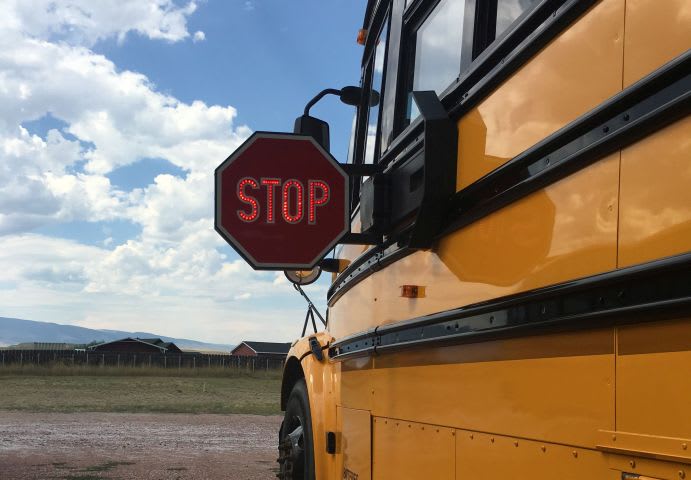
File photo courtesy Sheridan County (Wyo.) School District
File photo courtesy Sheridan County (Wyo.) School District
When a problem looms large and seems to be getting out of control, and the typical solutions evidently no longer work as well, it’s time to try something else.
That’s what we’re seeing now as a response to the apparently escalating issue of motorists passing stopped school buses and injuring students or even causing fatalities.
We can keep employing tactics that we’ve seen success with in the past. But, we can also get creative, and try new solutions.
That’s what some people are doing to combat stop-arm running.
In South Carolina, a man has created an attachment for school bus stop arms in hopes of grabbing the attention of the motoring public and increasing the likelihood that they will stop for school buses, WIS reported recently.
Glennah Hart has been working for four years on an addition of what appears to be a plastic police officer that is about the same size as a stop arm, and fits onto the side of it that is opposite the bus.
Meanwhile, in Montana, a driver for Helena (Mont.) Public Schools, took an extra step to ensure that the students on her bus are safe and seen when crossing and waiting at their stops.
Katee Horner purchased reflective safety belts for students to wear as a sash. The U.S. Army veteran and first-year bus driver, told School Bus Fleetthat she had worn one while serving. She was awarded second place in First Student’s 2019 Be First Awards for her initiative.
Bevann Hamill, who manages First Student’s Helena location, told SBF that First Student and Helena Public Schools plan to offer the reflective belts to most of the students on rural bus routes by this fall, and that the district and school bus company will share the cost.
And then there’s the adoption of new technology in many places, including school districts in Minnesota, Indiana, and Florida.
Hopkins (Minn.) Public Schools and Clark-Pleasant Community Schools Corp. in Whiteland, Indiana, are conducting pilot tests with the Predictive Stop-Arm (PSA) system from Safe Fleet. Using radar technology and predictive analytics, the system is designed to provide active visual and audio alerts to students and bus drivers once the risk of a vehicle passing a stop arm is detected.
Additionally, in Florida, St. Lucie Public Schools has operated the PSA live on regular routes on 10 buses since August 2018, Safe Fleet told SBF, and, at press time, expected to officially roll it out in May or June.
You’re probably familiar with the proverb “Necessity is the mother of invention.” That certainly seems to hold true when it comes to seeking a way to curb or completely eliminate stop-arm running. In addition to educational efforts and the stiffer penalties that many states are employing — most recently Indiana, Oklahoma, Idaho, and West Virginia — a federal bill is calling for the U.S. Department of Transportation to conduct a comprehensive review of existing laws and programs in all 50 states, recommend best practices, and create a nationwide public safety campaign.
We can only hope that these attempts will assist in raising awareness among the motoring public and help make conditions around the school bus even safer for students.
Are you aware of any other creative solutions being employed to prevent illegal bus passing? If so, please share them in the comments section below.
More Blog Posts
The Sound of Summer Starting [Guest Editorial]
That unmistakable school bus rumble? It carries childhood memories, community routines, and a whole lot of unseen work behind the scenes.
Read More →
The Technology Power Combo That Enables EV Charging on Difficult Sites
As the pace of fleet electrification increases and charging infrastructure continues to pose challenges, many fleets find themselves puzzling over the question: how do I install charging infrastructure faster and more cost-efficiently?
Read More →
Trip Sheet: Farewell, Faithful Readers – Keep on Rolling
Executive Editor Wes Platt offers parting thoughts as he parks the School Bus Fleet bus to focus on ultra-local community journalism, making way for someone else to take the wheel as the pupil transportation industry continues to evolve.
Read More →
Trip Sheet: School Transportation Pros Can Champion Children's Mental Health
Children's Mental Health Awareness Day underscores the significance of school bus drivers in fostering supportive environments during students' journeys. SAMHSA's initiatives, including stigma reduction and access to resources, complement the Biden-Harris administration's funding efforts to enhance youth mental health services and workforce development.
Read More →
Trip Sheet: Is It Time for Daylight Saving Time to Clock Out?
How do you think the potential shift to permanent Daylight Saving Time or standard time would impact our daily lives and routines, especially considering the divided approach across various states?
Read More →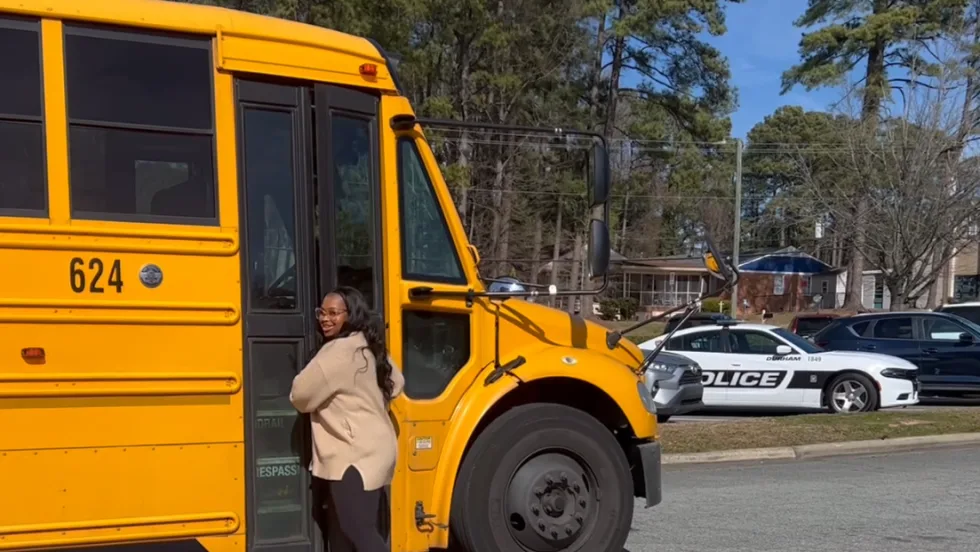
Trip Sheet: Meeting a Hero in My Own Back Yard
I remain impressed by the matter-of-fact heroism that’s often demonstrated by school bus drivers like Deona Washington who are caught in these situations where the best of us might lose our cool and panic. But, then again, bus drivers are a unique breed.
Read More →
Trip Sheet: 3 Takeaways from the EPA Clean School Bus Grant Program
Most applicants sought grant funding to acquire electric school buses, with propane coming in a distant second. No one indicated plans to purchase compressed natural gas (CNG) buses in this round. That’s not terribly surprising, I suppose, given how few school districts listed the inclusion of CNG buses in their fleets for our 2023 top district fleets survey.
Read More →
Trip Sheet: Let's Get Rolling: What's Coming in 2024?
Calendar pages keep flipping toward the mandates set in states like New York and California to transition their school bus fleets from diesel to zero-emission, but there’s plenty of reluctance and pushback.
Read More →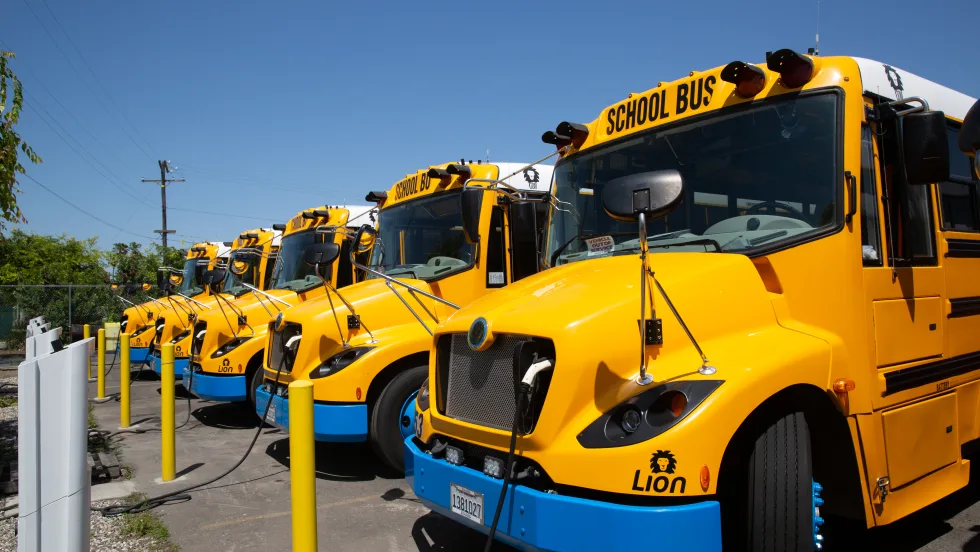
California School Children Ride in Green School Buses
Today, California prides itself on utilizing the most zero-emission (ZE) school buses in the country with over 1,689 being used by California school districts; and while the state is on a positive health trajectory thanks to a decree to eliminate gas and diesel vehicles, more work needs to be done to improve children’s well-being.
Read More →
Behind The Wheel of Childrens’ Safety Aboard the School Bus
Bus drivers are the primary caretakers of children during their commute and thus bear responsibility for their safety. By prioritizing proper operating procedures, maintenance checks, and additional precautions, drivers can help avoid the loss of precious young lives under their care.
Read More →