




Don’t Rule Out Drivers Under 25
The school bus industry needs more young people, not fewer, to carry on the work of safely transporting our nation’s future.


Don Smith trains school bus driver applicants in this file photo from Orange (Calif.) Unified School District.

Don Smith trains school bus driver applicants in this file photo from Orange (Calif.) Unified School District.
When Mark Cegelski earned his license to drive a school bus at age 18, he didn’t expect it to lead to a long career in pupil transportation.
It was 1982, and Cegelski took a bus driving gig to help pay his way through college. He was studying accounting at Duquesne University in Pittsburgh.
“It was the perfect job for a college student, as you had time to attend classes between the morning and afternoon runs,” he says.
After he graduated, Cegelski remained in the pupil transportation field, and he worked his way up the ladder to become a director of transportation. He served in that position for Cleveland Metropolitan School District and Mayfield City Schools in Ohio before retiring in December 2015.
Even in retirement, Cegelski has returned to the role that kicked off his career.
“I am happily retired and enjoying driving a bus again,” he says.
If he hadn’t been allowed to drive a school bus in college, Cegelski notes, he most likely would have gone on to work in an industry other than pupil transportation.
That point doesn’t mesh well with a recent development in Tennessee: Lawmakers raised the minimum age for new school bus drivers in the state from 21 to 25. Current school bus drivers in that age range will be grandfathered in.
The bill that Tennessee Gov. Bill Haslam signed into law on May 4 was spurred by the Nov. 21 school bus crash in Chattanooga in which six students were killed. The legislation includes other measures that are intended to bolster school transportation oversight and training, but the minimum age change stands out as an overreaching reaction to the tragedy in Chattanooga.
In that crash, school bus driver Johnthony Walker was 24 years old. The incident occurred on a two-lane road with a 30 mph speed limit and an advisory speed of 25 mph for curves. Police estimated that Walker’s bus was traveling at about 50 mph.
According to the National Transportation Safety Board’s (NTSB’s) preliminary report, Walker lost control of the bus and departed the roadway to the left as he passed the second of two curves. The bus then hit a utility pole, overturned, and crashed into a tree, which caused the roof of the bus to collapse inward.
Was Walker’s relatively young age a significant factor in what happened with his bus, or would the same thing have occurred if he had been 25 or older? We can’t say.
I would argue that the more telling details were what had happened before Nov. 21. For example, NTSB said that since the beginning of the school year in August, Walker had had one reportable crash and one non-reportable crash. Also, multiple complaints had been lodged about Walker’s driving and his behavior toward students.
So should people younger than 25 with a clean background and driving history now be barred from taking a job as a school bus driver?
Coming back to Cegelski, the Ohio pupil transportation veteran, he acknowledges that his own start at 18 years old may have been a bit too young, but he maintains that in the Chattanooga crash, “the driver’s personal immaturity caused his actions, not his age.”
“I don’t believe the actions of one driver should deny everyone under 25 a chance to start a great career in the school bus industry,” Cegelski says.
Cegelski’s early entrée into pupil transportation is certainly not unique. Many leaders in the industry launched their careers by driving a school bus in or after college.
At a time when operations across the country are struggling with a shortage of drivers, and as many longtime transportation directors are retiring, ruling out new school bus drivers under age 25 is a shortsighted move. The industry needs more young people, not fewer, to carry on the work of safely transporting our nation’s future.
More Blog Posts

The Sound of Summer Starting [Guest Editorial]
That unmistakable school bus rumble? It carries childhood memories, community routines, and a whole lot of unseen work behind the scenes.
Read More →
The Technology Power Combo That Enables EV Charging on Difficult Sites
As the pace of fleet electrification increases and charging infrastructure continues to pose challenges, many fleets find themselves puzzling over the question: how do I install charging infrastructure faster and more cost-efficiently?
Read More →
Trip Sheet: Farewell, Faithful Readers – Keep on Rolling
Executive Editor Wes Platt offers parting thoughts as he parks the School Bus Fleet bus to focus on ultra-local community journalism, making way for someone else to take the wheel as the pupil transportation industry continues to evolve.
Read More →
Trip Sheet: School Transportation Pros Can Champion Children's Mental Health
Children's Mental Health Awareness Day underscores the significance of school bus drivers in fostering supportive environments during students' journeys. SAMHSA's initiatives, including stigma reduction and access to resources, complement the Biden-Harris administration's funding efforts to enhance youth mental health services and workforce development.
Read More →
Trip Sheet: Is It Time for Daylight Saving Time to Clock Out?
How do you think the potential shift to permanent Daylight Saving Time or standard time would impact our daily lives and routines, especially considering the divided approach across various states?
Read More →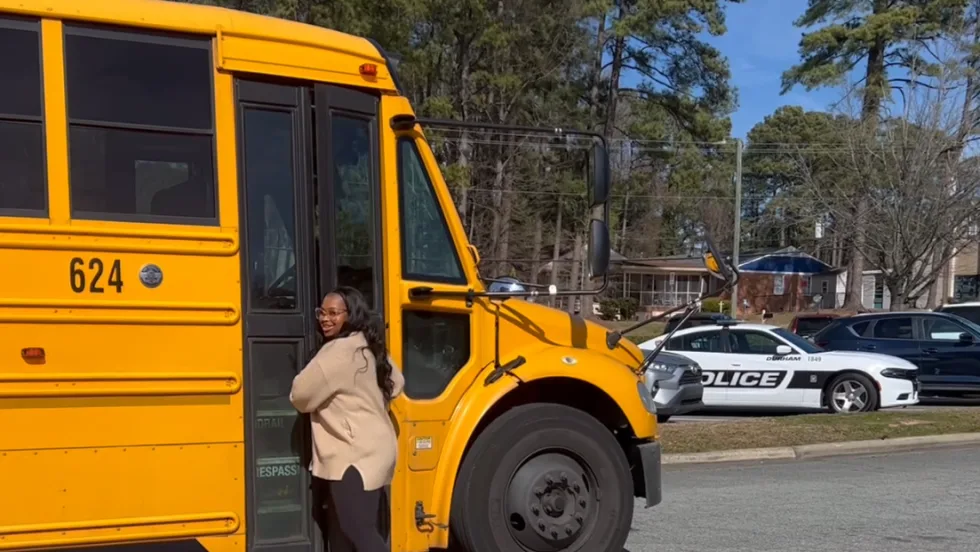
Trip Sheet: Meeting a Hero in My Own Back Yard
I remain impressed by the matter-of-fact heroism that’s often demonstrated by school bus drivers like Deona Washington who are caught in these situations where the best of us might lose our cool and panic. But, then again, bus drivers are a unique breed.
Read More →
Trip Sheet: 3 Takeaways from the EPA Clean School Bus Grant Program
Most applicants sought grant funding to acquire electric school buses, with propane coming in a distant second. No one indicated plans to purchase compressed natural gas (CNG) buses in this round. That’s not terribly surprising, I suppose, given how few school districts listed the inclusion of CNG buses in their fleets for our 2023 top district fleets survey.
Read More →
Trip Sheet: Let's Get Rolling: What's Coming in 2024?
Calendar pages keep flipping toward the mandates set in states like New York and California to transition their school bus fleets from diesel to zero-emission, but there’s plenty of reluctance and pushback.
Read More →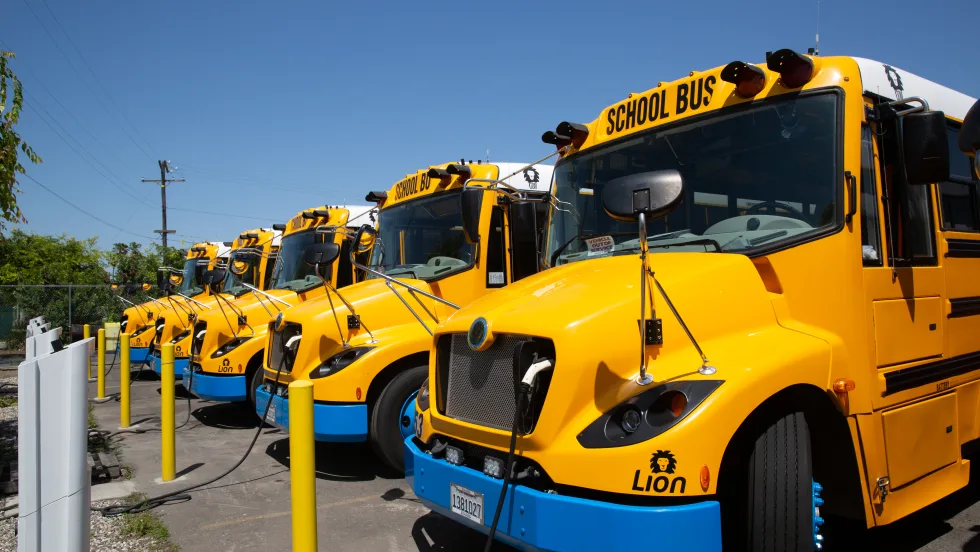
California School Children Ride in Green School Buses
Today, California prides itself on utilizing the most zero-emission (ZE) school buses in the country with over 1,689 being used by California school districts; and while the state is on a positive health trajectory thanks to a decree to eliminate gas and diesel vehicles, more work needs to be done to improve children’s well-being.
Read More →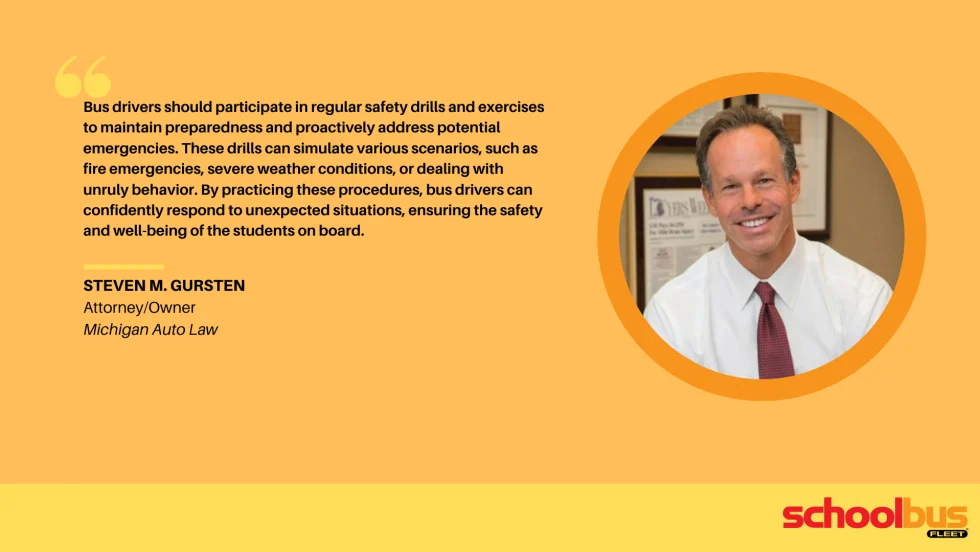
Behind The Wheel of Childrens’ Safety Aboard the School Bus
Bus drivers are the primary caretakers of children during their commute and thus bear responsibility for their safety. By prioritizing proper operating procedures, maintenance checks, and additional precautions, drivers can help avoid the loss of precious young lives under their care.
Read More →