




Does a Reported Drug Abuse Spike Impact Pupil Transportation?
A national survey finds that about 16% of all prescription drug use is misuse, and another study shows that illicit drug use has gone up, even among safety-sensitive professionals. What does this mean for pupil transportation?


A national survey finds that about 16% of all prescription drug use is misuse, and another study shows that illicit drug use has gone up, even among safety-sensitive professionals. Photo by iStock.

A national survey finds that about 16% of all prescription drug use is misuse, and another study shows that illicit drug use has gone up, even among safety-sensitive professionals. Photo by iStock.
It has been widely reported in the media that there has been a rise in both prescription and illicit drug abuse in the U.S.
One story that ran earlier this month on National Public Radio (NPR) cites The National Survey on Drug Use, which asked respondents for the first time last year about all uses of prescription medications, instead of just inappropriate use. The survey found that 119 million Americans age 12 and older, or 45% of the U.S. population, according to NPR, took prescription drugs. Moreover, 19 million of those respondents didn’t follow a prescription, and more than one-third had a prescription but took the drugs excessively. Altogether, about 16% of all prescription drug use was misuse, NPR reported.
This story, among others, has me wondering whether this reported increase is adding to the challenge of hiring and retaining school bus drivers.
There have been a few news stories within the last year or so about school bus drivers who have been in accidents or have been reported for unsafe driving while they either have had prescription medications in their system and/or were in possession of prescription medications that were not prescribed to them.
That was the case with a school bus driver in Michigan, who told deputies that she had taken prescription drugs earlier in the day and may have blacked out just before her bus struck a parked minivan in January, according to Detroit Free Press. Deputies found in her purse a pill container with prescription medications, including narcotics. Some of the pills she had were prescribed to her and some were not, according to the newspaper.
In Colorado, a school bus driver who lost control of her bus, which then went into a spin and overturned with eight students on board, seriously injuring two, was found to have six prescription medications in her system (her attorney said that drug tests showed she was not impaired at the time of the crash.)
In Pennsylvania, school bus driver Sharon Rox was accused of driving under the influence in February, and in April she was ordered to stand trial, WTAE reported. In a preliminary hearing, a witness claimed to have seen Rox driving slowly, swerving several times, and forcing oncoming vehicles off the road, according to the news outlet. The police officer who arrested Rox said that her speech was slurred and she had a hard time keeping her eyes open. Two prescription medications were detected in Rox's blood work after her arrest, according to the news source, and the blood tests found no alcohol.
Similarly, in Utah, Lycia Kae Martinez admitted to being impaired by prescription medications when she drove a group of students and teachers on a field trip in October 2014. Adults on the bus and motorists called 911, saying the bus was drifting into other lanes and getting dangerously close to other vehicles, Deseret News reported. Charging documents stated that when Martinez was arrested, investigators found pill bottles in her purse for Clonidine, Cyclobenzaprine, Xanax, and Meloxicam, and toxicology tests showed Clonidine and Xanax in amounts exceeding the recommended daily dosage, according to the newspaper.
Are school bus drivers being properly educated in the full effects of these drugs? Are medical professionals, including those on the National Registry, fully aware of the potential impact these drugs could have on a driver’s performance?
Meanwhile, there appears to also be an uptick in the use of illicit drugs. A recent article in The Wall Street Journal reports that the number of workers in the U.S. testing positive for use of drugs such as marijuana, heroin, or methamphetamine has reached the highest level in a decade, even in the safety-sensitive workforce, which includes school bus drivers. Among safety-sensitive workers, positive tests rose to 1.8% from 1.7% in 2015, according to The Wall Street Journal.
The newspaper also reports that the spike, which started in 2012, overlaps with legislation that passed in Colorado and Washington allowing recreational use of marijuana. More than 20 other states have legalized marijuana in some form since then, and eight states are voting on allowing either medical or recreational use of the drug this November.
However, although states that have legalized marijuana use in some form have shown higher positivity rates of the drug, those numbers have not increased in Colorado and Washington since 2014, Dr. Barry Sample, director of science and technology for Quest Diagnostics Inc.’s employer solutions business, told The Wall Street Journal.
I am curious to learn how school transportation providers have responded to these developments, particularly in states that have recently legalized marijuana use in some form or have it on the ballot this November. Do you have heightened safety and confidentiality concerns over this? Please leave your comments in the section below or feel free to email us at info@schoolbusfleet.com.
More Blog Posts

The Sound of Summer Starting [Guest Editorial]
That unmistakable school bus rumble? It carries childhood memories, community routines, and a whole lot of unseen work behind the scenes.
Read More →
The Technology Power Combo That Enables EV Charging on Difficult Sites
As the pace of fleet electrification increases and charging infrastructure continues to pose challenges, many fleets find themselves puzzling over the question: how do I install charging infrastructure faster and more cost-efficiently?
Read More →
Trip Sheet: Farewell, Faithful Readers – Keep on Rolling
Executive Editor Wes Platt offers parting thoughts as he parks the School Bus Fleet bus to focus on ultra-local community journalism, making way for someone else to take the wheel as the pupil transportation industry continues to evolve.
Read More →
Trip Sheet: School Transportation Pros Can Champion Children's Mental Health
Children's Mental Health Awareness Day underscores the significance of school bus drivers in fostering supportive environments during students' journeys. SAMHSA's initiatives, including stigma reduction and access to resources, complement the Biden-Harris administration's funding efforts to enhance youth mental health services and workforce development.
Read More →
Trip Sheet: Is It Time for Daylight Saving Time to Clock Out?
How do you think the potential shift to permanent Daylight Saving Time or standard time would impact our daily lives and routines, especially considering the divided approach across various states?
Read More →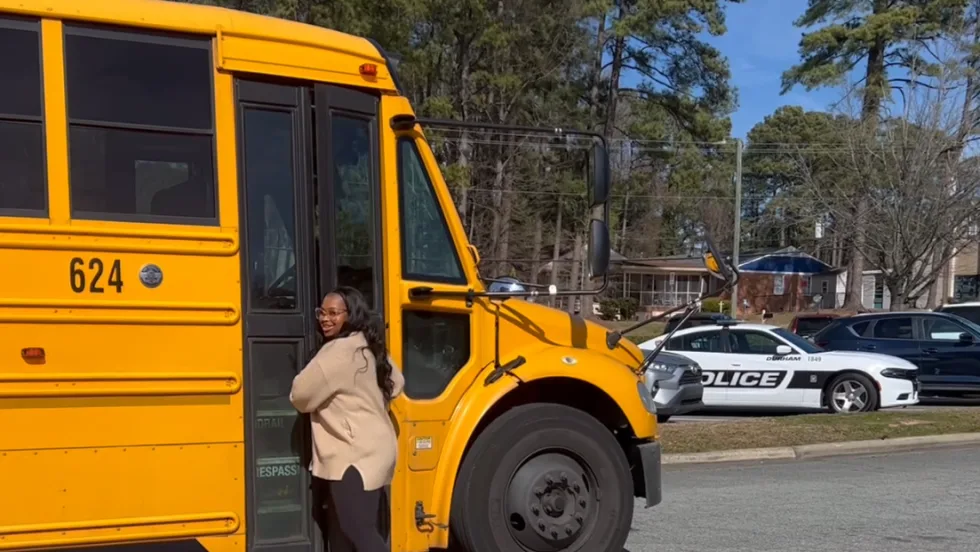
Trip Sheet: Meeting a Hero in My Own Back Yard
I remain impressed by the matter-of-fact heroism that’s often demonstrated by school bus drivers like Deona Washington who are caught in these situations where the best of us might lose our cool and panic. But, then again, bus drivers are a unique breed.
Read More →
Trip Sheet: 3 Takeaways from the EPA Clean School Bus Grant Program
Most applicants sought grant funding to acquire electric school buses, with propane coming in a distant second. No one indicated plans to purchase compressed natural gas (CNG) buses in this round. That’s not terribly surprising, I suppose, given how few school districts listed the inclusion of CNG buses in their fleets for our 2023 top district fleets survey.
Read More →
Trip Sheet: Let's Get Rolling: What's Coming in 2024?
Calendar pages keep flipping toward the mandates set in states like New York and California to transition their school bus fleets from diesel to zero-emission, but there’s plenty of reluctance and pushback.
Read More →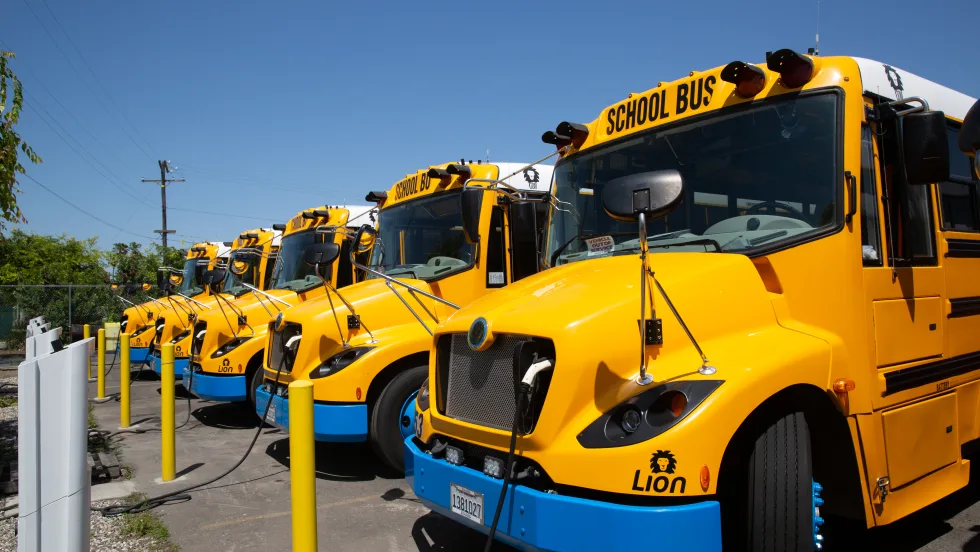
California School Children Ride in Green School Buses
Today, California prides itself on utilizing the most zero-emission (ZE) school buses in the country with over 1,689 being used by California school districts; and while the state is on a positive health trajectory thanks to a decree to eliminate gas and diesel vehicles, more work needs to be done to improve children’s well-being.
Read More →
Behind The Wheel of Childrens’ Safety Aboard the School Bus
Bus drivers are the primary caretakers of children during their commute and thus bear responsibility for their safety. By prioritizing proper operating procedures, maintenance checks, and additional precautions, drivers can help avoid the loss of precious young lives under their care.
Read More →