




Can Wi-Fi Make the School Bus an Effective Extension of the Classroom?
The onboard technology not only enables students to complete their homework during the ride, but can reportedly be considered an instructional expense. Additionally, the router can accommodate other technologies such as GPS and connectivity for the driver’s tablet.

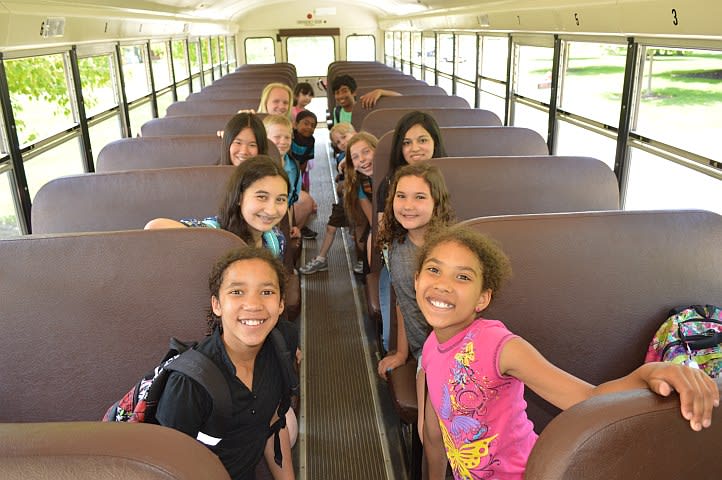
Onboard Wi-Fi, such as the SmartBus solution provided by Kajeet, gives all students the chance to complete their homework during the ride. It also can reportedly be considered an instructional expense, and the router can accommodate other technologies, such as GPS. Photo courtesy School Bus Safety Co.

Onboard Wi-Fi, such as the SmartBus solution provided by Kajeet, gives all students the chance to complete their homework during the ride. It also can reportedly be considered an instructional expense, and the router can accommodate other technologies, such as GPS. Photo courtesy School Bus Safety Co.
At a recent meeting that addressed how technology will impact the future of school transportation, one of the many interesting topics that came up was on extending connectivity to all students to enhance their ability to learn.
Michael Flood, vice president of strategy at Kajeet, which provides mobile broadband solutions that connect students to the internet outside of school, discussed with attendees at the IC Bus Next Stop Innovation Summit, which was held in Chicago in February, how the school bus of the future can become an extension of the classroom, helping all students learn more effectively.
Kajeet offers two broadband solutions for schools. One is the Smart Spot, a portable Wi-Fi hotspot that a student can take anywhere. The other possibly the more cost-effective option for school districts, since every student aboard can access the service at once, is the SmartBus solution, a Wi-Fi router on the bus that students connect to from their mobile devices. The connection is managed by Kajeet on behalf of the school district.
Kajeet limits use to educational purposes, filtering out content that isn’t child-appropriate and blocking entertainment such as Netflix and Spotify, keeping students on task and saving bandwidth, which keeps costs down. The SmartBus solution is currently in 40 school districts' fleets, including Miami-Dade County Public Schools.
The internet technology gives all students aboard the bus the chance to potentially finish their homework on the ride home from school, leaving time for extracurricular activities or — what is seemingly unheard of these days — unstructured fun.
For students who do not own a connectable device, such as a phone, tablet, laptop, or digital notebook, some school districts who install the technology on their buses have a one-to-one computing program in which they issue all students a device. Others have a checkout program in place to provide devices to students who don’t have them.
Some districts have seen homework completion rates go up for students with the Wi-Fi access, Flood said. Additionally, since the company can put more robust antennae on the buses, it can pull stronger signals than students can get on their phones, so students in more remote, rural areas can also reap the benefits.
The bus can also be equipped with a connection kill switch for the driver to use in case of emergencies, Flood said.
Another benefit is that onboard Wi-Fi could shift some of the cost burden away from the transportation department to instructional departments. For districts with school buses that serve Title 1 schools, that funding can be spent on this service because it falls into the instructional category, Flood pointed out.
It could also potentially add up to 150 hours per year of Wi-Fi access for students to work on homework for the cost of about $10 per student or even less, he told School Bus Fleet in an interview.
Although there isn’t yet a capability to push bus stop information to students through the Wi-Fi system, that is on the way, Flood said.
Flood also noted that keeping the students on the bus occupied in this way can improve behavior by reducing anxiety. He shared a story of a bus driver who drove a route with serious behavior incidents and threatened to quit. Three weeks after the technology was deployed, the route saw a significant decrease in behavior incidents, changing from about three to five write-ups per week to none.
Wi-Fi access, even if only available for schoolwork, can make the school bus ride more attractive to students, which cuts down on their requests to have their parents drive them to school.
Another interesting benefit of installing the technology, Flood said in the interview, is that the router can serve other onboard technologies that also need an IP connection to the internet, from low-bandwidth applications, like GPS and telemetry, to high-bandwidth applications, such as the driver’s tablet and surveillance cameras.
With all the potential benefits to students, the technology seems like a win-win, if it can be implemented cost-effectively. Have you installed Wi-Fi on your school buses, or used them to provide “homework hot spots?” If so, what has your experience been? If you have held off, what have your reservations been? Tell us in the comments section below.
More Blog Posts
The Sound of Summer Starting [Guest Editorial]
That unmistakable school bus rumble? It carries childhood memories, community routines, and a whole lot of unseen work behind the scenes.
Read More →
The Technology Power Combo That Enables EV Charging on Difficult Sites
As the pace of fleet electrification increases and charging infrastructure continues to pose challenges, many fleets find themselves puzzling over the question: how do I install charging infrastructure faster and more cost-efficiently?
Read More →
Trip Sheet: Farewell, Faithful Readers – Keep on Rolling
Executive Editor Wes Platt offers parting thoughts as he parks the School Bus Fleet bus to focus on ultra-local community journalism, making way for someone else to take the wheel as the pupil transportation industry continues to evolve.
Read More →
Trip Sheet: School Transportation Pros Can Champion Children's Mental Health
Children's Mental Health Awareness Day underscores the significance of school bus drivers in fostering supportive environments during students' journeys. SAMHSA's initiatives, including stigma reduction and access to resources, complement the Biden-Harris administration's funding efforts to enhance youth mental health services and workforce development.
Read More →
Trip Sheet: Is It Time for Daylight Saving Time to Clock Out?
How do you think the potential shift to permanent Daylight Saving Time or standard time would impact our daily lives and routines, especially considering the divided approach across various states?
Read More →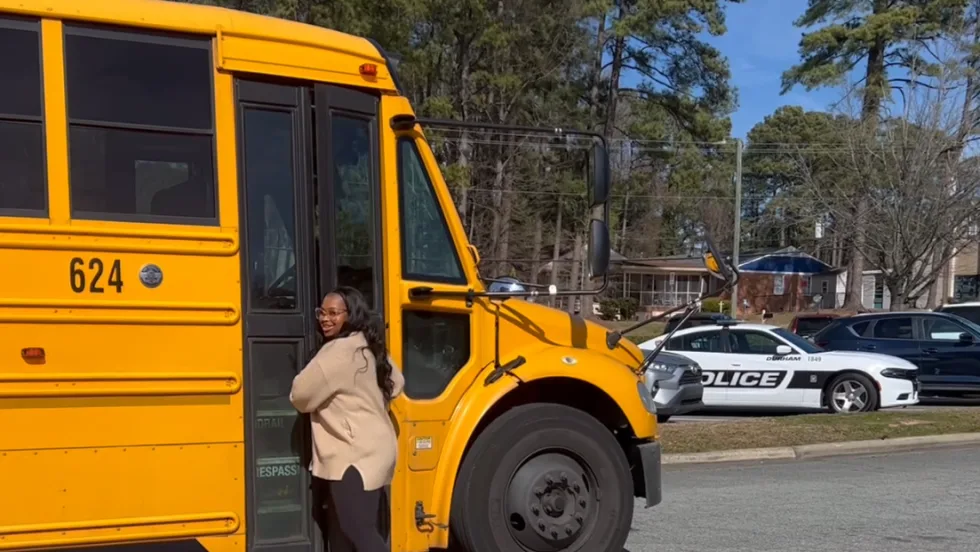
Trip Sheet: Meeting a Hero in My Own Back Yard
I remain impressed by the matter-of-fact heroism that’s often demonstrated by school bus drivers like Deona Washington who are caught in these situations where the best of us might lose our cool and panic. But, then again, bus drivers are a unique breed.
Read More →
Trip Sheet: 3 Takeaways from the EPA Clean School Bus Grant Program
Most applicants sought grant funding to acquire electric school buses, with propane coming in a distant second. No one indicated plans to purchase compressed natural gas (CNG) buses in this round. That’s not terribly surprising, I suppose, given how few school districts listed the inclusion of CNG buses in their fleets for our 2023 top district fleets survey.
Read More →
Trip Sheet: Let's Get Rolling: What's Coming in 2024?
Calendar pages keep flipping toward the mandates set in states like New York and California to transition their school bus fleets from diesel to zero-emission, but there’s plenty of reluctance and pushback.
Read More →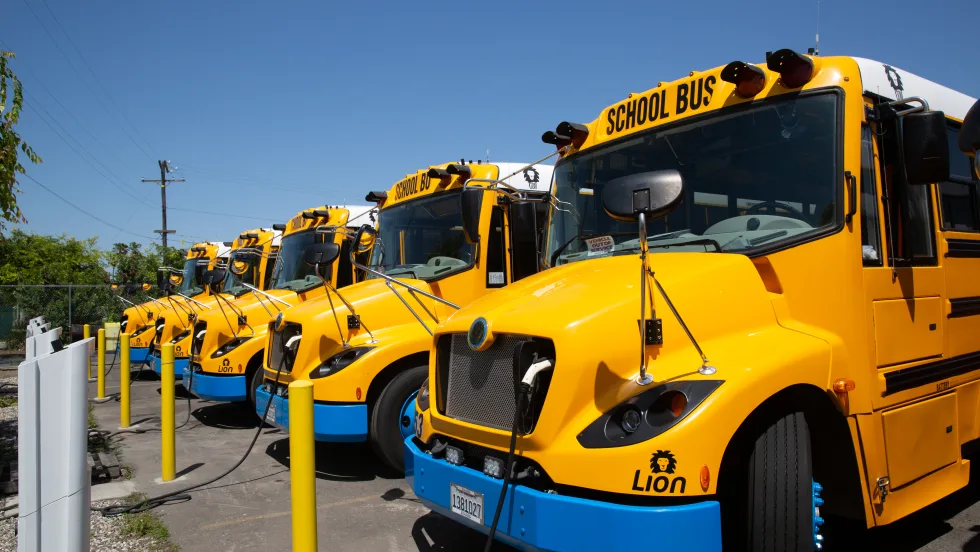
California School Children Ride in Green School Buses
Today, California prides itself on utilizing the most zero-emission (ZE) school buses in the country with over 1,689 being used by California school districts; and while the state is on a positive health trajectory thanks to a decree to eliminate gas and diesel vehicles, more work needs to be done to improve children’s well-being.
Read More →
Behind The Wheel of Childrens’ Safety Aboard the School Bus
Bus drivers are the primary caretakers of children during their commute and thus bear responsibility for their safety. By prioritizing proper operating procedures, maintenance checks, and additional precautions, drivers can help avoid the loss of precious young lives under their care.
Read More →