




Be carful with your words
It is by turns amusing and unsettling how much a small typo can alter the meaning of something. For example, maybe you’ve seen someone list his title as “assistant manger,” which would make him a trough for horses and cattle to eat from. ...

It is by turns amusing and unsettling how much a small typo can alter the meaning of something.
For example, maybe you’ve seen someone list his title as “assistant manger,” which would make him a trough for horses and cattle to eat from.
A while back, I got an e-mail in which someone apologized for the “incontinence” instead of the “inconvenience.”
Hopefully, you’ve never accidentally left out the “l” in “Public” when writing the name of your school district.
Editors are trained to catch these types of gaffes, but we are human, after all, and are typically on tight deadlines. I subscribe to our esteemed local paper, the Los Angeles Times, and I often find an error or two without even going through the whole edition.
I’m just praying that this editorial ends up typo-free (except for the one you may have caught in the headline, which was intentional).
Of course, it’s not just spelling errors that can cause confusion. Accidentally leaving out what would seem to be an insignificant word can significantly change how a sentence comes across. I was reminded of that fact by an intriguing Washington Post article that I came across online recently.
Stopping a school bus?
A Virginia man who drove by a stopped school bus was let off the hook by a judge because of a missing word in the state’s school bus violations law. It reads:
“A person is guilty of reckless driving who fails to stop, when approaching from any direction, any school bus which is stopped on any highway, private road or school driveway for the purpose of taking on or discharging children.”
As the Post reported, an “at” was deleted when the law was amended in 1970. So, technically, it says that you have to stop a stopped school bus rather than stop at a stopped school bus.
“He can only be guilty if he failed to stop any school bus, and there’s no evidence he did,” Judge Marcus Williams said in the trial of 45-year-old John Mendez.
When informed of Mendez’s acquittal, Virginia legislator David Albo told the Post, “That’s not good. That’s a very serious charge. That needs to be fixed.”
On Dec. 7, another legislator, Scott Surovell, pre-filed a bill that aims to eliminate the loophole by plugging in the missing “at.”
Train your eyes
Even if you’re not drafting state legislation, writing correctly is essential in making sure that your message won’t be misunderstood. Here are some tips based on common errors that we SBF editors see:
• A driver doesn’t “loose” his license — he “loses” it.
• A school bus has “brakes,” not “breaks” (unless it’s falling apart, that is).
• If you say that a bus is “stationery,” that means it’s writing material. If you want to say that it’s not moving, “stationary” is the right word.
• “Quite” is often accidentally used in place of “quiet.”
• Even the word “misspelled” itself is sometimes misspelled as “mispelled.”
The spell check on computer programs is helpful, but it won’t catch a mistake like the use of the wrong “breaks.”
Before you send out an e-mail or distribute a document, be sure to take a careful look over it. And if it’s a high-profile matter, have someone else review it as well.
I know I’ll be proofreading this editorial about a hundred times.
— Thomas McMahon, Executive Editor
More Blog Posts

The Sound of Summer Starting [Guest Editorial]
That unmistakable school bus rumble? It carries childhood memories, community routines, and a whole lot of unseen work behind the scenes.
Read More →
The Technology Power Combo That Enables EV Charging on Difficult Sites
As the pace of fleet electrification increases and charging infrastructure continues to pose challenges, many fleets find themselves puzzling over the question: how do I install charging infrastructure faster and more cost-efficiently?
Read More →
Trip Sheet: Farewell, Faithful Readers – Keep on Rolling
Executive Editor Wes Platt offers parting thoughts as he parks the School Bus Fleet bus to focus on ultra-local community journalism, making way for someone else to take the wheel as the pupil transportation industry continues to evolve.
Read More →
Trip Sheet: School Transportation Pros Can Champion Children's Mental Health
Children's Mental Health Awareness Day underscores the significance of school bus drivers in fostering supportive environments during students' journeys. SAMHSA's initiatives, including stigma reduction and access to resources, complement the Biden-Harris administration's funding efforts to enhance youth mental health services and workforce development.
Read More →
Trip Sheet: Is It Time for Daylight Saving Time to Clock Out?
How do you think the potential shift to permanent Daylight Saving Time or standard time would impact our daily lives and routines, especially considering the divided approach across various states?
Read More →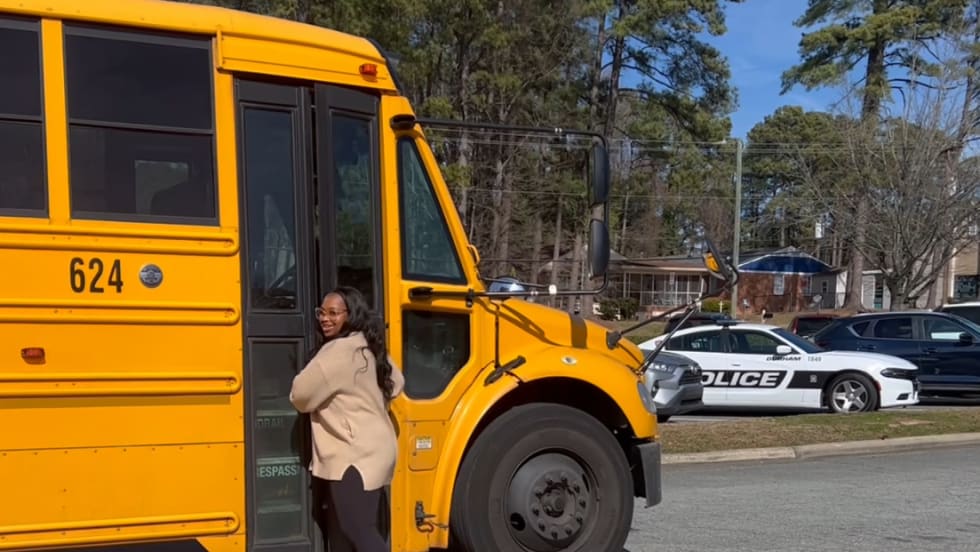
Trip Sheet: Meeting a Hero in My Own Back Yard
I remain impressed by the matter-of-fact heroism that’s often demonstrated by school bus drivers like Deona Washington who are caught in these situations where the best of us might lose our cool and panic. But, then again, bus drivers are a unique breed.
Read More →
Trip Sheet: 3 Takeaways from the EPA Clean School Bus Grant Program
Most applicants sought grant funding to acquire electric school buses, with propane coming in a distant second. No one indicated plans to purchase compressed natural gas (CNG) buses in this round. That’s not terribly surprising, I suppose, given how few school districts listed the inclusion of CNG buses in their fleets for our 2023 top district fleets survey.
Read More →
Trip Sheet: Let's Get Rolling: What's Coming in 2024?
Calendar pages keep flipping toward the mandates set in states like New York and California to transition their school bus fleets from diesel to zero-emission, but there’s plenty of reluctance and pushback.
Read More →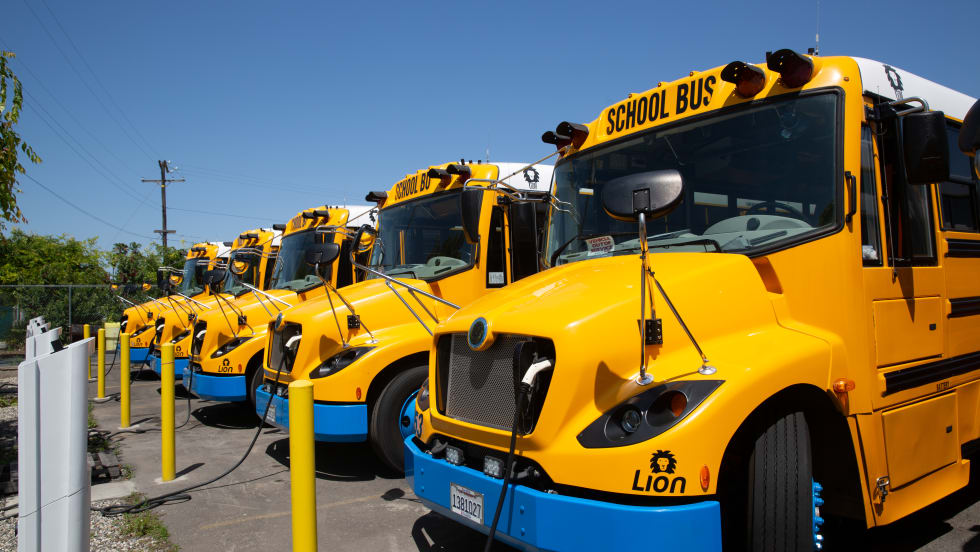
California School Children Ride in Green School Buses
Today, California prides itself on utilizing the most zero-emission (ZE) school buses in the country with over 1,689 being used by California school districts; and while the state is on a positive health trajectory thanks to a decree to eliminate gas and diesel vehicles, more work needs to be done to improve children’s well-being.
Read More →
Behind The Wheel of Childrens’ Safety Aboard the School Bus
Bus drivers are the primary caretakers of children during their commute and thus bear responsibility for their safety. By prioritizing proper operating procedures, maintenance checks, and additional precautions, drivers can help avoid the loss of precious young lives under their care.
Read More →