




For Accurate School Bus Maintenance Diagnoses, Steer Clear of Assumptions
Another Benefit of Brake Interlock Systems
A brake interlock system could easily allow a driver being held at gunpoint the means to prevent the bus from moving by purposely not following the required release steps and claiming mechanical problems to the assailant, thus giving law enforcement more time to respond.
by Brad Barker
August 12, 2019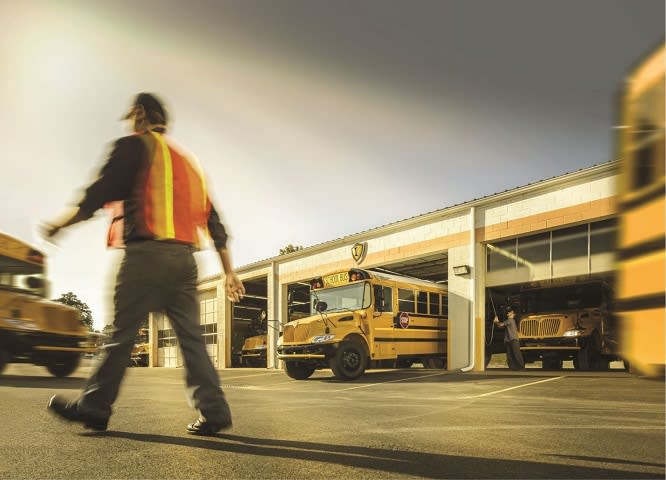
A brake interlock system is a safety system, available from all school bus OEMs, that requires the driver to take a series of steps before the parking brake can be released.
Photo: IC Bus
3 min to read
I recently attended a training session sponsored by a local SWAT team that demonstrated the process of defusing a hostage situation on a school bus. The SWAT team leaders explained that what we were going to experience would be the last effort to resolve the issue and that prior to this, other means of defusing the situation would have taken place first.
We were instructed to cover our ears, and then a “flash-bang” device was set off to distract the perpetrator as SWAT team members stormed the bus.
Weapons drawn, they entered the bus yelling for everyone to get down.
One officer came down the aisle while another armed officer jumped into the driver’s seat facing backwards on his knees. This officer, while kneeling in the driver’s seat, accidentally pushed the parking brake valve in with his foot, causing our bus to roll backwards down a short incline.
The bus bumped into another bus parked behind it, causing only minor damage to both vehicles and fortunately no injuries to anyone, except to the pride of the responsible officer.
It was at this time that I thought that if this bus had been equipped with a brake interlock system, this would never have happened.
What is a Brake Interlock System on a School Bus?
So, what is a brake interlock system? It’s a safety system, available from all school bus OEMs, that requires the driver to take a series of steps before the parking brake can be released. The purpose is to prevent unwanted movement of a bus.
One of the simplest forms of this system requires the ignition switch to be on and the service brake to be applied prior to parking brake valve release. Trying to release the parking brake prior to performing these two steps does not release the brakes.
A variety of parking brake interlocks have been available for more than 15 years. If you have special-needs buses that are equipped with wheelchair lifts, you may have another form of a brake interlock system.
Requiring the driver to turn the ignition key on and apply the service brake beforehand improves safety, and in the case of a hijacking or hostage situation, is a good way to prevent the assailant from commandeering the bus. It could easily allow a driver being held at gunpoint the means to prevent the bus from moving by purposely not following the required release steps and claiming mechanical problems to the assailant, thus giving law enforcement more time to respond.
What School Buses Can Use this Braking System?
All buses can be ordered with variations of this system. I recommend standardizing as much as possible so all release steps are the same between like models of buses.
Various designs are available at differing levels of complexity. In some variations, the electric control solenoid prevents air from flowing unless the proper steps are followed. The normally closed valve is an air valve with attaching air lines. Some prevent the transmission from shifting out of neutral if a door is open.
This system can be ordered on new buses or for retrofitting if desired. IC bus offers a conversion manual for some model years. Bus-specific information is available from local dealerships. The cost to convert depends on how complex you want the system to be.
Language in the National Congress of School Transportation’s National School Transportation Specifications and Procedures has changed little regarding the need for a parking brake interlock. In 2005, the use of the word “may” is used to define the need. In 2010, no change occurred. In 2015, updates were made to say “all buses shall have,” which requires the service brake to be applied prior to release. Where it will stand for the 2020 manual, I’m not sure. The system is a reliable safety feature that could prevent dangerous incidents from occurring.
About the Author: Brad Barker has more than 40 years of experience in school bus maintenance as a shop manager and technician. He has written numerous articles for SBF.
Subscribe to Our Newsletter
More Blog Posts
The Sound of Summer Starting [Guest Editorial]
That unmistakable school bus rumble? It carries childhood memories, community routines, and a whole lot of unseen work behind the scenes.
Read More →
The Technology Power Combo That Enables EV Charging on Difficult Sites
As the pace of fleet electrification increases and charging infrastructure continues to pose challenges, many fleets find themselves puzzling over the question: how do I install charging infrastructure faster and more cost-efficiently?
Read More →
Trip Sheet: Farewell, Faithful Readers – Keep on Rolling
Executive Editor Wes Platt offers parting thoughts as he parks the School Bus Fleet bus to focus on ultra-local community journalism, making way for someone else to take the wheel as the pupil transportation industry continues to evolve.
Read More →
Trip Sheet: School Transportation Pros Can Champion Children's Mental Health
Children's Mental Health Awareness Day underscores the significance of school bus drivers in fostering supportive environments during students' journeys. SAMHSA's initiatives, including stigma reduction and access to resources, complement the Biden-Harris administration's funding efforts to enhance youth mental health services and workforce development.
Read More →
Trip Sheet: Is It Time for Daylight Saving Time to Clock Out?
How do you think the potential shift to permanent Daylight Saving Time or standard time would impact our daily lives and routines, especially considering the divided approach across various states?
Read More →
Trip Sheet: Meeting a Hero in My Own Back Yard
I remain impressed by the matter-of-fact heroism that’s often demonstrated by school bus drivers like Deona Washington who are caught in these situations where the best of us might lose our cool and panic. But, then again, bus drivers are a unique breed.
Read More →
Trip Sheet: 3 Takeaways from the EPA Clean School Bus Grant Program
Most applicants sought grant funding to acquire electric school buses, with propane coming in a distant second. No one indicated plans to purchase compressed natural gas (CNG) buses in this round. That’s not terribly surprising, I suppose, given how few school districts listed the inclusion of CNG buses in their fleets for our 2023 top district fleets survey.
Read More →
Trip Sheet: Let's Get Rolling: What's Coming in 2024?
Calendar pages keep flipping toward the mandates set in states like New York and California to transition their school bus fleets from diesel to zero-emission, but there’s plenty of reluctance and pushback.
Read More →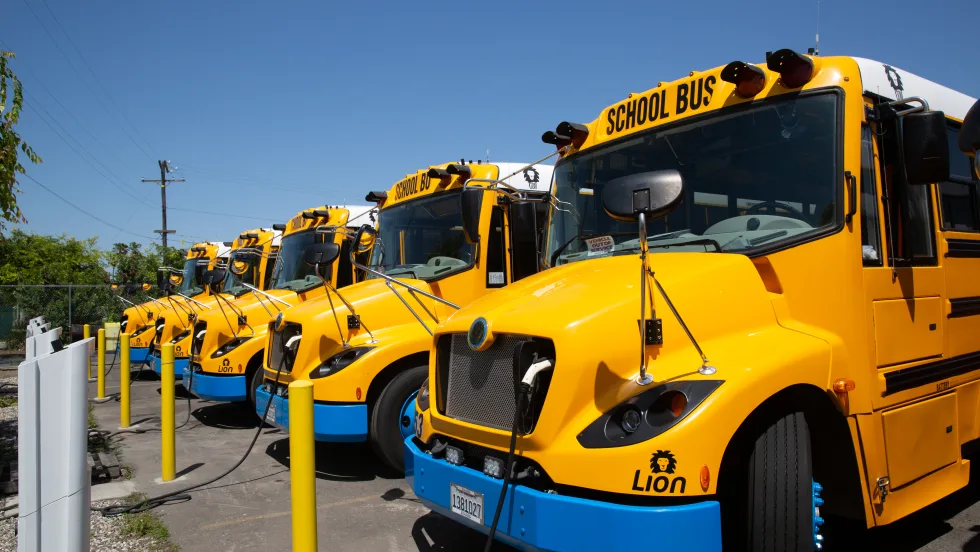
California School Children Ride in Green School Buses
Today, California prides itself on utilizing the most zero-emission (ZE) school buses in the country with over 1,689 being used by California school districts; and while the state is on a positive health trajectory thanks to a decree to eliminate gas and diesel vehicles, more work needs to be done to improve children’s well-being.
Read More →
Behind The Wheel of Childrens’ Safety Aboard the School Bus
Bus drivers are the primary caretakers of children during their commute and thus bear responsibility for their safety. By prioritizing proper operating procedures, maintenance checks, and additional precautions, drivers can help avoid the loss of precious young lives under their care.
Read More →