




Using Computer Technology to Optimize Your Program
For routing and scheduling, maintenance tasks and information gathering, computers can save time and money.
The computer industry has made inroads into many areas of our lives, and the pupil transportation industry is no exception. The low cost of fast, efficient computers, easy-to-use software and the increasing numbers of computer-savvy employees are making the computer a valuable asset in transportation. For example, each school district in North Carolina has computerized routing and scheduling through the Transportation Information Management System (TIMS) and a State Vehicle Fleet Management System (SVFMS) for maintenance, parts inventory and preventive maintenance. The state of North Carolina adapted the TIMS software to accommodate railroad crossings and other route hazards. Warning messages can be printed out for bus drivers whenever a route traverses a hazardous stretch of road. Meanwhile, data from the SVFMS has allowed for analysis and projections of the number of replacement school buses needed for the next 15 years. At the bus garage, the SVFMS keeps track of which vehicles need 30-day inspections and preventive maintenance on a daily basis. Many districts are also using spreadsheets like Microsoft Excel to keep track of inventory, schedules and budgets. Some are using sophisticated database programs like Microsoft Access to store, organize and maintain information.
More power on desktop
The desktop computer (and the laptop, too) has never had such self-contained power. The processors, memory and disk space allow for the use of some very sophisticated office software. For example, the transportation department at Pitt County Schools in Greenville, N.C., has developed a database to maintain information on bus drivers, accidents and vehicles. Craven County Schools in New Bern, N.C., uses a database to maintain shop information and inventories. The flexibility of the information storage allows a seemingly endless variety of reports and statistics. Transportation directors and staff members are able to use presentation graphics packages like Microsoft PowerPoint to create professional presentations of budget requests and redistricting proposals for school board meetings. To meet the needs of the pupil transportation departments and to demonstrate the new technologies, the Institute for Transportation Research and Education (ITRE) at North Carolina State University is planning to offer a new training series in the Microsoft packages this summer. Gone are the days when the only way to get information into a computer was to type it in. Many peripheral devices have become part of the transportation department's tool box. Parts inventories can be managed using wands and bar codes. Things like desktop scanners, for inputting images in the computer, help contribute to the paperless office. And, more images can be imported using digital cameras (. Going a step beyond laptops, state transportation consultants in North Carolina are using handheld, pen-based microcomputers to record defects found during state school bus inspections. The results are being compiled into a statewide database of problems and will help identify areas of needed training.
Casting a wide Inter-net
Very simply, if you aren't connected to the Internet, you should be! There are a multitude of World Wide Web pages that can put key information at your fingertips. Government regulations, industry contacts and training materials are just some of the things to be found on the Internet. ITRE is working on a project to develop school bus safety curricula and interactive training for teachers and students - all over the Internet. Web sites such as schoolbusfleet.com offer updated industry news, discussion groups, position papers and more.
E-mail delivers answers
And e-mail! There has never been a more efficient method of communication. Many things need to be discussed in person or at least over the phone. But, many things don't require that level of interaction. There is no phone tag and, if you don't want to talk about the weather, you don't have to. It is very straightforward and you can easily print out your "conversation." A step beyond e-mail are mailing lists. They provide the opportunity to get your message out, or seek assistance from, a lot of people at once. The National Association of State Directors of Pupil Transportation Services (NASDPTS) is using an Internet mailing list in which a member can send one message that will go to all state directors who subscribe to the list. And, since computer files can be attached to e-mail messages, documents that formerly required the time and expense of overnight shipping can be sent electronically. Technology is a key part of doing business in today's world and everything is in place so that our industry can participate.
Derek Graham is the state pupil transportation director in North Carolina, and Mickey Michael is a research associate at the Institute for Transportation Research and Education at North Carolina State University.
More Management

How to Build a Better Driver Training Program
Ready to boost up your school bus instructor training? Here’s how to pick the right talent and improve recruitment, retention, and safety.
Read More →
CALSTART and Forth Combine to Form Catalyst Mobility
The new name represents a renewed vision for the nonprofit focused on advancing clean, equitable, and affordable transportation solutions that move people and goods.
Read More →
What Makes a Great School Bus Driver Trainer?
Choosing the right school bus driver trainer takes more than experience. Learn six keys to selecting and developing trainers and evaluating program effectiveness.
Read More →


School Bus Contractors Expand Through New Deals, Acquisitions & Partnerships
STA's Canadian division acquires Ontario-based G&L Stevenson Transport while Durham School Services adds a new district contract in California, First Student adds a New Jersey contract, and Minnesota Coaches acquires Halo Transportation.
Read More →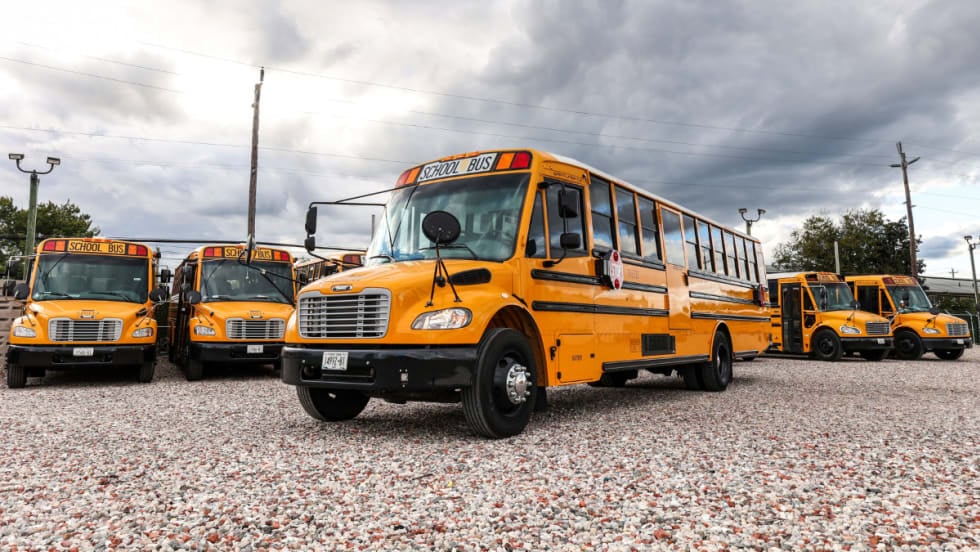
Logan Bus Company Rolls Out AI Phone System for NYC School Bus Families
A summer pilot found that AI agents could handle most routine calls, freeing up time for customer service staff to focus on emergencies and complex family concerns.
Read More →
From Intent to Impact: What I Learned About Leadership from TAPT
A Texas transportation supervisor shares lessons on self-awareness, accountability, managing stress and building trust — and why investing in leadership development matters at every stage of your career.
Read More →
NAPT Names 2026 Award Recipients, Hall of Fame Inductee
Who earned national recognition for their work in student transportation? This year, NAPT named five recipients of its 2026 awards for service, safety, and leadership, plus its newest Hall of Famer.
Read More →
2026 State of Student Transportation Report
Driver shortages. Rising costs. Growing safety expectations. More data, but not enough time to act on it. The 2026 State of Student Transportation Report reveals what transportation leaders say is putting the most pressure on their operations—and where they’re investing next. See how your priorities compare.
Read More →
How to De-Escalate an Angry Person: 5 Steps for Handling Workplace Conflict
What makes emotions run high, and how should you handle an angry colleague or parent? Follow these steps for staying calm, listening, showing empathy, and resolving conflict.
Read More →
What Readiness Looks Like This School Year
Learn about the challenges shaping the 2026–2027 school year, from persistent driver shortages and budget pressure to technology and readiness gaps. See how school districts are responding and adapting in Zonar’s 2026 Back-to-School Readiness Report.
Read More →