




Training Drives Success at Texas School District
Northside Independent School District in Greater San Antonio is faced with a population explosion that shows no sign of subsiding. Currently transport...
Northside Independent School District in Greater San Antonio is faced with a population explosion that shows no sign of subsiding. Currently transporting 33,000 students, the district gets an average of 2,000 new riders each year. In fact, Northside’s rapid growth has enabled it to surpass the size of neighboring San Antonio Independent School District to become the largest of the 19 districts in Bexar County. Particularly impressive is Northside’s special-needs transportation program that, with 2,500 special-needs passengers, is larger than that of any other area operator. The size of Northside’s special-needs operation results largely from an influx of military personnel and their families. The military grants service men and women with disabled children preferential placement in the states, and one of the most popular relocation spots in the nation is San Antonio. With several military bases in Northside’s vicinity, the district welcomes more children with special needs than any other district in the area. “We have 50 medically fragile kids while most districts across Texas have only one or two,” explains Dr. Ray Turner, special needs transportation coordinator for Northside. The 50 medically fragile students alone require eight small buses with lifts.
Beyond basic training
Turner attributes his department’s ability to run a safe, successful operation, despite the challenges presented by population growth and increased special services, to driver training. “My heart is in training, training, training. The content, frequency and appropriateness of our training means we expect excellence - and we get it,” says Turner. Northside’s training program, created 15 years ago, includes the typical driver training components, such as CDL licensing and district policies and procedures, with innovative and in-depth training in behavior management, medical emergencies and more. “Student management is the core component for every new employee we train,” says Turner. Required of drivers every two years, Northside’s student management training incorporates the nonviolent crisis intervention training program offered through the Crisis Prevention Institute, for which Turner is an instructor. All district drivers are certified in first aid and CPR, but special-needs drivers must undergo further training in disabilities, lift operation, wheelchair tie-downs and much more. A year ago, Northside’s special-needs transportation manual, authored by Turner, won the Best Training Handbook (Local) Award at the National Conference on Transporting Students with Disabilities and Preschoolers.
Constant improvement
Al Rath, Northside’s director of transportation, explains that his department uses an Employee Training Record (ETR) to track and document each driver’s training. A corresponding curriculum with each component of the training has been standardized and is in the process of being published internally. About 45 part-time trainers and three full-time trainer technicians oversee the whole program and ensure that the content in each course is carefully adhered to. Each year, the training program is evaluated, and adjustments are made based on feedback from the trainers. “Improving upon the training is an ongoing process - we will constantly be revising the curriculum and guidelines to accommodate the growth and technological change that occurs in our industry,” says Rath. Northside recently purchased three “Rescue Randys” and three “Rescue Jennifers” - rescue mannequins weighing 55 pounds and 35 pounds, respectively - to practice wheelchair lift evacuations with drivers. Turner has also equipped each lift bus with a large, wool army blanket strong enough to drag a 200- to 300-pound person from the bus in an emergency situation. The district’s first mass rescue practice is scheduled for this spring.
Standardizing spec’ing
Northside’s driver training program gains further effectiveness as the operation moves toward standardization of its fleet, which currently includes 135 small buses, 75 with lifts. “Standardizing features like wheelchair tie-downs throughout the fleet makes training a whole lot more efficient for our drivers and assistants,” says Rath. Three years ago, Northside transitioned from using seven types of wheelchair tie-downs to just one. All new lift buses are ordered with rear lift placement, explains Rath. This minimizes the number of seats the lift obstructs, while allowing for a more efficient combination of walk-on and wheelchair passengers. Turner says that air conditioning is a must for new buses equipped with wheelchair lifts because the power system is under incredible stress when running a lift, and a bus is susceptible to overheating when its doors are opened and closed frequently. To prevent alternator failure, drivers are instructed to turn off the air conditioning when the lift is running and to not let the bus idle for long periods of time at the loading zone or anywhere else.
Preparing for the future
For the 2001-2002 school year, Northside purchased 13 small buses - six for growth and seven for replacement. The district buses are on an 18-year retirement cycle, after which they’re sold. Through a partnership with the Huntsville (Texas) prison system, the district sends buses to the prison for refurbishing after 11 years. “The buses come back in excellent condition and with extended lifetimes,” says Rath. Northside typically puts 200,000 to 250,000 miles on the buses before it retires them. A key step in assessing the “health” of a vehicle, says Turner, is considering the lifetime of its wheelchair lift. When will it fail? Will you have to pull a bus out in the middle of a route to replace a down lift? “Children these days have heavier wheelchairs - we have one little lady who weighs 80 pounds, and her equipment weighs 450 pounds. That’s hard on a lift,” says Turner, noting that it reduces the survivability of the lift and necessitates more repairs. Changes in wheelchair sizes and styles are a growing concern to student transportation personnel everywhere, he adds. Another difficulty Turner is encountering is the growing popularity of sports wheelchairs among high school students. Sports wheelchairs do not fit easily onto regular lifts because the wheels are beveled out, and stability is compromised when going up and down the lift. Turner says some of these wheelchairs also lack back support or fail to provide an effective lap belt.
More Management

How to Build a Better Driver Training Program
Ready to boost up your school bus instructor training? Here’s how to pick the right talent and improve recruitment, retention, and safety.
Read More →
CALSTART and Forth Combine to Form Catalyst Mobility
The new name represents a renewed vision for the nonprofit focused on advancing clean, equitable, and affordable transportation solutions that move people and goods.
Read More →
What Makes a Great School Bus Driver Trainer?
Choosing the right school bus driver trainer takes more than experience. Learn six keys to selecting and developing trainers and evaluating program effectiveness.
Read More →

School Bus Contractors Expand Through New Deals, Acquisitions & Partnerships
STA's Canadian division acquires Ontario-based G&L Stevenson Transport; Durham School Services adds a new district in California; First Student expands in New Jersey; and Minnesota Coaches rebrands and acquires Halo Transportation.
Read More →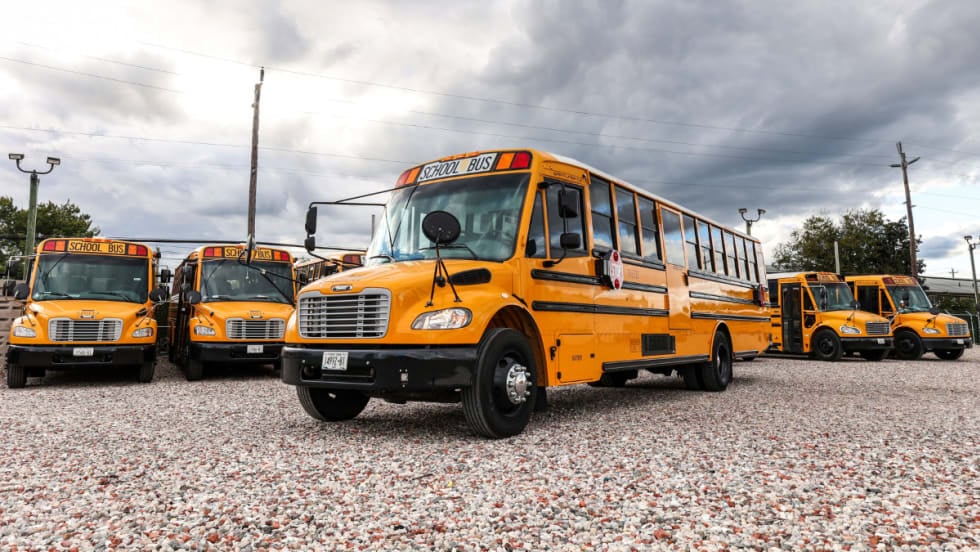
Logan Bus Company Rolls Out AI Phone System for NYC School Bus Families
A summer pilot found that AI agents could handle most routine calls, freeing up time for customer service staff to focus on emergencies and complex family concerns.
Read More →
From Intent to Impact: What I Learned About Leadership from TAPT
A Texas transportation supervisor shares lessons on self-awareness, accountability, managing stress and building trust — and why investing in leadership development matters at every stage of your career.
Read More →
NAPT Names 2026 Award Recipients, Hall of Fame Inductee
Who earned national recognition for their work in student transportation? This year, NAPT named five recipients of its 2026 awards for service, safety, and leadership, plus its newest Hall of Famer.
Read More →
2026 State of Student Transportation Report
Driver shortages. Rising costs. Growing safety expectations. More data, but not enough time to act on it. The 2026 State of Student Transportation Report reveals what transportation leaders say is putting the most pressure on their operations—and where they’re investing next. See how your priorities compare.
Read More →
How to De-Escalate an Angry Person: 5 Steps for Handling Workplace Conflict
What makes emotions run high, and how should you handle an angry colleague or parent? Follow these steps for staying calm, listening, showing empathy, and resolving conflict.
Read More →
What Readiness Looks Like This School Year
Learn about the challenges shaping the 2026–2027 school year, from persistent driver shortages and budget pressure to technology and readiness gaps. See how school districts are responding and adapting in Zonar’s 2026 Back-to-School Readiness Report.
Read More →