




Top 10 Discipline Mistakes
Behavior problems among passengers can lead to more than just an unruly school bus. School transportation managers indicate that rowdy students are on...

Behavior problems among passengers can lead to more than just an unruly school bus. School transportation managers indicate that rowdy students are one of the main reasons for low driver retention rates. Dr. Frank Finney, a Castlegar, British Columbia-based school transportation consultant, offers the following insights on the 10 most common mistakes made by drivers in trying to manage behavior problems. 1. Yelling — Kids figure out you are yelling because you don’t know what else to do, so they tune you out. 2. Labeling — Using phrases like “You’re ignorant” or “You don’t know better.” Eventually, the child may believe it — and act accordingly. 3. Making idle threats — “Sit down or I’ll throw you off this bus!” Children won’t take you seriously if you threaten what you can’t, or aren’t willing, to do. 4. Nagging — Telling children over and over not to do something often motivates them to do the opposite. 5. Praising instead of encouraging — When you praise — “Excellent!” or “Terrific!” — children don’t learn to pursue goals for their own satisfaction. 6. Using bribes — Rewards to stop bad behavior might produce short-term improvements, but you’ll have to up the ante to control the bad behavior. 7. No consequences — Consequences for unacceptable behavior need to be: • reasonable simple • valuable • safe • above all, enforced 8. Treating children like adults — Children lack experience and judgment. They need behavior boundaries and someone to look to for guidance. 9. Arguing in front of students — When you argue openly over bus rules or a problem student with another driver, a parent or a teacher, children get confused and become insecure. Also, a united front keeps students from playing one adult against another. 10. Looking for the cause instead of understanding the motivation behind the student’s behavior — When students misbehave, they are usually seeking one or more of the following: • attention • power/control • revenge • fun Some people think punishing or controlling children can make them obedient, but it’s much more effective to show them the important lessons discipline can teach them. The key is to be firm, fair and consistent. Be firm — Establish the limits of acceptable behavior and, with loving authority, firmly enforce them. Be fair — Children, especially teenagers, have a keen sense of fairness. If they believe a rule is unfair, they will resent and disobey it. Be consistent — Once you’ve established rules, don’t stray from them. Contact: Dr. Frank Finney, Educator Support Services, at (250) 365-3482 or frankfinneybc@hotmail.com.
More Management

The Back-to-School Checklist Every Director Should Complete Before the First Bell
Help your transportation team start the school year strong with these tips for contingency planning, communication, fleet visibility, technology, and trip management.
Read More →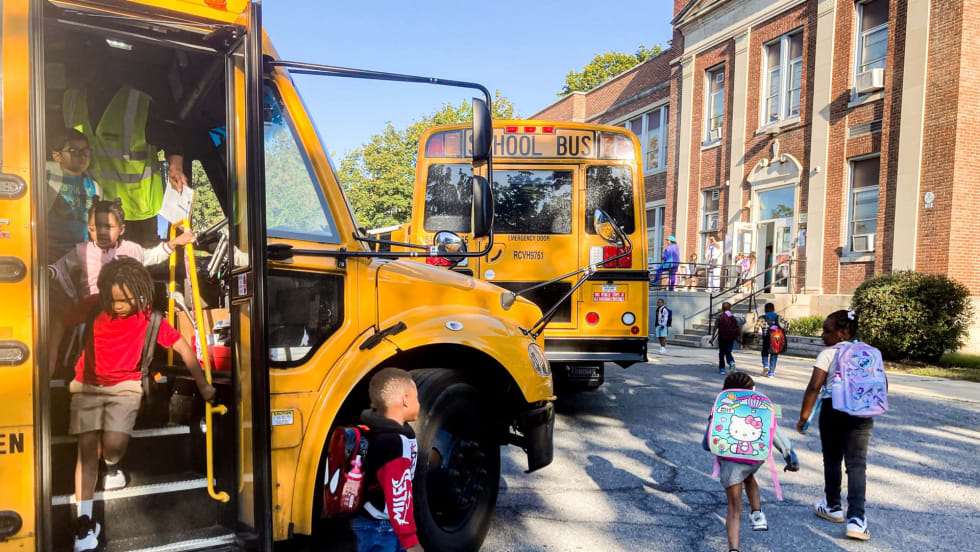
How a New York District Cut Nearly $1M in Transportation Costs While Expanding Bus Access
A data-driven overhaul with BusRight reduced Poughkeepsie City School District's planned routes from 26 to 17 while extending school bus service to about 1,200 additional students.
Read More →
Budgets Down, Enrollment Shifting: What the Data Says Districts Should Watch
School transportation departments face two converging challenges this year: tightening budgets and shifting enrollment. Most districts still address these issues separately, but the assumption that either trend will simplify operations is proving incorrect.
Read More →
These 8 School Transportation Companies Made the 2026 Inc. 5000 List
Find out which school transportation contractors, technology providers, and suppliers ranked among America’s fastest-growing private companies.
Read More →
The Link Between Emotional Intelligence and School Bus Safety
How can emotional intelligence help transportation pros navigate stress, manage change, and build stronger relationships? Listen to find out.
Read More →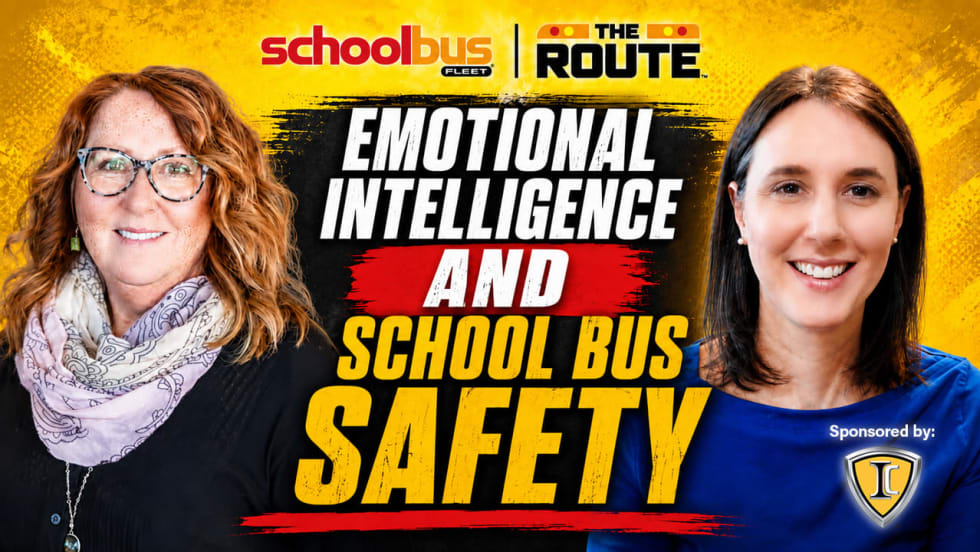
What Emotional Intelligence Has to Do With School Bus Safety
In this video, discover how emotional intelligence can help transportation leaders and drivers navigate stress, manage change, and build stronger relationships. The Route is sponsored by IC Bus.
Read More →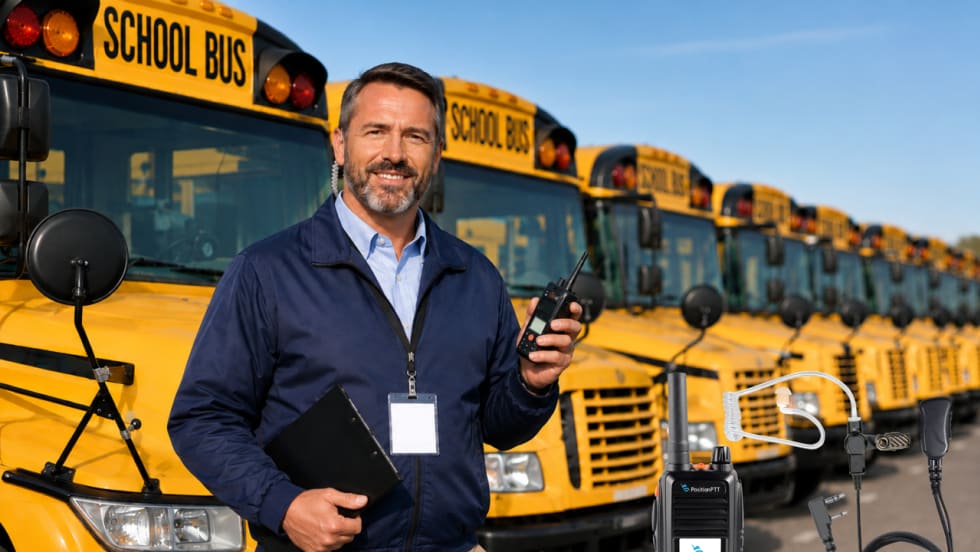
Beyond Two-Way Radios: School Bus Communications Evolve With Push-to-Talk Over Cellular
PRYME Radio and PositionPTT join forces to advance hands-free radio use and reduce distracted driving. See how PoC compares with traditional radios on range, cost, safety, and connectivity.
Read More →
Have School Districts Adapted to Bus Driver Shortages or Simply Accepted Less Service?
According to a recent report from HopSkipDrive, many districts appear to have recalibrated what "normal" transportation service looks like.
Read More →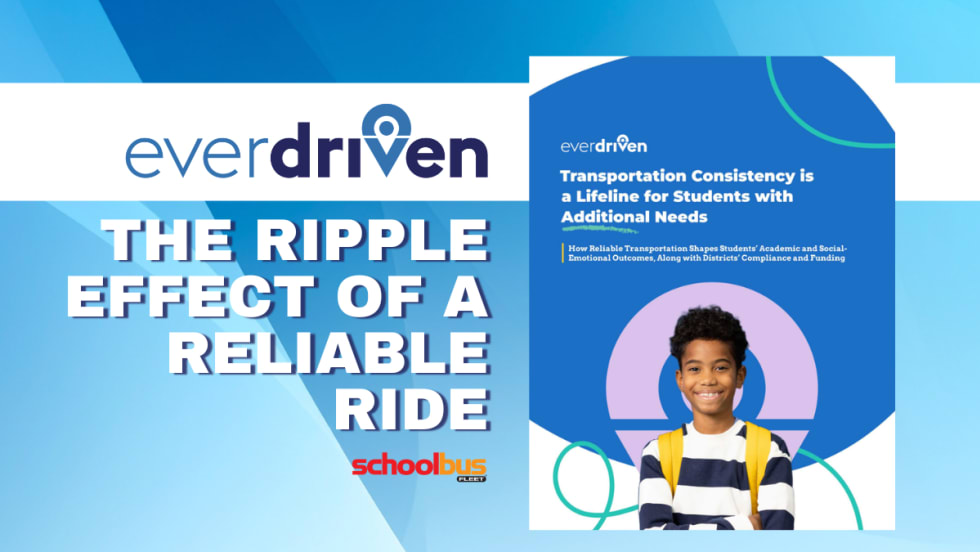
Reliable Transportation Linked to Better Student Outcomes, New EverDriven Study Finds
See why new research suggests transportation consistency improves student outcomes while influencing attendance, funding, IEP compliance, and family trust.
Read More →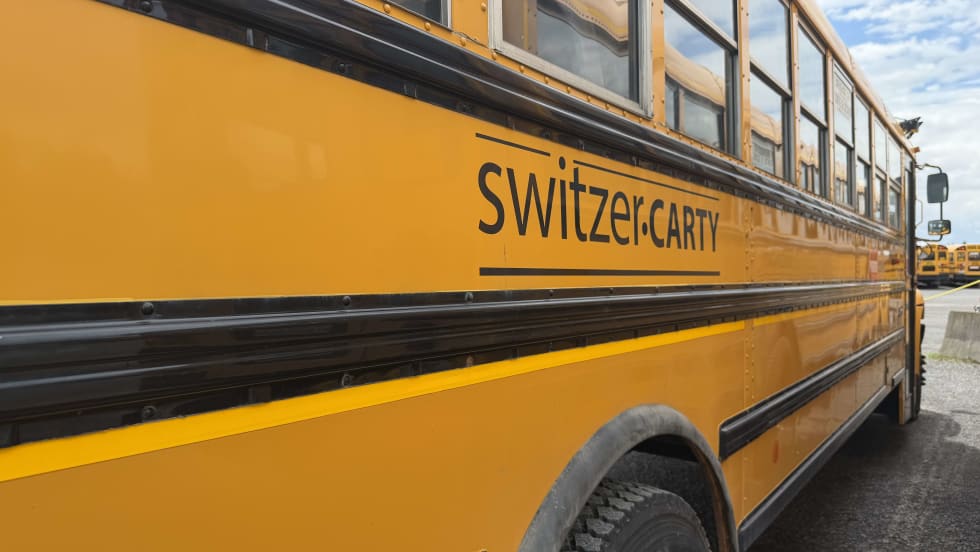
Switzer-CARTY Enters the U.S. with New Acquisition
The Canadian contractor’s acquisition of Minnesota-based Agnes Corporation marks its first cross-border expansion into the United States and adds 350 vehicles.
Read More →