




The start of something great continues in 2001
Welcome to the third edition of our Great Fleets Across America issue. To be honest, I didn’t plan to put together a third issue, not even a sec...
Welcome to the third edition of our Great Fleets Across America issue. To be honest, I didn’t plan to put together a third issue, not even a second issue. Back in 1999, I thought one would be enough. After all, you don’t want to wear out your welcome, like Rocky and Jaws and dozens of other films that sequeled America into a mindless stupor. But Great Fleets has taken on a life of its own. Each year we’ve seen heightened enthusiasm and a greater number of entries (including some from previous winners who argued that they deserved the recognition again). The point of the Great Fleets is to recognize a wide variety of transportation programs and furnish some insights into what they’re doing that meets and exceeds the prevailing standards. This year’s Great Fleets are an impressive group, a broad array of school district and contractor operations that range in size from the very small (13 buses) to the very large (1,300 buses). And, for the first time, we’re recognizing a fleet from the District of Columbia. Motivation for 'greatness'
Driver training, maintenance, staff morale, routing and scheduling, classroom safety training, community relations - all of these areas are brought into clearer focus when you’re preparing a nomination form for the Great Fleets competition. I’d like to think that we have encouraged some fleets to upgrade their programs so they would have a better chance of being recognized in our October issue. There is, however, some reluctance from extraordinarily qualified fleets to enter the competition, for fear that they will be perceived as self-aggrandizing. That’s unfortunate because they have much to offer and good stories to tell. There is no shame in taking pride in what you do or in sharing your mastery with the rest of the industry. I should add that many of this year’s winning fleets were nominated not by their own staff but by their peers at other school districts or contract operations. The timing of this Great Fleets issue is fortuitous. We could not have planned a better time to share dozens of positive, uplifting messages with the school transportation industry. While many of us are still trying to understand the rage and desperation that could have led to the murder of thousands of innocent people last month, it is easy to forget that good things are happening all the time, especially in school transportation. Heroes are everywhere
We forget that heroes can be found anywhere, in the driver’s seat of a school bus, in a school bus garage and in a transportation office. These people are engineering a miracle: the transportation of more than 23 million schoolchildren per day, with exceedingly rare fatal accidents. That is an astounding feat! Anti-terrorism authorities have expressed rueful admiration for the planning that went into the hijacking of the four U.S. airliners on Sept. 11. What about the planning that goes into operating 400,000-plus buses each school day? Those buses need to be properly maintained and skillfully driven, after someone has struggled long and hard to work out the logistics of the routing and scheduling. But let’s not get carried away with ourselves. There’s always room for improvement, in some cases, lots of room. A perfectly sound transportation program clicks on all cylinders. And that takes planning, commitment and teamwork. There’s very little luck - and plenty of sweat - involved in the smooth transportation of children to and from school and school activities. We choose only 50 Great Fleets each year, but many hundreds more are doing an awesome job. Like I said, heroes can be found anywhere.
More Management

The Right Ride for Every Student: Navigating the New Student Transportation Ecosystem
How should districts blend school buses with small-vehicle transportation and other options? EverDriven CEO Mitch Bowling discusses safety, costs, partnerships, and strategy.
Read More →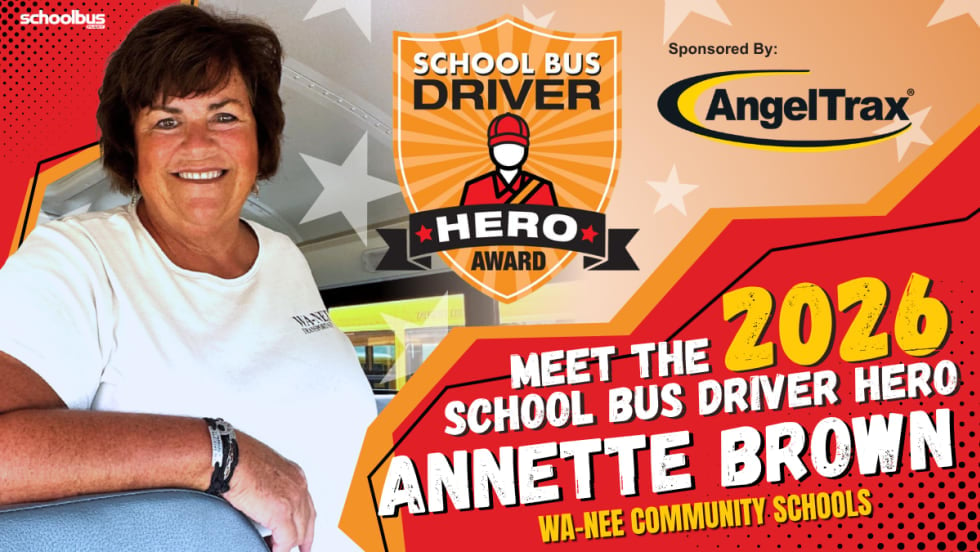
Annette Brown Always Takes the Extra Time: Meet Our 2026 School Bus Driver Hero
For more than 30 years, the Wa-Nee Community Schools driver has treated students like family, combining safety, compassion, and servant leadership to make a lasting difference on and beyond the school bus.
Read More →
How to Build a Better Driver Training Program
Ready to boost up your school bus instructor training? Here’s how to pick the right talent and improve recruitment, retention, and safety.
Read More →


CALSTART and Forth Combine to Form Catalyst Mobility
The new name represents a renewed vision for the nonprofit focused on advancing clean, equitable, and affordable transportation solutions that move people and goods.
Read More →
What Makes a Great School Bus Driver Trainer?
Choosing the right school bus driver trainer takes more than experience. Learn six keys to selecting and developing trainers and evaluating program effectiveness.
Read More →
School Bus Contractors Expand Through New Deals, Acquisitions & Partnerships
STA's Canadian division acquires Ontario-based G&L Stevenson Transport; Durham School Services adds a new district in California; First Student expands in New Jersey; and Minnesota Coaches rebrands and acquires Halo Transportation.
Read More →
Logan Bus Company Rolls Out AI Phone System for NYC School Bus Families
A summer pilot found that AI agents could handle most routine calls, freeing up time for customer service staff to focus on emergencies and complex family concerns.
Read More →
From Intent to Impact: What I Learned About Leadership from TAPT
A Texas transportation supervisor shares lessons on self-awareness, accountability, managing stress and building trust — and why investing in leadership development matters at every stage of your career.
Read More →
NAPT Names 2026 Award Recipients, Hall of Fame Inductee
Who earned national recognition for their work in student transportation? This year, NAPT named five recipients of its 2026 awards for service, safety, and leadership, plus its newest Hall of Famer.
Read More →
2026 State of Student Transportation Report
Driver shortages. Rising costs. Growing safety expectations. More data, but not enough time to act on it. The 2026 State of Student Transportation Report reveals what transportation leaders say is putting the most pressure on their operations—and where they’re investing next. See how your priorities compare.
Read More →