




The Next Shortage Could Be In Your Shop
At many pupil transportation operations, bus drivers are the hardest to find and keep. But many other transportation programs are beset with a shortag...
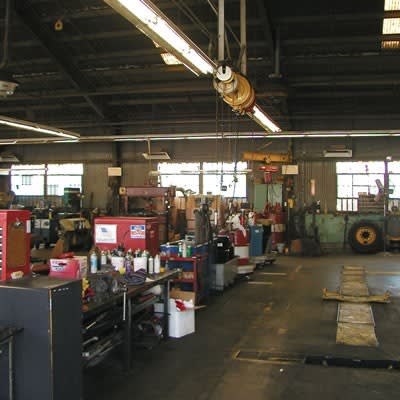
At many pupil transportation operations, bus drivers are the hardest to find and keep. But many other transportation programs are beset with a shortage of technicians — and that shortage could get worse before it gets better.
In a recent SCHOOL BUS FLEET survey of transportation directors and shop managers, nearly three of five respondents (59 percent) indicated that they had some type of technician shortage. Two of five (39 percent) described their shortage as “moderate” or “severe.”
A shop manager for a Wisconsin school bus contractor says the shortage is so grave at his shop that he is forced to use a temp service. “They are younger and less skilled, but we have no choice,” he says. “Very few applicants walk into the shop, and the few that do we would never hire due to unstable and scattered work histories. We don’t want to hire someone who will leave in two months.”
Assessing the problem
Today’s technicians must incorporate a whole new skill set with which to complete their job duties. While their predecessors could get by with wrench-turning skills, modern school bus technicians need to understand increasingly complex components and architecture systems.
Computerized engines and transmissions require enhanced diagnostic skills and the ability to use a laptop or handheld computer. In addition, many new buses come with multiplexing systems, requiring technicians to get additional training in diagnostic and trouble-shooting procedures.
“Virtually all new vehicles are unrepairable without electronic diagnosis or computer skills,” says Steve Babb, lead mechanic in the transportation department at Central Bucks School District in Doylestown, Pa. “And today’s technician is grossly underappreciated for what is required of him, so there is less incentive to become a mechanic. This is a problem to address.”
And the technological overlay is only going to grow more complicated as school bus operators add GPS systems to their buses for real-time vehicle location and student tracking. They also will have their hands full with 2007 engines, which will require a diesel particulate filter to reduce downstream emissions.
Demographics shifting
Where it exists, the shortage of mechanics is not always attributable to the rising technology of school buses.
Ed Allandar, vice president of service and parts for the Rohrer Bus Company in Duncannon, Pa., sees a demographic shift as the baby boomers, many of whom work in school bus shops, enter retirement.
Statistics back up Allandar’s claim. The Bureau of Labor Statistics estimates approximately 78 million baby boomers will start retiring in 2008. The last of the boomers should be retired by the year 2025. The estimated number for the Generation X workforce, which will replace the boomers, is 45 million. You don’t need to be a math whiz to realize that there is a huge disparity between the workforce numbers for the two generations.
Central Bucks’ Babb agrees that the retiring boomers will be difficult to replace. And more importantly, he, like Allandar, believes that the common perception of the school bus mechanic is driving potential technicians away from the field.
“Because of our society’s perception that mechanics are a lower form of life, compensation is lower than other technical occupations such as telecommunication or other skilled labor like electricians and plumbers,” Babb says. “Low pay translates into low value! That mentality has driven young people away from skilled jobs and, in particular, the mechanic position.”
Techs fall behind
But the old stereotypes, and quite possibly wages, no longer work, or fit. Today’s garage technician is light years apart from the mechanic of yesterday. Today’s technician requires specialized training and additional schooling in diagnostics, computers, electricity and basic electronics.
{+PAGEBREAK+} Further compounding things, Allandar says, many high schools have incentives in place that push students toward college instead of technical or trade schools. Again, statistics support the claim. A 2002 Department of Education study states the percentage of students graduating from high school with a concentration in vo-tech fell to 25 percent in 1998 from 33 percent in 1992.
Meanwhile, many of the technicians with the skills and training requisite for the industry today opt for jobs at dealerships and manufacturers where the benefits and the salaries are much more competitive and the workloads are lighter. In a market where the pool of younger technicians to replace the retiring ones is already limited, this is a serious concern.
Single-minded applicants
“Most qualified people want to concentrate on one specific task and solve that problem,” says Greg Kucera, vice president/director of maintenance for N.Y.-based Country Coach Corp. “Most do not want to be responsible for a vehicle from stem to stern for less money and benefits.”
The “stem to stern” fleet responsibilities entail a lot. Due to new emissions standards and increasingly more computerized fleets running on sophisticated drivetrains, the workload at many shops is rapidly increasing, often doubling or even tripling, according to survey respondents.
This, in turn, creates yet another problem. Kucera says that due to the qualified skilled workers going elsewhere for a variety of reasons, be they better pay, better facilities or a lighter workload, the pupil transportation industry is left with the remove-and-replace technician who wants to do little else.
But Allandar says the remove-and-replace technician is becoming the dinosaur in the room. “Today’s vehicles take a much different skill set than those buses of 10 or 20 years ago,” Allandar says. “We aren’t replacing the hard parts and rebuilding engines any more; it is mostly electrical trouble-shooting. Parts are far more delicate and expensive than just a few years ago. Today’s technicians need to have a very thorough understanding of electricity and basic electronics. Technicians need to be just that; parts replacers don’t cut it anymore.”
Taking action
In the survey, garage managers were asked what methods they’ve used to combat technician shortages. Nearly a quarter (25 percent) said offering more competitive wages has been one strategy. A less common approach (15.4 percent) has been to enhance the maintenance training program.
Two respondents said they have begun offering bonuses to mechanics who obtain ASE certification. One is offering an additional 10 cents per hour per certification, while the other offers up to 50 cents per hour.
One respondent said the desire to increase the pay of technicians exists, but the funding doesn’t. “We are a public school district with all the problems associated with the public sector,” he said. “We have no real voice in budget considerations and an inadequate facility. It is difficult, if not impossible, to get enough technicians and facilities to maintain our fleet.”
One survey respondent called for the creation of more technical colleges and to market them to the general public (and future students) as respected higher learning institutions that will lead to a respected professional career.
Another survey respondent called for the shops to create more livable work environments, such as air conditioned buildings with larger work areas, as his shop is in the process of doing.
Many shop foremen surveyed said internships and externships with local colleges are becoming commonplace (see sidebar).
More than half of respondents (58.7 percent) said they haven’t done anything to mitigate a shortage, in many cases because they don’t have one. “Most of our people are here until retirement,” one respondent said. “We have excellent wages and benefits.”
District Teams With Tech College
At Clint (Texas) Independent School District, like so many other districts, meeting the demands of hiring highly trained technicians to maintain school buses has always been a challenge.
Gilbert Marquez, shop foreman of Clint’s transportation services, recently discovered that the district’s diesel and gasoline technicians had a workload that far exceeded the national average. He also discovered that the senior staff members could handle and repair anything mechanical but lagged behind with regard to the technical side.
Unfortunately, Marquez also learned that budget constraints would prohibit him from hiring additional technicians. This tough situation did not stop him from finding a solution to the problem. He approached Western Technical College in nearby El Paso to find out if they had an externship program. They did, and a partnership was formed. “I felt if I brought together the old with the new, this would balance my staff and operations,” Marquez says.
According to Marquez, due to the cross training, it is a win-win situation. The students, who typically work 20 hours a week for a month, are receiving mentorship, real-world experience and an understanding of school bus fleet operations, and the veteran staff members, in return, are learning the new technologies.
“I feel that every school district transportation department that is fortunate enough to have a vocational college nearby should develop a relationship and team up. It has been worth every hour for both the student and my shop,” Marquez says.
— GILBERT MARQUEZ and LAURA CADE
More Maintenance
The essential guide to school bus maintenance and student safety
Reactive maintenance puts students at risk of breakdowns, delays and roadside emergencies. This guide gives transportation directors a data-driven framework to predict failures, extend bus lifespans and improve fleet reliability across every route.
Read More →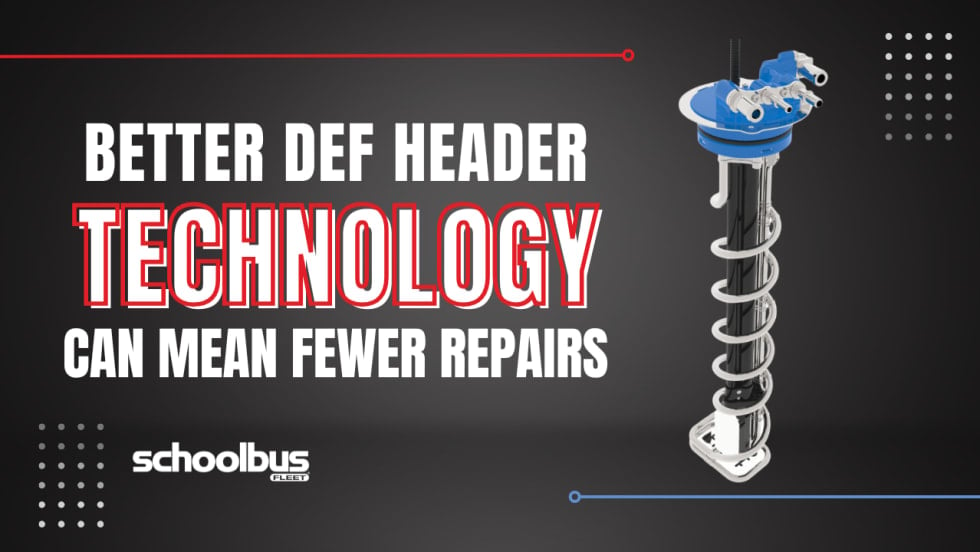
The Evolution of DEF Header Technology: What School Bus Operations Should Know at Replacement Time
See what school bus fleets should consider when replacing DEF headers to improve reliability, reduce repeat repairs, and control maintenance costs.
Read More →
Kerry Brothers Grows Michigan School Bus Repair Network
The acquisition of Downriver Truck and Bus expands Kerry Brothers’ school bus maintenance footprint across southeast Michigan, adding repair capacity, diagnostic resources, and state inspection support.
Read More →
Noregon Introduces CAN Bus Diagnostic Tool, Expands JPRO Features
CAN Mentor and the latest JPRO update aim to simplify vehicle network diagnostics and improve repair efficiency for technicians of all experience levels.
Read More →
Cummins on Smarter, Simpler Engine Innovation
Cummins discusses its first-ever gasoline engine for school buses, EPA 2027, and why bus fleets still want durable, simpler internal combustion options.
Read More →
Report: 72% of Diesel School Buses Now Use Advanced Low-Emission Engines
New data shows advanced low-emission diesel technology continues expanding across school bus fleets, even as electric bus adoption gains momentum.
Read More →
Vampire Tools' CAIMAN 7.5-Inch Multi-Purpose Screw Extractor Long-Nose Pliers with Crimper
Vampire Tools introduced the VAMPLIERS Caiman 7.5-inch multi-purpose pliers, combining screw extraction, cutting, crimping, and gripping functions into a single tool designed for fleet maintenance professionals.
Read More →
How Advanced Diagnostics Helps Bus Fleets Stay Ahead of Repairs
Chat with Noregon’s Kevin Smallhorn at ACT Expo about bus diagnostic tools, telematics integration, CNG maintenance support, and strategies to help reduce downtime and improve uptime.
Read More →
How School Bus Fleets are Getting Ahead of Breakdowns
Don’t let bus downtime wear you down. Here’s how bus operators are shifting from manual processes to AI-powered, data-driven maintenance systems for improved reliability and safety.
Read More →
Pennsylvania School Bus Maintenance Team Praised for Dedication to Safety
Matthews Bus Company’s West Jefferson received a letter of commendation from the Pennsylvania State Police for their fleet inspections.
Read More →