




The ‘Next Generation’ of Protection for Wheelchair Passengers
With crash-tested securement points, the transport wheelchair will significantly improve passenger safety. Meanwhile, retractable securement systems already are having a positive impact.
The development of design and performance standards for transportable wheelchairs and advancements in securement systems have created the platform for a significant leap in wheelchair passenger safety on school and transit buses. The voluntary standard for transport wheelchairs, called WC-19, was nearing adoption at press time, according to Larry Schneider, a senior research scientist at the University of Michigan’s Transportation Research Institute. WC-19 sets guidelines for wheelchair manufacturers to design or retrofit products with crash-tested securement points that are easily accessible. “The big problem right now is that we have all these wheelchairs that are not crashworthy and don’t have any securement points,” Schneider says. “The WC-19 standard fills that gap.” Wheelchair manufacturers have begun to modify their products to meet some or all of the WC-19 standards. Companies such as Sunrise Medical, Invacare Corp., Convair and Everest and Jennings are ramping up for distribution of WC-19 models. In fact, some companies already are selling transport models based on the latest version of WC-19, while others are waiting for final adoption of the standard.
The safest alternative?
Schneider says the combination of a transport wheelchair secured with tiedown systems complying with SAE J2249 (the voluntary wheelchair tiedown and restraint standard developed by the Society of Automotive Engineers) creates a safety cushion for wheelchair passengers that eclipses compartmentalization on a school bus. “Quite honestly, in a school bus you might be better off sitting in a WC-19 wheelchair than you might be with compartmentalization or a lap-belted seat,” Schneider says. However, even with a strong sales push from wheelchair manufacturers, the replacement of non-complying wheelchairs will take several years. “Yes, it will be a while before most wheelchairs have this option, and maybe some never will,” Schneider says, “but people can purchase a transit-option wheelchair that makes life a lot safer for the individuals being transported and the people who transport them.” Judy Hammer, a product manager for Invacare Corp. in Elyria, Ohio, says she’s seeing significant interest in the transport wheelchair. “We’re getting a lot of calls from parents,” she says. “School systems are urging parents to have wheelchairs that are transportable.” Jim Geraghty, director of eastern sales for Q’Straint in Fort Lauderdale, Fla., says he’s excited about the development of the transport wheelchair. “I tell as many parents as I can,” Geraghty says. “I know so many people who have disabled children in the family.”
Tiedown improvements
Wheelchair tiedowns and occupant restraints also have seen significant improvements recently. Companies such as Q’Straint and Kinedyne Corp. in Lawrence, Kan., now offer a retractor system that makes it easier for drivers and attendants to attach the tiedown straps. This retractable system is a critical improvement to older versions because it helps to ensure that the chair is properly secured. Geraghty says poorly secured wheelchairs are not an uncommon problem. “I see it all over the country,” he says, adding that the transit industry is more likely to be the guilty party. “I feel comfortable saying that the school bus industry does a better job.” Q’Straint’s QRT retractor system is self-tensioning and self-locking, which has advantages over competing systems, says Geraghty. “Attaching the QRT securement is a one-handed operation as opposed to a two-handed operation,” he explains. The self-tensioning retractor is especially helpful when the wheelchair must be stationed in the rear of the vehicle. “It can be difficult to get between the rear wall and the wheelchair,” Geraghty says. “With Q’Straint’s retractor system, you just push that mobility device forward, pull the strap out to meet it and let it come back by itself. It’s locking as it returns.” Joe Takacs, director of engineering for Kinedyne, credits retractor systems with easing the job of drivers and attendants. “They’re much more user friendly,” he says. Older systems, Takacs says, require an application of more force. “If you have a small woman or even a small man who doesn’t have a lot of wrist strength to turn the handle, it can be difficult to apply enough tension to stabilize the wheelchair.” Kinedynes Retraktor" Systems features a large tensioning crank that reduces the amount of force needed. Its much easier to apply tension to the securement system with this retractor, Takacs says. Winfred Kraft, president of Ortho Safe Systems International in Trenton, N.J., says further improvements in securement technology will be driven by the market. “The push has to come from the parents,” Kraft says. “They need to speak up and tell the industry what they need. I am for technology, and it only comes to its fullest when you have a dialogue.”
Docking stations ahead?
Looking forward several years, will it be possible to design an automatic docking system for wheelchair passengers? Kinedyne’s Takacs thinks so. “We’re already working on it,” he says. “The wheelchair or mobility aid would have a universal bar and the user would drive the chair into position and it would automatically engage, like a tractor can drive up to a trailer and lock it up.” The obstacles to such a docking system are many, however. To start, a universal interface would have to be designed and then approved by all wheelchair and securement manufacturers. Then, consumers would need to replace their existing wheelchairs with those fitted with the universal bar, which could take years, or decades. “There’s been a lot of work around the world on a fully automatic docking system, but it would be a very difficult to adopt such a system,” says Jean Marc Girardin, president of Q’Straint. “There are too many variations in wheelchairs.”
Still to be done. . .
Even with the proposed WC-19 voluntary standard and the development of retractable securement systems, the transportation of wheelchair students on school buses still is unsafe in many areas. That’s because many older school buses still have side-facing wheelchair stations. As we all know, wheelchairs should face forward, as stipulated in FMVSS 222, the federal safety standard dealing with school bus passenger seating and protection. But many school buses were grandfathered when the forward-facing wheelchair standard took effect in 1994. “There are so many vehicles out there with side-facing wheelchairs,” says Geraghty, “You know that they’re transporting those individuals in an unsafe manner. Side-facing is just not safe.”
More Special Needs Transportation
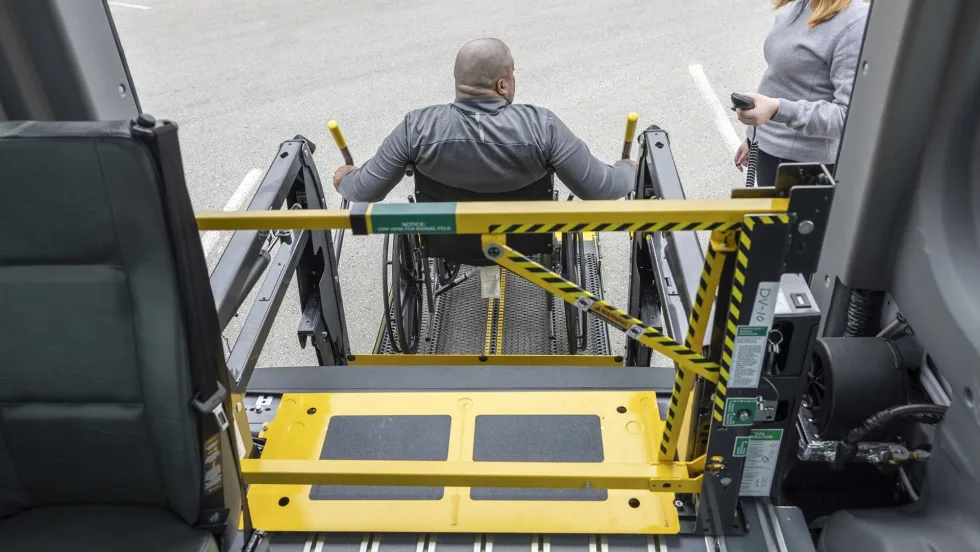
BraunAbility Introduces New Safety Barrier for Wheelchair Lifts
LiftSentinel is designed to add another layer of protection during wheelchair loading and unloading and can be retrofitted to many existing commercial lift installations.
Read More →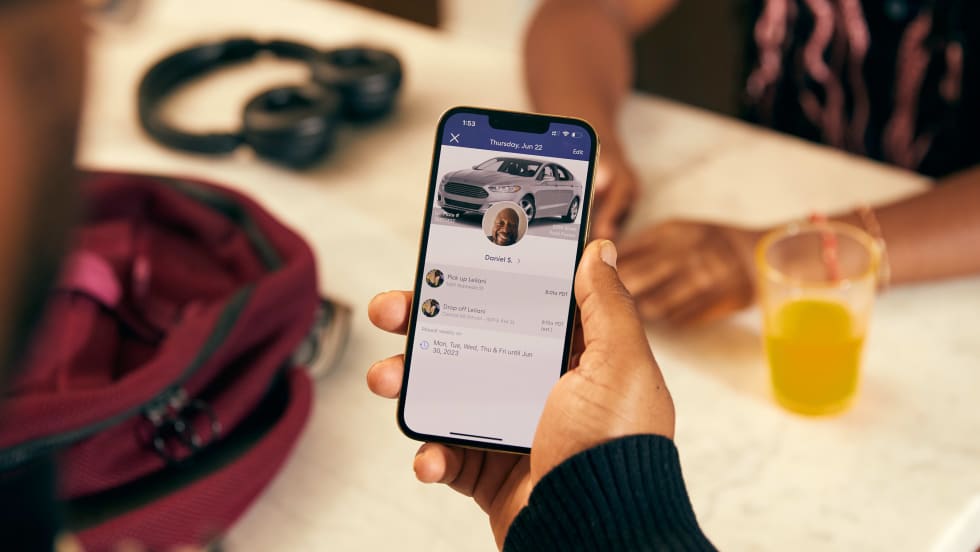
HopSkipDrive Launches New Safety, Driver Consistency Features for 2026-27 School Year
The company’s free ride recording, live ride tracking, and consistent driver assignments aim to improve safety and continuity for diverse student transportation needs.
Read More →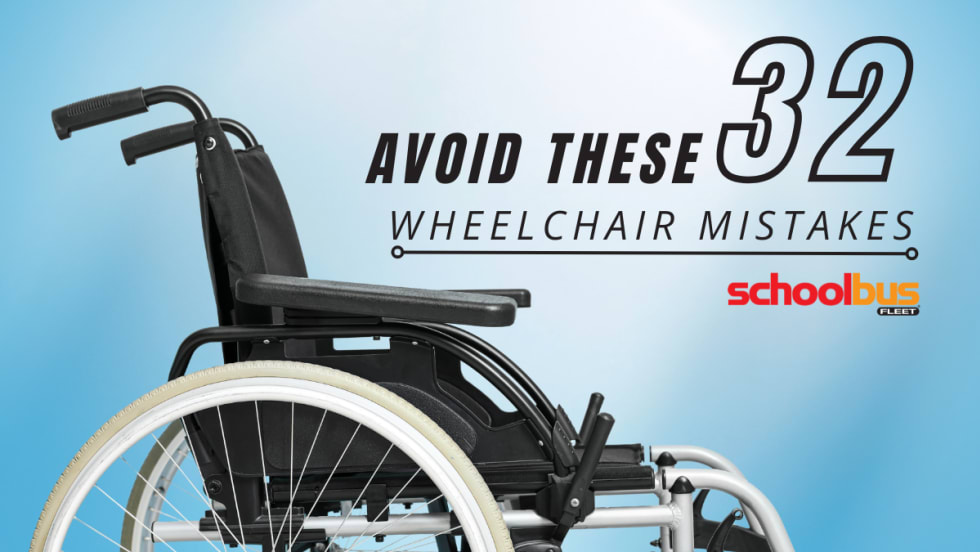
The Most Common Wheelchair Securement Mistakes on School Buses (and How to Fix Them)
Small missteps in wheelchair securement can have serious consequences. Here are 32 tips from experts to reduce risk and increase student safety on the bus.
Read More →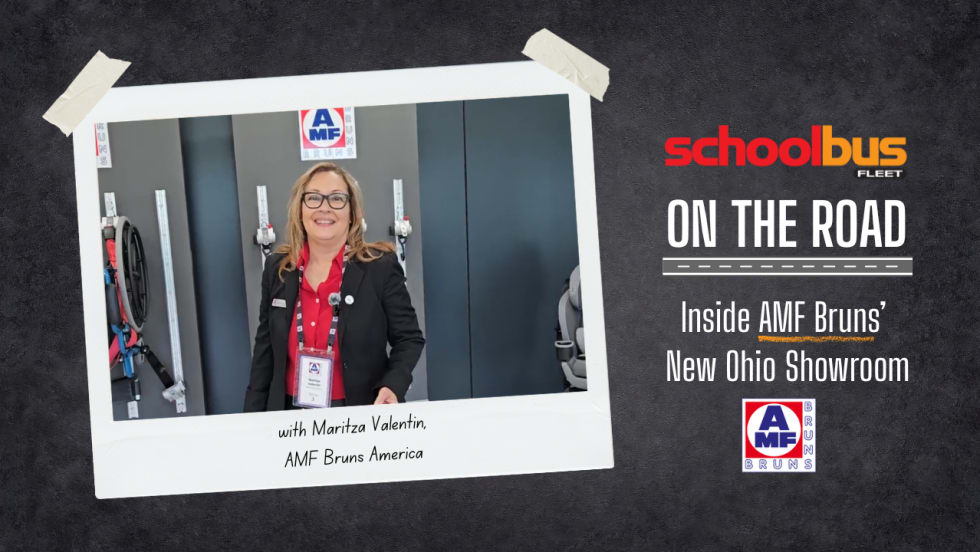
Inside AMF Bruns’ New Showroom: School Bus Securement Solutions Explained
Go inside AMF Bruns America’s new Ohio showroom with Maritza Valentin to see its FutureSafe technology, driver training tools, securement systems, and seating innovations.
Read More →
What AMF Bruns’ New Facility Means for Customers [Video]
Inside AMF Bruns’ new Stow, Ohio, operations: See how expanded space and innovation will enhance customer support and operations.
Read More →
AMF Bruns Expands in Ohio, Investing in Growth and Community
With expanded production space, local investment, and a growing workforce, AMF Bruns is scaling its U.S. presence. Here’s an exclusive first look inside the new Stow, Ohio, HQ.
Read More →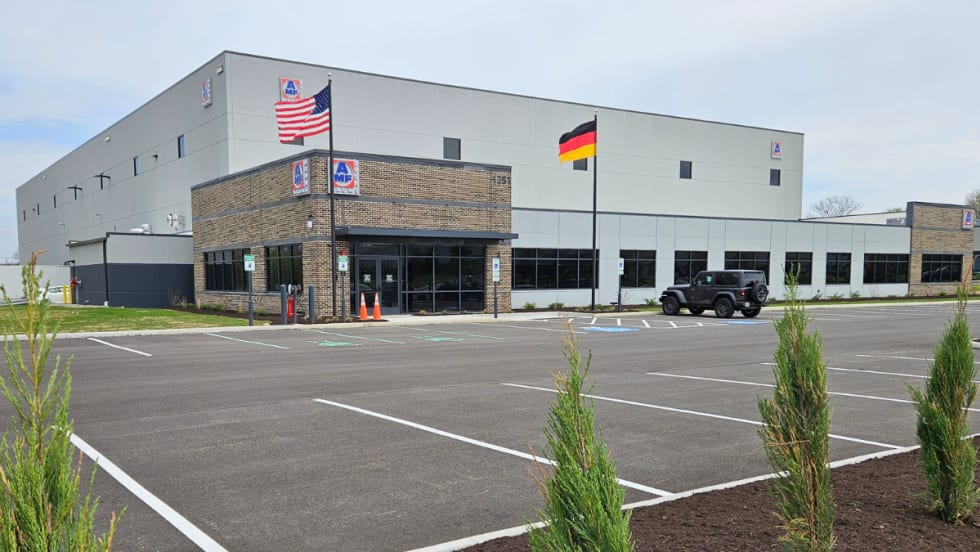
Inside AMF Bruns of America’s New Ohio Manufacturing Facility [Photos]
Take a behind-the-scenes look at AMF Bruns of America’s new 41,000-square-foot Stow, Ohio, headquarters, featuring advanced manufacturing, expanded space, and future-ready mobility solutions.
Read More →
First Student Boosts Student Support in Wichita & Texas
First Student and Wichita Public Schools are using behavioral support strategies to improve student ride experiences, while a separate initiative expands access to after-school programs through a bus donation.
Read More →
2026 Special-Needs Transportation Survey
What’s changing in special-needs transportation? This year, student transportation operators report a rising need, easing driver shortages, growing tech adoption, and evolving challenges. Sponsored by AMF Bruns of America.
Read More →
The Lived-Experience Gap in Mobility Tech: An Expert Take on Safe Student Transportation
Brianna Pauwee, a product application specialist at AMF Bruns of America and a wheelchair user, drops in to The Route to share practical securement and training insights, plus the story behind the new “Beyond Mobility” podcast. The Route is sponsored by IC Bus.
Read More →