




The ABCD's of a behavior intervention plan
Behavior problems exhibited by students with disabilities are not uncommon on the school bus.
Behavior problems exhibited by students with disabilities are not uncommon on the school bus. According to the reauthorization of the Individuals with Disabilities Education Act, students with special needs who are experiencing behavior problems in any school setting, including the school bus, must have these problems addressed in their Individualized Education Programs (IEP). Thus it is becoming increasingly necessary for school districts to write behavior goals and intervention plans specifically for the school bus. Behavior IEPs should include the following:
Current level of functioning
Statement of annual goals
Short-term objectives
Each of these components must be written in objective, measurable terms. Baseline data is essential in determining current levels of functioning. Drivers and monitors are encouraged to keep documentation about students with significant behavior problems in order to help identify and quantify behavior issues. For example, if a student has to be told to sit down seven times, uses profanity five times and has a good ride once over a one-week period, this data can be used to indicate a current level of functioning of "Follows school bus rules one out of 10 bus rides. "The statement of annual goals represents what the student can reasonably be expected to accomplish in 12 months. For example, an annual goal such as "Follow school bus rules eight out of 10 bus rides" would accomplish safer bus behavior yet allows for realistic expectations. The short-term behavioral objectives should describe the specific behaviors that need to be increased or decreased. Writing behavioral objectives is as easy as "A-B-C-D." "A" refers to your audience; most of the time a phrase such as "the student will be able to…" addresses this need. "B" indicates behavior desired, for example, "…stay in seat…" "C" refers to the conditions for meeting the goal, such as "…for the entire bus ride…" "D" indicates degree of mastery, for example, "…for eight out of 10 bus rides… "Put all four components together: "The student will be able to stay in seat for entire bus ride for eight out of 10 bus rides." You have written a perfectly acceptable behavioral goal. Add the current level of functioning derived from the baseline data and your behavioral objective is complete and measurable. (See sidebar for behavioral verbs to aid in writing behavior objectives.) Typically, only a few of these objectives would be included as part of a more general behavior IEP addressing behavior problems throughout the school setting because it is rare for special-needs students to exhibit behavioral problems on the school bus alone. The following is a sample transportation behavior intervention plan. It indicates those behaviors that are interfering with learning and/or safety, alternative positive behaviors to be increased (written objectively and measurably), intervention strategies appropriate to a school bus setting, reinforcers (rewards) and consequences (punishments). Again, not all of the behaviors, intervention strategies, reinforcers and consequences listed would typically be used on one student's intervention plan. School bus issues normally would be addressed with other school-related behavior problems on the same behavior intervention plan.
Behavioral Verbs
Apply, Arrange, Classify, Collect, Compare, Construct, Define, Demonstrate, Describe, Read, Graph, Identify, Estimate, Refrain, Use, State, Separate, Report, Record, Organize, Order, Match, Measure, Recite, Relate, Revise, Comply.
Sample Transportation Behavior Intervention Plan Student Age School Grade School Year Duration of Services
Behaviors that Interfere with Learning/Safety Unsafe out-of-seat behavior
Refusing to fasten seat belt
Refusing to follow directions
Use of profanity and/or name-calling
Unsafe voice volume
Aggressive behavior toward property or others
Putting objects/body parts out of bus windows
[PAGEBREAK]
Alternative Behaviors to Be Increased
Stay in seat for entire bus ride ____ out of ____ bus rides
Currently: ____out of ____ bus rides
Fasten seat belt at first request ____ out of ____ bus rides
Currently: ____ out of ____ bus rides
Comply with staff directions at first request ____ out of ____ times
Currently: ____ out of ____ bus rides
Refrain from using profanity and/or name-calling for entire bus ride ____out of ____ times
Currently: ____ out of ____ bus rides
Maintain low voice volume for entire bus ride ____ out of ____ bus rides
Currently: ____ out of ____ bus rides
Keeping hands to self for entire bus ride ____ out of ____bus rides
Currently: ____ out of ____ bus rides
Keep all body parts and/or objects inside the bus for entire bus ride ____ out of ____ bus rides
Currently: ____out of ____ bus rides
Intervention Strategies
Frequent reminder of rules
Assigned seating
Clearly defined limits and expectations of behavior
Avoid power struggles and negotiating of consequences
Set limits calmly, use neutral tone of voice
Be straightforward about inappropriate behavior
Give concrete examples of desired behavior
Be consistent o Provide choices rather than direct commands
Assist in conflict resolution with peers
Acknowledge appropriate behaviors
Private discussions regarding behavior
Reinforce successive approximations of behavior
Redirection
State instructions simply, one at a time
Use of seat belt
Use of harness
Reinforcers
Positive notes home
Good bus reports
Praise
Concrete reinforcers (e.g., stickers, certificates)
Peer or bus helper
Choice of seating
Choice of radio station
Increased privileges at school
Consequences
Assigned seating or call home
Conference with administrator
Discipline referral
Parent conference
Decreased privileges at school
Time out from school activities
In-school suspension or lunch detention
Before- or after-school detention
Saturday school
Safety class
Alternative placement for continued or serious misbehavior (not to exceed 10 days without IEP team meeting)
Emergency removal (not to exceed 3 days)
Nancy Tarvin is a nationally certified school psychologist at Leander (Texas) Independent School District.
More Special Needs Transportation
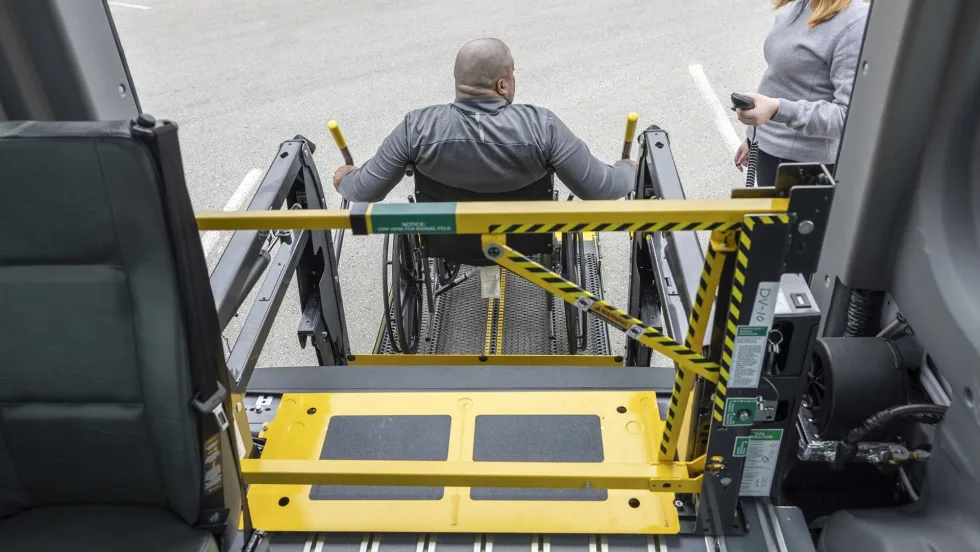
BraunAbility Introduces New Safety Barrier for Wheelchair Lifts
LiftSentinel is designed to add another layer of protection during wheelchair loading and unloading and can be retrofitted to many existing commercial lift installations.
Read More →
HopSkipDrive Launches New Safety, Driver Consistency Features for 2026-27 School Year
The company’s free ride recording, live ride tracking, and consistent driver assignments aim to improve safety and continuity for diverse student transportation needs.
Read More →
The Most Common Wheelchair Securement Mistakes on School Buses (and How to Fix Them)
Small missteps in wheelchair securement can have serious consequences. Here are 32 tips from experts to reduce risk and increase student safety on the bus.
Read More →
Inside AMF Bruns’ New Showroom: School Bus Securement Solutions Explained
Go inside AMF Bruns America’s new Ohio showroom with Maritza Valentin to see its FutureSafe technology, driver training tools, securement systems, and seating innovations.
Read More →
What AMF Bruns’ New Facility Means for Customers [Video]
Inside AMF Bruns’ new Stow, Ohio, operations: See how expanded space and innovation will enhance customer support and operations.
Read More →
AMF Bruns Expands in Ohio, Investing in Growth and Community
With expanded production space, local investment, and a growing workforce, AMF Bruns is scaling its U.S. presence. Here’s an exclusive first look inside the new Stow, Ohio, HQ.
Read More →
Inside AMF Bruns of America’s New Ohio Manufacturing Facility [Photos]
Take a behind-the-scenes look at AMF Bruns of America’s new 41,000-square-foot Stow, Ohio, headquarters, featuring advanced manufacturing, expanded space, and future-ready mobility solutions.
Read More →
First Student Boosts Student Support in Wichita & Texas
First Student and Wichita Public Schools are using behavioral support strategies to improve student ride experiences, while a separate initiative expands access to after-school programs through a bus donation.
Read More →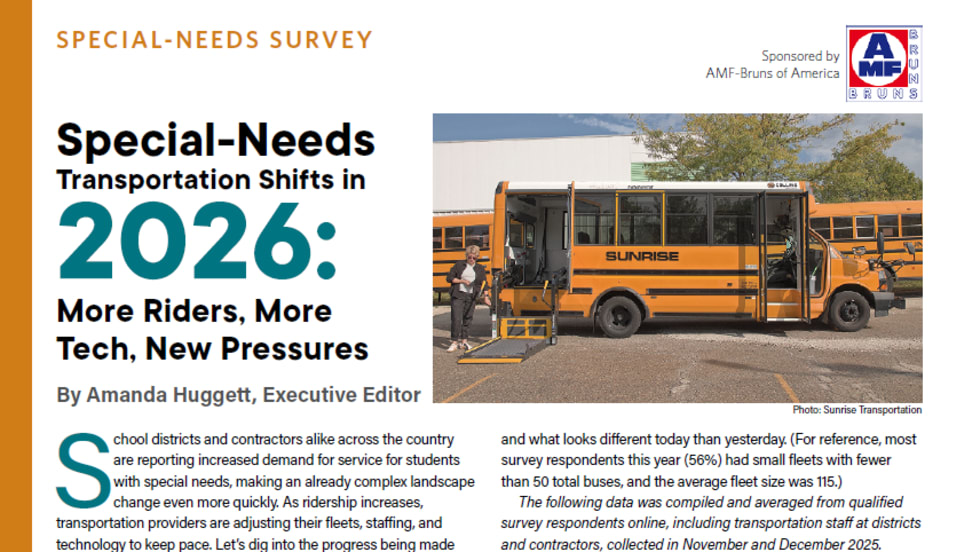
2026 Special-Needs Transportation Survey
What’s changing in special-needs transportation? This year, student transportation operators report a rising need, easing driver shortages, growing tech adoption, and evolving challenges. Sponsored by AMF Bruns of America.
Read More →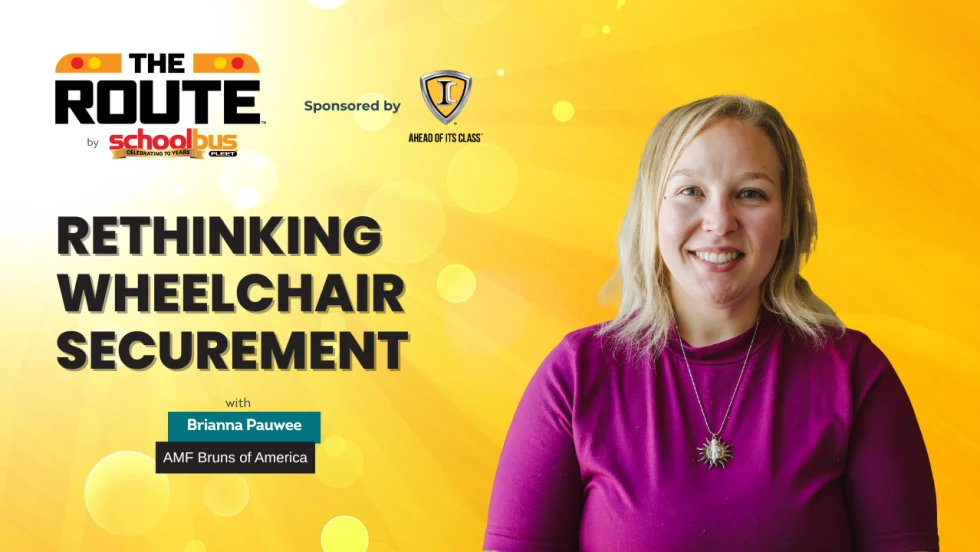
The Lived-Experience Gap in Mobility Tech: An Expert Take on Safe Student Transportation
Brianna Pauwee, a product application specialist at AMF Bruns of America and a wheelchair user, drops in to The Route to share practical securement and training insights, plus the story behind the new “Beyond Mobility” podcast. The Route is sponsored by IC Bus.
Read More →