




Taking a Stand in Warrensburg
Four days of listening to lengthy and often meandering debate over minute details about school transportation equipment and operations would test the ...

Four days of listening to lengthy and often meandering debate over minute details about school transportation equipment and operations would test the patience of a rivet worker at a bus factory.
But few of the more than 300 people who attended the 14th National Congress on School Transportation (formerly the National Conference on School Transportation) in mid-May would deny that the experience was not only critically important to the industry, but also enlightening and motivating.
As Max Christensen, state pupil transportation director in Iowa, put it: “Food — $100; hotel — $220; registration fee — $295; conference value — priceless!”
The conference, which is held every five years at Central Missouri State University in Warrensburg, Mo., brings together delegates from nearly every state to deliberate and approve national guidelines for vehicle specifications and operational procedures.
The final document created by this assemblage will be called the 2005 National School Transportation Specifications and Procedures. The 2000 document spanned more than 300 pages.
A few states adopt the document wholesale into their statutory requirements and administrative rules, but most take a more selective approach depending on their particular needs and concerns.
This year’s meeting was chaired by Dwight Carlson, a former state pupil transportation director in Iowa, who displayed remarkable humor, energy and patience throughout the four-day session.
Sponsoring organizations included the National Association of State Directors of Pupil Transportation Services (NASDPTS), National Association for Pupil Transportation (NAPT), National School Transportation Association (NSTA), School Transportation Section of the National Safety Council, the School Bus Manufacturers Technical Council and the Missouri Safety Center at Central Missouri State University.
Points of interest
The 2005 meeting featured several interesting developments:
The introduction of a section on security and emergency preparedness. The industry needs guidance in this area. It also could use an infusion of federal funding, which was the subject of a joint statement by presidents of the NAPT, NASDPTS and NSTA at the meeting.
The new section, “School Transportation Security and Emergency Preparedness,ݠbolsters the notion that the school bus community now has to add security to safety and efficiency as its chief objectives. The section addresses policy considerations, audit questions, training topics, equipment and a school bus-specific guide for emergency personnel on information such as emergency exit locations, battery type and location, and communication system type, location and operation.
A resolution urging the National Highway Traffic Safety Administration (NHTSA) to revise the existing standard on seat back heights. Research conducted by NHTSA found that larger students would be better protected in a crash if seat backs were raised to 24 inches above the seating reference.
“It’s important for the industry to take a leadership position to make further improvements to compartmentalization,” said Charlie Hood, Florida’s state pupil transportation director and chair of the congress’ steering committee, in supporting the resolution.
A resolution urging NHTSA to require lap/shoulder belts rather than lap belts to protect passengers on Type-A buses. This resolution, approved at the end of the meeting, was a corollary to an earlier amendment that said “lap belts shall not be installed on passenger seats in large school buses (10,000 or more pounds) except in conjunction with child safety restraint systems that comply with FMVSS 213.”
{+PAGEBREAK+} Fighting the tide
Under the legislative-style process of the meeting, state delegations each voted on the sections proposed by the various writing committees as well as any proposed amendments. This led to considerable debate throughout the four-day session. Several of the verdicts had to be decided by a state-by-state count (accomplished with the hoisting of small red and green flags) rather than a simple voice vote.Here’s a summary of the more interesting or controversial issues:
A proposal by the New Mexico delegation that windshields be manufactured with a minimum of two pieces of flat glass was defeated. The delegation argued that replacing single-piece windshields is difficult and expensive. One factor in the defeat of the proposal is that it would require certain bus manufacturers to redesign the windshields.
An initiative to adopt exclusively the federal standards for emergency exit requirements — the minimum number of roof hatches and exit windows and doors based on bus capacity — was turned away. The guidelines that were ultimately approved exceed the federal standards, and most of the delegates supported those more stringent requirements. “We can do better than the federal government,” said Allan Jones, state pupil transportation director in Washington state.
An attempt by the California Association of School Transportation Officials to add a paragraph on the use of transit buses for school transportation was defeated. The proposed section acknowledged that some communities and school districts use transit buses for home-to-school transportation and would have prohibited students below the eighth grade from riding transit buses unless they were accompanied by a parent or guardian. “We’ve stuck our heads in the sand for the last two conferences,” said Bob Wigginton, transportation director at Rowland (Calif.) Unified School District.
An attempt by Dale Goby, executive transportation director at Detroit Public Schools, to add a provision allowing the use of single rear tires on large buses was thwarted. Goby argued that single rear tires are gaining popularity in Europe, where they have been credited with a 10 percent improvement in fuel mileage. But the Technical Assistance Committee said manufacturers are not supplying these extra-wide tires and that they would leave a bus vulnerable in the event of a flat.
An amendment prohibiting school buses from towing a trailer or other vehicle when students are on board was approved. Rick Meyer, a school bus contractor in Scotland, S.D., said this would create a hardship for him because he hauls trailers behind school buses to transport, for example, hockey gear or ski equipment. Without the trailer, he would have to use an extra bus for these types of trips.
Other vantage points
The following are some thoughts from delegates as well as “interested parties” who attended the conference as observers.
Ted Finlayson-Schueler, president of Safety Rules! in Syracuse, N.Y., was an observer rather than a delegate, which provided him a larger perspective.
“There are always acts of courage and acts of self-interest. In many places, language was strengthened as numerous ‘mays’ and ‘shoulds’ became ‘shalls,’ reversing a major trend at the 2000 NCST. Some other moments where we stepped into the future were 24-inch seat height, noise-kill switches, lap-shoulder belts on small buses, maintaining more emergency exits than required by federal standard, windshield wiper design, communication systems and increased danger zone dimensions.”
Finlayson-Schueler also cited some perceived miscues: “We made some plain boo-boos, such as leaving a 2-inch shake test for wheelchairs when every other recommendation in the industry is for 1 inch. We also, without any discussion, stepped back from establishing best practice for hours of training.”
{+PAGEBREAK+}
Percy Abbott, vice president of safety at First Student Inc., said the meeting provided him with an excellent overview of what people are thinking across the nation:
“At this congress, you have the opportunity to feel the industry’s pulse, hearing the important issues for today and for the next five years. There was a sense of understanding among the delegates that the American public is not as interested in our present safety record as it is about how the industry prepares for improved crash protection and passenger management.”
Mike Simpson, transportation director at Shelby County (Tenn.) Schools, had a newcomer’s perspective:
“As a first-timer, I was most impressed with the level of expertise of the delegates and the commitment to produce the best document possible. I thought the process was very smooth and efficient.”
Mike Connors, transportation director at Brevard County (Fla.) Schools, jokingly said he has a better understanding of why the meeting is held only once every five years: “It takes four years for everyone to recover from the process.”
Connors was relieved that an alternate procedure to cross students, used only in California, that requires the driver to leave the bus and escort the children across the street, was defeated. “This had the potential to hurt a school district in the unfortunate event of a lawsuit involving a student injury or death related to crossing a street in front of a bus.”
A fellow Floridian, Karen Strickland, general manager of the transportation department at the School District of Hillsborough County, said she was especially interested in the special-needs section.
“Transporting our special-needs children is a tremendous challenge. Each child has very specific needs and requirements. The section titled ‘Specially Equipped School Bus Specifications’ required a major clean-up. The committee did a phenomenal job of condensing, rewriting and organizing.”
Pauline Gervais, transportation director at Adams 12 Five Star School District in Colorado, expected the process to be mundane and tedious but found herself “totally engaged.”
“This was an incredible learning experience. I left the conference with a feeling of accomplishment and knowing that the work we do ‘matters.’ I would recommend this conference to anyone who has the opportunity to attend.”
Gervais did, however, have a suggestion for speeding things up. “The review process was very slow and cumbersome at times. Rather than go through the entire manual page by page, the emphasis should be on changes, deletions and new material only.”
Bob Peters, transportation director at Liverpool (N.Y.) Central School District, was a member of a writing committee and gained from the experience.
“It was exciting being a part of it. I learned a lot during the process leading up to the conference, and then I learned a lot at the conference.”
Peters had one suggestion for improvement: “I think that electronic voting that places the results on the screens at the front of the room will be an essential improvement for the next conference.”
Post-meeting update
At press time, the writing committee chairs were still finalizing their sections, according to Hood, the steering committee chair. Once completed, the document will be available through the Missouri Safety Center at Central Missouri State University. For more information, visit www.14thncst.org.For those of you who’ve never had the opportunity to attend the Warrensburg meeting, you’ve got another five years to make your plans. See you in 2010.
More Management
How to Build a Better Driver Training Program
Ready to boost up your school bus instructor training? Here’s how to pick the right talent and improve recruitment, retention, and safety.
Read More →
CALSTART and Forth Combine to Form Catalyst Mobility
The new name represents a renewed vision for the nonprofit focused on advancing clean, equitable, and affordable transportation solutions that move people and goods.
Read More →
What Makes a Great School Bus Driver Trainer?
Choosing the right school bus driver trainer takes more than experience. Learn six keys to selecting and developing trainers and evaluating program effectiveness.
Read More →


School Bus Contractors Expand Through New Deals, Acquisitions & Partnerships
STA's Canadian division acquires Ontario-based G&L Stevenson Transport while Durham School Services adds a new district contract in California, First Student adds a New Jersey contract, and Minnesota Coaches acquires Halo Transportation.
Read More →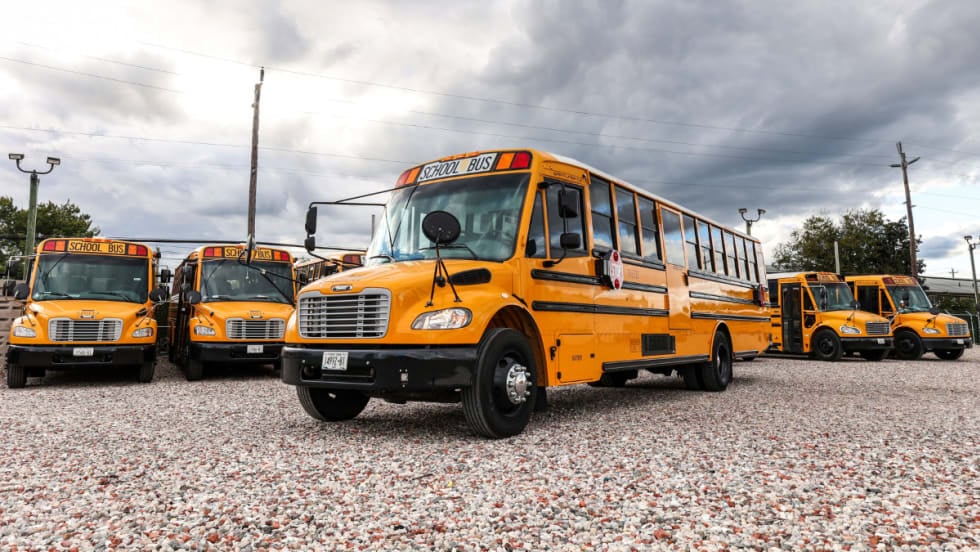
Logan Bus Company Rolls Out AI Phone System for NYC School Bus Families
A summer pilot found that AI agents could handle most routine calls, freeing up time for customer service staff to focus on emergencies and complex family concerns.
Read More →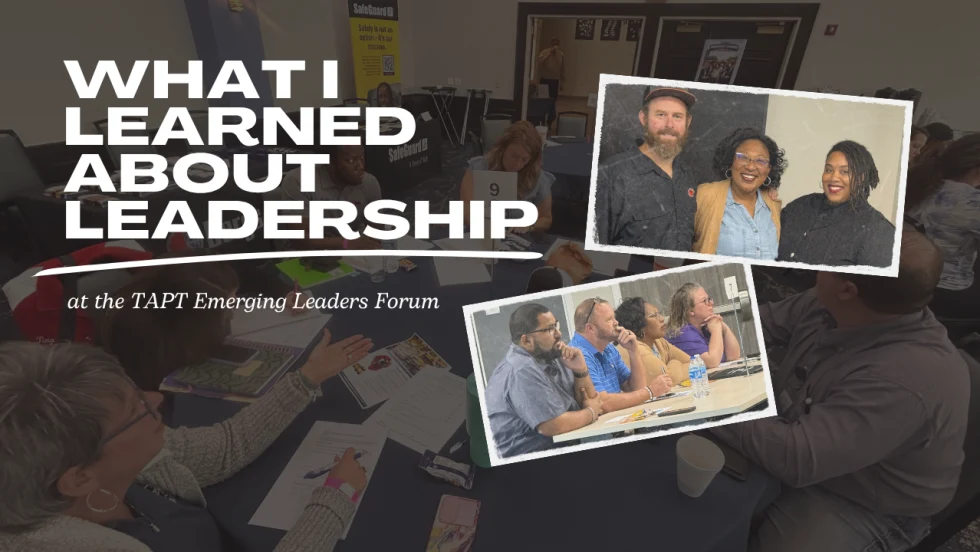
From Intent to Impact: What I Learned About Leadership from TAPT
A Texas transportation supervisor shares lessons on self-awareness, accountability, managing stress and building trust — and why investing in leadership development matters at every stage of your career.
Read More →
NAPT Names 2026 Award Recipients, Hall of Fame Inductee
Who earned national recognition for their work in student transportation? This year, NAPT named five recipients of its 2026 awards for service, safety, and leadership, plus its newest Hall of Famer.
Read More →
2026 State of Student Transportation Report
Driver shortages. Rising costs. Growing safety expectations. More data, but not enough time to act on it. The 2026 State of Student Transportation Report reveals what transportation leaders say is putting the most pressure on their operations—and where they’re investing next. See how your priorities compare.
Read More →
How to De-Escalate an Angry Person: 5 Steps for Handling Workplace Conflict
What makes emotions run high, and how should you handle an angry colleague or parent? Follow these steps for staying calm, listening, showing empathy, and resolving conflict.
Read More →
What Readiness Looks Like This School Year
Learn about the challenges shaping the 2026–2027 school year, from persistent driver shortages and budget pressure to technology and readiness gaps. See how school districts are responding and adapting in Zonar’s 2026 Back-to-School Readiness Report.
Read More →