




Stock Steers NSTA Toward Success
Barry Stock is based in Ontario, but his professional endeavors have him focusing on school bus contracting matters above and below the Canadian borde...

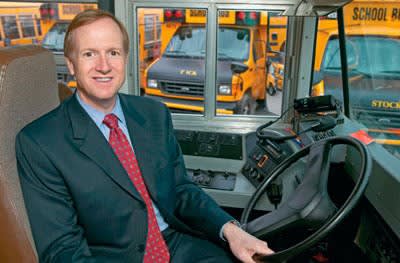
Barry Stock of National Express Corp. is heading into the second year of his term as NSTA president.
Barry Stock is based in Ontario, but his professional endeavors have him focusing on school bus contracting matters above and below the Canadian border.
As executive vice president of customer development for National Express Corp., he works with the company’s two bus businesses: Durham School Services in the U.S. and Stock Transportation in Canada.
And as president of the National School Transportation Association, he represents a diverse group of contractors from both countries.
As Stock was nearing the half-way point in his two-year term at the helm of NSTA, SBF Executive Editor Thomas McMahon spoke with him about his outlook for the association and the industry.
SBF: What were some of the key developments in your first year as president of NSTA?
BARRY STOCK: We have a great team. One thing that we did this year was to tweak some of our committees. We really put ownership of those committees into the hands of the volunteers. And we’ve challenged them to be as progressive and creative as they possibly can. I’m very pleased with what they’ve done.
We have monthly conference call meetings with all the committees to further their initiatives. These are busy folks who are taking a good lot out of their time, not just on the calls, but also going back and then doing some homework.
That’s complemented with Danielle Abe and Kelly Price from the NSTA office. Both Danielle and Kelly are involved with the various committees to really help with the coordination and to help with any resources that the committees need to move forward. So we’re seeing some success there.
The other area when it comes to the committees: Government relations is a huge area of NSTA, and by having John Corr agree to chair that committee, it certainly allowed for a lot of continuity from when he was president through to that committee.
John has really honed that committee to work very effectively. He set up co-chairs to work with him, the BKSH team and Robin Leeds in each of the legislative and regulatory subcommittees, and there isn’t a day that goes by that I don’t see something they’re working on.
John and Tim Flood — who oversees our association industry development committee, which really has about six subcommittees — are both doing a fantastic job. The other notable committee would be our safety and security committee. Gary Catapano from First Student is chairing that.
Another key development is with ASBC [American School Bus Council]. The momentum that we’re building for one voice for the industry is exciting.
While I recognize that all three associations [NSTA, NASDPTS and NAPT] can’t be in sync with everything, the more we can line up our views, the better off the industry is as a whole. And we’re seeing absolute results by doing that.
What do you expect to focus on in the second year of your term?
One of the pieces that I see us working on further is green-bus issues. This ties into another area, which is growing the industry. Those two are key.
Green bus — there is no question in our mind that as an industry, we can and should be doing more. And we can combine that with growing the industry.
What I mean by that, specifically, is that if we can work through ASBC or other means to encourage parents, as an example, not to take their children to school every day — to allow school buses to do that — it will take a tremendous number of vehicles off the road.
Some simple math that I do: There are 40 kids on a bus. One bus in the morning does three routes. Forty times three is 120 kids who can get delivered to school and taken home. One car, on average, drops off 1.2 children, so 120 divided by 1.2 equals 100 cars that could come off the road for every additional bus that is on the road.
The second piece on that is the number of students who drive their own cars to school. If we could work together to try to convince those students that it’s fun to ride the bus — and perhaps high fuel prices may be helping us in some ways — I think it would go a long way to help with that.
So those are a couple of green-bus initiatives. Another one is: What more can we be doing from an education and technology perspective to help with green bus?
For instance, more idle-reduction education and perhaps some technology on the vehicles to help with idle reduction. Also, to be able to maximize routing efficiencies. What more can we be doing to shorten up the overall length of the routes? I think we’ll see some emphasis in those areas.
Going back to growing the industry: There’s another factor at play. Many school districts still operate their own fleets, and we’re finding that because of the economy, there are more and more bond issues being canceled. And every time a bond issue is canceled, that means there are fewer buses being replaced in those sectors.
They cannot sustain that. Sooner or later, they need to replace the fleets. And that’s an opportunity for contractors to be able to help school districts. Similarly, the increased cost of fuel is huge for school districts, so they’re looking for alternatives.
Those are two things that I expect to focus on in the second term. Another one is working with my successor, Donnie Fowler. Donnie is a very bright individual, and it’s incumbent upon me to make sure that I hand over the issues appropriately to him and support him through that.
The last piece is to work through the industry, be it through ASBC or other means, to address some of the key issues in the industry today, and a lot of those I’ve already touched on.
What would you say is the top issue for school bus contractors right now?
Right now and for the foreseeable future, fuel is undoubtedly the top issue. The way it has escalated over the past 90 days is a huge impact for both school districts and school bus contractors.
How are NSTA members dealing with the elevated price of fuel?
A variety of ways. We are certainly educating our members around idling programs. We’re working in D.C. on encouragement of grant programs to help with new technology that can ultimately reduce the total amount of fuel that is consumed by a bus every day. We’re working with routing efficiencies, as I mentioned earlier.
Another way is that some contractors have chosen to hedge fuel. More and more school districts are looking for some guarantees around fuel pricing, so whenever you can hedge the price of fuel and give them a guarantee that that’s going to be the set price for a certain period of time, that’s working well.
Is that related to fuel escalator clauses?
The fair term to use is “fuel adjustment,” because “escalator” implies that it only helps when it goes up. Well, what happens when the price of fuel goes down? Most school districts that have employed fuel adjustment clauses do it for fairness. It is just such a volatile unknown. So a fuel adjustment clause is a win-win for the district and the contractor. The contractor going into a bidding scenario doesn’t have to put their price of fuel way out there — they can leave it down at a reasonable level, knowing that the fuel adjustment clause will help. Similarly, from a school district perspective, whenever that price of fuel does drop — and it is cyclical — they get the benefit of it coming back down as well.
There seems to have been a surge of acquisitions and consolidations among contractors in recent years. Do you expect that to continue?
Yes, I do. There are still thousands of school bus contractors out there in North America. And I see it, frankly, as a cycle. I’ll give you an example. We’ve had some recent, very large acquisitions — one in particular. And what we have seen and what we will continue to see is that while that may have taken a large competitor out of the business, what’s happening is that local contractors are being asked to step up and be regional contractors. Similarly, we’re seeing evidence of regional contractors being asked to step up to be national players. As opportunities come up, we’re finding more people getting in the business on a local level. So it is a cycle.
Are there many opportunities for new business for contractors these days?
Yes. I think the key is to target the greater market. I’m going to refer back to what I talked about a little earlier: How do we get the parents to not take their children to school? There’s a huge market there. How do we get the high school children to not drive to school?
As far as school districts contemplating contracting their services, we are seeing a significant increase not only in interest but in actually doing it. In the past two years, I personally have seen more conversion opportunities and actual conversions than I’d seen in the preceding 10 years. And all indicators are that that will continue.
Why do you think that’s been the case in these past two years?
There’s always been continual pressure for school districts around the question, “What business are we in?” They’re in the education business. And so ancillary services tend to be an afterthought in some cases — and I want to qualify that, because it’s certainly not all cases.
I see increased unionization activity, both at the contractor and the school district side. That means there’s more supervisory time spent on labor negotiations and issues than there has been in the past. And then I think the realities of this period of time have been finances. We have seen bond issues being canceled, and school districts are looking at other creative ways to still be able to develop the quality education but perhaps save some money. And that’s where contractors have been called to give some creative proposals.
NSTA has been working on some high-profile cases of transit encroachment lately — particularly the Rochester-Genesee case in New York. Is this an issue for school bus contractors in Canada as well as those in the U.S.?
Yes, it is. It has been an ongoing issue that we challenge regularly. The general pretense behind that is using taxpayers’ money inappropriately. All of our tax money goes to paying for the capital of the transit buses, and in some cases it helps out with some of the operating costs. How can we compete against something like that? In Canada, there is not a St. Germain Amendment, so it is a large challenge.
What do you expect will be some of the highlights of NSTA’s upcoming meeting and convention?
Probably one of the highlights is an opportunity to explore Calgary. Calgary is a phenomenal city. It’s based at the foothills of the Canadian Rockies. And I know that a lot of folks plan to take some of their vacation time around that period to be able to explore the Rockies. So that will certainly be a highlight.
The safe driving competition is shaping up to be one of the best we’ve ever had. We’re really excited about that. We have a tremendous venue for it. Our supplier partners have really come to the table, and I think the drivers are going to have a phenomenal time.
We also have a safety and security summit, and this is the first time we’ve put that on. It will be on the Saturday prior to our conference. Gary Catapano, the chair of our safety and security committee, is chairing this, and it promises to be an outstanding summit for both contractor and school district managers and safety managers.
Tim Flood, Jennifer Carroll, Robin Leeds, Danielle Abe and others are promising an outstanding conference and venue.
When was the last time the meeting and convention was held in Canada?
1995 in Toronto. I believe that was the only other time. So it’s exciting to have it in Canada. And we’ve engaged some of our Canadian supplier partners as well to be able to give folks a taste of what Canada is all about. We know people are really excited to come.
More Management
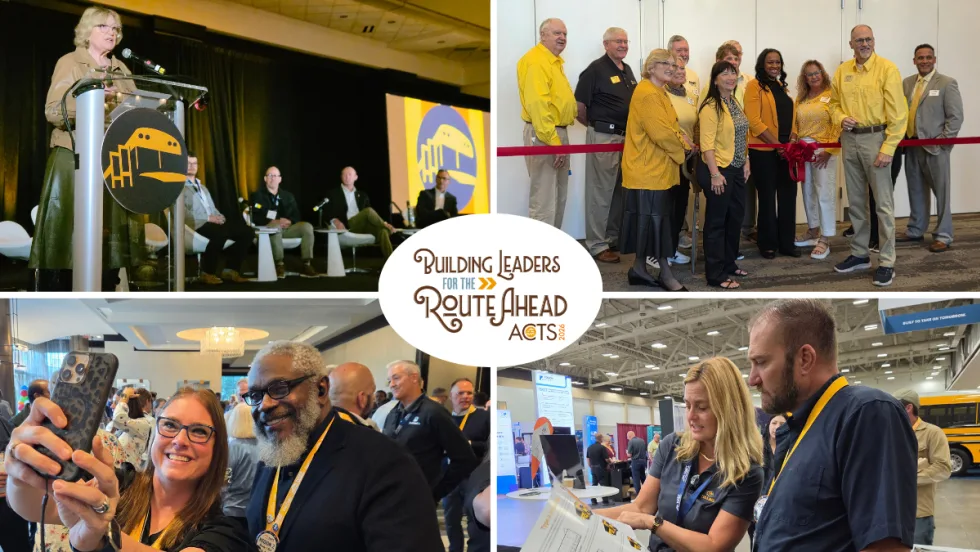
Inside NAPT ACTS 2026: Highlights from Louisville
From federal updates and student behavior strategies to new school bus technology and industry awards, see highlights from NAPT ACTS 2026 in Louisville.
Read More →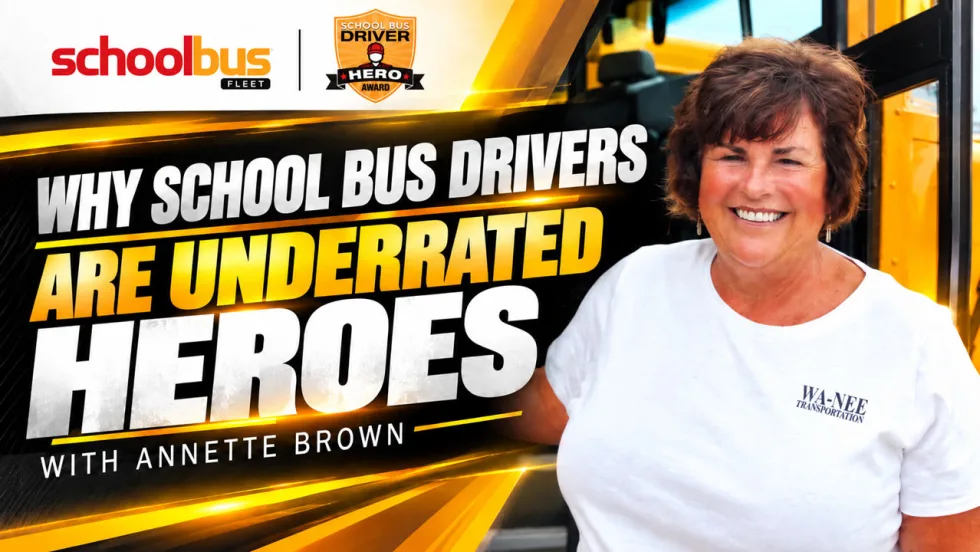
Meet the 2025 School Bus Driver Hero Winner: Annette Brown
We caught up with Wa-Nee Community Schools' Annette Brown on site at SBFX, where she was named the 2026 School Bus Driver Hero Award winner. Hear about her reaction, what she loves most about being a school bus driver, and more!
Read More →
Predictability Is Like Ketchup (According to 6-Year-Olds)
To students, a different school bus can feel like a full-blown crisis. One driver reflects on why familiar routines, showing up on time, and being reliably boring matter more than we think.
Read More →
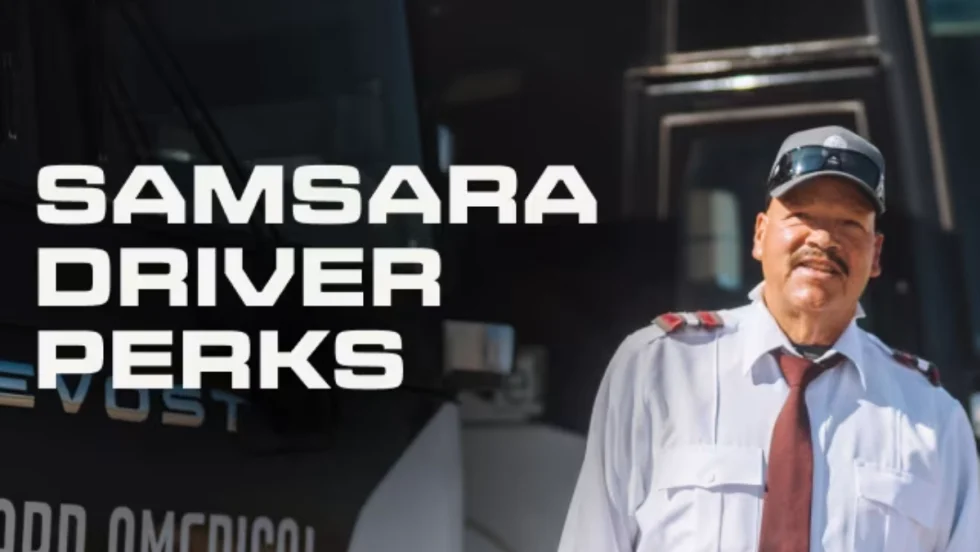
Samsara Launches Free Driver Rewards Program
The new Driver Perks program gives eligible professional drivers access to discounts and offers without adding a cost for participating fleets.
Read More →
How Tax-Exempt Municipal Leases Can Help Finance School Buses
Let’s explore school bus financing options, including municipal leases, vendor payable accounts, and balloon payments, and how they can help stretch fleet budgets.
Read More →
Nominate Rising School Transportation Pros Under 40!
We’re searching for the next generation of leaders making an impact across the K-12 student transportation industry to recognize as SBF’s 2027 Trailblazers. Nominations are open now!
Read More →
Changing Lanes: BusWhere, EverDriven, InterMotive, Summit School Services, Switzer-Carty & Thomas Built Buses
Check out who's been hired, promoted, and appointed to leadership positions at various school transportation suppliers, contractors, and manufacturers.
Read More →
The Most Expensive Thing You Do Before Selling a School Bus: Wait
When should you sell an aging school bus? Learn how maintenance, mileage, corrosion, specifications, and timing can affect resale value long before the auction.
Read More →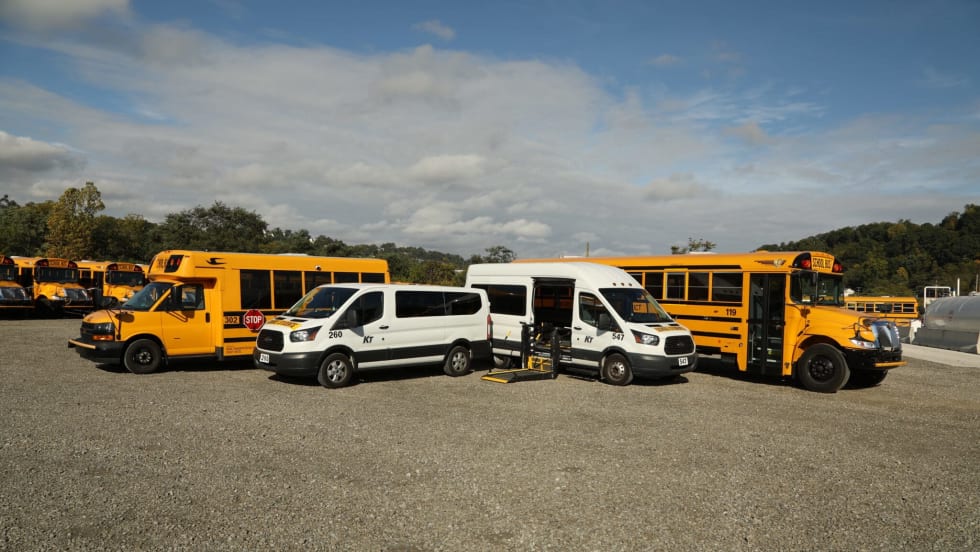
American Student Transportation Partners Acquires AJ Myers and Sons
A new deal brings a 75-year Pennsylvania student transportation provider into one of the nation’s largest private school bus contracting groups.
Read More →
What I Brought Home From SBFX: Relationships, Leadership, and Preparing What's Next
Who could lead your transportation operation tomorrow if you couldn't? Bernando Brown explores succession planning, mentorship, and preparing emerging leaders to step up.
Read More →