




Specific Special-Needs Evacuations: SMA
Part 3 of this series focuses on spinal muscular atrophy, which is a group of inherited diseases that cause progressive muscle degeneration and weakness. Knowing how to carry passengers with this condition on an evacuation device and including a nurse in training drills will help to ensure their safety.
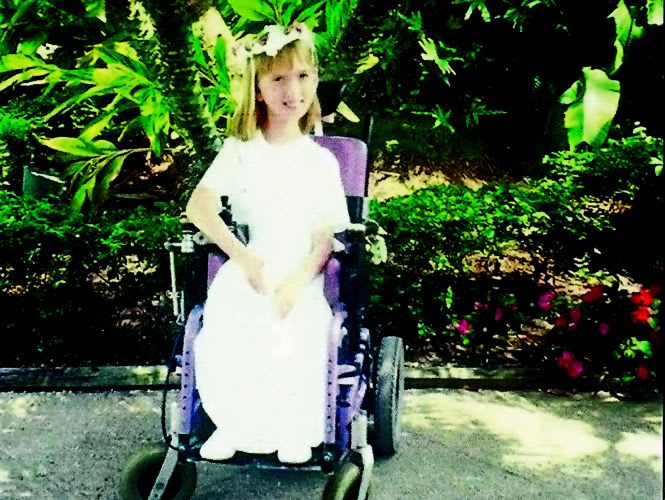
Katie, who has spinal muscular atrophy, received her first motorized wheelchair at the age of 2.
Previously, we’ve discussed cerebral palsy — the disability itself and how it affects evacuations from a school bus.
We also discussed Duchenne muscular dystrophy (DMD). DMD is characterized by progressive weakness of muscles, eventually leading to death in the individual’s late teens or early 20s.
In this article, we will discuss spinal muscular atrophy (SMA).
Specifics of SMA
SMA is a group of inherited diseases that cause progressive muscle degeneration and weakness which, like DMD, leads to death, but at a much earlier age.
The difference between DMD and SMA is that DMD is actually a disease of the muscle. With SMA, the problem is with the nerves that fail to function normally and do not send messages to the muscles to move. This causes the muscles to deteriorate.
SMA is a degenerative disease characterized by a dramatic loss of spinal motor neurons (the nerve cells in the spinal cord that cause the muscle fibers to function), resulting in muscle weakness, atrophy and, in the worst cases, loss of ability to swallow and breathe.
Sensation and the ability to feel are not affected. Intellectual activity is normal, and it’s often observed that children with SMA are unusually bright and sociable. Many of these children often have the ability to draw very detailed drawings.
There are four types of SMA, ranging from the more involved type where there is early infant death, to normal adult life with only mild weakness. The child is affected with SMA when the defective gene is inherited from both parents.
Those of us working with students who have SMA must realize the comprehensive medical approach that these children receive. This is important, as it might be necessary to consult with one of the medical specialists in regard to the student’s bus ride and an emergency evacuation.
These specialists can include pediatric neurology, pediatric pulmonology and pediatric orthopedic surgery, which may entail follow-up orthosis (i.e., braces) for the lower extremity and spine. Although physical and occupational therapy cannot change the progression of the muscle atrophy, therapy is important to prevent contractures of muscles and tendons and abnormal curvature of the spine (i.e., scoliosis).
A student with SMA is often seen by a respiratory therapist and a clinical nutritionist. We need to be aware that students with SMA will have difficulty protecting themselves from choking and that breathing complications are common.
[PAGEBREAK]

Zimmerman says students with spinal muscular atrophy are aware of bus evacuations, but physically they are unable to help themselves. Therefore, it is critical to be in constant verbal communication with the students to reassure them that they will be evacuated safely.
Implications for an emergency evacuation
The following must be taken into account when doing an emergency evacuation for a student with SMA:
• These students are usually in a motorized mobility device at a very
young age.
• These students will need to be either carried out of the bus or dragged out of the bus on an emergency evacuation device.
• These students will have extreme weakness of their trunk muscles and often cannot sit by themselves. Be sure that during an evacuation you protect and support the student’s head and back.
• As a student with SMA gets older, a tracheostomy and ventilator (i.e.,
a breathing machine) may become necessary to help the student breathe.
Plan well in advance to provide manual respirations for this student during an emergency. Also, practicing this drill will be critical to the student’s safety.
• Often, a nurse will ride the bus with a student who has a tracheostomy and ventilator. During an evacuation, the student will need to be disconnected from the ventilator. Respiration will be performed manually by the nurse. However, the transportation staff will also need to know how to perform manual respirations in case the nurse is unconscious due to the accident.
For a student being dragged out of the bus who needs to breathe with an Ambubag, use this recommended procedure:
• During the dragging process, the bus staff members drag the student, then pause to allow the nurse to use the Ambubag to breathe for the student, then resume dragging, pause again to let the nurse use the Ambubag, etc.
• Repeat this process until the student has been safely evacuated. The nurse will continue operating the Ambubag until medical help arrives. For this reason, it is critical that the nurse be involved with emergency evacuation drills.
Summary
It is important to recognize that students with SMA are aware of an evacuation, but physically they are unable to help themselves. During evacuations, it is critical to be in constant verbal communication with these students. They will need reassurance that we will be doing everything we can to get them out of the bus safely.
Jean M. Zimmerman is supervisor of occupational and physical therapy for the School District of Palm Beach County (Fla.). She is the author of Evacuating Students With Disabilities, a comprehensive manual and training course written in conjunction with the Pupil Transportation Safety Institute. The program can be purchased at www.ptsi.org or by calling (800) 836-2210.
More Special Needs Transportation
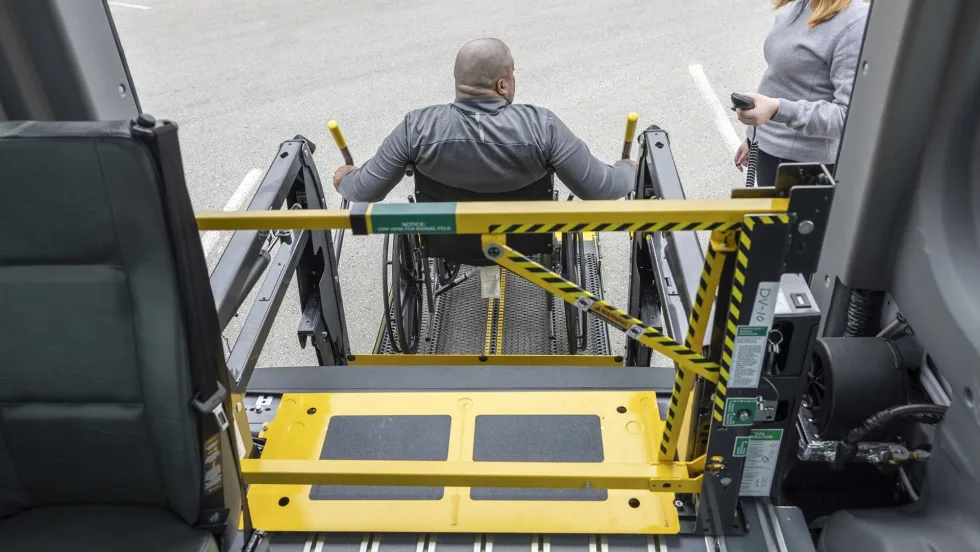
BraunAbility Introduces New Safety Barrier for Wheelchair Lifts
LiftSentinel is designed to add another layer of protection during wheelchair loading and unloading and can be retrofitted to many existing commercial lift installations.
Read More →
HopSkipDrive Launches New Safety, Driver Consistency Features for 2026-27 School Year
The company’s free ride recording, live ride tracking, and consistent driver assignments aim to improve safety and continuity for diverse student transportation needs.
Read More →
The Most Common Wheelchair Securement Mistakes on School Buses (and How to Fix Them)
Small missteps in wheelchair securement can have serious consequences. Here are 32 tips from experts to reduce risk and increase student safety on the bus.
Read More →
Inside AMF Bruns’ New Showroom: School Bus Securement Solutions Explained
Go inside AMF Bruns America’s new Ohio showroom with Maritza Valentin to see its FutureSafe technology, driver training tools, securement systems, and seating innovations.
Read More →
What AMF Bruns’ New Facility Means for Customers [Video]
Inside AMF Bruns’ new Stow, Ohio, operations: See how expanded space and innovation will enhance customer support and operations.
Read More →
AMF Bruns Expands in Ohio, Investing in Growth and Community
With expanded production space, local investment, and a growing workforce, AMF Bruns is scaling its U.S. presence. Here’s an exclusive first look inside the new Stow, Ohio, HQ.
Read More →
Inside AMF Bruns of America’s New Ohio Manufacturing Facility [Photos]
Take a behind-the-scenes look at AMF Bruns of America’s new 41,000-square-foot Stow, Ohio, headquarters, featuring advanced manufacturing, expanded space, and future-ready mobility solutions.
Read More →
First Student Boosts Student Support in Wichita & Texas
First Student and Wichita Public Schools are using behavioral support strategies to improve student ride experiences, while a separate initiative expands access to after-school programs through a bus donation.
Read More →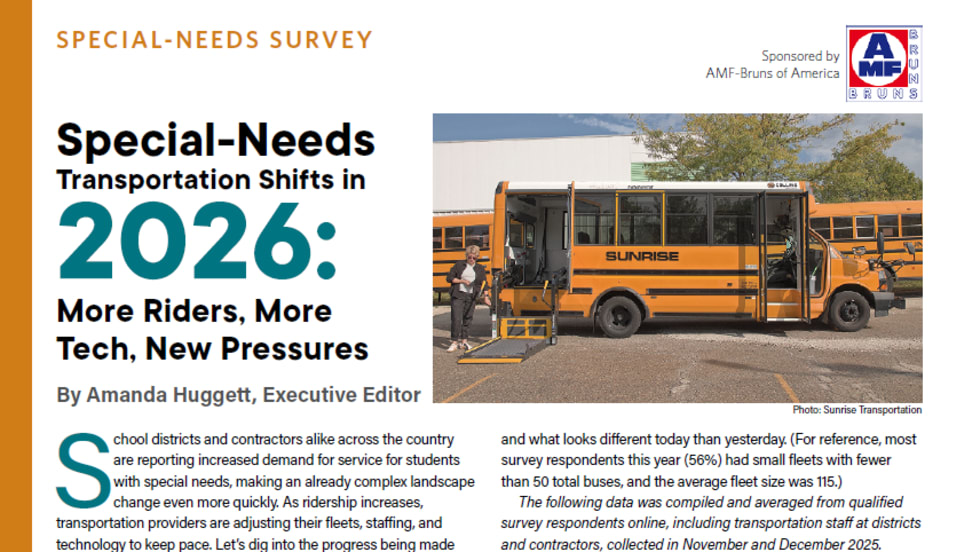
2026 Special-Needs Transportation Survey
What’s changing in special-needs transportation? This year, student transportation operators report a rising need, easing driver shortages, growing tech adoption, and evolving challenges. Sponsored by AMF Bruns of America.
Read More →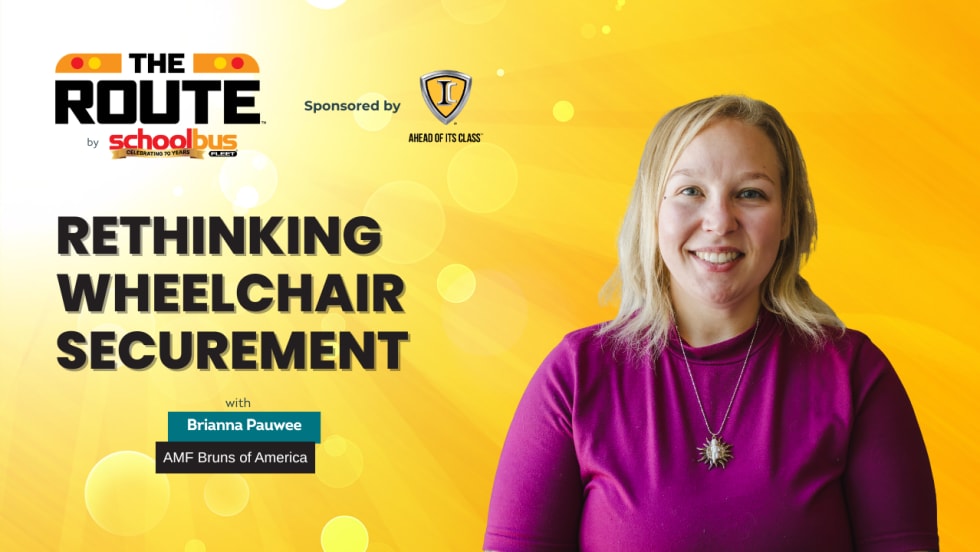
The Lived-Experience Gap in Mobility Tech: An Expert Take on Safe Student Transportation
Brianna Pauwee, a product application specialist at AMF Bruns of America and a wheelchair user, drops in to The Route to share practical securement and training insights, plus the story behind the new “Beyond Mobility” podcast. The Route is sponsored by IC Bus.
Read More →