





Don't Miss: Effective Evacuation Plans for Special-Needs Students
Special Equipment on a Special-Needs Transportation School Bus
Technology can transform the daily bus ride for special-needs students into a safe and inclusive experience.
February 1, 2024
Where innovation meets inclusivity, technology helps improve the school bus ride experience for student passengers.
Image: Canva
2 min to read
The modern special-needs school bus is a meeting of innovation and inclusivity, with technologies that make it safer, more accessible, and more comfortable for student passengers, as well as providing peace of mind for their families.
Some technologies aboard the special-needs bus include:
Wheelchair lifts.
Wheelchair stations.
Wheelchair restraint systems.
Child safety restraint systems.
Safety vests.
Evacuation blankets.
Wheelchair Lifts
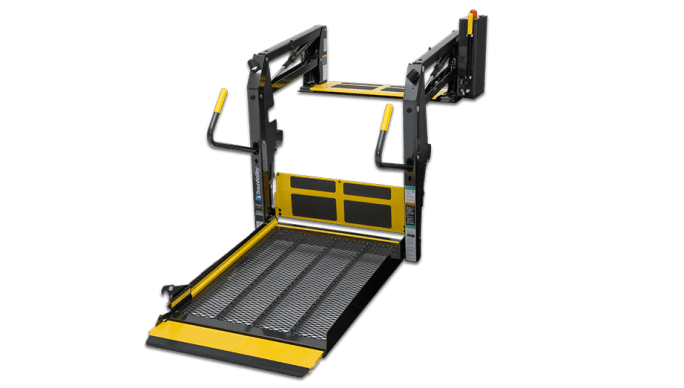
BraunAbility Millennium Series NL-2
Image: BraunAbility
Power lifts are mechanized platforms that grant access to the bus for an occupied mobility aid or wheelchair. They offer a smooth and safe boarding process, reducing potential discomfort or challenges that students might otherwise face while trying to board the school bus. BraunAbility’s Millennium Series NL-2 lift is ADA-compliant for use in school buses, cutaways, and paratransit vans. It can handle up to 800 pounds.
Wheelchair Stations
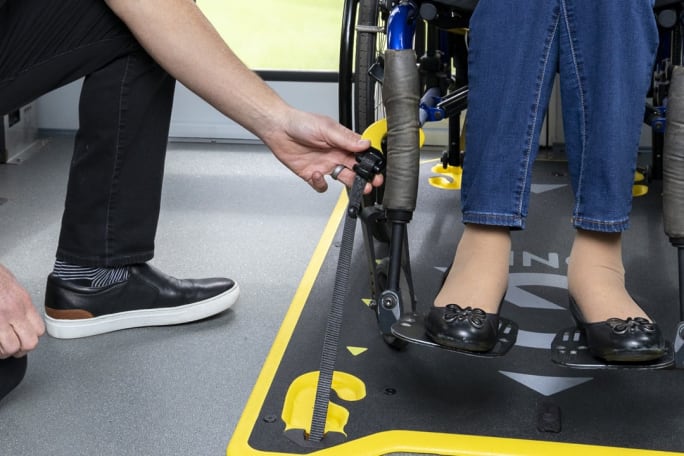
Q'Straint One
Image: Q'Straint
These devices provide a footprint for securement of wheelchairs while a special-needs school bus is in motion. They enhance stability and security for students in wheelchairs, while also promoting inclusivity. The Q’Straint One, for example, replaces traditional 4-point securement with a simplified station.
Wheelchair Restraint Systems
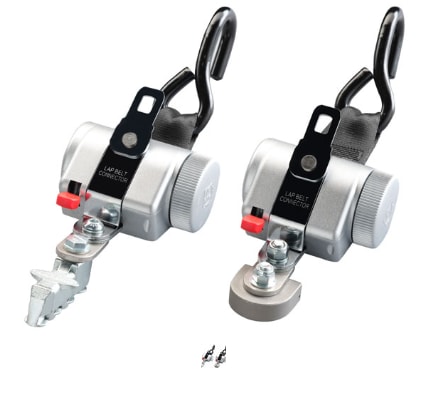
AMF Bruns Protektor PlatinumSeries
Image: AMF Bruns
These systems help secure wheelchairs aboard special-needs school buses. The Protektor PlatinumSeries by AMF Bruns provides a 4-point safety system with retractors attached to the bus floor.
Child Safety Restraint Systems
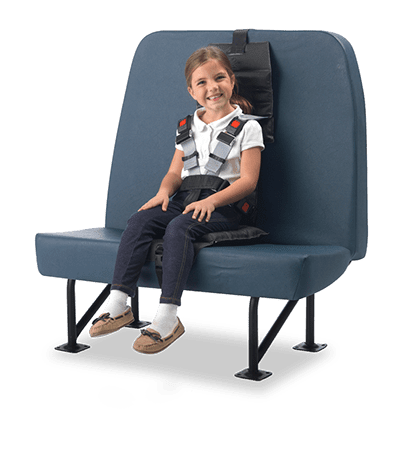
BESI Pro Tech II
Image: BESI
Any device that’s designed for use in a school bus to restrain, seat, or position a child. These can include harnesses, adaptive seat belts, and other restraint systems. They offer protection by preventing too much movement and reducing the risk of injury if the bus suddenly stops or turns. The BESI Pro Tech II, for example, accommodates children between 25 and 65 pounds. Its height can be adjusted to varying torso heights.
Safety Vests
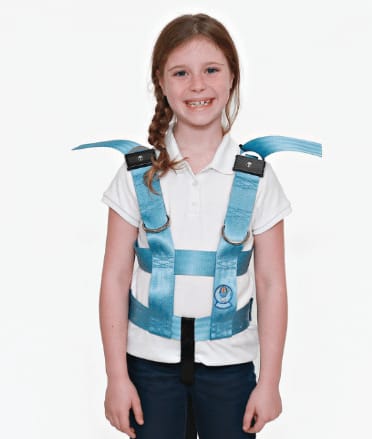
EZ-ON Max2
Image: EZ-ON
These vests, which provide stability and security, may be necessary for students who have difficulty staying upright on the bus seat. In ideal circumstances, the vest becomes part of a routine for the students who need them, allowing for a sense of predictability and structure during bus routes. That’s especially valuable for students with autism or sensory sensitivities who might find comfort in routines. The EZ-ON Max2 vest is for passengers who weigh more than 31 pounds.
Evacuation Blankets
When a child is too heavy or has uncontrollable movements that make it difficult to safely carry them, these special blankets can be used for evacuation. These should be stored in easily accessible locations and inspected regularly to make sure they’re in good condition and undamaged.
Subscribe to Our Newsletter
More Special Needs Transportation
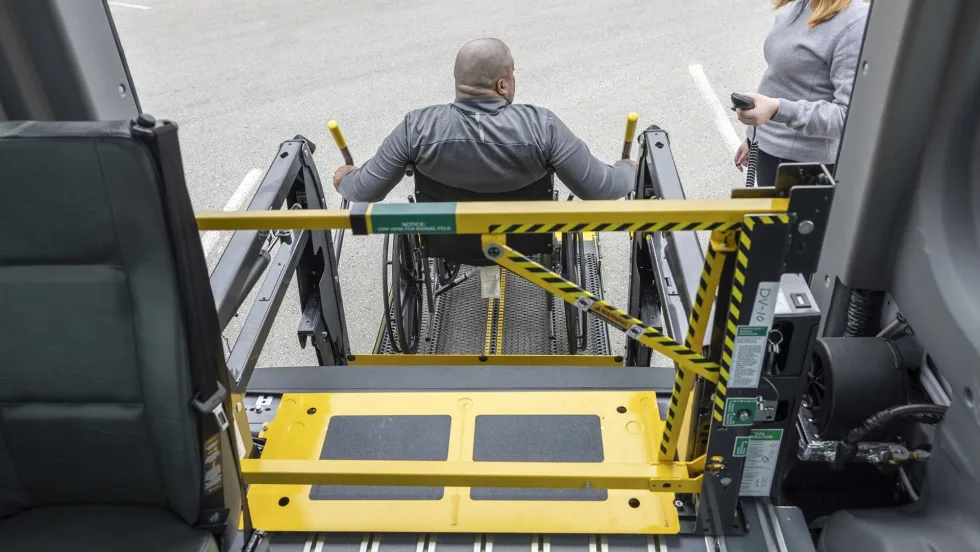
BraunAbility Introduces New Safety Barrier for Wheelchair Lifts
LiftSentinel is designed to add another layer of protection during wheelchair loading and unloading and can be retrofitted to many existing commercial lift installations.
Read More →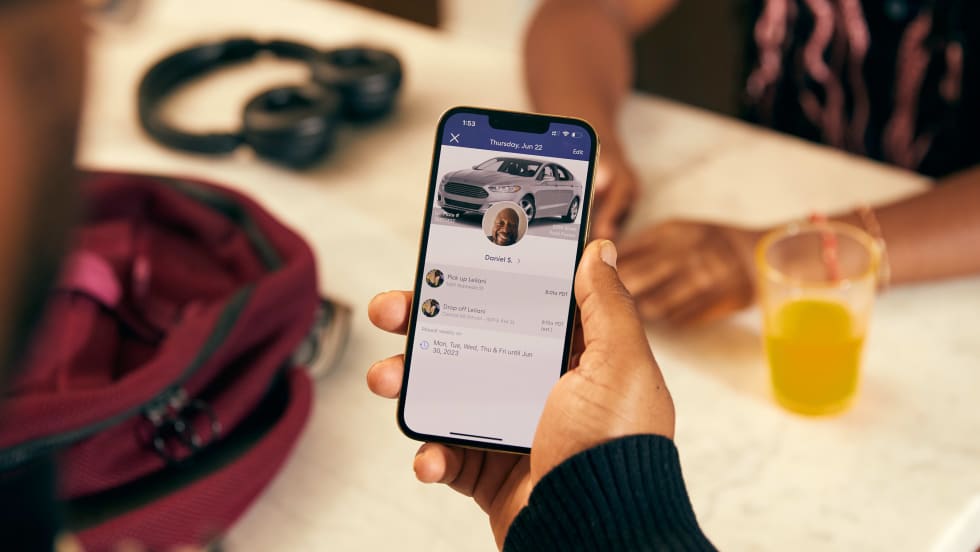
HopSkipDrive Launches New Safety, Driver Consistency Features for 2026-27 School Year
The company’s free ride recording, live ride tracking, and consistent driver assignments aim to improve safety and continuity for diverse student transportation needs.
Read More →
The Most Common Wheelchair Securement Mistakes on School Buses (and How to Fix Them)
Small missteps in wheelchair securement can have serious consequences. Here are 32 tips from experts to reduce risk and increase student safety on the bus.
Read More →
Inside AMF Bruns’ New Showroom: School Bus Securement Solutions Explained
Go inside AMF Bruns America’s new Ohio showroom with Maritza Valentin to see its FutureSafe technology, driver training tools, securement systems, and seating innovations.
Read More →
What AMF Bruns’ New Facility Means for Customers [Video]
Inside AMF Bruns’ new Stow, Ohio, operations: See how expanded space and innovation will enhance customer support and operations.
Read More →
AMF Bruns Expands in Ohio, Investing in Growth and Community
With expanded production space, local investment, and a growing workforce, AMF Bruns is scaling its U.S. presence. Here’s an exclusive first look inside the new Stow, Ohio, HQ.
Read More →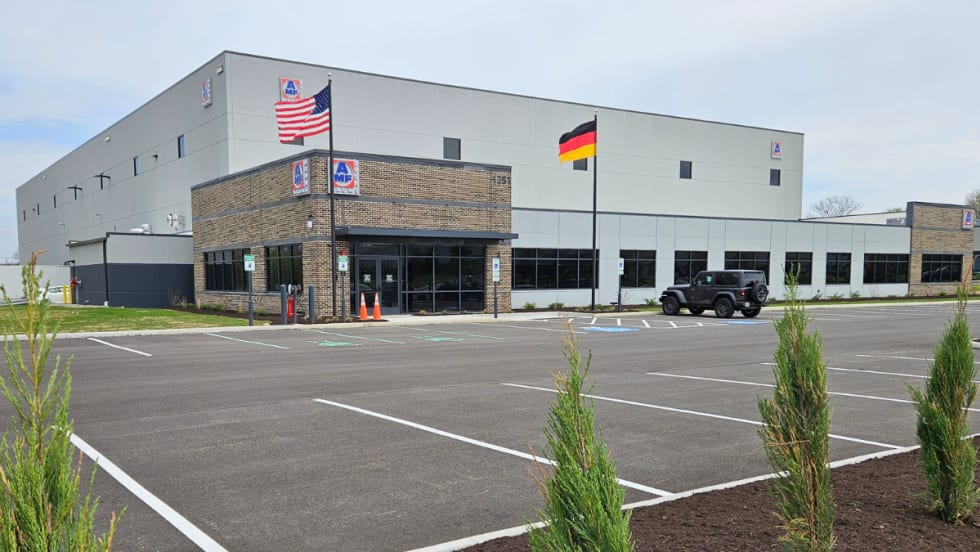
Inside AMF Bruns of America’s New Ohio Manufacturing Facility [Photos]
Take a behind-the-scenes look at AMF Bruns of America’s new 41,000-square-foot Stow, Ohio, headquarters, featuring advanced manufacturing, expanded space, and future-ready mobility solutions.
Read More →
First Student Boosts Student Support in Wichita & Texas
First Student and Wichita Public Schools are using behavioral support strategies to improve student ride experiences, while a separate initiative expands access to after-school programs through a bus donation.
Read More →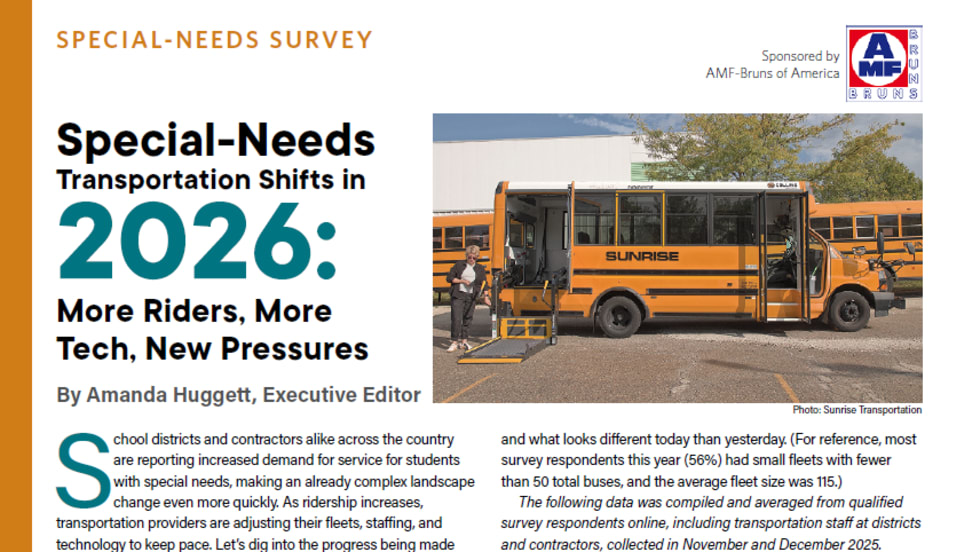
2026 Special-Needs Transportation Survey
What’s changing in special-needs transportation? This year, student transportation operators report a rising need, easing driver shortages, growing tech adoption, and evolving challenges. Sponsored by AMF Bruns of America.
Read More →
The Lived-Experience Gap in Mobility Tech: An Expert Take on Safe Student Transportation
Brianna Pauwee, a product application specialist at AMF Bruns of America and a wheelchair user, drops in to The Route to share practical securement and training insights, plus the story behind the new “Beyond Mobility” podcast. The Route is sponsored by IC Bus.
Read More →