




SMI expands bus flooring business
PINEVILLE, N.C. — A company better known for its line of roof hatches, stop arms and crossing arms, Specialty Manufacturing Inc. (SMI) has quietly bec...

PINEVILLE, N.C. — A company better known for its line of roof hatches, stop arms and crossing arms, Specialty Manufacturing Inc. (SMI) has quietly become a major player in rubber flooring and step treads for school buses.
And it hopes to enlarge its footprint in this arena with an innovative one-piece flooring product that prevents moisture seepage that can lead to rot and decay of the subfloor. It’s also developing hybrid flooring material that will improve durability and performance while reducing weight and cost.
“We’ve got the resources to make it all happen,” said Douglas Campbell, SMI’s vice president of North American sales. SMI recently acquired Transpec Worldwide and Pretoria Transit Interiors, expanding its product line and its reach industrywide.
SMI entered the bus flooring business about four years ago by acquiring Rubber Solutions, the flooring division of Mat Works in Baltimore. Rubber Solutions was formed in 1999 to help diversify Mat Works’ product line.
Over the past four years, SMI’s flooring and step tread business has expanded its reach, garnering contracts with all of the major school bus manufacturers, as well as cutaway bus builders for the transit, paratransit and shuttle markets.
These days, SMI has a majority of the school bus industry’s market share and is hoping to capitalize on its enhanced product line to capture even more. It recently rebranded its flooring division, now known as SpecFlor.
Campbell said the strengths of SMI’s flooring business include its ability to deliver pre-cut, pre-measured flooring kits. This allows the manufacturers to reduce their labor costs while virtually eliminating scrap. “They used to buy 30-yard rolls of flooring and have to cut them to fit,” he explained. “With our product, the manufacturer receives the exact length and width of material, reducing scrap by 15 to 20 percent per bus.”
Another strength exhibited by SMI is its depth of stock. “We carry six to eight weeks of stock for all of our clients,” Campbell said. “We have the capital support to carry that much inventory, which helps meet the just-in-time manufacturing needs of the OEMs.”
The flooring is warehoused in Springdale, Ark., in the northwest region of the state. The location is geographically desirable because of its proximity to OEM manufacturing facilities. “This allows us to respond quickly to the manufacturers’ needs,” Campbell said, adding that step treads are manufactured at the company’s Pineville facility.
But the company’s greatest strength, Campbell said, is its focus on the needs of the customer. “We go beyond our competitors’ products with regard to our products’ slip resistance, extreme-weather flexibility and durability,” he said, adding that SMI is not satisfied with the status quo.
“Our claim to fame is innovation,” Campbell said. “We’re the first company to come up with a true one-piece floor. It covers the width and length of the bus without a seam. It combines aesthetics with great functionality.”
School bus operators, however, have to pay a premium for the one-piece product compared with the traditional three-piece floor covering. But some states, such as North Carolina, already are specifying the one-piece floor covering because of its potential to reduce damage to the plywood subfloor.
“Rotting plywood is a horrible warranty issue,” Campbell said. “It’s very expensive to replace the subfloor. A one-piece floor that prevents rust and decay is worth the small additional upfront investment. The end-user sees that value.”
More Maintenance

Easy Ways to Reduce School Bus Emissions: Q&A with John Gonzales
Learn how preventive maintenance, driver training, reduced idling, smarter routing, and the right fuel choices can help districts reduce emissions — without investing in new buses.
Read More →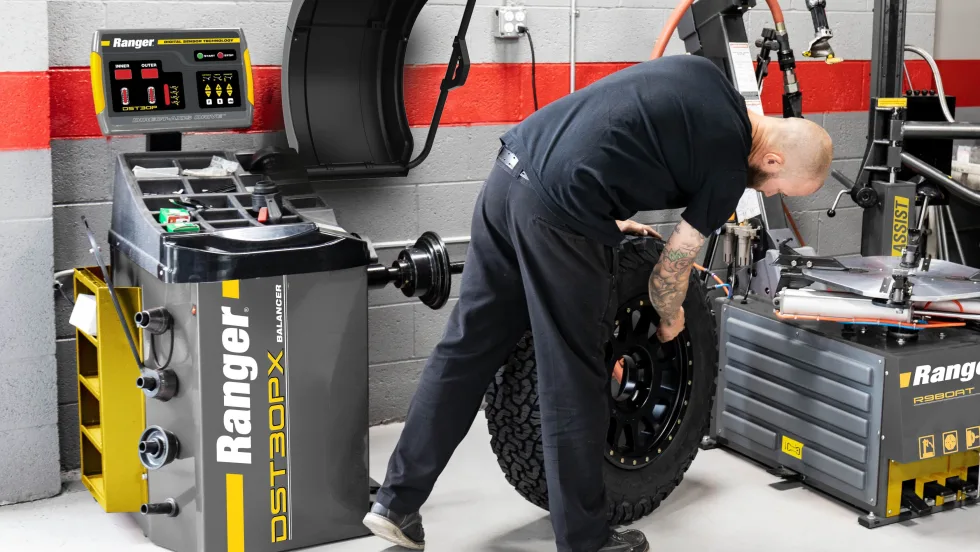
BendPak Launches Ranger DST30PX Wheel Balancer
BendPak's new wheel balancer handles tires up to 43 inches in diameter, with a reinforced design, precise weight placement, and faster service cycles.
Read More →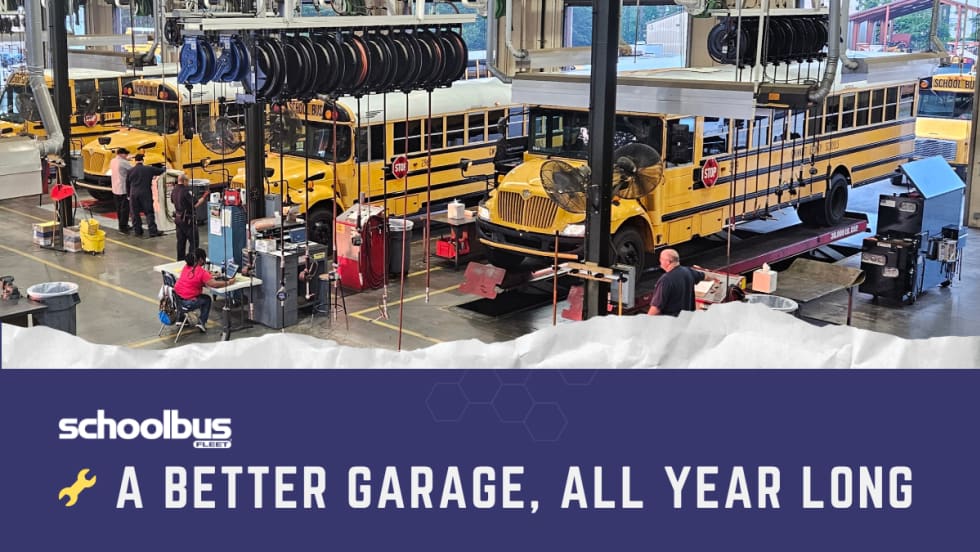
Tips for Ensuring School Bus Garages Are Safe and Warm Year-Round
Cold maintenance bays and rising heating costs? Learn how school bus garages can improve comfort with targeted heating, better airflow, and winter preparation.
Read More →
ASE Highlights School Bus Technician Certification Requirements
ASE is encouraging school bus maintenance professionals to maintain their certifications, highlighting seven specialized tests and five-year renewal requirements.
Read More →
International Adds E-Commerce Capabilities to Fleetrite.com
IC Bus customers can now browse, buy, and track shipments for more than 400,000 aftermarket parts online.
Read More →
The Most Expensive Thing You Do Before Selling a School Bus: Wait
When should you sell an aging school bus? Learn how maintenance, mileage, corrosion, specifications, and timing can affect resale value long before the auction.
Read More →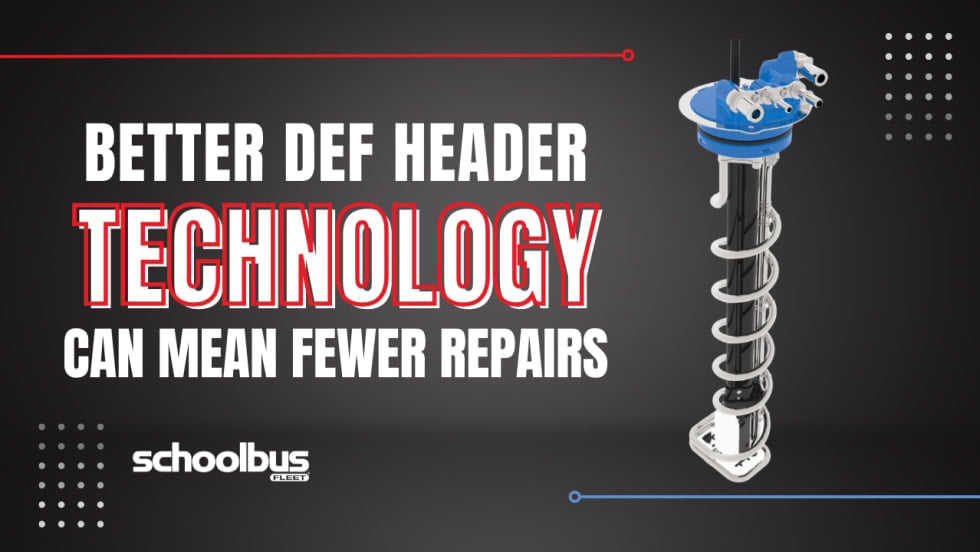
The Evolution of DEF Header Technology: What School Bus Operations Should Know at Replacement Time
See what school bus fleets should consider when replacing DEF headers to improve reliability, reduce repeat repairs, and control maintenance costs.
Read More →
The Essential Guide to School Bus Maintenance and Student Safety
Your district's buses carry students to school every day. This guide shows how predictive maintenance powered by fleet data helps keep buses reliable, drivers accountable and students safer from the first bell to the last stop.
Read More →
Kerry Brothers Grows Michigan School Bus Repair Network
The acquisition of Downriver Truck and Bus expands Kerry Brothers’ school bus maintenance footprint across southeast Michigan, adding repair capacity, diagnostic resources, and state inspection support.
Read More →
Noregon Introduces CAN Bus Diagnostic Tool, Expands JPRO Features
CAN Mentor and the latest JPRO update aim to simplify vehicle network diagnostics and improve repair efficiency for technicians of all experience levels.
Read More →